



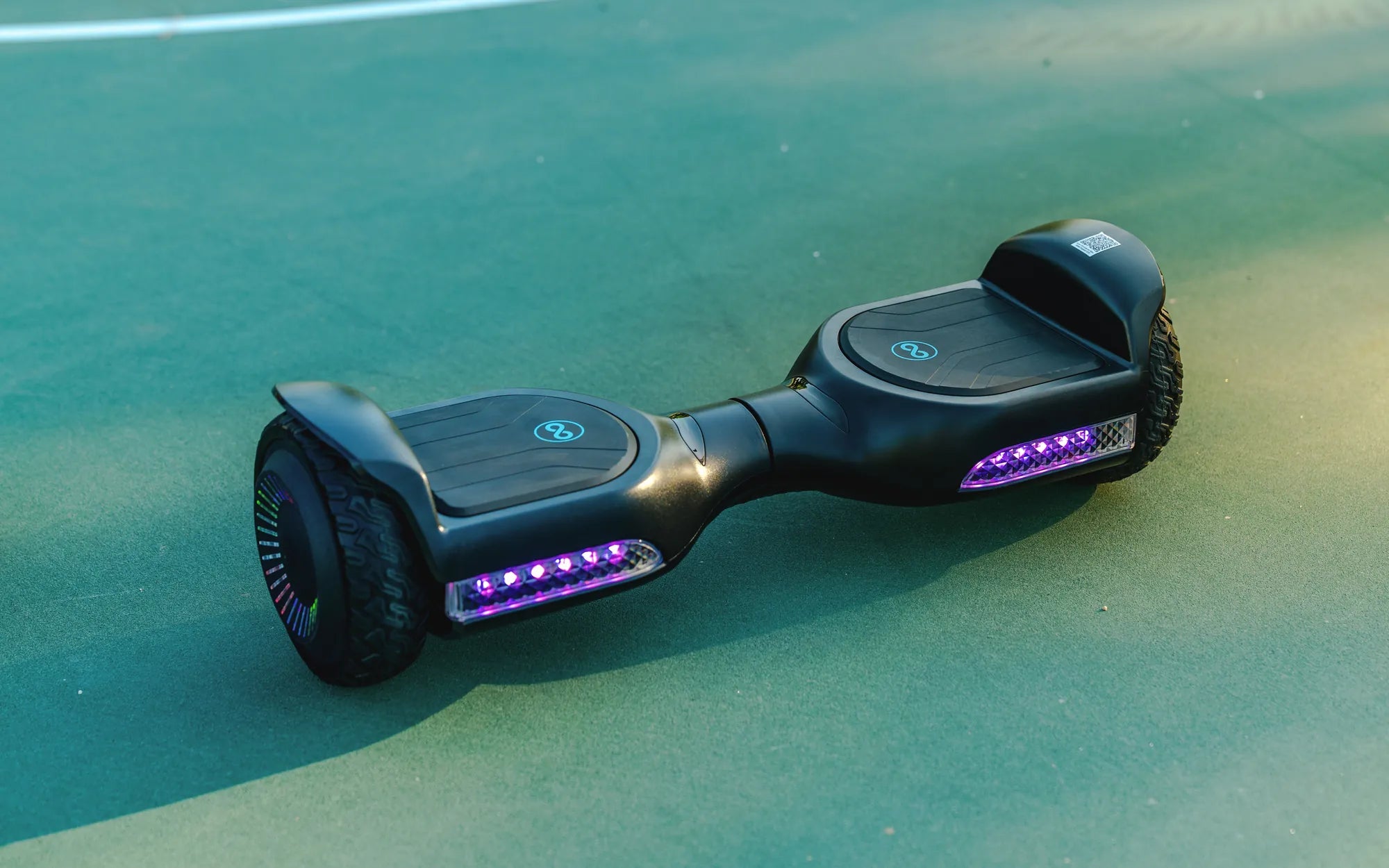
Introduction: Redefining Urban Mobility with Sleek Innovation
The search for efficient, stylish, and practical personal transportation in congested city environments has led to the rise of the self-balancing scooter. Among these, the self balancing scooter black has emerged as a dominant choice for commuters who value both form and function. This article will explore why this specific model has become the ultimate urban commuting companion, examining its technical specifications, practical benefits, and how it compares to alternatives. You will gain a clear understanding of the critical features that ensure safety and performance, learn expert tips for mastering your commute, and discover why leading brands like Gyroor have set new standards in this category. By the end, you'll know exactly what to look for in a premium personal transport device and how to integrate it seamlessly into your urban lifestyle.
Understanding the Self-Balancing Scooter: More Than Just a Black Scooter
A self-balancing scooter, commonly referred to as a hoverboard or electric unicycle, is a two-wheeled, battery-powered personal transporter. It uses gyroscopic sensors and internal motors to automatically balance the rider, requiring only subtle shifts in body weight for acceleration, braking, and steering. The self balancing scooter black variant takes this innovative technology and wraps it in a universally appealing, sleek aesthetic. The color black is not merely cosmetic; it signifies a professional, low-profile, and versatile design that blends into both corporate environments and casual urban settings.
It's crucial to differentiate this device from traditional kick scooters or standing electric scooters with handlebars. The core experience is one of intuitive, hands-free movement. The learning curve, while present, is often shorter than many anticipate, with most riders achieving basic competency within 30-60 minutes of practice. The appeal of the black model lies in its ability to look sophisticated while performing as a highly agile piece of tech, capable of navigating crowded sidewalks, weaving through stalled traffic, and fitting into tight spaces where bicycles and cars cannot.
The market for these devices has matured significantly. Early models faced scrutiny over safety, particularly concerning battery reliability. Today, reputable manufacturers prioritize safety certifications and robust construction. The matte or glossy black finish commonly found on premium models is often a durable coating designed to resist scratches and UV fading, making it a practical choice for daily use. This combination of advanced self-balancing technology and a timeless, durable finish is what positions the self balancing scooter black as a serious commuting tool.
For the urban dweller, this device solves the "last-mile" problem—the final leg of a commute from a transit hub to home or office—with unparalleled efficiency. It collapses the distance that is too far to walk comfortably yet too short and congested for a car or traditional vehicle. The hands-free operation allows riders to remain engaged with their surroundings or even take a hands-free call, adding a layer of convenience that handlebar-equipped vehicles cannot match. The black color scheme enhances this utility by projecting a sense of discretion and professionalism, making it acceptable in a wider range of social and professional contexts.
Why Choose a Black Self-Balancing Scooter for City Travel?
The choice of a black self-balancing scooter for urban travel is driven by a blend of psychological and practical advantages. Visually, black is associated with sophistication, authority, and modernity. A commuter arriving at an office on a sleek, black device presents a markedly different image than one on a brightly colored, toy-like gadget. This professional aesthetic removes the stigma sometimes associated with personal transport devices, framing them as legitimate tools for efficient adults. The low-profile look allows the rider and the technology to blend into the urban landscape without drawing unnecessary attention.
From a practical maintenance perspective, black is a forgiving color. Urban commuting exposes a device to constant minor abrasions, dust, and dirt. A black shell is exceptionally effective at hiding minor scuffs, scratches, and everyday grime that would be glaringly obvious on a white or silver finish. This means your self balancing scooter black maintains its "like-new" appearance far longer with minimal cleaning effort, which is a significant consideration for a daily-use item. It aligns perfectly with the practical, low-maintenance demands of a fast-paced urban lifestyle.
A common concern is that a black device will overheat in the sun. While it's true that a black surface absorbs more solar radiation, leading to a hotter exterior shell, premium manufacturers engineer their products to manage this. The critical components—the lithium-ion battery pack and control boards—are insulated and housed within the deck. Reputable brands like Gyroor use UL-certified batteries tested to operate safely within a wide temperature range. The surface temperature of the deck may be warm, but the internal operational temperature remains regulated. For rider comfort, wearing shoes provides ample insulation.
Regarding nighttime visibility, the color of the chassis is far less important than the integrated lighting systems. A high-quality self balancing scooter black will feature bright LED headlights, rear brake lights, and often side ambient lighting. These lights, not the body color, are the primary visibility tools. The dark body can actually make these lights more prominent by contrast. Furthermore, responsible riding in low-light conditions always involves the use of additional reflective gear or accessories, making the base color a secondary factor in safety. The benefits of a discreet, professional, and low-maintenance appearance during the vast majority of daytime commuting hours overwhelmingly support the choice of black.
Key Features to Prioritize in Your Self-Balancing Scooter
When selecting your urban commuting companion, looking beyond the color is essential. Performance, safety, and durability are dictated by a set of core technical specifications. The motor power, typically ranging from 250W to 800W per wheel, determines torque and hill-climbing ability. For varied urban terrain with moderate inclines, a dual 350W motor system is often a minimum for reliable performance. Top speed is usually capped between 10-12 mph for safety and regulatory compliance, which is ideal for sidewalk and bike lane travel.
Battery capacity and management are the heart of the device. Look for a battery specified in Watt-hours (Wh) or Amp-hours (Ah) with a reputable brand name like Samsung or LG cells. A capacity of 200Wh or more translates to a realistic range of 10-15 miles on a single charge, sufficient for most daily commutes. The single most important safety feature is a UL-certified battery pack. This independent certification guarantees the battery has passed rigorous tests for electrical, mechanical, and environmental safety, drastically reducing any risk of fire—a non-negotiable feature for peace of mind.
Wheel size and construction directly impact ride comfort and obstacle handling. Larger wheels (8.5 to 10 inches) roll over cracks, cobblestones, and minor road imperfections more smoothly than smaller, solid wheels. Pneumatic (air-filled) tires offer the best shock absorption but require maintenance; solid rubber tires are puncture-proof but provide a firmer ride. For all-weather urban readiness, an IPX5 water-resistance rating is critical. This means the scooter can withstand water jets from any direction, making it safe to ride through puddles and in light rain, protecting the internal electronics from moisture damage.
Additional smart features elevate the commuting experience. Bluetooth connectivity via a companion app allows you to lock the scooter, adjust performance modes (e.g., beginner vs. advanced), monitor battery life in real-time, track riding statistics, and customize LED light patterns. These features integrate the scooter into your digital life. Finally, consider the weight and portability. A weight under 30 lbs makes it manageable to carry up a flight of stairs or onto public transit. Together, these features—exemplified by brands like Gyroor, which integrates UL-certification, IPX5 rating, and smart app control across its lineup—transform a simple black scooter into a reliable, high-performance commuting machine.
Gyroor's Commitment to Safety and Reliability in Every Ride
In a market flooded with options, Gyroor has distinguished itself by building its reputation on foundational pillars of safety and reliability, which are especially crucial for a device used in daily urban commuting. This commitment begins with the power source. Every Gyroor self-balancing scooter utilizes a UL 2272 certified battery pack. This standard, developed by Underwriters Laboratories, is specifically for electrical systems in personal e-mobility devices. It involves a battery of tests including overcharge, short circuit, imbalance, drop, and crush tests. By choosing a Gyroor product, a rider is effectively choosing a battery system that has been independently verified to mitigate the primary safety risks associated with lithium-ion batteries in this application.
The IPX5 water-resistance rating is another cornerstone of Gyroor's design philosophy for the urban commuter. An IPX5 rating is not merely "splash-proof"; it certifies that the enclosure can handle low-pressure water jets from all angles. In practical terms, this means a commuter won't be stranded by a sudden rain shower or a large puddle. The electrical components, motor housings, and battery compartment are sealed to prevent water ingress that could cause short circuits or corrosion. This reliability in varied weather conditions is what makes a self balancing scooter black from a brand like Gyroor a true all-weather tool, not a fair-weather gadget.
Beyond the hardware, reliability is backed by a strong customer support framework. Gyroor offers a comprehensive 1-year warranty on its self-balancing scooters, covering defects in materials and workmanship. This warranty is supported by a US-based customer service team, ensuring that if an issue arises, riders have access to timely and clear communication for troubleshooting, parts, or service. For a commuter who depends on their device daily, this support network is as valuable as the physical product itself. It transforms the scooter from a disposable consumer item into a supported piece of personal transportation infrastructure.
This holistic approach to safety and reliability—encompassing certified components, robust environmental protection, and accessible support—directly addresses the core anxieties of a potential buyer. It allows the rider to focus on the joy and efficiency of the commute, rather than worrying about battery safety in their home, getting caught in the rain, or being left with a costly paperweight if something goes wrong. For over 100,000 riders across North America and Europe, this commitment has made Gyroor a trusted name in personal electric mobility, proving that the best self balancing scooter black is defined by what's underneath the sleek exterior.
Black Scooter Showdown: Comparing Urban Commuting Options
Choosing the right urban vehicle requires a clear comparison of how different options stack up against the practical demands of city life. Below is a data-driven comparison of a typical black self-balancing scooter against other popular black urban commuting vehicles: a standing electric scooter (like a Gyroor e-scooter) and a traditional black bicycle. This analysis focuses on key factors for city dwellers.
| Feature | Black Self-Balancing Scooter | Black Electric Scooter (w/ Handlebars) | Black Traditional Bicycle |
|---|---|---|---|
| Portability & Storage | Excellent. Compact, no handlebars. Easy to carry (20-30 lbs) and store under a desk or in a closet. | Good to Fair. Foldable, but handlebars add bulk. Heavier (30-50 lbs). Can be awkward to carry for long. | Poor. Requires bike rack or significant indoor space. Difficult to bring onto public transit or into offices. |
| Learning Curve | Moderate (30-90 mins). Requires balance practice but is very intuitive once mastered. | Low (Almost nil). Similar to a kick scooter; intuitive steering and hand brakes. | Low (Assumed). Requires known cycling skill. |
| Range & Effort | 10-15 miles. Zero physical effort. Battery-dependent. | 15-25 miles. Zero physical effort. Battery-dependent. | Unlimited (with rider effort). Subject to rider fitness. No charging required. |
| Urban Agility & Size | Superior. Small footprint, zero-turn radius. Ideal for crowded sidewalks and tight spaces. | Very Good. Narrow profile, good for bike lanes. Turning radius limited by handlebars. | Good. Requires more space to maneuver and park. Vulnerable to theft when parked outside. |
| Weather Resistance | Good (with IPX5). Can handle light rain and puddles. Rider is exposed. | Good (with IPX5). Can handle light rain. Rider is exposed. | N/A. Mechanical, but rider and components get wet. Chain requires maintenance. |
| Cost of Ownership | Medium. Initial purchase + electricity. Low maintenance. | Medium to High. Initial purchase + electricity. Low maintenance. | Low to Medium. Initial purchase + ongoing maintenance (tires, chain, brakes). No fuel cost. |
As the table illustrates, the self balancing scooter black excels in scenarios where extreme portability, storage in tight spaces, and superior maneuverability in dense pedestrian areas are top priorities. It is the most seamless to integrate with multi-modal commuting (e.g., bus/train + scooter). The electric scooter with handlebars offers greater range and speed with an easier learning curve, making it better for longer, faster commutes primarily in bike lanes. The traditional bicycle is the most economical and fitness-oriented option but lacks the "effortless" electric assist and has significant parking and storage drawbacks in dense urban cores.
Mastering Your Urban Commute: Tips for New and Experienced Riders
Successfully integrating a self-balancing scooter into your life starts with proper learning. Always begin in a safe, open, and flat area like an empty parking lot or a smooth park path. Wear your safety gear during practice. Focus on mounting and dismounting smoothly, using a wall or pole for support initially. Practice gentle forward and backward movement by leaning your ankles, not your entire body. Mastering the stop is crucial—simply straighten your posture. Most people achieve basic control within an hour, but dedicate several short sessions to build muscle memory and confidence before tackling sidewalks.
Safety gear is non-negotiable, regardless of skill level. At a minimum, a properly certified bicycle helmet is essential to protect against head injuries. For new riders, wrist guards are highly recommended to prevent fractures from instinctive falls. As you progress to busier environments, consider knee and elbow pads. For visibility, especially on a self balancing scooter black, add reflective stickers to the deck or your clothing and ensure your scooter's front and rear lights are always functional and used in low-light conditions. Your safety is your responsibility.
Urban navigation requires awareness and etiquette. Familiarize yourself with local laws; in many cities, these devices are treated like pedestrians and belong on sidewalks, while in others, they may be directed to bike lanes. Always yield to pedestrians, announce your presence politely with a bell or your voice when passing, and maintain a safe, controllable speed (typically under 10 mph). Be hyper-aware of surface transitions like curb cuts, metal grates, and wet leaves, which can be slippery. Avoid riding through deep puddles even with an IPX5 rating, as visibility of hazards underneath is zero.
Daily maintenance is simple but vital. Before each ride, perform a quick check: ensure tires are properly inflated (if pneumatic), check that the housing has no major cracks, verify that the footpad sensors are responsive, and confirm the battery has adequate charge. Wipe down the deck with a damp cloth to remove dirt and debris. For charging, always use the manufacturer-provided charger and follow the manual's instructions. Avoid leaving the scooter plugged in for extended periods after it reaches 100%, and never charge it unattended or overnight in a blocked exit pathway. Store it in a cool, dry place away from direct sunlight when not in use to maximize battery lifespan.
Frequently Asked Questions About Black Self-Balancing Scooters
Q: Is a black self-balancing scooter significantly hotter to ride in the summer sun?
A: The deck's surface can become warm, similar to a black car seat. However, this is a surface-level effect. The critical internal components, like the UL-certified battery, are insulated. The heat does not impact performance or safety within normal operating ranges. Wearing shoes provides ample protection for your feet. Choosing a model with a matte finish can slightly reduce heat absorption compared to a glossy one.
Q: How long does it realistically take to learn to ride one safely?
A> Most adults can achieve basic competency—mounting, moving forward, turning, and stopping—within 30 to 60 minutes of dedicated practice in a safe area. However, becoming confident enough to navigate uneven sidewalks, slight inclines, and light pedestrian traffic typically requires 3-5 hours of total practice over a few days. Patience and proper practice environment are key.
Q: Can I legally ride my black self-balancing scooter on the road or bike lane?
A> Laws vary dramatically by city, state, and country. In many US jurisdictions, these devices are classified as "Personal Transport Devices" and are restricted to sidewalks or paths with speed limits under 15 mph. Some cities allow them in bike lanes. It is the rider's absolute responsibility to research and obey all local regulations before riding in public spaces.
Q: What is the true cost of ownership beyond the purchase price?
A> The ongoing costs are relatively low. The primary cost is electricity for charging, which is negligible (cents per charge). Maintenance may include tire replacement (every 1-2 years for pneumatic tires), occasional pad or grip tape replacement, and potentially a new battery after 2-3 years of heavy use (500+ charge cycles). Compared to a car or even public transit fares, the annual cost is minimal.
Q: How does the IPX5 rating protect my scooter in the rain?
A> An IPX5 rating means the scooter's enclosure is protected against sustained, low-pressure water jets from any direction. This makes it safe for riding in light to moderate rain and through puddles you might encounter on an urban street. It is not, however, submersible. You should not ride through flooded streets or leave it out in a torrential downpour. Always dry the scooter with a towel after a wet ride.
Conclusion: Elevating Your Daily Journey with the Right Choice
The quest for the perfect urban commuting tool leads many to the sleek, efficient, and innovative self balancing scooter black. As we've explored, its value extends far beyond its sophisticated color. It represents a convergence of agile technology, practical design, and, when chosen wisely, uncompromising safety standards. The ultimate urban companion is not defined by its hue but by the quality of its construction—the UL-certified battery that ensures safe charging in your home, the IPX5 rating that grants freedom from weather worries, and the reliable performance that turns a congested commute into an enjoyable glide.
By comparing it to other options, its unique niche becomes clear: unparalleled portability and seamless integration into a multi-modal, space-constrained urban existence. Mastering its use is a rewarding investment that pays daily dividends in time saved and stress reduced. The key is to prioritize substance over style, selecting a model from a brand that backs its aesthetic appeal with rigorous engineering and dependable customer support. For those ready to transform their commute, the journey begins with choosing a partner built for the realities of city life. Explore the engineered reliability and sleek designs available for your urban adventure. Browse the full Gyroor collection at gyroorboard.com and discover the model designed to become your ultimate urban commuting companion.
2 Wheeler Balancing Scooter: The Future of Personal Urban Mobility
Hoverboard for Kids Price: A Comprehensive Guide to Finding the Best Deal