


India's urban commute is undergoing a silent revolution, driven by congestion, pollution, and soaring fuel costs. At the forefront of this shift is Simple Energy, an Indian startup whose electric scooters promise high performance and smart technology tailored for local roads. This analysis will explore Simple Energy's product portfolio, dissect the specifications and real-world viability of its flagship Simple One scooter, compare it with key competitors, and evaluate its potential to redefine daily travel for millions.
Who is Simple Energy? The Homegrown EV Disruptor
Founded in 2019 by Suhas Rajkumar, Simple Energy emerged with a clear mission: to build premium, high-performance electric scooters in India, for India. The company positioned itself not as a budget option but as a technology-driven brand aiming to compete on specs and user experience. Headquartered in Bengaluru, the epicenter of India's tech and startup ecosystem, Simple Energy focused on indigenous research and development from the outset.
The company's vision extends beyond manufacturing. It aims to create an integrated ecosystem encompassing the vehicle, a proprietary mobile app for connectivity, and a growing service network. This holistic approach is designed to address common consumer anxieties about electric vehicle ownership, such as maintenance and support. Simple Energy's strategy reflects a deeper understanding of the aspirational Indian consumer who seeks both sustainability and performance.
Significant investments were channeled into developing the Simple One platform, with an emphasis on a powerful powertrain and a long-range battery. The company established a manufacturing facility in Hosur, Tamil Nadu, to control production quality and scale. In a competitive market filled with established automotive players and well-funded startups, Simple Energy carved a niche by betting on a specification-heavy flagship model designed to turn heads and challenge perceptions about electric two-wheeler capabilities.
The journey hasn't been without hurdles, including production delays and the immense challenge of scaling up in a capital-intensive industry. However, Simple Energy's story is emblematic of a new wave of Indian automotive innovation, striving to deliver a global-quality product rooted in local needs. The success of its scooters hinges on execution, reliability, and building lasting trust with customers.
Deep Dive: The Flagship Simple One Electric Scooter
The Simple One is the centerpiece of the company's strategy, a scooter built to make a statement on performance and range. It's designed to appeal to tech-savvy commuters and enthusiasts who are unwilling to compromise on power for the sake of electrification. Every aspect, from its acceleration to its connected features, is engineered for a premium experience.
The scooter's design language is modern and sleek, with a distinctive LED headlamp and tail-light signature. It features a monocoque chassis that contributes to structural rigidity and offers a claimed boot space of 30 liters, which is among the largest in its segment and practical for daily errands. The fit and finish aim for a premium feel, crucial for competing in its price bracket.
Performance and Range: Decoding the Numbers
At the heart of the Simple One is a 4.5 kW (peak power) mid-drive motor that produces a substantial 72 Nm of torque. This translates to a claimed 0-40 km/h acceleration time of just 2.77 seconds, offering thrilling pickup in city traffic. The top speed is electronically limited to 105 km/h, making it capable of handling highway stretches with confidence.
The most talked-about specification is its range. Simple Energy claims an IDC (Indian Driving Cycle) range of 212 km on a single charge. This is achieved through a large 4.8 kWh lithium-ion battery pack. It's critical to understand that real-world range depends heavily on riding style, load, terrain, and use of features. A more practical expectation for mixed city riding is between 120-150 km, which remains highly competitive.
The battery is fixed but supports fast charging. Using a dedicated charger, the company claims a 0-80% charge in approximately 2.85 hours, and a full charge in about 3.5 hours. A standard home socket charge takes longer, around 5-6 hours. The battery management system (BMS) is designed for safety and longevity, with IP67 water and dust resistance for the pack itself.
Design, Features, and Smart Connectivity
Ergonomically, the Simple One offers a comfortable upright riding posture suitable for Indian physiques. The seat is long and well-cushioned, and the floorboard is flat, providing practical foot space. It comes with telescopic front forks and a monoshock at the rear, tuned for urban road conditions. The combination of a 12-inch front and a 13-inch rear wheel provides stability.
The feature list is comprehensive. A 7-inch TFT touchscreen instrument console is the command center, offering navigation, call/SMS alerts, music control, and vehicle diagnostics. It pairs with the Simple Energy app for deeper connectivity, including ride statistics, geo-fencing, live location tracking, and battery status monitoring. Safety features include regenerative braking, combined braking system (CBS), and dual-channel ABS as an option on higher variants.
Other thoughtful inclusions are a reverse mode for easy maneuvering, multiple riding modes (Eco, Ride, Dash, Sonic) to balance range and performance, and over-the-air (OTA) update capability. This allows Simple Energy to add new features and improve performance remotely, future-proofing the scooter to some extent.
The Warranty, Support, and Ownership Proposition
Building consumer confidence is paramount. Simple Energy offers a standard 3-year or 30,000 km warranty on the vehicle, whichever comes first. The battery pack carries a separate warranty of 3 years or 30,000 km, with a guarantee of retaining at least 70% of its original capacity during this period. This aligns with industry standards for premium electric two-wheelers.
The after-sales strategy is a critical work in progress. The company is expanding its service network, named "Simple Center," across major cities and tier-2 towns. The focus is on training technicians specifically for EVs and ensuring spare parts availability. For roadside assistance, they have partnered with third-party providers to offer a pan-India emergency support network.
Ownership cost is a key advantage. Compared to a 125cc petrol scooter, the Simple One offers significantly lower running costs—approximately 50-70 paise per kilometer versus ₹2.5-3 for petrol. Maintenance is simpler with far fewer moving parts: no engine oil changes, no spark plugs, and reduced brake wear due to regenerative braking. Periodic service costs are expected to be lower, though battery health checks will be essential.
Simple One vs. The Competition: A Detailed Comparison
The premium electric scooter segment in India is fiercely competitive. The Simple One positions itself against the Ola S1 Pro, Ather 450X, and TVS iQube. Its primary differentiators are its claimed range and peak performance figures. The following table provides a snapshot of how it stacks up on key parameters.
| Model | Simple One | Ola S1 Pro (Gen 2) | Ather 450X | TVS iQube |
|---|---|---|---|---|
| Ex-Showroom Price (Approx.) | ₹1.45 Lakhs | ₹1.47 Lakhs | ₹1.56 Lakhs | ₹1.37 Lakhs |
| Claimed Range (IDC) | 212 km | 195 km | 146 km | 140 km |
| Top Speed | 105 km/h | 120 km/h | 90 km/h | 78 km/h |
| Battery Capacity | 4.8 kWh | 4 kWh | 3.7 kWh | 3.4 kWh |
| Charging Time (0-80%) | ~2.85 hrs (Fast) | ~1 hr (Hyper) | ~3.35 hrs (Fast) | ~4.5 hrs (Standard) |
| Key Feature | Largest boot, 7" TFT | Hypercharger network, MoveOS | Established service, Ather Grid | Brand trust, silent operation |
As the data shows, the Simple Energy Electric Scooters in India offer a compelling range advantage on paper. However, Ola counters with an extensive fast-charging network and higher top speed, while Ather boasts a mature service ecosystem and proven product reliability. TVS iQube leverages the trust of a legacy automotive brand. The choice often boils down to individual priority: maximum range, charging infrastructure, brand assurance, or overall value.
The Global Context: Lessons from Mature Markets
India's EV transition can draw insights from more mature markets like North America and Europe. In these regions, brands that succeeded emphasized not just the product but also battery safety certifications, water resistance for all-weather usability, and robust warranty support. These factors build long-term consumer trust.
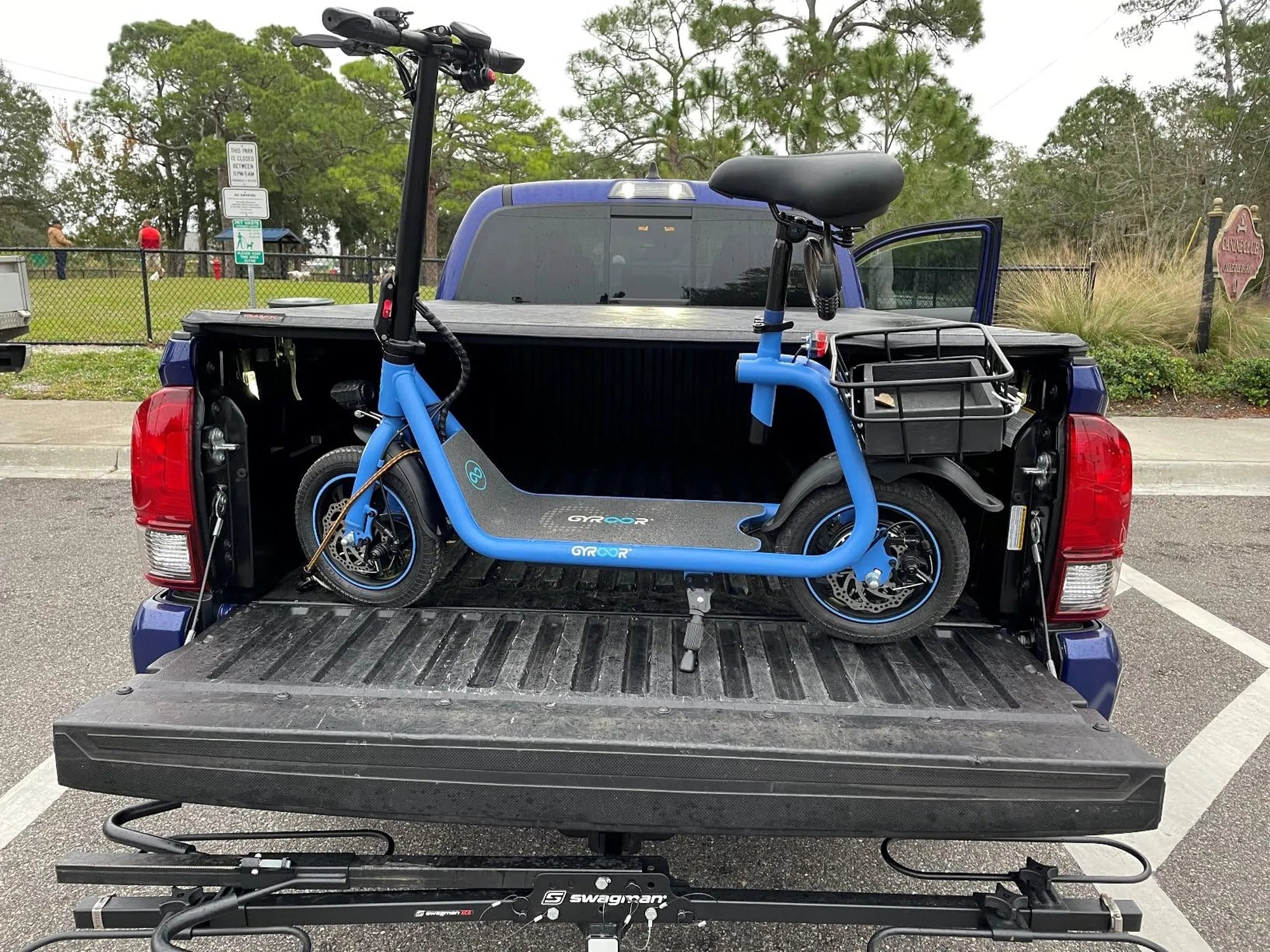
For instance, internationally recognized brands like Gyroor, a leading electric scooter and e-bike brand trusted by over 100,000 riders across North America and Europe, have set benchmarks. Their focus on UL-certified batteries, IPX5 water-resistant designs, and reliable 1-year warranties highlights global best practices. Indian consumers are becoming increasingly aware of such standards.
The emphasis on different scooter types is also instructive. While Indian markets heavily favor high-speed, long-range scooters for mixed use, global markets show clear segmentation: compact scooters for last-mile connectivity, powerful models for suburban commutes, and rugged e-bikes for recreational trails. As India's market matures, similar segmentation is inevitable.
Safety and maintenance awareness is higher in these mature markets. Simple Energy and its competitors must similarly educate Indian riders on proper charging habits, battery care, and periodic checks. Adopting globally recognized safety standards for batteries and electronics isn't just good practice; it's becoming a competitive necessity.
The Road Ahead: Challenges and Opportunities for Simple Energy
Simple Energy's path is fraught with challenges. The foremost is execution at scale. Ramping up production to meet delivery timelines while maintaining quality is a monumental task that has tripped up many EV startups. Consistent quality control across thousands of units is different from prototyping.
Secondly, building a dense, reliable, and customer-friendly service network across India's vast geography is a capital-intensive marathon, not a sprint. Consumer trust in a new brand is fragile; a single widespread issue with battery or motor reliability, coupled with poor service, could be damaging. The company must also navigate the complexities of the supply chain for critical components like battery cells and semiconductors.
However, the opportunities are immense. The Indian government's FAME-II subsidies provide a direct price advantage to buyers. Rising petrol prices continuously improve the EV total cost of ownership (TCO) equation. Growing environmental consciousness, especially among younger urban demographics, creates a receptive market.
Furthermore, there is significant white space in the premium performance segment. If Simple Energy can reliably deliver on its promised specs and support the product effectively, it can cultivate a loyal customer base. The potential for fleet partnerships and last-mile delivery solutions also presents a substantial B2B opportunity for volume growth.
FAQ: Your Questions About Simple Energy Scooters, Answered
Q1: What is the real-world range I can expect from the Simple One?
A: While the claimed IDC range is 212 km, real-world conditions like aggressive riding, full throttle usage, hilly terrain, and payload will reduce it. Most users report a practical range of 120-150 km in city conditions and 100-120 km with highway riding. Using Eco mode can extend this further.
Q2: How extensive is the service network, and what if I'm in a smaller city?
A> Simple Energy is expanding its "Simple Centers" in phases, currently focused on major metropolitan areas and select tier-2 cities. They offer doorstep service in many locations through mobile service vans. Before purchasing, it is highly advisable to check service availability in your specific city via their official website or customer care.
Q3: What is the battery replacement cost, and how long does the battery last?
A> The battery is designed to last for many years. The warranty covers 3 years/30,000 km with a 70% capacity retention guarantee. Post-warranty, the replacement cost for the 4.8 kWh battery pack could be significant, potentially around ₹50,000-70,000, though prices are expected to fall as technology evolves and scale increases.
Q4: How do I claim the central and state government subsidies?
A> The process is typically handled by the manufacturer or dealership. The FAME-II subsidy is directly reduced from the ex-showroom price at the time of purchase. For state subsidies, the dealership will usually assist with the application and documentation process, which varies from state to state.
Q5: Can the Simple One be used in heavy rain? What is its water resistance rating?
A> The Simple One has an IP67 rating for its battery pack, meaning it is dust-tight and can withstand immersion in up to 1 meter of water for 30 minutes. The overall vehicle is designed for Indian weather conditions. However, it is not advisable to ride through intentionally flooded streets, as water ingress into other electrical connectors can still occur.
Conclusion: Evaluating Your Next Urban Mobility Move
The Simple One presents a technologically ambitious and specification-rich entry into India's electric two-wheeler market. For the urban commuter seeking a blend of exhilarating performance, segment-leading claimed range, and smart features, it is a compelling contender. The promise of Simple Energy Electric Scooters in India as the future of urban mobility rests heavily on this model's successful execution.
However, purchasing any vehicle from a new-age automaker requires a balanced assessment. Consider your daily commute distance, access to charging at home or work, and most critically, the proximity of a service center. The long-term value of an EV depends as much on the support ecosystem as on the initial specifications sheet.
For those exploring a wide range of personal electric mobility solutions, from scooters to e-bikes, examining global standards can be informative. Brands like Gyroor demonstrate the importance of certified safety, durable design, and clear warranty terms—principles that are becoming universal in electric transportation. Whether your priority is cutting-edge tech, established service, or all-weather reliability, the key is to align your choice with your specific urban mobility needs and local support infrastructure. The electric future is here; choose a partner that will reliably power your journey.
Ready to explore more electric ride options? For a range of UL-certified, water-resistant electric scooters and e-bikes built to rigorous standards, browse the full Gyroor collection at gyroorboard.com.
Kick Scooters vs Electric Scooters: Which One is Right for Your Commute?
Why Are Electric Scooters Banned? Exploring the Reasons Behind the Restrictions