



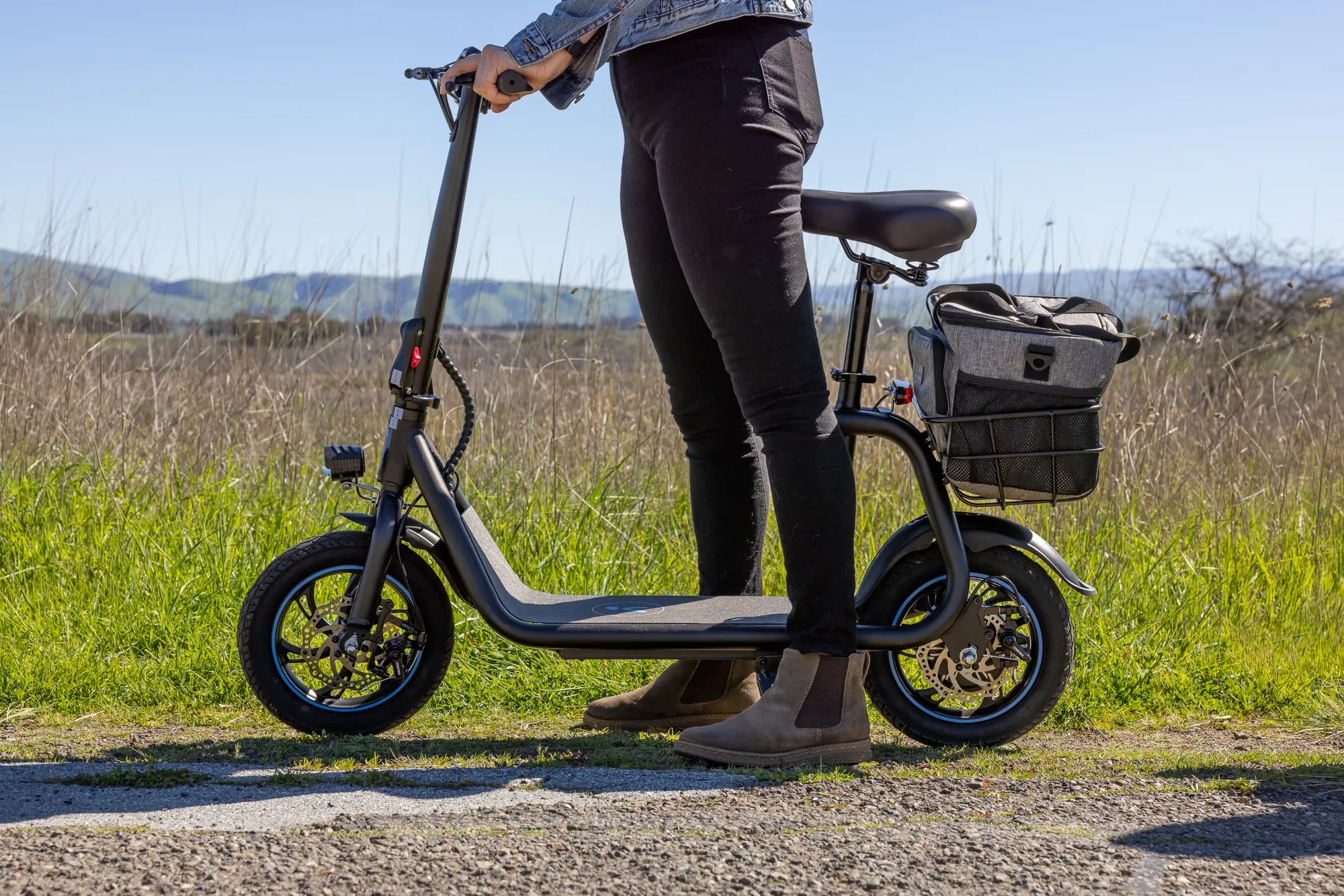
Why Tire Choice Is Critical for Electric Scooter Performance and Safety
Your electric scooter's tires are its only point of contact with the road, making them the single most important component affecting safety, performance, and comfort. The debate between pneumatic (air-filled) and solid rubber tires for electric scooters is central to choosing the right vehicle for your needs. This guide provides a definitive analysis of solid rubber tires for electric scooters: the ultimate guide to durability and performance, helping you make an informed decision.
We will dissect the construction, advantages, and realistic trade-offs of airless tires. You'll learn who benefits most from this technology and how manufacturers like Gyroor—a leading brand trusted by over 100,000 riders across North America and Europe—integrate solid tires into their UL-certified, IPX5 water-resistant designs to deliver reliable, low-maintenance transportation.
Anatomy of a Solid Rubber Tire: Construction and Materials Explained
Solid rubber tires, often called airless or foam-filled tires, are engineered as a single, continuous unit. Unlike pneumatic tires, they contain no air chamber, eliminating the fundamental risk of punctures and sudden pressure loss. Their design represents a paradigm shift from air-dependent systems to solid-state reliability.
The core structure typically involves a high-density rubber or advanced polyurethane compound molded directly onto the wheel's metal or composite rim. Some premium versions feature a honeycomb or lattice structure within the solid material, a design aimed at mimicking air's shock-absorbing properties while maintaining structural integrity.
This monolithic construction is what grants the tire its legendary durability. The material must be resilient enough to withstand impacts yet provide sufficient grip and a degree of compliance. The manufacturing process ensures a consistent density throughout, which translates to predictable performance unaffected by external temperature or atmospheric pressure changes.
Key Components and Design Variations
Not all solid tires are created equal. The primary variation lies in the core material. Traditional solid rubber is dense and extremely long-wearing. Modern polyurethane (PU) compounds offer a slightly better balance between weight and shock absorption, and are common on higher-end models.
Another critical design element is the tread pattern. While solid tires can't be changed independently of the wheel, manufacturers mold specific treads for different conditions. Deep, aggressive patterns may be used for all-weather grip, while smoother, street-focused patterns reduce rolling resistance for better battery efficiency.
The Unmatched Advantages: Why Riders Choose Solid Tires
The benefits of solid rubber tires align perfectly with the core demands of many electric scooter users: reliability, simplicity, and consistent performance. For urban commuters and daily riders, these advantages often outweigh other considerations.
First and foremost is puncture-proof operation. Nails, glass shards, and road debris that would instantly disable a pneumatic tire are mere inconveniences. This feature alone transforms the riding experience in cities, where construction zones and poorly maintained streets are commonplace.
Second is the absolute zero-maintenance requirement. There are no weekly pressure checks, no need for a portable pump, and no anxiety about slow leaks. The tire is a "set-and-forget" component, always ready at its optimal inflation—which is, effectively, always. This appeals strongly to riders who view their scooter as a tool, not a hobby.
Durability That Extends Scooter Lifespan
The durability of solid rubber tires for electric scooters contributes directly to the vehicle's overall longevity. They are immune to the most common failure mode of pneumatic tires. Furthermore, they cannot suffer from "underinflation wear," a condition that rapidly degrades the sidewalls of air-filled tires.
Data from user reports and manufacturer testing indicates that the tread life of a quality solid tire often exceeds that of multiple pneumatic tire replacements. When you combine this with the elimination of repair kits and spare tubes, the total cost of ownership over the scooter's life can be significantly lower.
The Consistency Advantage in All Conditions
Performance remains constant. A pneumatic tire loses pressure as temperatures drop, increasing rolling resistance and reducing range. A solid tire's characteristics are stable from summer heat to winter chill, providing predictable handling and efficiency. This reliability is a cornerstone of brands like Gyroor, whose IPX5-rated scooters are built for consistent performance in varied environments.
Performance Trade-Offs: A Balanced and Honest Assessment
To make an informed choice, one must understand the engineering compromises inherent in solid tire design. The primary trade-off for unparalleled durability is a reduction in vibration dampening and impact absorption.
Pneumatic tires use compressed air as a sophisticated spring. When a wheel hits a bump, the air compresses, absorbing energy and slowing its transfer to the scooter frame and rider. A solid rubber tire lacks this cushioning medium, transmitting more of the road's imperfections directly upward.
This results in a firmer, more tactile ride. On perfectly smooth asphalt, the difference may be minimal. On chip-seal roads, brick paths, or surfaces with cracks and expansion joints, the rider will feel more high-frequency vibration. This can lead to rider fatigue on longer journeys and demands more attention to road surface selection.
Traction, Weight, and Range Implications
Traction profiles differ. A high-quality pneumatic tire with a soft rubber compound can offer superior grip, especially in wet conditions or during aggressive cornering, as the tread can conform to micro-imperfections in the road surface. Solid tire compounds are necessarily harder to prevent excessive deformation and heat buildup, which can slightly reduce the coefficient of friction in marginal conditions.
Weight is another factor. A solid rubber or PU tire is inherently heavier than a pneumatic tire and tube of similar size. This unsprung weight marginally affects acceleration and braking dynamics. More importantly, the increased rolling resistance from the solid material's inherent hysteresis can reduce overall battery range by an estimated 5-10% compared to an optimally inflated, low-resistance pneumatic tire.
Solid vs. Pneumatic Tires: A Detailed Comparison Table
This data-driven table provides a clear, scannable comparison to help you evaluate which tire technology best suits your primary riding needs and priorities.
| Attribute | Solid Rubber Tires | Pneumatic (Air-Filled) Tires |
|---|---|---|
| Puncture & Flat Resistance | Excellent. Immune to punctures from nails, glass, thorns. | Poor to Fair. Susceptible to flats; tubeless variants offer some improvement. |
| Maintenance Required | Very Low. No air pressure checks, pumps, or patch kits needed. | High. Requires regular pressure monitoring, occasional repairs/replacements. |
| Ride Comfort & Shock Absorption | Lower. Transmits more road vibration. Requires suspension for best comfort. | Higher. Air acts as a natural suspension, providing a smoother ride. |
| Traction & Grip Performance | Good. Consistent in dry conditions; slightly reduced on wet surfaces. | Excellent (when properly inflated). Softer compounds can offer better wet/dry grip. |
| Weight & Impact on Performance | Heavier. Increases unsprung weight, can slightly reduce acceleration & range. | Lighter. Improves agility and maximizes potential battery range. |
| Longevity & Wear | Very High. No underinflation wear; tread life is often longer. | Variable. Wear rate highly dependent on maintaining correct pressure. |
| Ideal Rider Profile | Urban commuters, low-maintenance seekers, riders in debris-heavy areas. | Performance enthusiasts, long-distance riders, those prioritizing comfort. |
Identifying Your Rider Profile: Who Are Solid Tires For?
The decision isn't about which tire is universally "better," but which is better for you. Based on the data, solid rubber tires are the optimal choice for several distinct rider profiles where their advantages directly address core needs.
The Daily Urban Commuter: If your primary use is a reliable, predictable trip to work, class, or the train station, solid tires eliminate the single biggest cause of commuting delay: a flat tire. The trade-off in comfort is often acceptable for a short, predictable urban journey where reliability is paramount.
The Low-Maintenance, Practical Rider: Riders who want a vehicle that is always ready in the garage, with no preparatory checks, will appreciate the simplicity. This profile values function over fine-tuning and prefers to spend time riding, not maintaining.
The Rider in Harsh or Debris-Filled Environments: Cities with broken glass, construction sites, or areas with thorny vegetation are high-risk zones for pneumatic tires. For these riders, solid tires aren't just a convenience; they are a practical necessity for uninterrupted use.
When Pneumatic Tires Might Be the Better Choice
Conversely, riders who prioritize comfort over absolute reliability, who frequently ride on rough or uneven paths, or who are undertaking longer recreational rides may find the plush ride of a pneumatic tire worth the extra maintenance. Performance-focused riders seeking maximum grip and minimal rolling resistance will also gravitate towards high-quality air-filled tires.
Gyroor's Engineering Philosophy: Integrating Solid Tires for Balanced Performance
Leading manufacturers don't simply install solid tires and call it a day. They engineer the entire scooter as a system to mitigate the trade-offs and amplify the benefits. Gyroor's approach exemplifies this holistic design philosophy, aligning with their core values of durability, safety, and hassle-free ownership.
Gyroor integrates solid rubber tires within a chassis designed to compensate for firmer ride characteristics. This often includes implementing advanced suspension systems—such as front and rear hydraulic or spring shocks—that actively manage the impact energy before it reaches the rider. The deck itself may use vibration-dampening materials or flex patterns to further enhance comfort.
This systems engineering extends to their commitment to safety and quality. A UL-certified battery pack ensures power delivery is safe and reliable, complementing the tire's physical reliability. The IPX5 water-resistant rating protects the scooter's electronics, meaning the vehicle's durability is comprehensive, from its puncture-proof tires to its water-resistant core. This integrated reliability is backed by a dependable 1-year warranty, offering peace of mind.
By viewing the solid tire as one component in a performance ecosystem, Gyroor creates scooters where the ultimate guide to durability and performance is baked into the product itself, offering a robust, ready-to-ride solution for real-world conditions.
Maintenance and Care for Solid Rubber Tires
While "maintenance-free" is a key selling point, proper care can extend the life and optimize the performance of your solid rubber tires. A minimal routine ensures you get the maximum value from their durable design.
Regular visual inspection is crucial. Check the tread for any unusual wear patterns, which could indicate an alignment issue with the scooter's frame or fork. Look for deep cuts or chunks missing from the rubber, as extreme impacts can damage even solid tires. Cleaning the tread with a brush and mild soap periodically removes embedded grit and small debris that can gradually abrade the surface.
It is vital to maintain the correct tire pressure in any pneumatic tires on your scooter, as mismatched compliance can affect handling. For solid tires, be mindful of the load rating. Consistently exceeding the scooter's maximum weight limit can overstress the solid tire compound and the wheel bearings, potentially leading to premature failure.
Recognizing End-of-Life and Replacement
Solid tires do not wear out from punctures, but they do wear down from friction. The primary indicator for replacement is significantly reduced tread depth, which will impair wet-weather traction. Unlike pneumatic tires, replacement is more complex, often requiring specialized tools or professional service to remove the old tire from the rim and press on the new one, due to the tight, interference fit.
Frequently Asked Questions (FAQ)
Q1: Can solid rubber tires ever go flat or fail?
A: They cannot go flat from a puncture in the traditional sense. However, they can fail from catastrophic damage (like a severe impact that cracks the rim or tears the rubber from the hub) or from eventual tread wear. Their failure mode is typically a gradual loss of tread, not a sudden loss of pressure.
Q2: Are solid tires noisier than pneumatic tires?
A: They can produce a slightly different acoustic profile, often a higher-pitched hum on smooth surfaces, due to the firmer contact patch. However, on most urban roads, wind and ambient noise are far more significant factors than tire noise.
Q3: Do I absolutely need a suspension system with solid tires?
A: It is highly recommended. While you can ride a rigid scooter with solid tires, a suspension system dramatically improves comfort, control, and safety by managing the vibration and impacts that the tires cannot absorb. Brands like Gyroor typically pair solid tires with suspension for this reason.
Q4: How does temperature affect solid rubber tires?
A: Extreme cold can make the rubber compound temporarily harder, potentially reducing grip slightly until it warms up from friction. Extreme heat can soften it. However, these effects are far less pronounced than the significant pressure changes seen in pneumatic tires, making solid tires more consistent performers across seasons.
Q5: Can I replace pneumatic tires on my scooter with solid ones?
A: It is technically possible but not generally advisable unless the scooter manufacturer specifically offers a solid-tire variant of your model. The swap requires compatible rim dimensions and, crucially, the scooter's frame and suspension (if any) are tuned for the different weight and compliance characteristics of the original tire type. Using an incompatible tire can negatively affect handling and safety.
Making the Informed Choice for Your Riding Needs
The selection of solid rubber tires for electric scooters represents a conscious prioritization of durability and convenience. For the urban commuter navigating debris-strewn streets, the low-maintenance rider seeking simplicity, or anyone for whom a flat tire would be a major disruption, the benefits are compelling and tangible. The trade-offs in ride comfort are real but can be effectively mitigated by quality scooter design that includes proper suspension and ergonomic engineering.
When you choose a scooter like those from Gyroor, you're selecting a system where the solid tire is one part of a durability-focused philosophy that includes battery safety, water resistance, and robust construction. Assess your primary riding environment, distance, and personal tolerance for maintenance against the clear data presented in this guide. Your perfect scooter is the one whose strengths align with your most frequent use case.
Ready to explore electric scooters built with reliable, real-world performance in mind? Browse the full Gyroor collection at gyroorboard.com to discover models engineered for durability, from their solid rubber tires to their UL-certified cores, and find the ride that matches your lifestyle.
Electric Scooters in Edmonton: The Ultimate Guide to Eco-Friendly Commuting
Light Up Electric Scooters: Safer, Smarter Urban Travel