



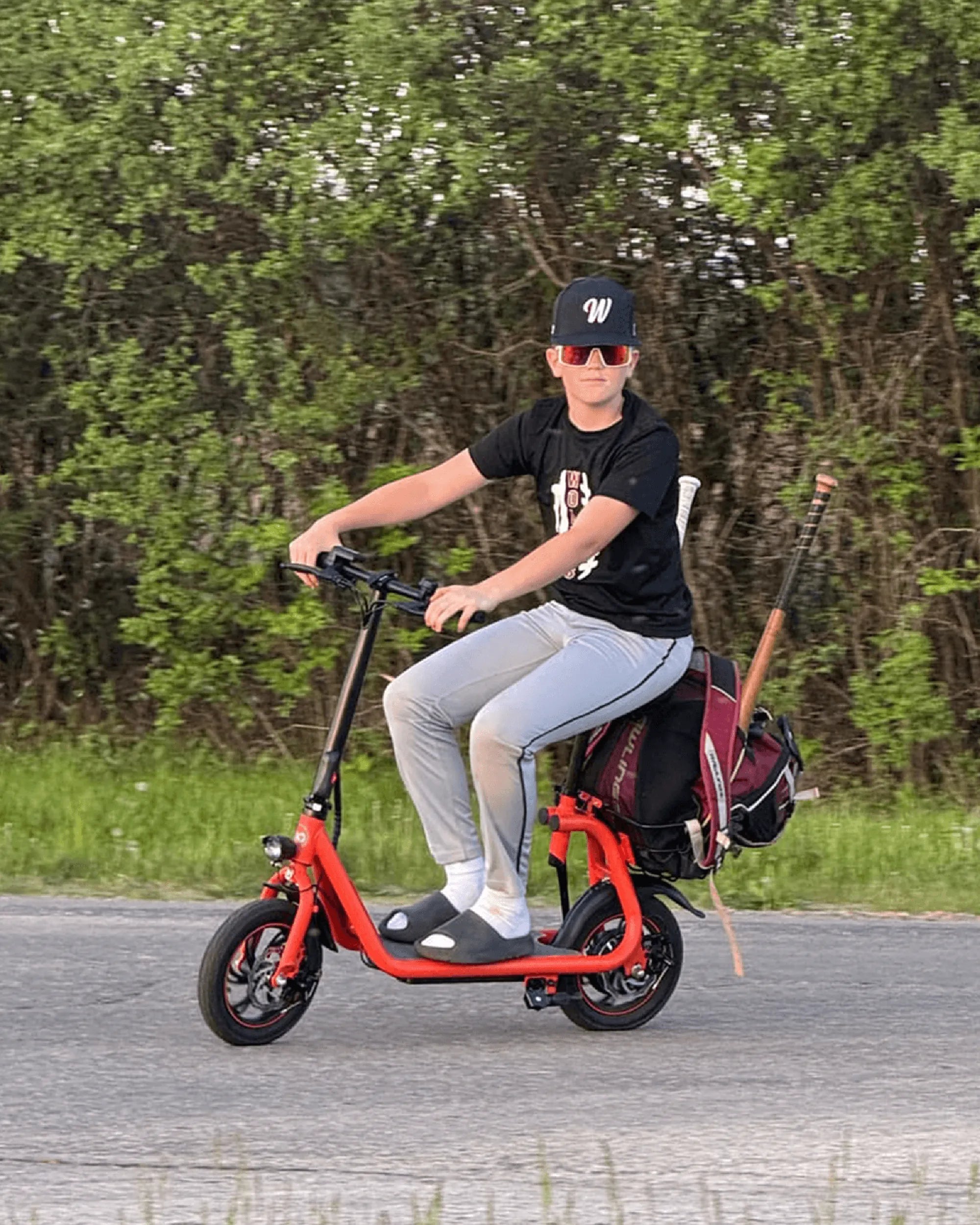
Redefining Urban Mobility with Stand-Up Electric Scooters
Urban transportation is undergoing a quiet revolution, driven by the need for efficiency, sustainability, and personal freedom. Stand up electric scooters for adults have emerged as a dominant force in this shift, offering a compelling answer to the chronic problems of traffic congestion, high costs, and environmental impact. This article will demonstrate how these personal electric vehicles (PEVs) are not just a trend but a legitimate, practical solution for the daily commuter. We will explore their advantages, break down the essential features for informed purchasing, and highlight why choosing a brand built on safety, like Gyroor, is paramount for adult riders who value reliability.
Why Adults Are Choosing Stand-Up E-Scooters Over Other Commute Options
The modern adult commuter evaluates transportation through a lens of cost, time, convenience, and personal impact. Stand up electric scooters for adults excel in this multi-variable equation. Compared to car ownership, which incurs fuel, insurance, parking, and maintenance costs averaging over $10,000 annually according to AAA, an e-scooter's operating cost is measured in cents per charge. Public transit offers reliability at the cost of inflexible schedules and crowded conditions, while traditional bicycles require significant physical exertion, arriving at work sweaty.
E-scooters bridge these gaps perfectly. They provide door-to-door convenience at speeds that match or exceed urban traffic flow, typically between 15-20 mph. They eliminate parking fees and the stress of finding a spot, as they can be folded and carried inside. Environmentally, their electric operation results in zero direct emissions, with a carbon footprint up to 90% lower per mile than a single-occupancy car when charged on a standard grid. For the adult seeking a rational, efficient, and enjoyable commute, the stand-up electric scooter presents an unmatched value proposition.
The Practical Advantages for the Daily Commuter
The daily grind of commuting is where stand up electric scooters for adults prove their worth. They transform the "first and last mile" problem—the distance from a transit stop to your final destination—into a seamless, sub-5-minute journey. This multi-modal capability makes buses and trains more viable. In dense traffic, a scooter's agility allows it to navigate stalled vehicles, effectively bypassing congestion that would trap a car.
The operational simplicity is key: a grab-and-go vehicle with no need for gas stations. Charging costs are minimal, often adding only a few dollars to a monthly electricity bill. The portability factor cannot be overstated; the ability to fold the scooter and bring it into an office, cafe, or apartment eliminates the risk of theft and the hassle of external locking. This combination of time savings, cost reduction, and sheer convenience makes the stand-up e-scooter a powerful tool for reclaiming time and reducing daily stress.
Beyond Commuting: Versatility for Errands and Leisure
The utility of a robust stand-up electric scooter extends far beyond the workday commute. It becomes a default vehicle for a wide range of urban activities. Quick trips to the grocery store, visiting friends across town, or exploring local parks and neighborhoods are all enhanced. For many urban dwellers, a significant portion of car trips are under three miles—a distance perfectly suited for e-scooter travel without the overhead of starting a car, finding parking, and paying associated fees.
This versatility positions the scooter as a partial car replacement, contributing to reduced household transportation costs. Leisure rides along bike paths or waterfronts offer a novel way to experience the city. The low barrier to use—simply step on and go—encourages more frequent short trips, promoting a more active and engaged lifestyle without the physical strain of a bicycle. A reliable scooter like those from Gyroor, with sufficient range and durability, thus becomes an integral part of an efficient urban lifestyle.
Key Features to Look for in an Adult Stand-Up Electric Scooter
Selecting the right stand up electric scooter for adults requires moving beyond marketing claims to evaluate tangible specifications that impact safety, performance, and longevity. Adult riders need a vehicle engineered for daily use, not a toy. The core checklist should prioritize motor power, battery quality, braking systems, build materials, and water resistance. Understanding these specs ensures your investment aligns with your commute's demands, whether it involves steep hills, wet conditions, or carrying a laptop bag.
Compromising on critical components like the battery or brakes to save on initial cost often leads to higher long-term expenses and safety risks. The following sections break down these features into non-negotiable safety elements and performance specs that should match your specific urban terrain. A brand's commitment to these areas, evidenced by certifications and warranty, is a direct indicator of product quality and rider-focused design.
Safety and Reliability: The Non-Negotiables
For adult riders, safety is the foremost concern. This begins with the braking system. A combination of electronic (e-brake) and mechanical braking (disc or drum) is ideal, providing redundancy. Regenerative braking can extend range slightly but should not be the sole braking method. Lighting is critical for visibility: a bright front headlight (200 lumens or more), a dedicated brake light, and side reflectors are essential for dawn, dusk, and night riding.
The most critical safety component is the battery. It must be UL 2271 certified. This independent certification tests the battery pack for electrical, mechanical, and environmental safety, drastically reducing the risk of thermal runaway and fire. Brands like Gyroor use only UL-certified battery packs, a non-negotiable standard for peace of mind. Finally, wheel size and type matter for stability. Larger wheels (8.5-10 inches) and pneumatic (air-filled) tires provide better shock absorption and handle cracks and bumps more safely than small, solid tires.
Performance Specs That Match Your Urban Terrain
Motor power, typically measured in watts (W), determines hill-climbing ability and acceleration. For most adults and moderate hills, a continuous motor rating of 350W is a minimum; 500W or more provides confident performance. Top speed is often regulated to 15-20 mph, which is appropriate for bike lanes and shared paths. The crucial metric is real-world range, which depends on battery capacity (measured in Watt-hours, Wh).
Manufacturer range claims are based on ideal conditions: a light rider on flat ground at low speed. A practical rule is to expect 70-80% of the advertised range. For a 15-mile advertised range, plan for 10-12 miles realistically, factoring in your weight, hills, stop-and-go traffic, and use of the throttle. If your commute is 5 miles one-way, a scooter with a 15-mile advertised range provides a comfortable buffer. Always choose a scooter with a range that exceeds your daily needs to account for battery degradation over time.
Build Quality and Durability for Daily Use
The scooter's frame must withstand daily stress. Aircraft-grade aluminum alloy is the standard for a strong yet lightweight frame. Check the maximum weight capacity; a rating of 220 lbs (100 kg) or higher indicates a robust build. The folding mechanism should feel solid and secure, with no wobble when locked open. Portability weight is a trade-off; models between 30-40 lbs offer a balance of stability and carry-ability.
Water resistance is rated via the IP (Ingress Protection) code. For reliable all-weather commuting, an IPX4 rating (protection from water splashes from any direction) is a good minimum. An IPX5 rating, like that found on Gyroor scooters, offers a higher standard, protecting against low-pressure water jets from a nozzle, making it resilient against rain and wet roads. This durability, backed by a comprehensive warranty (at least 1 year on the battery and motor), protects your investment and ensures long-term reliability.
Navigating Regulations and Riding Safely in the City
Responsible ownership of stand up electric scooters for adults requires understanding and adhering to local laws. Regulations vary significantly by city, county, and state. Common rules include age restrictions (often 16+), speed limits (frequently capped at 15-20 mph), and designated riding areas, which are usually bike lanes and roads with speed limits under 25-35 mph. Riding on sidewalks is prohibited in most urban areas due to pedestrian safety concerns. Some regions may require helmet use for all riders, while others mandate them only for minors.
It is the rider's responsibility to research local ordinances before riding. Beyond legality, safe riding practices are essential for sharing space with vehicles, cyclists, and pedestrians. Always assume you are invisible to drivers. Use hand signals for turns, obey all traffic signals, and never ride under the influence of alcohol or drugs. Defensive riding—anticipating car doors opening, cars turning, and pedestrians stepping into the path—is the key to accident prevention. Your scooter is a vehicle, and riding it requires the same alertness as driving a car.
Essential Gear and Pre-Ride Checks
Proper safety gear mitigates risk. A bicycle or multi-impact helmet is the single most important piece of equipment and should be worn on every ride. For added protection, consider gloves, elbow pads, and knee pads, especially when learning or riding in heavy traffic. High-visibility clothing or a reflective vest is crucial for low-light conditions. Investing in a quality bike lock is also wise if you must leave your scooter unattended, though bringing it inside is always the most secure option.
A quick pre-ride check takes 60 seconds and ensures mechanical safety. Follow this checklist: 1) Inspect tire pressure and look for punctures or excessive wear. 2) Test both brakes for firm responsiveness. 3) Ensure the folding mechanism is fully locked and the stem is secure with no play. 4) Check that front and rear lights are functioning. 5) Verify the throttle and bell/horn work. Performing this routine extends the life of your scooter and, more importantly, prevents failures while in motion.
Comparing Scooter Types for Different Urban Needs
Not all stand up electric scooters for adults are created equal. The right model depends on your primary use case, commute distance, and terrain. The market segments into commuter, performance, and ultra-portable categories. Commuter-focused models prioritize range, comfort, and water resistance for daily reliability. Performance models offer higher speeds and power for tackling steep hills. Ultra-portables sacrifice some range and power for exceptional lightness and foldability, ideal for combining with public transit.
| Category | Ideal Use Case | Typical Motor | Typical Range | Key Features | Trade-offs |
|---|---|---|---|---|---|
| Commuter/Daily Driver | Reliable 5-10 mile daily commute in all weather. | 350W - 500W | 15-25 miles | IPX4/5 water resistance, pneumatic tires, integrated lighting, robust build. | Heavier (35-45 lbs), less emphasis on top speed. |
| Performance/Hill Climber | Longer commutes or routes with significant hills. | 500W - 1000W+ | 20-40+ miles | Dual motors, dual suspension, large battery capacity, superior braking. | Heavy (50+ lbs), higher cost, reduced portability. |
| Ultra-Portable | Multi-modal commuting (bus/train + scooter), short errands. | 250W - 350W | 10-15 miles | Lightweight (under 30 lbs), fast folding, compact design. | Less power for hills, smaller wheels, shorter range, less stable. |
For the majority of adult urban commuters, a model from the Commuter/Daily Driver category offers the best balance of safety, comfort, and practicality for consistent, year-round use.
The Gyroor Difference: Engineered for Adult Rider Peace of Mind
When evaluating brands against the critical criteria outlined above, Gyroor stands out by designing specifically for the safety and reliability demands of adult commuters. This focus is evident in three core pillars: certified safety, all-weather durability, and protected investment. Every Gyroor scooter is powered by a UL 2271 certified battery pack, undergoing rigorous testing for over 500 charge cycles. This certification is not an optional upgrade but a foundational standard, directly addressing the paramount concern of battery fire safety.
Further, Gyroor builds its scooters to the IPX5 water-resistance standard. This engineering commitment means the scooter's electrical components are sealed against water jets, providing confidence when encountering rain-washed streets or unexpected puddles—a common reality of daily commuting. This durability is backed by a clear and reliable 1-year warranty on the scooter, with extended coverage on the battery. For an adult making a significant purchase, this warranty is not just a promise; it's a risk mitigation strategy, ensuring that the investment is protected against manufacturing defects. With over 100,000 riders trusting the brand across North America and Europe, Gyroor’s approach validates that safety and reliability are the true foundations of a superior riding experience.
Your Next Step Towards a Smarter Commute
The evidence is clear: stand up electric scooters for adults are a transformative solution for urban mobility. They offer a rational, efficient, and enjoyable alternative that saves time, reduces costs, and minimizes environmental impact. The key to a successful experience lies in informed selection—prioritizing safety certifications like UL 2271, demanding durable construction with proper IP ratings, and choosing a brand that stands behind its product with a strong warranty.
Assess your specific commute distance, terrain, and local laws. Match those needs to the scooter categories and features discussed. Remember, the cheapest option is often the most expensive in the long run when it compromises on critical safety components. Investing in a well-engineered scooter from a trusted manufacturer is an investment in your daily comfort, safety, and freedom. Take the next step in redefining your commute.
Frequently Asked Questions (FAQ)
Q: How far can I realistically travel on a single charge?
A: Real-world range is typically 70-80% of the manufacturer's advertised range. Advertised ranges are achieved under ideal laboratory conditions (light rider, flat terrain, constant low speed). For an accurate estimate, subtract 3-5 miles from the advertised range for a typical adult rider on an urban route with stops, starts, and mild inclines.
Q: Are stand-up electric scooters safe to ride in the rain?
A> Safety in rain depends on the scooter's IP water resistance rating. A rating of IPX4 or higher provides good protection against splashes from any direction. Gyroor's IPX5 rating offers even better protection against water jets. However, no consumer scooter is fully waterproof. Avoid deep puddles (which can submerge the deck and electronics) and heavy downpours. Always reduce speed, brake earlier, and be extra cautious on wet surfaces.
Q: What is the average cost of ownership beyond the purchase price?
A> Ongoing costs are minimal. Electricity for charging is negligible, often less than $20 per year. The main consumables are tires (pneumatic tires may need replacement every 500-1000 miles depending on use) and brake pads (every several hundred miles). Annual maintenance cost for a reliable scooter is typically under $50 if you perform basic checks yourself.
Q: Do I need a license, insurance, or registration to ride one?
A> Laws vary widely. In the vast majority of U.S. states and cities, stand-up e-scooters with top speeds under 20 mph are classified similarly to bicycles and do not require a driver's license, vehicle registration, or mandatory insurance. However, some municipalities may have their own rules. It is crucial to check the specific regulations in your city and state before riding.
Q: How important is the warranty, and what should it cover?
A> The warranty is a critical indicator of a brand's confidence in its product. A comprehensive warranty should cover at least one year for the entire scooter, with specific coverage for the battery and motor. A strong warranty, like Gyroor's 1-year coverage, protects your investment against defects in materials and workmanship. It is especially important for the battery, the scooter's most expensive and safety-critical component.
Ready to transform your urban commute? Browse the full collection of UL-certified, IPX5-rated stand-up electric scooters engineered for adult riders at gyroorboard.com. Discover the Gyroor difference—where safety, durability, and performance are built into every ride.
Sit Down Electric Scooters: The Ultimate Guide
Best Locks for Electric Scooters: Secure Your Ride with Top Picks