



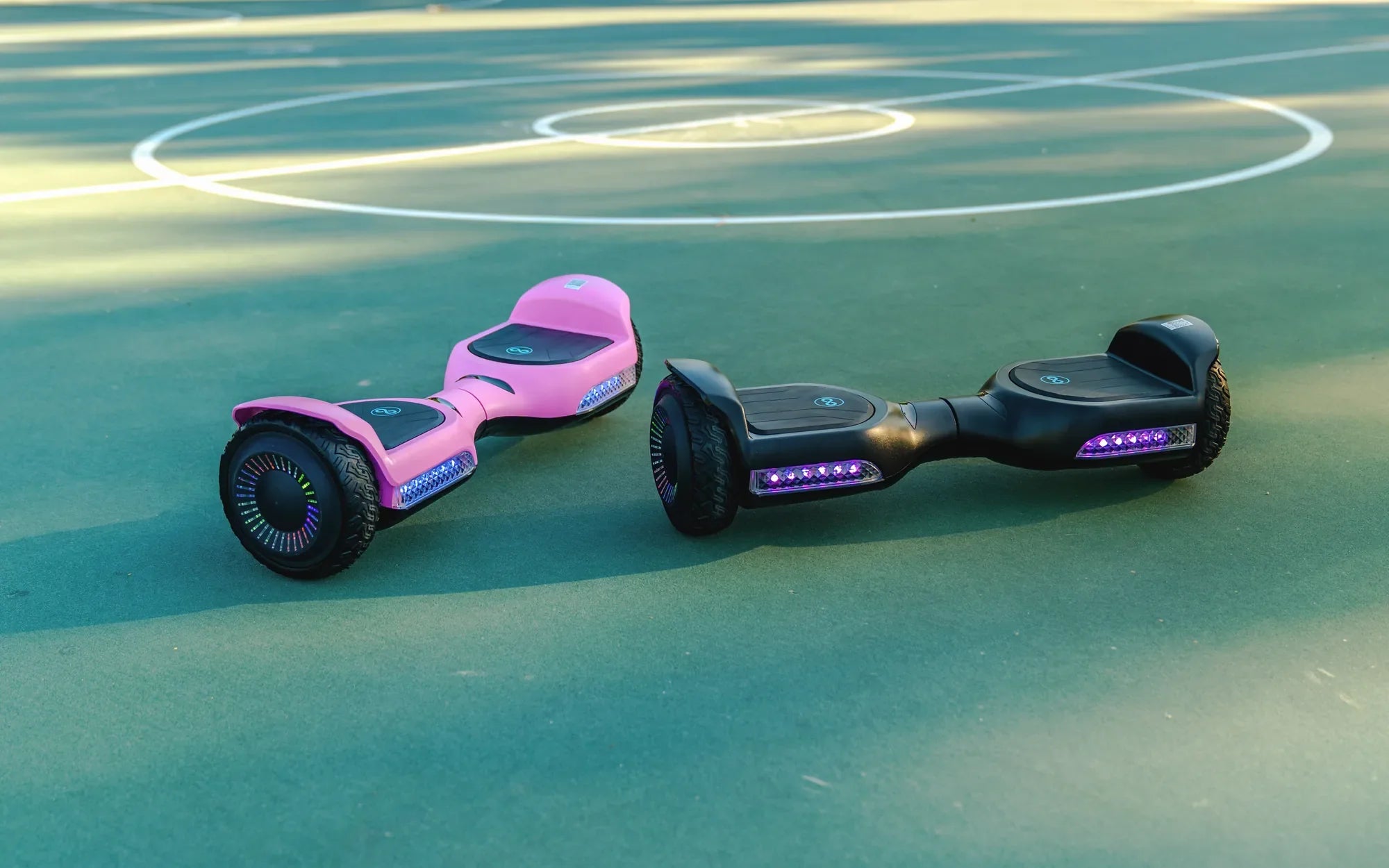
The self balancing scooter is no longer a futuristic concept; it's a practical, efficient, and exhilarating reality transforming how we navigate our cities and communities. This article will provide a comprehensive analysis of this technology, from the fundamental gyroscopic principles that make it work to the critical safety features you must consider. You will learn how to evaluate specifications, understand where it fits within the broader micro-mobility landscape, and discover the best practices for safe and effective riding. By the end, you'll have a clear, data-driven understanding of why the self balancing scooter represents a genuine revolution in personal transportation.
Introduction to the Self-Balancing Scooter Phenomenon
A self-balancing scooter, commonly referred to as a hoverboard or electric unicycle, is a two-wheeled, battery-powered personal transporter. It uses a combination of gyroscopic sensors, accelerometers, and microprocessors to automatically maintain balance based on the rider's subtle weight shifts. This core technology has propelled the device from a niche gadget to a legitimate tool for urban commuters, students, and recreational enthusiasts seeking an eco-friendly alternative to short car trips.
The journey began with high-profile prototypes and early consumer models that captured public imagination, albeit with initial safety concerns. Today, the market has matured significantly. Reputable brands have implemented rigorous safety standards, improved battery technology, and enhanced durability. The result is a reliable form of micro-mobility that addresses last-mile connectivity challenges, reduces traffic congestion, and offers a unique blend of utility and fun.
The appeal is multifaceted. For the urban dweller, it's a compact commute solution that can be carried onto public transit or stored under a desk. For the environmentally conscious, it's a zero-emission travel mode. And for the tech enthusiast, it represents an elegant application of sensor fusion and control theory. The self balancing scooter has successfully transitioned from a novelty to a viable component of the modern transportation ecosystem.
This revolution is backed by growing adoption. Industry reports indicate sustained growth in the personal electric vehicle market, with self-balancing devices holding a significant share. Their compact form factor, intuitive (once learned) operation, and relatively low operating cost make them an attractive proposition in dense urban environments where space and efficiency are paramount.
The Gyroscopic Technology Behind the Ride
At the heart of every self balancing scooter is a set of gyroscopic sensors and inertial measurement units (IMUs). These components act as the device's "inner ear," constantly measuring its orientation, tilt, and angular velocity. This data is fed to a central microprocessor hundreds of times per second. When you lean forward, the sensors detect the change in the tilt angle almost instantly.
The microprocessor then calculates the precise amount of power needed to drive the electric motors in each wheel to counteract the lean and propel you forward. Leaning back commands deceleration or reverse. This creates a closed-loop control system where your body's movements are the primary input, and the scooter's motors are the output. The technology effectively translates intuitive lean-to-steer commands into smooth, responsive motion.
This gyroscopic stabilization is what differentiates it from traditional scooters or bikes, which require active balancing by the rider. While there is a learning curve—typically 30 minutes to an hour for basic proficiency—the machine does the fundamental balancing work. This allows riders to focus on direction and navigation rather than constantly correcting for stability, making it accessible to a wide range of users.
The sophistication of this system cannot be understated. Advanced models feature multiple redundant sensors to ensure safety if one fails. The software algorithms that process this sensor data are complex, managing not just balance but also torque distribution between wheels for smooth turns and stability on inclines. This seamless integration of hardware and software is what delivers the characteristic "magic carpet" feel of a well-tuned self balancing scooter.
Key Features and Specifications to Consider
Choosing the right model requires careful evaluation of its specifications, which directly impact performance, safety, and suitability for your needs. Motor power, typically ranging from 250W to 1000W per wheel, determines torque, hill-climbing ability, and acceleration. Higher wattage is crucial for heavier riders or tackling steeper gradients.
Battery capacity, measured in watt-hours (Wh), is the single biggest factor determining range. A 300Wh battery might offer 10-12 miles, while a 600Wh+ battery can extend that to 20-25 miles under ideal conditions. Always consider real-world range, which is affected by rider weight, terrain, temperature, and riding style. Charging time is another key metric, usually between 2 to 5 hours for a full charge.
Top speed is often capped between 10 to 15 mph for safety and regulatory reasons, though some performance models may go higher. Weight capacity is a firm limit; exceeding it strains the motors and battery, reducing performance and safety. Tire type is critical: solid rubber tires are puncture-proof but offer a harsher ride, while air-filled (pneumatic) tires provide better shock absorption and traction, especially on uneven surfaces.
Other vital features include the deck material for grip, the brightness of LED headlights and taillights for visibility, and built-in speakers or Bluetooth connectivity for app pairing. The learning curve, while manageable, varies. Some models offer beginner modes that limit speed for easier initial practice. Ultimately, matching these specifications to your primary use case—be it a smooth commute, off-road adventure, or casual neighborhood cruising—is essential for satisfaction.
Why UL-Certification and IP Ratings Matter (A Gyroor Priority)
Safety is the non-negotiable foundation of this revolution. UL (Underwriters Laboratories) certification for the battery pack is the most critical safety benchmark. It verifies that the lithium-ion battery has passed rigorous tests for electrical, mechanical, and environmental safety, drastically reducing the risk of thermal runaway, fire, or explosion. Never compromise on this.
Ingress Protection (IP) ratings indicate a device's resistance to dust and water. An IPX5 rating, which all Gyroor models carry, means the scooter can withstand water jets from any direction. This makes it resilient against puddles, wet roads, and light rain, transforming it from a fair-weather toy into a practical daily commuter. This durability is a hallmark of a serious transportation tool.
Investing in a brand that prioritizes these certifications is investing in long-term reliability and peace of mind. Gyroor, as a leading electric scooter and e-bike brand trusted by over 100,000 riders, builds every model around this principle. Their use of UL-certified battery packs tested for 500+ charge cycles and IPX5 water-resistant designs ensures the product is built to last and perform safely in real-world conditions.
Beyond the battery, build quality matters. A robust frame, secure wiring harnesses, and quality control in manufacturing prevent mechanical failures. A reputable brand like Gyroor supports this with a reliable 1-year warranty, providing a safety net for the consumer. These features collectively elevate a self balancing scooter from a risky novelty to a dependable piece of personal transportation technology.
Comparing Self-Balancing Scooters to Other E-Mobility Options
To understand the unique value proposition of the self balancing scooter, it's helpful to compare it directly with other popular electric micro-mobility devices: the electric kick scooter and the electric bicycle. Each has distinct advantages tailored to different user needs and scenarios.
| Feature | Self-Balancing Scooter (Hoverboard) | Electric Kick Scooter | Electric Bicycle (E-Bike) |
|---|---|---|---|
| Portability & Storage | Very high. Compact, can be carried easily. Fits under desks. | Moderate to High. Many are foldable, but larger when folded. | Low. Bulky, requires bike rack or significant space. |
| Learning Curve | Moderate (30-60 mins). Requires balance practice. | Low. Most people can ride immediately. | Very Low (if you can ride a bike). |
| Terrain Handling | Good on smooth surfaces. All-terrain models with large tires handle grass, dirt. | Fair. Small wheels struggle with cracks and rough pavement. | Excellent. Handles most terrains, especially with wider tires. |
| Regulation & Law | Often unclear; typically treated like pedestrians on sidewalks or banned in some areas. | Evolving; often allowed in bike lanes, sometimes with speed limits. | Clear. Generally treated as bicycles with defined rules for pedal-assist vs. throttle. |
| Ideal Use Case | Last-mile commute, campus mobility, recreational cruising, indoor use (malls, warehouses). | Medium-distance urban commutes (3-10 miles), bike lane travel. | Longer commutes (10+ miles), cargo carrying, hilly terrain, replacing car trips. |
| Physical Exertion | Very low. Standing balance only. | Low. Some kicking may be required. | Adjustable (Pedal-assist). Can provide exercise or full electric power. |
The self balancing scooter excels in ultra-portability and its unique, intuitive control scheme. It is the most compact and easiest to store and carry among the three, making it ideal for multi-modal commutes involving buses or trains. Its standing-only operation requires minimal physical exertion.
However, electric kick scooters often have a lower initial learning barrier and may be more explicitly permitted in bike lanes. E-bikes are the clear winners for longer distances, cargo capacity, and a more familiar, regulated riding experience. The choice ultimately hinges on your specific commute distance, storage options, local laws, and personal preference for riding style.
Practical Applications: Who Are They For?
The versatility of the self balancing scooter has led to adoption across diverse user groups. Urban commuters are a primary demographic. For those facing the "last-mile problem"—the distance between a transit stop and their final destination—a hoverboard is a perfect solution. It's fast enough to cover the gap quickly and compact enough to carry on a bus or train without issue.
College and university campuses are ideal environments for this technology. The compact size allows for easy navigation through crowded quads and pathways, and storage in dorm rooms or under lecture hall seats is simple. It provides a efficient way to get from one end of a large campus to the other without breaking a sweat.
Recreational riders and off-road enthusiasts form another significant segment. All-terrain models equipped with large, rugged pneumatic tires open up new possibilities, allowing riders to explore park trails, grassy fields, and gravel paths. This transforms the device from an urban tool into a weekend adventure vehicle, offering a unique way to experience the outdoors.
Finally, eco-conscious individuals and families are increasingly turning to electric micro-mobility. Replacing short car trips to the local store, coffee shop, or friend's house with a zero-direct-emission ride reduces one's carbon footprint and local air pollution. It also promotes a more active, engaged relationship with one's immediate neighborhood, all while being a genuinely enjoyable mode of travel.
Safety, Regulations, and Riding Best Practices
Responsible riding begins with knowing and obeying local laws. Regulations for self-balancing scooters vary widely by city, state, and country. Some jurisdictions treat them as pedestrians, restricting them to sidewalks. Others classify them similarly to electric scooters, permitting use in bike lanes. Some areas ban them from public roads and sidewalks entirely. Always check your local Department of Transportation or city council website for the most current rules.
Personal protective equipment (PPE) is non-optional. A properly fitted bicycle or multi-sport helmet is the minimum requirement. Wrist guards are highly recommended, as falls often involve instinctive bracing with hands. Knee and elbow pads provide additional protection, especially for beginners. High-visibility clothing or accessories are crucial for riding at dawn, dusk, or night.
Develop a consistent pre-ride checklist. Inspect tires for wear and proper inflation (if pneumatic). Check that the deck is clean and dry for good footing. Ensure the battery is adequately charged. Listen for any unusual sounds from the motors or wheels. Practice mounting and dismounting in a safe, open area until it becomes second nature, always stepping off backwards with one foot first.
When riding, maintain a defensive posture. Assume drivers and pedestrians may not see you. Avoid high-traffic roads. Be extra cautious on wet surfaces, metal grates, and sandy patches, as traction can be reduced. Never exceed the posted weight limit. Start slowly in beginner mode to build confidence. By internalizing these practices, you transform riding from a risky activity into a safe, sustainable habit.
FAQ: Your Self-Balancing Scooter Questions Answered
Q: How long does it take to learn to ride a self-balancing scooter?
A: Most adults can achieve basic proficiency—straight-line riding and gentle turns—within 30 to 60 minutes of practice in a safe, open area. Mastery of sharper turns, pivots, and handling different terrains may take a few days of regular use. Using a model with a beginner/slow mode is highly recommended for the first few sessions.
Q: Can it get wet? What about riding in the rain?
A> This depends entirely on the IP rating. A model with an IPX5 rating, like those from Gyroor, is designed to withstand water jets and is safe to ride through puddles and in light rain. However, no consumer model is submersible. Avoid deep puddles, heavy downpours, and always dry the unit after riding in wet conditions. Models without a stated water resistance rating should be kept completely dry.
Q: What is the average real-world range I can expect?
A> Range is highly variable. While manufacturers advertise maximum range under ideal conditions (light rider, flat terrain, slow speed), a good rule of thumb is to expect 60-70% of the advertised figure. For a common 300Wh battery, expect 8-12 miles. Rider weight, hills, wind, temperature, and riding style (frequent acceleration) all significantly impact range. Larger batteries (500Wh+) can provide 15-25 miles of real-world use.
Q: Are they allowed on public transportation like buses or trains?
A> Policies vary by transit authority. Many systems allow them if they are carried and do not obstruct aisles, similar to a folded bicycle or stroller. It is always best practice to check the specific rules of your local bus, subway, or train operator. When in doubt, carry it in a protective bag to keep wheels and handles from contacting others.
Q: How does Gyroor's 1-year warranty and customer support benefit me?
A> A comprehensive warranty is a hallmark of a reputable brand. Gyroor's 1-year warranty covers defects in materials and workmanship, providing significant peace of mind. This, combined with their support for over 100,000 riders in North America and Europe, means you have access to technical assistance, genuine replacement parts, and a company invested in your long-term satisfaction. It protects your investment far beyond the point of sale.
The Future of Self-Balancing Personal Transport
The evolution of the self balancing scooter is far from over. The integration of smart connectivity is a clear trend. Future models will feature deeper app integration for ride statistics, firmware updates, customizable performance profiles (e.g., eco, sport, beginner modes), and anti-theft tracking via GPS or Bluetooth. This connectivity turns the device into a data-rich node in the Internet of Things.
Battery technology is poised for continued improvement. While lithium-ion remains dominant, advancements in energy density will allow for longer ranges without increasing size or weight. Faster charging technologies will reduce downtime. Furthermore, the adoption of even more robust battery management systems (BMS) will enhance safety and battery lifespan, making the devices more reliable and cost-effective over time.
Advanced safety and assistance features are on the horizon. We can expect to see more sophisticated sensor suites, potentially including simple cameras or radar for obstacle detection and automatic emergency braking. Enhanced stability control algorithms will make riding even smoother on uneven terrain. These developments will lower the learning curve further and make the technology accessible to an even broader audience.
Finally, the role of self-balancing devices within broader urban transport ecosystems will likely expand. As cities formalize regulations and integrate micro-mobility into their infrastructure plans, we may see dedicated lanes or parking/storage solutions. They could become a staple in shared mobility fleets alongside e-scooters and e-bikes. The self balancing scooter is set to become a more intelligent, safer, and more integrated part of our daily mobility fabric.
Finding Your Balance in a Mobile World
The self balancing scooter has unequivocally revolutionized personal transportation by offering a unique synthesis of compact design, intuitive control, and eco-friendly operation. It solves real-world problems like the last-mile commute and campus mobility while delivering a genuine sense of fun. The technology, rooted in sophisticated gyroscopic stabilization, has matured into a safe and reliable platform when built to proper standards.
Success with this technology hinges on informed selection and responsible use. Prioritizing UL-certified batteries, meaningful water resistance (IPX5 or higher), and a robust warranty from a trusted brand is not just a recommendation—it's a prerequisite for safety and durability. The comparison with other e-mobility options clearly defines its niche: supreme portability and a unique riding experience.
As urban landscapes evolve and the demand for efficient, sustainable transit grows, the role of devices like the self balancing scooter will only become more prominent. By choosing a well-engineered product and adhering to safety best practices, you are not just buying a gadget; you are investing in a smarter, more flexible way to move through your world.
Ready to experience this revolution for yourself? Explore a range of models built with the safety and reliability that modern riders demand. Browse the full Gyroor collection, featuring UL-certified batteries, IPX5 water-resistant designs, and the backing of a 1-year warranty, at gyroorboard.com.
Electric Scooter for Kids 25 mph: The Ultimate Guide for Parents
Electric Scooter for Kids 25 mph: The Ultimate Guide for Parents