

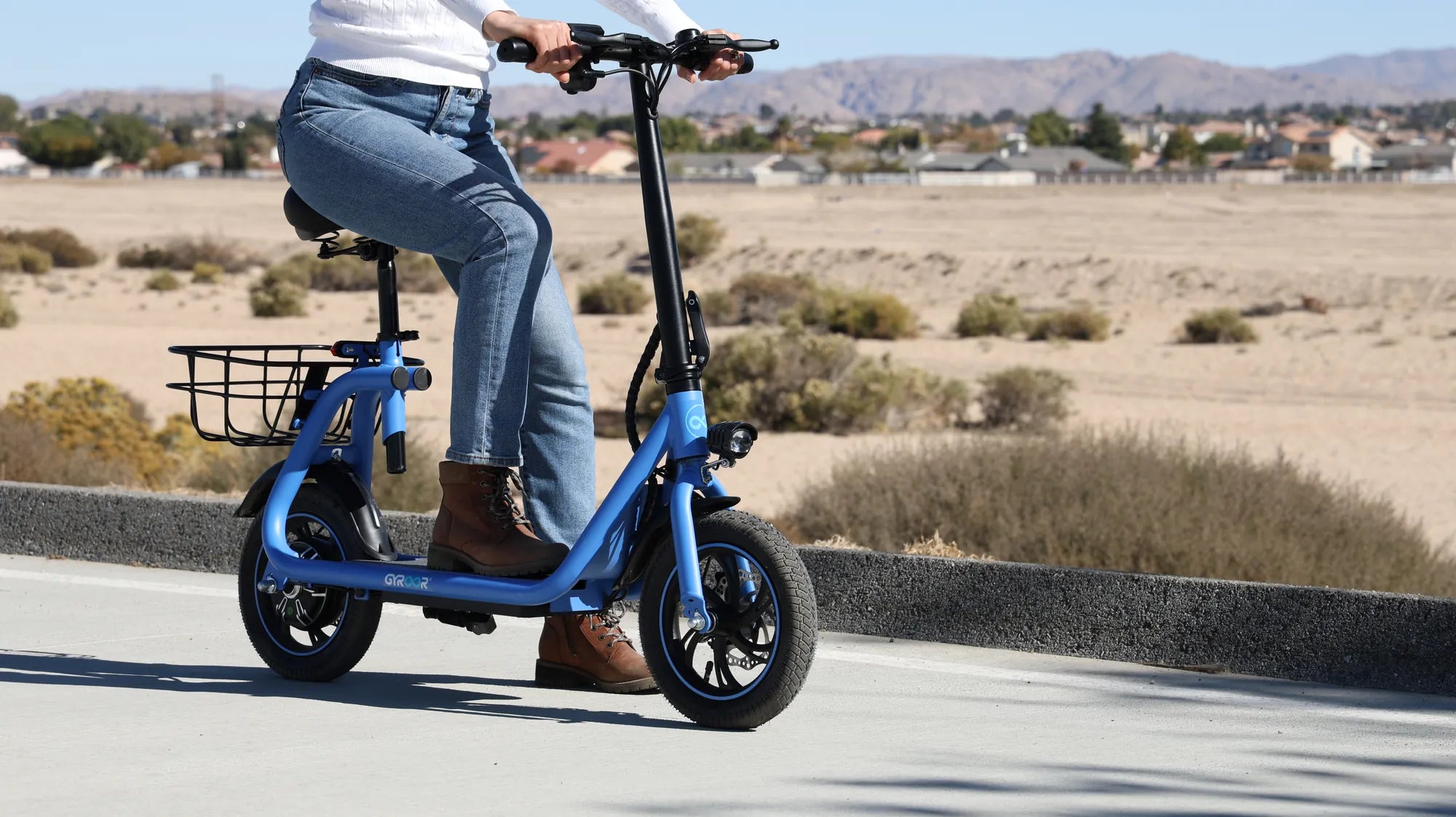
Forget the wobbly first ride. The modern three scooter represents a fundamental redesign of personal electric mobility, engineered for confidence from the very first push of the throttle. This guide cuts through the hype to deliver a factual, data-driven analysis of three-wheel electric scooters. You will learn which riders benefit most from this stable platform, understand the engineering trade-offs compared to traditional models, and discover how to select a reliable model built with certified safety components for long-term daily use.
Introduction to Three-Wheel Scooters: Redefining Stable Mobility
A three-wheel electric scooter, commonly called a three scooter, features a configuration with either two wheels at the front and one at the rear, or one at the front and two at the rear. This triangular footprint is the core of its design philosophy, shifting the priority from maximum agility to inherent stability. The design is a direct response to the primary barrier for many potential riders: the fear of falling. For urban commuters, older adults, and those with balance concerns, this configuration is not a niche product but a practical gateway to efficient, car-alternative transportation.
The market for these vehicles has matured significantly. Early models often compromised on power or range, but contemporary three scooter designs integrate high-capacity batteries, robust motors, and advanced braking systems without sacrificing their foundational stability. Brands like Gyroor have leveraged this design to create vehicles that meet stringent safety standards, appealing to a broad demographic seeking reliability. The evolution signals a clear trend: electric mobility is expanding to be inclusive, safe, and adaptable to real-world urban conditions beyond the ideal smooth pavement.
Who is the Three-Wheel Scooter Designed For? Identifying the Core User
The three scooter is engineered for specific user profiles where stability is the paramount concern, not an optional extra. The primary beneficiary is the new or inexperienced rider. The reduced need to master dynamic balance allows a beginner to focus on fundamental skills: throttle modulation, brake control, and road awareness. This can shorten the learning process from days or weeks to mere hours, building confidence rapidly and safely.
Another key demographic is the pragmatic urban commuter. Navigating stop-and-go traffic, wet manhole covers, cracked pavement, and tram tracks on a traditional scooter requires constant micro-adjustments. A three scooter provides a planted, predictable ride in these variable conditions, reducing cognitive load and fatigue. The stability is particularly valuable when carrying items like a laptop bag or groceries, as the scooter is less susceptible to weight-shift-induced wobbles.
Urban Commuters Seeking Unshakeable Confidence
For the daily commuter, a three scooter transforms the journey. The dual-front-wheel configuration, in particular, offers superior stability during braking—a critical moment when weight shifts forward. This design prevents the front wheel from washing out or the scooter from tipping, a common concern when braking on painted road lines or gravel. It makes navigating through crowded bike lanes and coming to smooth stops at traffic lights a more assured experience.
Furthermore, the enhanced stability directly contributes to safety in adverse conditions. While no scoter should be ridden through deep puddles, a three scooter with a proper water-resistance rating (like the IPX5 standard found on Gyroor models) handles wet roads and light rain with more composure. The three-point contact patch better manages slick surfaces, providing the rider with greater control where a two-wheel scooter might feel skittish.
Riders with Balance or Mobility Considerations
This category extends beyond age. It includes individuals recovering from injury, those with inner ear conditions affecting balance, or anyone who simply lacks the confidence for a two-wheeled vehicle. The three scooter acts as an accessibility tool, offering a form of independent, efficient mobility that might otherwise be inaccessible. The ability to start and stop without putting a foot down for balance (on some models) can be a significant benefit.
The design philosophy is inclusive. By lowering the physical skill barrier to entry, three-wheel scooters democratize personal electric transportation. They enable a wider population to participate in micro-mobility, reducing car dependency for short trips. This aligns with broader urban planning goals and provides tangible freedom to individuals who value stability as a non-negotiable feature.
Key Advantages of Three-Wheel Scooters: A Data-Driven Breakdown
The benefits of a three scooter are quantifiable and directly linked to its mechanical design. The most significant advantage is a drastic reduction in the static and dynamic tipping risk. A two-wheel scooter is inherently unstable at rest and requires constant balance in motion. A three-wheel design provides immediate static stability when stationary and a vastly more forgiving dynamic stability envelope, especially at lower, urban-appropriate speeds.
This translates to measurable safety metrics. The risk of a low-side fall (the scooter sliding out from under the rider) during low-speed turns is minimized due to the wider effective wheelbase. Similarly, the risk of a high-side fall (being thrown over the handlebars) during hard braking is reduced as the deceleration force is distributed across a more stable platform. For families or individuals prioritizing safety above all, this engineering benefit is the primary selling point.
Unmatched Stability and Safety Metrics
The stability is rooted in physics. The triangular contact patch creates a larger "stability polygon." As long as the rider's center of gravity remains within this polygon, the scooter will not tip. This polygon is significantly larger than the virtual line between the two contact points of a traditional scooter. This is why mounting, dismounting, and slow-speed maneuvering—moments of high instability on two wheels—feel secure and natural on a three scooter.
This design also enhances control during evasive maneuvers. When encountering an unexpected obstacle like a pothole, a two-wheel scooter can be deflected sharply. A three scooter, with one wheel potentially tracking a different path, can absorb the irregularity with less dramatic steering input required from the rider, maintaining a straighter, more controlled trajectory.
Accelerated Learning Curve and Riding Confidence
The learning curve is not just shorter; it's fundamentally different. A new rider on a two-wheel scooter spends 80% of their mental energy on balance. On a three scooter, that energy is freed up and can be allocated to developing critical riding habits: scanning the road ahead, signaling intentions, understanding traffic flow, and practicing smooth acceleration and braking. This leads to the development of safer, more aware riders from the outset.
This confidence has a compounding effect. A rider who feels secure is more likely to use the scooter regularly for practical trips, maximizing its utility and the investment. It removes the anxiety that often accompanies a new mode of transport, transforming the scooter from a recreational novelty into a trusted daily tool. Brands focused on reliability, like Gyroor, build on this confidence by ensuring their vehicles are backed by robust warranties and certified safety components.
Potential Trade-offs: The Realities of Three-Wheel Design
Choosing a three scooter involves accepting specific engineering compromises. The most notable trade-off is in agility and maneuverability. The same wide wheelbase that provides stability makes the scooter less nimble for sharp, last-second turns. The turning radius is typically larger, requiring more planning when navigating tight spaces like crowded bike racks or narrow pathways.
Portability is another consideration. The frame required to support the three-wheel configuration, along with the extra wheel and related hardware, often results in a heavier and sometimes bulkier scooter compared to a two-wheel counterpart with similar performance specs. This can impact the ease of carrying it up stairs, loading it into a car trunk, or storing it in a cramped apartment.
Maneuverability and Portability in Detail
Cornering dynamics differ significantly. On a two-wheel scooter, a rider leans into a turn. On many three scooter models, especially those with a rigid rear axle connecting two wheels, the scooter must turn more like a car, using handlebar steering without significant lean. This can feel less intuitive to riders accustomed to bicycles or two-wheel scooters and requires slightly more space to execute turns at the same speed.
The weight and size factor directly impacts the multi-modal commuter. If your commute involves carrying the scooter onto a bus or train, the added heft of a three-wheel model can be a serious drawback. It's crucial to check the folded dimensions and weight specifications before purchasing. While some three-wheel models are designed with folding mechanisms, they rarely achieve the ultra-compact form of the most portable two-wheel commuter scooters.
Speed and Terrain Limitations
Most three scooter models are engineered with a stability-first mindset, which often correlates with moderate top speeds. While high-performance three-wheel models exist, the market majority prioritizes controlled, safe speeds in the 15-20 mph (24-32 km/h) range. This is perfectly adequate for urban commuting but may disappoint riders seeking thrill-oriented performance.
Terrain handling is also more specialized. The stable platform excels on paved surfaces. However, the fixed rear axle on many models means that if one rear wheel hits a significant bump or curb, the entire rear end is affected. They are generally not designed for off-road trails, loose gravel, or sand. Tire choice is also critical; while pneumatic (air-filled) tires on all three wheels improve comfort, they are essential for maintaining grip and stability across varied pavement quality.
Choosing the Right Three-Wheel Scooter: A Gyroor-Inspired Checklist
Selecting a quality three scooter requires scrutiny beyond the wheel count. The foundation of a safe and durable vehicle lies in its core components. A buyer's first question should be about battery certification. A UL-certified battery pack, like those used across Gyroor's lineup, is non-negotiable. It signifies the battery has passed rigorous independent testing for electrical, mechanical, and fire safety, offering peace of mind for both home charging and long-term reliability over hundreds of charge cycles.
Next, evaluate the build quality for real-world use. An IP water-resistance rating is crucial for a vehicle exposed to the elements. An IPX5 rating, a standard for Gyroor scooters, means the scooter can withstand water jets from any direction, making it safe to ride in the rain and through urban puddles. Finally, a strong warranty is a direct reflection of the manufacturer's confidence. A comprehensive 1-year warranty on the frame, motor, and electronics protects your investment and indicates a brand that stands behind its engineering.
Prioritizing Safety with Certified Components
The battery is the heart of the scooter and its greatest potential hazard if poorly made. UL certification (from Underwriters Laboratories) involves stress testing beyond normal operation, including overcharge, short circuit, and crush tests. This is the benchmark for safety. Gyroor's commitment to using UL-certified battery packs in its models, which have been trusted by over 100,000 riders, sets a clear industry standard that informed buyers should demand.
Braking system design is equally critical on a stable platform. A three scooter that can accelerate confidently must also decelerate with control. Look for a combination of braking systems, such as electronic (regenerative) braking paired with a mechanical disc or drum brake. This provides redundancy and effective stopping power in all conditions, leveraging the stable chassis to prevent skidding or loss of control.
Ensuring Durability for the Long Haul
Daily commuting subjects a scooter to constant vibration, impacts, and weather. Frame construction material is key. Aircraft-grade aluminum alloys offer an optimal balance of strength and weight. Check the maximum rider weight capacity; a higher limit (e.g., 265 lbs / 120 kg or more) often indicates a more robust frame and suspension system built to handle stress over time.
Maintenance should also factor into your decision. Models with sealed bearings, tubeless tires (or solid tires if you prioritize puncture resistance over comfort), and minimal exposed cabling will require less frequent upkeep. A brand with a proven track record of customer support and available replacement parts, like Gyroor with its established presence in North America and Europe, ensures your scooter remains functional for years, not just months.
Three-Wheel Scooter vs. Two-Wheel Scooter: A Feature Comparison
| Feature | Three-Wheel Scooter | Two-Wheel Scooter |
|---|---|---|
| Primary Strength | Inherent Stability & Safety | Agility & Portability |
| Learning Curve | Short & Easy; focus on control | Steeper; requires balance mastery |
| Low-Speed Maneuverability | Excellent (straight line, mounting) | Good (requires more skill) |
| High-Speed Cornering | Stable but wider turning radius | Nimble; can lean into turns |
| Typical Weight | Heavier (due to extra wheel/frame) | Lighter, more compact designs |
| Ideal User Profile | Beginners, commuters, stability-focused riders | Experienced riders, multi-modal commuters |
| Best Use Case | Predictable urban commutes, paved paths | Crowded cities, mixed transport, carrying indoors |
Three-Wheel Scooter FAQs: Your Questions Answered
Q: Are three-wheel scooters significantly slower than two-wheel ones?
A: Not necessarily. Top speed is determined by motor power and electronic limiters, not just wheel count. Many three-wheel models match the speed of commuter-focused two-wheel scooters (15-20 mph). However, high-performance racing scooters are almost exclusively two-wheeled due to agility requirements.
Q: Can children ride three-wheel electric scooters?
A>It depends entirely on the specific model's specifications, including speed settings, deck size, and recommended age range. Some three-wheel models are designed for teens and adults due to power and size. Always adhere to the manufacturer's age and weight guidelines and ensure children wear full safety gear and receive supervision.
Q: How do three-wheel scooters handle hills?
A>Hill-climbing ability is a function of motor torque and wheel traction. A three-wheel scooter with a powerful motor (e.g., 500W continuous or more) and pneumatic tires can handle moderate hills effectively. The stable platform can provide more confident traction on inclines compared to a two-wheeler where weight distribution is more critical.
Q: Where is it legal to ride a three-wheel electric scooter?
A>Laws vary by city, state, and country. Typically, they are regulated similarly to other electric scooters: allowed on bike lanes and roads with speed limits under 25-35 mph, and often prohibited on sidewalks. It is the rider's responsibility to check local regulations regarding speed limits, helmet laws, and permitted riding areas before use.
Q: Do three-wheel scooters require more maintenance?
A>They have one more wheel bearing and tire to maintain, which is a minor increase. The core maintenance—checking brakes, tire pressure, and battery care—is identical. Choosing a model with solid tires eliminates puncture repairs, while models with high-quality sealed components minimize routine upkeep.
Final Verdict: Is a Three-Wheel Scooter Your Ideal Ride?
The decision hinges on a clear hierarchy of needs. If your top priorities are stability, safety, and a confidence-inspiring ride for daily commuting on paved surfaces, a modern three scooter is an outstanding choice. It is the definitive tool for new riders, those with balance considerations, and anyone who wants to navigate urban terrain without the anxiety of a potential tip-over. The design delivers on its core promise of secure, accessible mobility.
Conversely, if your commute involves frequent carrying onto public transit, navigating extremely tight spaces, or you prioritize the agile, sporty feel of leaning into corners, a high-quality two-wheel scooter may better suit your lifestyle. The trade-off in stability is exchanged for greater portability and maneuverability.
For those aligned with the stability mission of the three-wheel design, the next step is selecting a model built to last. Prioritize brands that invest in foundational safety with UL-certified batteries, weather-ready construction with IPX5 or higher ratings, and strong customer warranties. This approach ensures your three scooter is a reliable long-term investment, not a disposable gadget. Discover a range of thoughtfully engineered electric mobility solutions designed with safety and reliability as core principles.
Browse the full Gyroor collection at gyroorboard.com to explore models that combine stable three-wheel designs with certified safety features and robust performance for your everyday journey.
Dirt Bike Riding Season: Your Complete Guide to Timing, Prep & Trails
65 Inch Scooter Tires: The Complete Guide to Size, Performance & Reality