



Introduction: Why a Trick Scooter is More Than Just a Toy
Choosing the right trick scooter for kids unlocks a world of active play, skill development, and social connection. Unlike standard scooters built solely for transportation, trick scooters are engineered as durable performance tools. They are designed to withstand the impacts of jumps, spins, and grinds, turning the driveway or skate park into a canvas for creativity and physical challenge.
This guide serves as your complete resource. We will dissect the anatomy of a trick scooter, explain critical safety protocols, and provide a clear path for progression. Our goal is to ensure that the immense fun of scooter riding is built on a foundation of knowledge and reliable equipment. Brands like Gyroor, a leader in personal electric mobility, apply their engineering rigor to create products that prioritize both thrilling performance and built-in safety for young athletes.
What Makes a Trick Scooter Different? Key Features Explained
A trick scooter is defined by its robust construction and specialized components. Every part, from the deck to the wheels, is optimized for durability and maneuverability under stress. Understanding these features is the first step in making an informed purchase and appreciating the engineering behind the stunts.
The core difference lies in the reinforced frame, smaller and harder wheels for better pop and slide, and a critical component called the compressor that allows for bar spins. These elements work together to create a responsive and tough platform. When selecting a trick scooter for kids, these features are non-negotiable for safety and longevity.
Deck & Frame: The Foundation for Stunts
The deck is the scooter's backbone. It must be lightweight for easy control yet strong enough to absorb landing impact. Most quality decks are made from aircraft-grade aluminum alloys, offering an ideal strength-to-weight ratio. The width and length provide a stable platform for foot placement during tricks like tailwhips and manuals.
A deck that is too narrow or flexes excessively can lead to instability and increased risk of injury. For growing riders, some brands offer modular systems where the deck can be upgraded independently. The integrity of the deck-welding and its connection to the fork is paramount, as this junction endures significant force.
Wheels & Bearings: Smooth Rolls and Spins
Trick scooter wheels are typically smaller (100mm-110mm) and harder than cruiser scooter wheels. This size provides a lower center of gravity for stability, while the increased hardness (measured in durometer, e.g., 88A-92A) allows for faster slides and grinds on rails and ledges. The material is a high-rebound urethane for consistent grip and wear.
Inside the wheels are ABEC-rated bearings. The ABEC rating (e.g., ABEC 5, ABEC 7, ABEC 9) indicates manufacturing precision. Higher ratings generally mean less friction and faster, longer rolls. For trick riding, sealed bearings are essential to keep out dirt and moisture, which can quickly degrade performance. Smooth, fast-rolling bearings are crucial for maintaining momentum in skate parks.
The Compressor System: The Heart of the Scooter
The compressor, or headset, is the assembly that connects the fork to the handlebars and allows them to spin 360 degrees freely. This is the mechanical heart of trick capability, enabling bar spins, briflips, and other advanced maneuvers. A quality compressor uses sealed cartridge bearings and a compression bolt system to eliminate looseness or "play."
A loose or poorly made compressor is a major safety hazard, potentially causing the bars to slip or seize during a trick. The system must be robust enough to handle repeated impacts from landings. When checking a scooter, a key test is to hold the front wheel and try to twist the handlebars; there should be zero movement independent of the fork.
The Gyroor Advantage: Engineering Safety into Every Stunt
Gyroor brings its expertise from the electric mobility sector to the world of active sports. The brand's philosophy centers on integrating premium performance with foundational safety features. This approach ensures that a trick scooter for kids is not only fun but also a reliable piece of sports equipment parents can trust.
With over 100,000 riders trusting their products across North America and Europe, Gyroor's commitment to quality control and customer support adds a significant layer of confidence. Their design process prioritizes real-world durability and user safety, making them a standout choice for parents looking beyond basic toy-grade scooters.
Built to Last: Premium Materials and Construction
Gyroor utilizes reinforced aluminum alloy frames and high-tensile steel components in critical stress areas like the fork and clamp. This material selection is tested to withstand the repeated impacts of jumps and failed trick attempts. The welding techniques and finish are designed to resist cracking and fatigue over time.
This durability is not just about longevity; it's a direct safety feature. A component that fails mid-trick can lead to a serious fall. By engineering scooters to exceed the demands of young riders, Gyroor minimizes the risk of equipment failure. This robust construction is a hallmark of a true performance scooter, distinguishing it from imitative products on the market.
Safety-Certified Confidence: The Focus on Reliable Power Systems
While non-electric trick scooters are purely mechanical, Gyroor's engineering ethos shines in its broader product safety standards. For any electric models in their range, such as commuter scooters, they implement UL-certified lithium-ion battery packs. This certification involves rigorous testing for overcharge, short circuit, and extreme temperature protection.
This principle of certified safety informs their entire design philosophy. It underscores a commitment to preventing hazards through superior engineering. When a brand invests in such third-party safety validations, it reflects a deeper responsibility towards the end-user, ensuring that every product, whether powered or not, meets high safety benchmarks.
Warranty and Support: Your Safety Net
Gyroor backs its products with a comprehensive 1-year warranty, covering manufacturing defects in materials and workmanship. This warranty acts as a crucial safety net for parents, providing assurance that any unforeseen issue will be addressed. Access to reliable customer support and readily available replacement parts is essential for maintaining a scooter in safe, working condition.
This support structure is vital. A minor issue with a bearing or bolt, if unresolved, can evolve into a major safety concern. Knowing you have a direct line to the manufacturer for guidance or service encourages proper maintenance and timely repairs, keeping the scooter safe for the long term.
<Choosing the Right Trick Scooter: A Parent's Checklist
Selecting a scooter involves matching the equipment to your child's physical size, current skill level, and commitment. A scooter that is too large, too advanced, or poorly made can frustrate a beginner and increase risk. Use this checklist to navigate the key decision points and find the perfect trick scooter for kids.
The goal is to find a scooter that grows with the rider. A quality beginner model can serve for years, while a pro-level scooter might be overwhelming. Consider adjustability, component quality, and the brand's reputation for durability and safety. The following table compares key considerations for different rider profiles.
| Rider Profile | Deck Size | Bar Height | Wheel Size | Key Feature Priority |
|---|---|---|---|---|
| Beginner (Age 6-8) | Small (4.5" wide x 18" long) | Adjustable (22" - 26") | 100mm | Stability, adjustable bars, full warranty |
| Intermediate (Age 9-12) | Medium (4.75" wide x 20" long) | Fixed or Slightly Adjustable (26" - 28") | 105mm-110mm | Durable compressor, ABEC 7+ bearings, solid clamp |
| Advanced/Progressive | Large/Pro (5"+ wide x 21"+ long) | Fixed (28"+) | 110mm-120mm | High-grade aluminum, integrated headset, aftermarket compatibility |
Age, Height, and Skill Level: Finding the Perfect Fit
A proper fit is critical for control and safety. A simple rule: when the child stands on the deck, the handlebars should be between their waist and lower rib cage. Bars that are too low force a hunched posture, hindering balance; bars too high make steering and control awkward. Many beginner scooters feature T-style bars with adjustable height, offering years of use.
Skill level dictates component needs. A beginner needs a stable, forgiving scooter to learn basics like balancing and kicking. An intermediate rider, attempting 180s and tailwhips, requires a more responsive compressor and stronger frame. Always err on the side of a slightly more robust scooter than necessary, as it will better withstand the learning process.
Safety Gear is Non-Negotiable: The Essential Kit
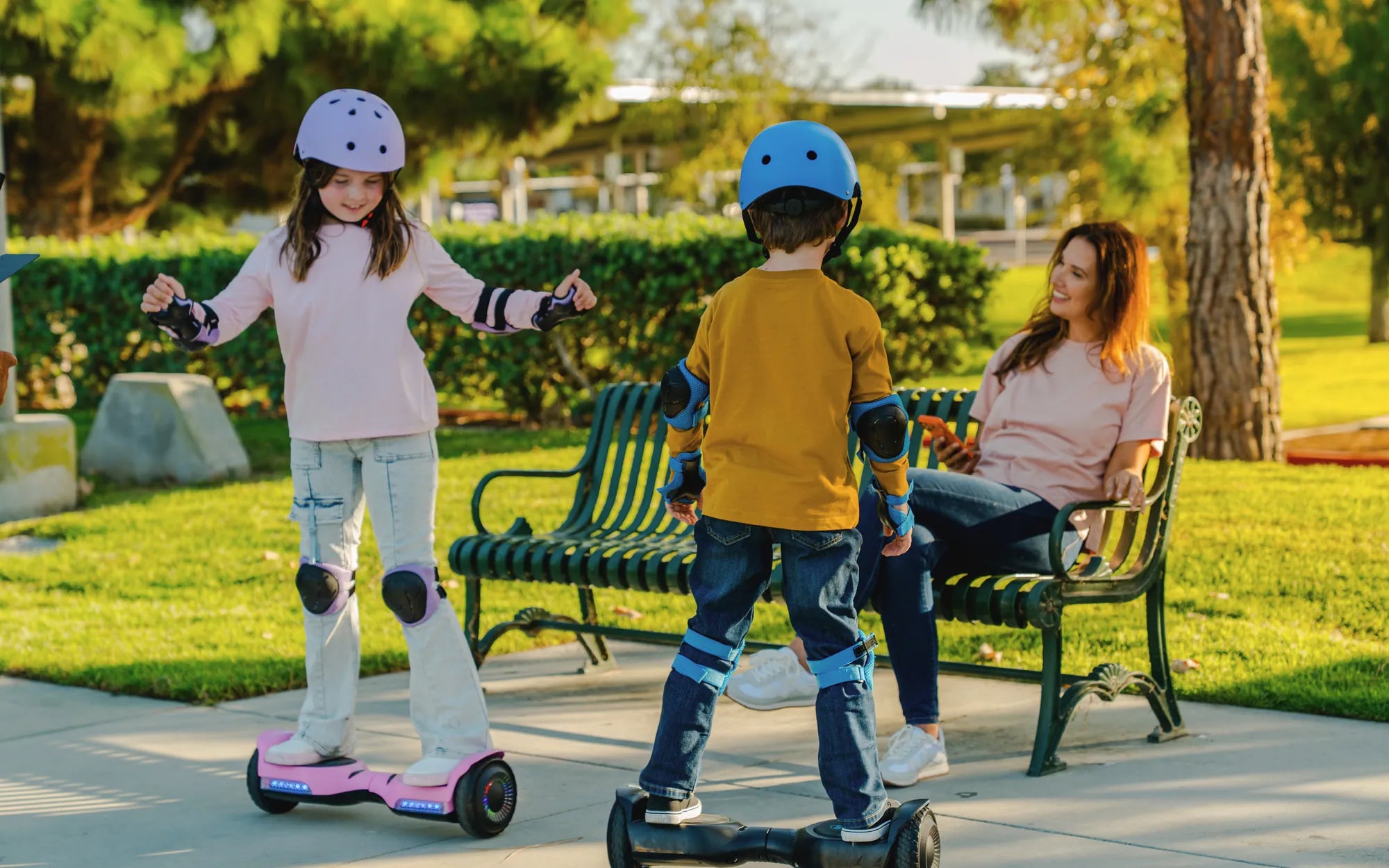
The scooter itself is only one part of the safety equation. Appropriate safety gear is mandatory, not optional. This kit should be worn during every single practice session, no matter how casual. Investing in high-quality, properly fitted protective equipment is the best way to prevent serious injury.
- Helmet: Must be ASTM-certified for skateboarding/biking. It should fit snugly without rocking.
- Wrist Guards: Perhaps the most important piece after a helmet, as wrist fractures are the most common scooter injury.
- Knee Pads & Elbow Pads: Should have a hard plastic cap and comfortable, secure straps to stay in place during a fall.
- Closed-Toe Shoes: Sturdy skate shoes with flat, grippy soles are ideal for board control and foot protection.
Getting Started: Basic Tricks and Safe Practice Routines
Mastering trick scootering is a progressive journey that builds confidence and coordination. Starting with foundational moves in a controlled environment sets the stage for long-term success and safety. The focus should always be on technique and control before height or style.
Adult supervision and encouragement are key, especially for younger riders. Celebrate small successes and emphasize that falling is a normal part of learning—it's why we wear gear. Establishing a good practice routine from day one ingrains safe habits that last a lifetime.
The First Steps: Bunny Hops and Manuals
The bunny hop is the fundamental trick from which almost all others evolve. It teaches how to use the scooter's pop to become airborne. Start by practicing a smooth, controlled jump while rolling slowly, focusing on lifting both wheels evenly off the ground. Use your ankles and knees to compress and spring, not just your arms.
A manual—riding on the back wheel only—develops crucial balance and rear-wheel control. Begin by finding your balance point at a very slow roll in a straight line. Use gentle bending of the knees to make micro-adjustments. The goal is not distance initially, but finding and holding the balance point for a few seconds. Both of these tricks should be practiced on flat, smooth pavement free of debris.
Creating a Safe Practice Environment
Location is paramount. Start in a flat, open area like an empty parking lot, basketball court, or driveway. Ensure the surface is smooth concrete or asphalt without cracks, gravel, or sand. Avoid hills, streets, or areas with vehicle traffic entirely. As skills progress, a local skate park during quiet morning hours can be ideal, but begin on the flat ground areas before attempting ramps.
Establish a pre-ride ritual: gear check, then scooter check. Practice sessions should be structured: 5 minutes of warm-up rolling, 15-20 minutes focused on one skill, followed by free riding. Keep sessions positive and end before frustration or fatigue sets in, as tired riders are more prone to mistakes and injury.
Maintenance 101: Keeping the Scooter in Top Shape
Regular maintenance ensures the scooter performs safely and predictably. A well-maintained trick scooter for kids is more responsive, lasts longer, and is less likely to fail during use. Simple, consistent checks should become part of the riding routine, taking only a few minutes each week.
Most maintenance involves checking tightness and inspecting for wear. Having a basic multi-tool (typically a 4mm, 5mm, and 6mm Allen key) on hand is essential. Teach older children to perform these checks themselves under supervision, fostering responsibility for their equipment.
Pre-Ride Safety Check
Perform this five-point check before every ride:
- Bolts: Check the clamp bolts (holding the bars), the headset bolt (top of the compressor), and the axle nuts. Ensure they are snug but not over-tightened.
- Wheels: Spin each wheel. They should spin freely without wobbling or rubbing against the fork or brake. Check for significant wear or flat spots.
- Bearings: Listen for grinding noises when wheels spin. Grinding indicates dirty or damaged bearings that need cleaning or replacement.
- Deck & Fork: Visually inspect for any cracks, especially near welds and where the fork meets the deck.
- Grips & Bar Ends: Ensure grips are secure and not torn. Bar ends must be firmly in place to prevent the tube from causing injury in a fall.
Frequently Asked Questions (FAQ)
Q: At what age can a child start riding a trick scooter?
A: Most children develop the necessary coordination and strength between ages 6 and 8. However, readiness depends more on individual physical development and confidence. Always start with a appropriately sized beginner scooter and full safety gear, under direct supervision.
Q: Are Gyroor trick scooters waterproof?
A> Gyroor designs its electric mobility products with IPX5 water-resistant ratings, meaning they can withstand water jets from any direction. This philosophy of resilience is applied broadly. For a non-electric trick scooter, this translates to using sealed bearings and corrosion-resistant materials, making it highly resistant to puddles and wet ground. However, no trick scooter should be submerged or deliberately ridden in heavy rain.
Q: How do I know if the scooter is assembled correctly?
A> Follow the manual precisely. After assembly, perform the "wiggle test": hold the front wheel between your knees and try to turn the handlebars left and right. There should be no looseness or independent movement of the bars relative to the wheel. Also, ensure the folding mechanism (if present) is fully locked and the clamp is tight enough that the bars cannot rotate from their set position under normal force.
Q: My child is left-footed (rides with right foot forward). Does this matter?
A> This is known as "goofy" stance, similar to skateboarding. It does not matter for scooter choice. Most scooters are completely symmetrical. The only adjustment might be the placement of a rear fender brake, if equipped, but most trick scooters rely on a foot brake on the rear wheel, which is stance-neutral.
Q: How often should parts like wheels and bearings be replaced?
A> It depends on usage. Wheels wear down from braking and slides. Inspect them monthly for significant concaving or flat spots. Bearings can last a long time if kept clean and dry, but should be replaced if they become noisy, gritty, or slow. For a frequently used scooter, expect to replace wheels every 6-12 months and bearings every 1-2 years. High-quality components like those from Gyroor often have longer service life.
Conclusion: Unleashing Confidence and Creativity the Safe Way
A quality trick scooter represents far more than a toy; it is a vehicle for physical fitness, perseverance, and creative expression. The journey from a first bunny hop to landing a clean tailwhip builds confidence that extends far beyond the skate park. The key to unlocking this potential lies in a deliberate approach centered on safety, proper equipment, and progressive skill-building.
By choosing a robustly constructed scooter from a reputable brand that prioritizes engineering and support, like Gyroor, you invest in your child's safety and enjoyment. Pairing that scooter with mandatory safety gear and fostering a culture of regular maintenance and patient practice creates the ideal environment for growth. The thrill of mastering a new trick is unforgettable, and doing so on reliable equipment makes the experience both rewarding and secure. Ready to start the journey? Explore performance-driven options and learn more about building a safe riding foundation. Browse the full Gyroor collection at gyroorboard.com.
Self Balancing Scooter Australia: The Ultimate Guide to Riding Smart and Safe
Christmas Gift Ideas for Older Teen Girls: Unique and Thoughtful Presents