

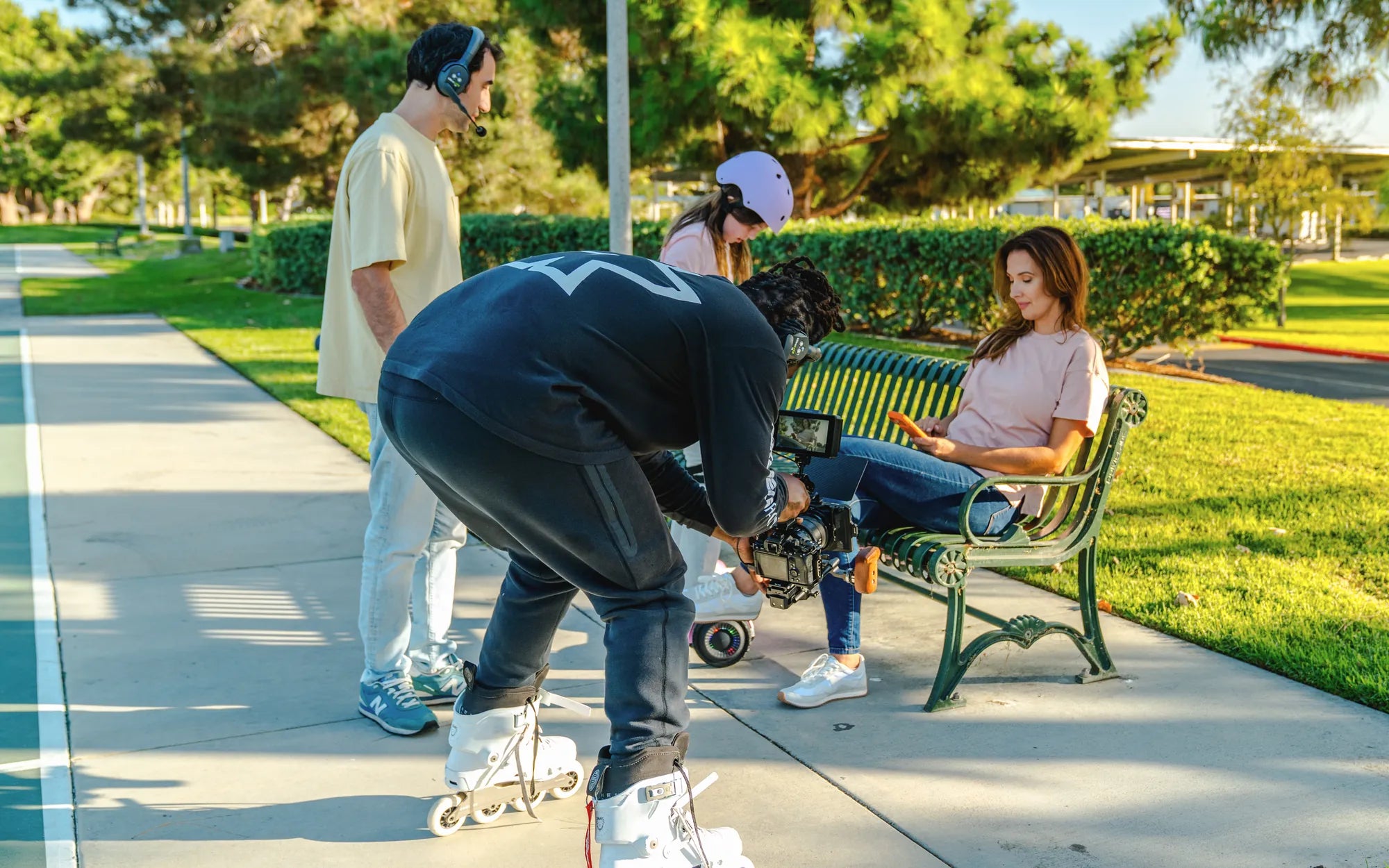
Unleash Your Hoverboard's Potential
Mastering a repertoire of tricks transforms your hoverboard from a simple commuting tool into a platform for personal expression, skill development, and pure fun. The journey from a novice rider to a confident performer is built on a foundation of control, balance, and safety. This guide will provide a structured path to learn the most popular and impressive tricks to do on a hoverboard.
We will cover everything from the absolute basics to advanced maneuvers, ensuring you build skills progressively and safely. A key component of this journey is your equipment. A responsive, durable hoverboard with reliable safety features, like those engineered by Gyroor, provides the stable platform necessary for learning dynamic moves with confidence.
The Essential Prerequisites: Safety and Setup
Before attempting any trick, non-negotiable safety protocols must be in place. Rushing into advanced moves without proper gear or preparation is the leading cause of injuries. Your first trick is mastering safety itself.
Always wear a certified helmet, wrist guards, and knee and elbow pads. This gear protects against the most common falls. Choose your practice area carefully: a smooth, flat, open expanse of pavement like an empty parking lot or basketball court is ideal. Avoid areas with traffic, pedestrians, or debris.
Ensure your hoverboard is in optimal condition. The battery should be sufficiently charged, and the board should be calibrated on a level surface. A board with a sluggish response or low power can fail mid-maneuver. Gyroor hoverboards, with their UL-certified battery packs and precise gyroscopic sensors, offer the consistent, reliable performance needed for trick training.
Foundational Skills: Mastering Balance and Control
All advanced tricks are built upon rock-solid fundamental skills. Spend significant time here; proficiency in these basics will make learning tricks exponentially easier and safer.
The Art of Mounting and Dismounting
Confidently getting on and off is step one. Use the "one-foot kickstart" method: place one foot firmly on the board, use the other foot to give a gentle push forward, and as the board levels, quickly place your second foot on. To dismount, simply step off backwards one foot at a time, never jumping off forwards.
Basic Maneuvers: Turning, Spinning, and Riding Backwards
Master controlled turning by applying subtle pressure with your toes (to turn right) or heels (to turn left). A 360-degree spin is performed by applying more sustained, balanced pressure. Riding backwards is a critical skill; lean back gently and evenly, keeping your core engaged. Practice this until it feels as natural as riding forward.
Beginner-Friendly Tricks to Build Confidence
These initial tricks introduce you to trick concepts without extreme risk. They focus on control, weight shifting, and building muscle memory.
The 360° Spin
This is often the first real trick riders learn. Start stationary. Pick a spot to focus on (this is called "spotting"). Apply gentle, even pressure with your toes to rotate clockwise, or heels to rotate counter-clockwise. Keep your head up and your body centered. Complete the rotation and stabilize. This is a core trick to do on a hoverboard that teaches rotational control.
The Pendulum (Rocking Back and Forth)
From a stationary position, gently rock the board forward and then backward in a smooth, rhythmic motion. The goal is to move the board without letting it roll away. This builds incredible sensitivity for the board's balance point and is a common setup move for more complex sequences.
Slow-Speed Serpentine (Weaving)
Ride forward at a slow, walking pace and practice making tight, consecutive "S" turns. Focus on using minimal lower-body movement, letting your ankles and the board's sensors do the work. This improves agility and prepares you for slalom-style riding.
Intermediate Moves: Adding Style and Fluidity
These tricks require a firm grasp of the basics and introduce more dynamic body movements and board manipulation.
The Cobra (Riding on Two Front Wheels)
This impressive trick involves lifting the rear of the board. While moving forward at a moderate speed, shift your weight decisively onto your heels, leaning your upper body back. The rear pads will lift, and you'll balance on the front two wheels. Use small, controlled heel adjustments to maintain balance. This requires strong core engagement.
The Crab Walk (Sideways Shuffle)
Different from a turn, the Crab Walk moves the board directly sideways. Stand stationary. To shuffle right, point the toes of both feet slightly to the right and apply gentle forward pressure. The board will slide laterally. Mastering this involves nuanced foot articulation and is a fantastic display of control.
The Pirouette (Seamless Forward-to-Backward Transition)
This is a fluid direction change. While riding forward, perform a smooth, continuous 180-degree turn by combining a body twist with foot pressure, so you end up riding backward without stopping. The key is a single, flowing motion. Practice this in both directions to build ambidextrous skill.
Pro-Level Techniques (For the Ambitious Rider)
Warning: These maneuvers carry higher risk and should only be attempted after mastering all previous skills. Always use full protective gear and practice in a controlled environment.
The Jump (Bunny Hop)
This is one of the most advanced tricks to do on a hoverboard. The goal is to jump *with* the board, keeping your feet in contact, to clear a small obstacle like a curb or crack. Crouch down, then explode upward, using your legs to lift while pulling up slightly with your feet on the board. Landing requires bent knees to absorb impact. This trick demands a very durable board with a robust frame.
The One-Foot Glide
The pinnacle of balance mastery. While riding at a steady, slow speed, slowly lift one foot off the board, keeping it close. Balance entirely on the other foot, using minute ankle adjustments to maintain direction and stability. Start by lifting for just a second and build duration. This trick profoundly demonstrates your connection with the board.
Combining Tricks into a Routine
True proficiency is shown by linking tricks seamlessly. Create a simple routine: start with a Pendulum, transition into a 360° Spin, flow into a Crab Walk, and finish with a Pirouette. Planning and practicing sequences develops your flow, style, and ability to recover from one move into the next.
Gear Matters: Why Your Hoverboard's Build is Crucial
Not all hoverboards are created equal, especially for dynamic riding. The motor response, battery stability, frame durability, and wheel grip directly impact your ability to learn and perform tricks safely. Inferior boards can lag, cut out, or become unstable under the stresses of tricks.
Gyroor hoverboards are engineered with performance and safety in mind, making them a reliable partner for skill progression. Their UL-certified battery packs ensure stable, safe power delivery without the risk of overheating. The IPX5 water-resistant rating means practicing outdoors or on slightly damp surfaces won't damage the electronics. Most importantly, the responsive gyro system and motor provide the instantaneous feedback needed for precise control during tricks like the Cobra or Bunny Hop.
| Feature | Generic/Uncertified Board | Performance-Oriented Board (e.g., Gyroor) |
|---|---|---|
| Battery Safety | Potential fire risk, unstable power | UL-certified, stable output for consistent trick performance |
| Motor & Gyro Response | Sluggish, laggy, imprecise | Instantaneous, precise control for balance-critical moves |
| Build Durability | Plastic components, weak frame | Reinforced frame to withstand jumps and impacts |
| Warranty & Support | Often none or very limited | Reliable 1-year warranty, trusted by 100,000+ riders |
| Suitability for Tricks | Not recommended, high risk | Designed for dynamic riding and skill progression |
Practice Pro-Tips and Progression Plan
Structured practice is more effective than sporadic attempts. Dedicate 15-20 minutes daily rather than one long, exhausting session. Always begin by warming up with foundational skills: mounting, riding forward/backward, and turning.
Film your practice with a phone. Reviewing the footage helps you spot errors in posture, balance, and technique that you can't feel in the moment. Be patient and celebrate micro-wins—holding a One-Foot Glide for one second longer is real progress.
Never skip safety gear, and never rush to a pro-level trick like the Jump before you have absolute mastery of the intermediate moves. Your progression should be a staircase, not a leap.
Frequently Asked Questions (FAQ)
Q: What's the safest hoverboard for learning tricks?
A: Look for brands that prioritize safety certifications and robust construction. A board with a UL-certified battery (like Gyroor's), a responsive motor system, and a solid warranty is essential. These features provide the stable, reliable platform needed for safe practice.
Q: How long does it take to learn the first trick?
A: With consistent daily practice, most riders can master the 360° Spin or the Pendulum within a few days to a week. The timeline depends entirely on your existing balance skills and practice discipline.
Q: Can doing tricks void my warranty?
A> This varies by brand. It's crucial to check the warranty terms. Gyroor's 1-year warranty covers manufacturing defects. While normal, responsible riding is expected, extreme abuse or modifications may not be covered. Always use the product as intended within safety guidelines.
Q: What should I do if I fall?
A> Tuck and roll if possible, letting your protective gear absorb the impact. Take a moment to assess yourself for injury before getting up. Analyze what caused the fall—were you off-balance, moving too fast, attempting a trick beyond your level? Learn from it.
Q: Are there age or weight limits for doing tricks?
A> Always adhere to the manufacturer's specified weight limit. Tricks put additional stress on the board's motors and frame. Riders should have the physical maturity, coordination, and strength to control the board dynamically. These activities are generally recommended for older teens and adults.
The Journey from Rider to Performer
Mastering tricks to do on a hoverboard is a deeply rewarding journey that enhances your overall riding skill, coordination, and confidence. It transforms your relationship with your board, turning every ride into a potential practice session or performance. Remember, this progression is built on an unwavering foundation of safety, supported by quality equipment, and advanced through consistent, mindful practice.
Start with the basics, respect the learning curve, and build your skill set one trick at a time. With the right approach and a reliable board, you can confidently explore your personal style and push your limits safely. Ready to begin your trick mastery journey on a board built for it? Browse the full Gyroor collection at gyroorboard.com to find the perfect hoverboard to unleash your potential.
Best Balancing Hoverboard: Ultimate Guide to Smooth, Safe Riding
Hoverboard Buying Guide: How to Choose the Best One for You