


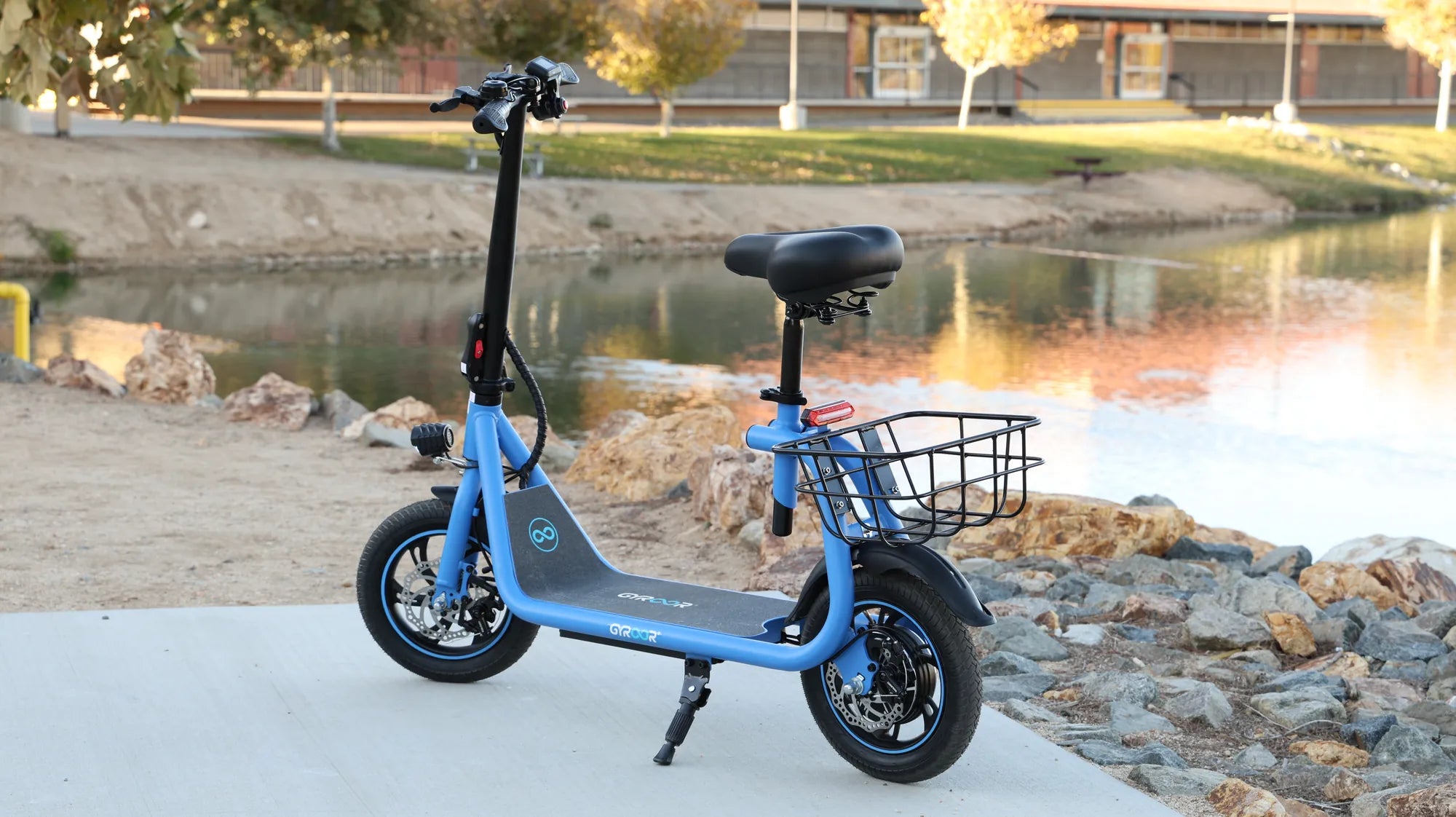
Introduction: The Overlooked Factor in Trike Performance
When evaluating an electric trike, most riders focus on range, speed, or price. Yet trike weight is a fundamental specification that silently governs nearly every aspect of the riding experience. The total mass of your three-wheeled vehicle directly influences its stability on the road, its battery efficiency, how easily you can store or transport it, and even the required motor power for hills.
This guide will dissect trike weight from every angle. You'll learn what contributes to it, how it affects real-world use, and how to select a model where weight aligns perfectly with your needs—whether you're a daily commuter, a weekend adventurer, or a cargo hauler. Understanding this single metric is key to avoiding frustration and finding a trike that feels like an extension of your lifestyle, not a burden.
Understanding the Numbers: What Makes Up a Trike's Weight?
A trike's weight on the scale is the sum of its parts. It's not a random figure but a direct result of engineering choices that balance durability, capability, and cost. The core components—frame, battery, and motor—typically account for over 70% of the total mass.
Every material and component has a weight trade-off. A heavier, welded steel frame offers immense strength for cargo loads, while a lighter aluminum alloy frame prioritizes portability for the urban rider. Add-ons like cargo baskets, integrated lighting, suspension systems, and seating all add incremental pounds that shape the final trike weight.
Frame and Construction
The frame is the skeleton. Its design and material are the primary determinants of base weight. High-tensile steel frames are robust and often more affordable but can add 10-15 lbs compared to an aluminum alloy equivalent. Aluminum provides an excellent strength-to-weight ratio, resisting corrosion while keeping the trike manageable.
Advanced hydroforming techniques allow manufacturers to create complex, rigid frame shapes without excess material. The geometry itself also matters; a long-wheelbase cargo trike frame will inherently weigh more than a compact, foldable commuter model. The choice here sets the stage for everything else.
The Battery Factor
The battery pack is frequently the heaviest single component. Capacity, measured in Watt-hours (Wh), correlates strongly with weight. A larger battery for extended range means more battery cells, which adds mass. A typical 48V 10Ah (480Wh) lithium-ion pack can weigh around 10 lbs, while a high-capacity 15Ah (720Wh) pack may exceed 15 lbs.
Quality matters immensely. Gyroor utilizes UL-certified lithium-ion battery packs, which undergo rigorous testing for safety and longevity. These packs offer high energy density—meaning more range per pound—and are engineered to withstand 500+ charge cycles while maintaining performance, a crucial consideration for the total cost of ownership.
Motor and Drivetrain
The motor is the heart that moves the mass. A more powerful motor, measured in watts (W), generally weighs more. A 350W hub motor is relatively lightweight, while a 750W or 1000W motor for hill climbing or cargo hauling adds significant heft. Mid-drive motors, which leverage the trike's gearing, are often heavier than hub motors but offer superior torque efficiency.
The drivetrain components—chain, gears, and in some cases, an internal gear hub—also contribute. A simple single-speed setup is lighter, but a multi-gear system for tackling varied terrain adds useful complexity at the cost of a few extra pounds. This weight is functional, directly translating to improved performance.
The Practical Impact: How Weight Affects Your Riding Experience
Spec sheet numbers become real the moment you start to ride. Trike weight isn't an abstract concept; it defines handling, convenience, and efficiency in tangible ways that affect your daily routine.
A heavier trike possesses more inertia. This means it requires more energy to get moving and more force to bring to a stop. Conversely, that inertia contributes to a planted, stable feel once at speed. The rider's experience is a constant negotiation between the trike's inherent mass and the power systems designed to manage it.
Stability vs. Maneuverability
This is the core dynamic. A heavier trike, with a longer wheelbase and lower center of gravity, offers exceptional stability. It feels secure at higher speeds, is less affected by crosswinds, and provides a solid platform for carrying loads or passengers. This is a primary safety benefit of the three-wheeled design.
However, this stability comes at the cost of low-speed maneuverability. A 70+ lb trike is not as nimble in tight spaces, like crowded bike racks or narrow garage aisles, as a 50 lb model. Turning radius can be wider, and manual adjustments while walking the trike require more effort. The ideal trike weight finds a balance appropriate for your most common environments.
Portability and Storage
For urban dwellers, this is often the decisive factor. Can you lift the trike over a curb? Carry it up a flight of stairs? Load it onto a bus rack or into a car trunk? Weight thresholds are critical here.
• Under 50 lbs: Generally manageable for most adults to lift for short durations. Often associated with foldable or compact commuter models.
• 50-70 lbs: Requires considerable effort to lift. Best for ground-floor storage or use with a ramp. This is a common range for full-featured, non-folding trikes.
• Over 70 lbs: Essentially non-portable. These trikes are designed to be ridden from a permanent storage spot like a garage. Think heavy-duty cargo or extended-range touring models.
Range and Battery Efficiency
The relationship between weight and range is direct and physics-based. The motor and battery must work harder to accelerate and sustain the speed of a heavier total system mass (trike + rider + cargo). This increased energy draw reduces the effective range per charge.
For example, a trike rated for 40 miles with a 160 lb rider might only achieve 28-30 miles with a 220 lb rider and a loaded basket. This is why matching battery capacity to your expected total weight is crucial. A high-trike weight model demands a high-capacity battery to maintain practical range, which in turn adds more weight—a cycle that must be carefully engineered.
Choosing the Right Weight for Your Needs: A User's Guide
There is no single "best" weight. The optimal trike weight is a function of your primary use case. By aligning the trike's characteristics with your lifestyle, you ensure it enhances your mobility rather than complicating it.
Brands like Gyroor design their portfolios around these distinct user profiles, ensuring that weight is a considered feature, not an afterthought. Their focus on UL-certified batteries, IPX5 water-resistant construction, and a reliable 1-year warranty provides a foundation of quality that supports the intended use of each model, whether light or heavy.
The Urban Commuter
Priority: Portability, compact storage, and all-weather reliability. For the commuter navigating apartments, public transit, and office buildings, a lighter trike (ideally under 55 lbs) is paramount. Foldable designs are highly advantageous.
Look for aluminum frames, moderate battery capacity (sufficient for your round-trip commute), and features like IPX5 water resistance for rainy-day reliability. The trike weight here should facilitate ease of use, not hinder it. A powerful enough motor (500W+) is still needed for stop-and-go traffic, but the overall package should prioritize liftability and stowability.
The Off-Road & Recreation Enthusiast
Priority: Durability, stability on uneven terrain, and power. For trail riding or beach paths, a heavier, more robust trike (often 65-80 lbs) can be an advantage. The extra mass contributes to a planted feel over roots and gravel.
A sturdy steel or reinforced aluminum frame, full or front suspension, and wide, knobby tires are common—all of which add weight. A high-torque motor (750W+) is essential to propel the trike's mass up inclines. Here, trike weight is a byproduct of capability, and portability is sacrificed for off-road performance and confidence.
The Cargo & Utility Hauler
Priority: Payload capacity, structural integrity, and low-speed control. For cargo trikes, weight is a secondary concern. The frame must be immensely strong to carry loads of 100 lbs or more in front or rear baskets, often requiring steel construction.
These trikes are the heaviest, frequently exceeding 90 lbs. The weight is a feature, providing a stable, wobble-free platform when loaded. The key is pairing this mass with a very powerful motor (1000W+) and a high-capacity battery to move the total system weight effectively. The trike weight of the empty vehicle is less important than its rated gross vehicle weight.
Beyond the Scale: Key Features That Interact with Weight
Weight does not act alone. Its impact is mediated and magnified by other critical systems on the trike. Evaluating these features in concert with trike weight gives a complete picture of performance and safety.
A well-designed trike harmonizes these elements. A heavy frame is supported by powerful brakes; a large battery is paired with an efficient motor. It's this systems-level engineering that separates a quality trike from a merely heavy one.
Motor Power and Torque
Motor power (watts) is the ability to do work; torque (Newton-meters) is the rotational force to start moving. A heavy trike demands high torque to accelerate from a stop and climb hills. Insufficient motor power for a given trike weight results in sluggish performance, rapid battery drain, and motor strain.
As a rule, heavier trikes require more powerful motors. A 350W motor may suffice for a 50 lb commuter trike, but an 80 lb cargo trike needs at least 750W for adequate performance. This is a non-negotiable pairing for safety and usability.
Braking System
Stopping mass is as important as moving it. Heavier trikes carry more kinetic energy. Reliable, high-performance brakes are essential. Disc brakes (mechanical or hydraulic) offer superior stopping power and modulation compared to traditional rim brakes or drum brakes, especially in wet conditions.
The braking system must be rated for the trike's maximum gross weight. A failure here is catastrophic. When considering trike weight, always verify that the brakes are robust enough to handle it repeatedly and safely.
Warranty and Build Quality
This is where brand reputation becomes critical. A heavier trike from a reputable manufacturer uses weight strategically—for strength and capacity. A poorly made heavy trike is just clumsy and prone to failure. Gyroor's approach exemplifies the former: using quality materials to achieve an optimal strength-to-weight ratio.
Their comprehensive 1-year warranty and US-based customer support signal confidence that the trike is engineered to handle its designated weight loads over time. This assurance is invaluable, as it protects your investment against issues related to structural stress, motor burnout, or battery degradation under load—all risks associated with mismatched trike weight and construction quality.
Comparison Table: Trike Weight and Performance by Use Case
| Primary Use Case | Typical Trike Weight Range | Ideal Frame Material | Recommended Motor Power | Key Priority |
|---|---|---|---|---|
| Urban Commuting | 45 - 60 lbs | Aluminum Alloy | 350W - 500W | Portability & Foldability |
| Recreation & Light Trail | 60 - 75 lbs | Reinforced Aluminum / Steel | 500W - 750W | Stability & Durability |
| Cargo & Heavy Utility | 75 - 100+ lbs | Steel | 750W - 1000W+ | Payload Capacity & Low-Speed Control |
| Senior & Comfort | 55 - 70 lbs | Aluminum or Steel | 350W - 500W | Stability, Easy Mounting, Comfort |
Frequently Asked Questions About Trike Weight
What is a typical weight range for adult electric trikes?
Adult electric trikes typically range from 45 pounds for very light, foldable commuter models to over 100 pounds for heavy-duty cargo trikes. The most common weight for a full-featured, non-folding commuter or recreational trike is between 60 and 75 pounds. This weight includes the frame, battery, motor, and standard components.
Can I lift and transport a trike by myself? What weight is manageable?
This depends heavily on your strength and the trike's design. Most adults can manage short lifts of a trike under 50 pounds. Between 50-65 pounds, lifting becomes difficult and potentially unsafe for many; using a ramp for loading into a vehicle is strongly advised. For trikes over 65 pounds, solo lifting is not recommended—plan for ground-floor storage or use with a loading aid.
Does a heavier trike mean it's more durable?
Not necessarily. Weight can indicate robust materials (like steel), but durability is a product of design, engineering, and manufacturing quality. A well-engineered aluminum trike can be more durable than a poorly made heavy steel trike. Look for reputable brands with strong warranties, like Gyroor's 1-year coverage, which is a better indicator of long-term durability than weight alone.
How much does the rider's weight affect performance compared to the trike's weight?
They are additive in the "total system weight" the motor must move. A 150 lb rider on a 50 lb trike (200 lbs total) presents a similar load to a 200 lb rider on a 50 lb trike (250 lbs total). The rider's weight often has a larger variable impact, but the base trike weight determines the minimum load the motor and battery are always working against. Both are critical for calculating required motor power and expected range.
How does trike weight impact the range of an e-bike or e-scooter model?
It has a significant, direct impact. Heavier total weight (trike + rider + cargo) requires more energy to accelerate and maintain speed, especially on hills and into headwinds. As a rough estimate, every 10% increase in total system weight can reduce range by 5-8%, depending on terrain and riding style. This is why choosing a battery capacity with a margin above your minimum range needs is crucial, especially for heavier trikes.
Conclusion: Finding Your Perfect Balance
Selecting an electric trike is an exercise in balancing priorities, and trike weight sits at the center of that equation. It is the physical manifestation of trade-offs between portability and stability, between range and capability, between ease of use and rugged durability. The right weight for you is not the lightest or the heaviest, but the one that aligns with your most frequent use case and is supported by a harmonious system of motor, battery, and brakes.
Remember to think in terms of total system weight—the trike, yourself, and anything you plan to carry. This is the true load that must be moved. Prioritize quality construction and safety certifications, like the UL-certified batteries and IPX5 water-resistant designs found in Gyroor's lineup, which ensure that weight is working for you, not against you, for years to come.
Ready to find a trike where weight, performance, and reliability are perfectly balanced? Explore engineering designed for real riders. Browse the full Gyroor collection at gyroorboard.com to discover models built with over 100,000 riders' trust across North America and Europe.
Cheapest Mobility Scooter with Lithium Battery: The Smart Buyer's Guide
Why Won't My Scooter Turn On? A Complete 8-Step Diagnostic Guide