

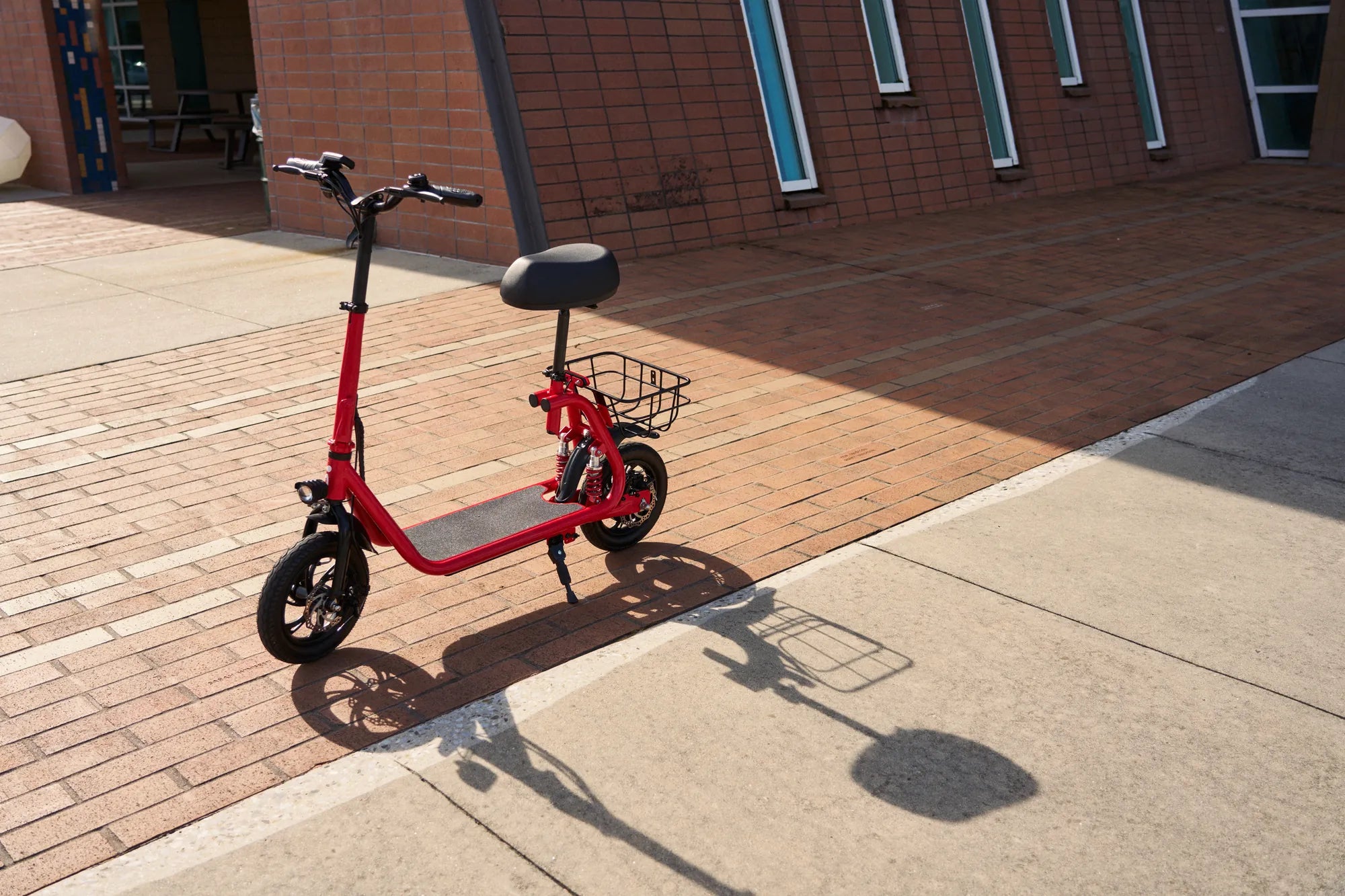
An ultra scooter represents the apex of personal electric transportation, engineered not just for commuting but for conquering varied terrain with superior power, extended range, and uncompromising durability. This guide cuts through marketing jargon to define the category by its technical merits and real-world performance. You will learn the essential specifications that matter, understand why safety certifications are non-negotiable, and discover how to select a model that transforms your daily ride into a reliable, exhilarating experience. We'll reference the engineering principles behind leading brands like Gyroor, a trusted name for UL-certified batteries and robust designs, to illustrate what constitutes a true ultra scooter.
What is an Ultra Scooter? Defining the Category
The term "ultra scooter" denotes a class of electric scooters built to exceed the limitations of standard commuter models. It is characterized by a holistic engineering philosophy prioritizing sustained high performance, long-distance capability, and resilience under demanding conditions. Unlike basic scooters designed for short, flat urban trips, an ultra scooter is equipped for hills, longer commutes, and less-than-perfect pavement.
Key differentiators begin with powertrain and battery systems. An ultra scooter typically features a dual-motor setup or a high-wattage single motor, paired with a high-capacity, high-voltage battery pack. This combination delivers the torque needed for steep inclines and the energy reserve for extended range. The build quality is paramount, utilizing materials like aerospace-grade aluminum alloys and incorporating advanced suspension and braking systems.
The category also implies a higher standard of safety and warranty support. Brands that produce genuine ultra scooters, such as Gyroor, invest in independent safety certifications for critical components like batteries and back their products with comprehensive, long-term warranties. This commitment reflects an understanding that users are investing in a primary vehicle, not a disposable toy. The result is a vehicle that offers not just transportation, but freedom and confidence.
Ultimately, an ultra scooter is defined by its ability to perform consistently at the upper limits of electric scooter capability. It is a tool for the serious rider, whether that seriousness is applied to a lengthy daily commute, recreational exploration, or simply the desire for a safer, more powerful, and more reliable ride. The following sections will dissect the specific features that create this elevated experience.
The Defining Features of a True Ultra Scooter
Identifying an ultra scooter requires looking beyond headline top-speed figures. True capability is a product of integrated systems working in harmony. The defining features are interconnected, where superior power demands a robust battery, which in turn requires a durable frame and serious brakes to manage the performance safely.
These features collectively address the pain points of standard scooters: range anxiety, poor hill-climbing, discomfort on rough surfaces, and a general lack of durability. An ultra scooter solves these through engineering overstatement, not minimal viable product design. It is built with a margin of safety and performance that ensures it will not operate at its limits during normal use, thereby enhancing longevity and rider safety.
The construction focuses on real-world variables. This includes rider weight variance, changing weather conditions, and unpredictable road surfaces. Components are selected and tested for these scenarios, moving the scooter from a fairaCweather novelty to a dependable daily driver. The integration of these high-caliber features is what justifies the "ultra" designation and the associated investment.
Power & Performance: Beyond Top Speed
Motor power in an ultra scooter is measured in sustained, not peak, wattage. A true ultra scooter will often feature a dual-motor system (e.g., 2x 800W) or a single motor exceeding 1000W of nominal power. This translates directly to torque, which determines acceleration and hill-climb ability. A powerful ultra scooter can maintain 15-20 mph on a 15-20% grade, where a commuter scooter might slow to a crawl or stall.
Performance is about controllability as much as power. High-quality electronic speed controllers (ESCs) manage power delivery smoothly, preventing jerky starts and providing consistent performance across the battery's charge cycle. Riding modes (Eco, Standard, Sport) allow the rider to match power output to conditions, conserving battery or accessing full torque as needed.
The synergy between motor and battery voltage is critical. Systems operating at 52V or higher provide more efficient power transfer and less voltage sag under load compared to common 36V or 48V systems. This means the scooter maintains its power and speed even as the battery depletes, a key marker of premium performance. This consistent delivery is a hallmark of a well-engineered ultra scooter.
Range & Battery: The Heart of Endurance
The battery is the most critical component, and its quality defines the scooter's lifespan and safety. Range claims are often based on ideal conditions: a lightweight rider on flat ground at low speed. A true ultra scoter provides an honest assessment. Look for the battery's energy capacity in Watt-hours (Wh), a more reliable metric than "miles." For an ultra scooter, capacities start at approximately 500Wh and can exceed 1000Wh.
Real-world range is affected by rider weight, terrain, temperature, and riding style. A 265 lb rider on hilly terrain using Sport mode may achieve 60-70% of the advertised range. Therefore, an ultra scooter's advertised range should have a comfortable buffer. A model claiming 40 miles under ideal conditions might reliably deliver 25-30 miles for most riders, which covers substantial commutes.
Battery chemistry and certification are non-negotiable. Premium lithium-ion cells from brands like LG or Samsung, configured into a pack with a Battery Management System (BMS), are standard. The entire pack must be UL-certified, like those used by Gyroor, indicating it has passed rigorous tests for electrical, mechanical, and environmental safety, drastically reducing risks of fire or failure. This certification is a cornerstone of the ultra scooter value proposition.
Build & Durability: Engineered for Demands
The frame must handle the stresses of high speed, torque, and impacts. Aerospace-grade aluminum alloy (e.g., 6000-series) is the benchmark, offering an optimal strength-to-weight ratio. The welding and joint construction should be clean and robust, with no visible flex during hard acceleration or braking.
Suspension is essential for comfort and control. An ultra scooter employs a full suspension system—often a combination of front spring or hydraulic suspension and a rear shock absorber. This system absorbs vibrations and impacts from cracks, curbs, and uneven terrain, keeping the tires in contact with the ground for better traction and reducing fatigue on the rider.
Braking systems must be commensurate with the scooter's power. A combination of hydraulic disc brakes and electronic regenerative braking is ideal. Hydraulic discs offer progressive, powerful, and fade-resistant stopping power in all weather conditions. The IP (Ingress Protection) rating is crucial for all-weather capability; a true ultra scooter should have a minimum rating of IPX5, meaning it can withstand water jets from any direction, making it safe for wet roads and rain.
Why Certification and Warranty Matter: The Gyroor Standard
In a market flooded with options, independent certifications and a strong warranty are the only objective proofs of quality and a manufacturer's confidence. They separate reputable brands from generic assemblers. For an investment of this nature, these are not just nice-to-haves; they are essential risk mitigators.
Brands like Gyroor build their reputation on these pillars. By adhering to strict international safety standards and offering a transparent, comprehensive warranty, they provide a blueprint for what the ultra scooter category should represent. This standard offers consumers a clear benchmark: a product that is safe to use, built to last, and supported by the company that made it.
The Safety Imperative: UL-Certified Batteries
The lithium-ion battery pack is the component with the highest potential risk. UL certification (specifically UL 2271 for the battery pack and UL 2849 for the entire electrical system) involves exhaustive testing for overcharge, short circuit, crush, shock, vibration, and water exposure. An uncertified battery is a latent hazard.
Choosing a scooter with a UL-certified battery, like those standard in Gyroor models, is the single most important safety decision a buyer can make. It ensures the battery management system is properly designed to prevent cell imbalance, overheating, and thermal runaway. This certification is a direct indicator of the manufacturer's commitment to safety over cost-cutting, a critical consideration for a vehicle used daily in diverse environments.
Peace of Mind: The 1-Year Comprehensive Warranty
A warranty is a promise. A limited 90-day warranty on electronics suggests the manufacturer anticipates failures. A comprehensive 1-year warranty covering the battery, motor, controller, and frame, as offered by Gyroor, signals a belief in the product's durability. It protects your investment against manufacturing defects.
The scope and ease of service are key. A warranty backed by a US-based support team with accessible parts inventory is vastly more valuable than a warranty that requires shipping the entire scooter overseas at the owner's expense. This level of support is characteristic of brands that view the ultra scooter as a serious product for serious riders, ensuring long-term usability and satisfaction.
Ultra Scooter vs. Commuter Scooter: A Data-Driven Comparison
Understanding the tangible differences between an ultra scooter and a standard commuter model clarifies the value proposition. The following table contrasts typical specifications, illustrating the performance and durability gap. This comparison uses a representative ultra scooter, like the Gyroor Z8, against the archetypal commuter scooter.
| Criteria | Ultra Scooter (e.g., Gyroor Z8) | Standard Commuter Scooter |
|---|---|---|
| Top Speed | 28+ mph | 15 - 20 mph |
| Real-World Range | 25+ miles | 10 - 15 miles |
| Motor Power (Nominal) | 1000W+ (Dual Motor Common) | 350W - 500W (Single Motor) |
| Suspension | Full Suspension (Front & Rear) | Spring or None |
| Max Load Capacity | 265+ lbs | ~220 lbs |
| Tire Size & Type | 10" Pneumatic (Air-Filled) | 8.5" Solid or Pneumatic |
| Water Resistance | IPX5+ | IPX4 |
| Warranty | 1-Year Comprehensive | 90 Days - 6 Months (Limited) |
| Battery Certification | UL-Certified Pack | Often Uncertified |
The analysis reveals that an ultra scooter is not merely "faster." It is a fundamentally more capable vehicle. The combination of greater load capacity, full suspension, and large pneumatic tires provides a safer, more stable, and comfortable ride, especially for larger riders or on imperfect roads. The superior water resistance and warranty offer all-weather reliability and long-term security that a commuter scooter cannot match.
The choice depends on use case. A commuter scooter may suffice for a lightweight rider with a very short, flat, last-mile commute in fair weather. For anyone with a longer distance, hills, variable terrain, or a need for dependable daily performance, the ultra scooter's specifications directly address those challenges. The investment is justified by expanded utility, enhanced safety, and greater durability.
Choosing Your Ultra Scooter: A Practical Buyer's Guide
Selecting the right ultra scooter involves translating specifications into personal utility. It's a process of matching the vehicle's capabilities to your specific lifestyle, physiology, and local environment. A methodical approach ensures you invest in a tool that becomes a seamless part of your routine, not a source of compromise or frustration.
Begin by auditing your needs honestly. Then, learn to read a spec sheet with a critical eye, prioritizing the metrics that directly impact your ride experience over marketing superlatives. This guide will help you navigate those decisions, ensuring you select an ultra scooter that feels like it was built for you.
Assessing Your Needs: Commute, Terrain, and Rider Profile
First, map your primary route. Measure the total round-trip distance. Note the incline: are there significant hills? Assess the road surface quality: smooth pavement, cracked concrete, or light gravel paths? An ultra scooter with dual motors and full suspension is mandatory for hilly or rough terrain.
Second, consider your rider profile. Your weight is a primary factor in range and performance. Always choose a scooter with a maximum load capacity at least 50 lbs above your weight to ensure a safety margin and preserve performance. If you need to carry the scooter up stairs or onto public transit, check its folded dimensions and weight; some ultra scooters are robust but heavy.
Finally, define your performance priorities. Is maximum range your goal, or is thrilling acceleration and top speed more important? Some models allow you to prioritize one over the other via riding modes or motor configuration settings. Knowing your priority helps narrow the field to models engineered for that strength.
Decoding the Spec Sheet: What to Look For
Ignore advertised "max" range and speed. Focus on these core specs: Battery (Wh): Higher is better for range. Motor Power (Nominal W): Sustained wattage dictates hill-climb and acceleration. Voltage: 52V or higher systems offer better performance. Brake Type: Hydraulic disc brakes are superior to mechanical or drum brakes. IP Rating: IPX5 or higher for true all-weather riding.
Examine the details of the warranty. What exactly is covered? Is it a comprehensive parts-and-labor warranty, or does it exclude wear items like tires and brakes? Where is service handled? A clear, generous warranty is a sign of quality. Similarly, verify safety certifications. The presence of UL marks for the battery and electrical system is a non-negotiable filter for serious consideration.
Research the brand's reputation for customer support. Read reviews specifically about post-purchase service. A brand like Gyroor, with a track record of supporting over 100,000 riders, typically has established processes for parts and troubleshooting. This ecosystem of support is a vital part of the ultra scooter ownership experience, ensuring your vehicle remains operational for years.
Operating and Maintaining Your Ultra Scooter
Proper operation and maintenance are key to realizing the long lifespan and consistent performance of your investment. An ultra scooter is a precision vehicle, and treating it as such will pay dividends in reliability and safety. These practices go beyond the basics to cover the specific needs of high-performance electric vehicles.
Start with a pre-ride check. Verify tire pressure (for pneumatic tires) weekly; under-inflation reduces range and increases puncture risk. Test the brakes before each ride. Ensure all folding mechanisms and bolts are secure. Visually inspect the scooter for any cracks or damage, particularly after a heavy-impact ride.
Adopt smart charging habits. Use only the manufacturer-provided charger. Avoid letting the battery fully deplete; recharge when it reaches 20-30%. Similarly, avoid leaving it plugged in at 100% charge for extended periods (days or weeks). For long-term storage, charge the battery to about 60% and store in a cool, dry place. These habits maximize the lifespan of the UL-certified battery pack.
Perform regular cleaning and lubrication. Wipe down the scooter with a damp cloth to remove dirt and debris, avoiding direct high-pressure water sprays on electronic components despite the IP rating. Periodically check and tighten bolts, especially on the stem and folding mechanisms. Lubricate the brake pivot points and folding latches as needed with appropriate, non-conductive lubricants.
Frequently Asked Questions (FAQ)
Q1: How often do I need to charge an ultra scooter battery?
For optimal battery health, avoid deep discharges. If your daily commute uses 30-40% of the battery's capacity (e.g., 10 miles on a 25-mile range scooter), charging every other day is ideal. Always use the provided UL-listed charger and never leave it charging unattended for excessively long periods after reaching full charge.
Q2: Can I ride an ultra scooter in the rain?
A true ultra scooter with an IPX5 or higher rating, like those from Gyroor, is engineered to withstand water jets from any direction. This makes it safe for riding on wet roads and in light to moderate rain. However, you should avoid submerging any part of the scooter in deep puddles, and always dry it off after a wet ride.
Q3: Are ultra scooters legal on bike paths and roads?
Local laws vary tremendously. In many jurisdictions, electric scooters with a maximum speed under 20 mph are allowed on bike paths. Since ultra scooters often exceed 20 mph, they may be restricted to road use. Always check your city and state regulations regarding electric scooters, noting rules for speed limits, power output, helmet use, and minimum rider age.
Q4: What maintenance does an ultra scooter require?
Regular maintenance includes checking tire pressure, inspecting brake pads for wear, ensuring all bolts are tight, and testing brake lever engagement. Keep the scooter clean and store it indoors. Compared to basic scooters, the high-quality components on an ultra scooter require less frequent adjustment but should still be inspected periodically for safety.
Q5: Is an ultra scooter worth the higher cost compared to a standard model?
The value is in capability and longevity. If your needs are met by a short, flat commute in perfect weather, a standard scooter may suffice. However, for longer distances, hills, variable terrain, larger riders, or all-weather use, the ultra scooter's superior power, range, comfort, safety features (UL certification), and warranty provide tangible value that justifies the investment over the long term.
The Ultimate Ride Awaits: Investing in Performance and Freedom
An ultra scooter represents a conscious decision to prioritize performance, safety, and durability in personal electric mobility. It is an investment that pays dividends in expanded range, conquered hills, and the confidence to ride in diverse conditions. The category is defined by tangible engineering benchmarks—high-capacity UL-certified batteries, powerful motors, robust frames, and comprehensive warranties—that together create a transformative riding experience.
Choosing a model from a reputable brand that embodies these principles, such as Gyroor with its focus on certified safety and rider support, ensures your investment is protected. It moves you from being a mere consumer to an empowered rider with a reliable, high-capability vehicle. The right ultra scooter doesn't just get you from point A to B; it makes the journey itself a source of enjoyment and freedom.
Ready to experience the pinnacle of electric scooter performance? Explore engineering-driven designs built to the highest standards of safety and durability. Browse the full Gyroor collection, featuring UL-certified ultra scooters and e-bikes trusted by over 100,000 riders, at gyroorboard.com.
Dirt Bike Price in India: 2024 Complete Cost & Ownership Guide
Moped Scooter Brands: Your Guide to Safety, Performance, and Value