


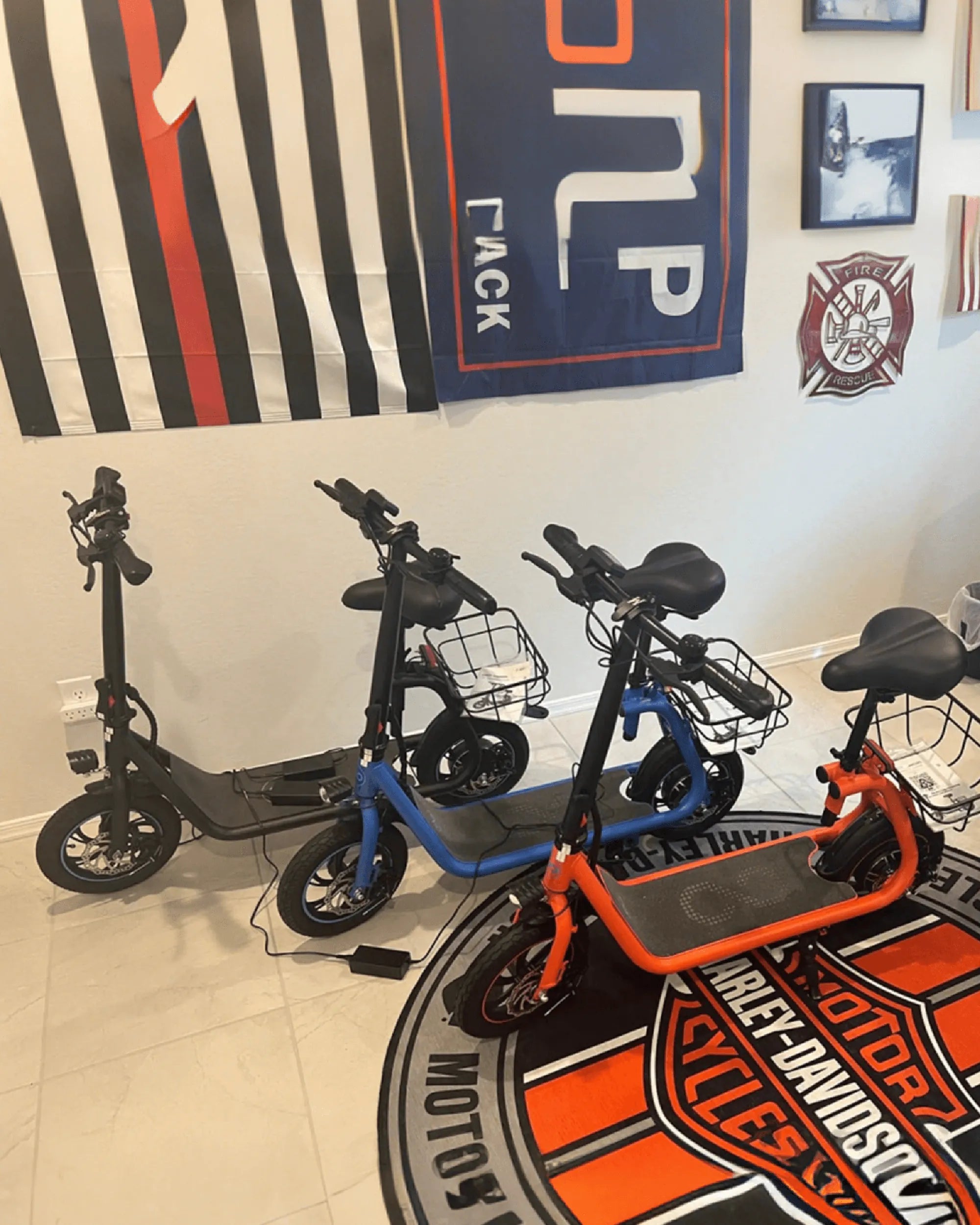
Introduction: The Rise of the Ultralight Scooter
An ultralight scooter represents the pinnacle of portable personal electric transportation, typically defined by a weight under 30 pounds. This category has exploded in popularity among urban commuters, students, and professionals who prioritize seamless integration with public transit and effortless carrying. The core appeal lies in transforming the 'first and last mile' of a journey from a chore into a pleasure.
Unlike bulkier, more powerful models, an ultralight scooter is engineered for agility and convenience. It is designed to be lifted with one hand, stored under a desk, and carried onto a bus or train without a second thought. For a leading brand like Gyroor, innovating in this space means merging this portability with uncompromising safety standards, including UL-certified battery packs and IPX5 water-resistant designs, trusted by over 100,000 riders.
This guide will dissect every aspect of the ultralight scooter. We will explore why portability is non-negotiable for modern city life, break down the key technical features that matter, and provide a practical framework for choosing your ideal model. The goal is to deliver a data-driven resource that helps you make an informed investment in effortless urban mobility.
Why Portability is King: The Core Benefits of Going Ultralight
The primary advantage of an ultralight scooter is its transformative impact on daily logistics. For the urban dweller, the ability to effortlessly carry your vehicle is a game-changer. It eliminates the search for parking, reduces dependency on single-mode transport, and dramatically expands your effective range from any transit hub.
Carrying a scooter up a flight of stairs to an apartment, lifting it onto a crowded subway car, or tucking it beside a desk becomes a trivial task. This reduces physical strain and increases the likelihood you'll use the scooter for every short trip, maximizing its utility and your return on investment. The freedom of multi-modal travel—combining scooter, train, and bus—makes the entire city more accessible.
Furthermore, the compact nature of an ultralight scooter simplifies storage at home, in the office, or in a small apartment. It can be folded and placed in a closet, under a bed, or in a car trunk without consuming significant space. This logistical ease directly translates to more frequent use and a greater overall value from your purchase.
Finally, the psychological benefit is substantial. Knowing your transportation can be with you at all times, without being a burden, fosters a sense of independence and flexibility. An ultralight scooter isn't just a vehicle; it's a portable key to the city.
Key Features to Look for in an Ultralight Electric Scooter
Choosing the right ultralight scooter requires moving beyond marketing claims to examine concrete specifications and build quality. The best models achieve a delicate balance between minimal weight and capable performance. Here are the non-negotiable features that define a quality ultralight scooter.
The Weight-to-Power Sweet Spot
The central engineering challenge is pairing a lightweight frame with sufficient motor power. High-grade aluminum alloys are standard for the deck and stem, providing strength without excess mass. The motor, typically ranging from 250W to 350W for this class, must deliver enough torque for confident starts and manageable hills.
A scooter that is too underpowered will struggle on inclines, forcing you to kick-push and defeating the purpose of electric assist. Brands like Gyroor carefully calibrate this balance, ensuring their ultralight models offer a responsive ride that handles typical urban gradients without requiring a heavy, power-draining motor.
The sweet spot is a scooter that feels zippy and responsive on flat ground—reaching speeds of 15-18 mph—while still being light enough to carry comfortably. This balance is what separates a well-engineered commuter tool from a compromised toy.
Battery Technology and Range Realities
The battery is the heart of any electric scooter, and in an ultralight model, its integration is critical. High-energy-density lithium-ion cells packed into a compact, UL-certified battery pack are essential. UL certification, a standard Gyroor meets, indicates rigorous testing for safety, stability, and performance, mitigating risks of fire or failure.
Advertised range figures are often based on ideal lab conditions. Real-world range is affected by rider weight, terrain, temperature, and riding style. A quality ultralight scooter with a 250Wh battery may advertise 20 miles, but a practical expectation is 12-15 miles for a 165 lb rider on mixed terrain.
This range is typically more than sufficient for daily commuting and errands. The key is reliable performance across 500+ charge cycles, ensuring the scooter remains a dependable asset for years. Prioritize proven battery technology over simply the largest capacity, as a bigger battery adds significant weight.
Durability and Weather Resistance
Lightweight construction must not equate to fragility. Key components like the folding mechanism, stem clamp, and wheel axles must be robust. Many ultralight scooters forgo complex suspension to save weight, relying instead on larger, air-filled (pneumatic) tires or solid rubber tires with honeycomb inserts to absorb vibrations.
Weather resistance is crucial for a practical commuter. An IPX5 rating, common in Gyroor's lineup, means the scooter can withstand water jets from any direction. This protects the electrical system from puddles, road spray, and light rain, greatly increasing its reliability and lifespan. Avoid models with no stated IP rating for serious use.
Folding Mechanism and Portability
The folding mechanism is the cornerstone of portability. It must be quick, intuitive, and secure. Look for a one-step or two-step process that locks both the stem and the handlebars firmly in place. A wobbly or complicated fold undermines the entire ultralight proposition.
Once folded, check the dimensions and whether it can stand upright on its own or has a carrying handle. The folded package should be compact enough to fit in tight spaces. A good fold transforms the scooter from a vehicle into a portable object in seconds, which is the ultimate test of its design.
Beyond the Spec Sheet: Practical Considerations for Urban Riders
Technical specifications tell only part of the story. The daily experience of riding and living with an ultralight scooter involves several practical factors that significantly impact satisfaction and safety.
Ride Quality and Comfort
With smaller wheels (usually 8-8.5 inches) and minimal suspension, ride quality on rough pavement is a valid concern. Pneumatic tires provide the best shock absorption and traction but require occasional inflation and are prone to punctures. Solid tires eliminate flats but transmit more vibration.
The deck size and texture are also vital. A deck should provide enough room for a stable stance and have a non-slip surface. Even without suspension, a well-designed ultralight scooter from a brand focused on rideability, like Gyroor, will use ergonomic principles to dampen road feedback and reduce fatigue on short-to-medium commutes.
Safety Features for City Navigation
Urban riding demands proactive safety systems. A bright front headlight and a rear brake light are essential for visibility at dawn, dusk, or night. Integrated reflectors on the sides and wheels add passive safety. Reliable braking is non-negotiable; a combination of an electronic (regenerative) brake and a mechanical disc or drum brake offers confident stopping power in all conditions.
An audible bell or horn is a simple but critical tool for alerting pedestrians and cyclists. While an ultralight scooter is agile, defensive riding—anticipating car doors opening, pedestrians stepping out, and road hazards—is the rider's most important safety feature.
The Warranty and Support Factor
An electric scooter is a complex electromechanical device. A strong warranty is your insurance against manufacturing defects. Gyroor backs its products with a comprehensive 1-year warranty, covering the motor, battery, and controller. This reflects confidence in their build quality and component sourcing.
Accessible customer support, ideally based in your region (like Gyroor's North American support), is invaluable for troubleshooting and obtaining replacement parts. This support infrastructure protects your investment and ensures a long, useful life for your ultralight scooter, far beyond what a no-name brand can offer.
Making the Choice: Is an Ultralight Scooter Right for You?
Deciding if an ultralight scooter fits your life requires honest assessment of your primary use case. The following comparison table highlights the key differences between ultralight and standard/heavy-duty scooters.
| Feature | Ultralight Scooter | Standard/Heavy-Duty Scooter |
|---|---|---|
| Primary Use | First/Last Mile, Multi-Modal Commute | Primary Commute, Longer Recreational Rides |
| Typical Weight | 22-30 lbs | 35-65+ lbs |
| Motor Power | 250W - 350W | 500W - 1000W+ |
| Real-World Range | 12-18 miles | 20-40+ miles |
| Max Speed | 15-18 mph | 19-25+ mph |
| Portability | Excellent; easy to carry/store | Fair to Poor; difficult to carry |
| Ride Comfort | Good on smooth surfaces | Excellent with suspension/large tires |
| Ideal Rider | Urban commuter using transit, student, apartment dweller | Long-distance commuter, thrill-seeker, rider on rough roads |
Choose an ultralight scooter if: Your commute involves stairs, public transit, or limited storage. Your typical trip is under 5 miles, and your route is mostly on paved paths or roads. Your priority is convenience and carrying ease over high speed or long range.
Consider a more powerful scooter if: You have a long, single-mode commute (over 10 miles one way), frequently encounter steep hills, prioritize top speed, or ride on rough terrain where suspension is needed. Be prepared to sacrifice easy portability.
For the vast majority of city dwellers looking to solve the short-trip problem, the ultralight scooter is the most logical and practical choice. It offers the best balance of utility and hassle-free ownership.
Frequently Asked Questions (FAQ)
Q1: How far can I really go on a single charge with an ultralight scooter?
Real-world range is typically 65-75% of the manufacturer's ideal test range. For a scooter with a 250Wh battery rated for 20 miles, expect 13-15 miles for a 165 lb rider at moderate speeds on flat terrain. Factors like hills, cold weather, and frequent stops/starts will reduce this. For most urban commutes, this is ample for several days of travel between charges.
Q2: Is an ultralight scooter safe to ride in the rain?
Safety in wet conditions depends on the scooter's IP rating. A model with an IPX5 rating, like those from Gyroor, is designed to handle water jets and light rain, protecting its electrical components. However, riding in heavy rain or through deep puddles is not advised. Always reduce speed, avoid sharp turns, and brake earlier on wet surfaces, as traction is reduced.
Q3: Can it handle hills, or do I need more power?
A quality ultralight scooter with a 350W motor can handle moderate hills (grades of 10-15%) at reduced speed. For very steep or long hills, a more powerful motor would be better. If your regular route includes significant inclines, check the scooter's specified hill-climbing grade. The lightweight design can be an advantage on hills you may need to push up in extreme cases.
Q4: How important is the UL certification for the battery?
Extremely important. UL certification means the battery pack has been independently tested to rigorous safety standards for electrical, mechanical, and environmental stress. It significantly reduces the risk of overheating, fire, or failure. It is a key indicator of a manufacturer's commitment to safety and quality. Never compromise on this for any electric scooter.
Q5: What's the typical maintenance required?
Maintenance is minimal but crucial. Regularly check tire pressure (if pneumatic), ensure all bolts (especially around the folding mechanism) are tight, and keep the scooter clean. Check brakes for wear and functionality. Store the scooter in a dry place and avoid completely draining the battery before recharging. Following these simple steps will ensure longevity and reliable performance.
Conclusion: Embracing Effortless Mobility
The ultralight scooter has cemented its place as an essential tool for modern urban mobility. By perfectly balancing portability with capable electric assist, it solves the most persistent transportation challenges for city residents. The freedom to seamlessly bridge the gap between home, transit, and destination is no longer a futuristic concept but an accessible reality.
Choosing the right model requires focusing on the synergy of lightweight engineering, reliable UL-certified battery technology, durable weather-resistant construction, and a trustworthy warranty. A brand like Gyroor exemplifies this approach, building ultralight scooters that are not just convenient but also safe and dependable, backed by proven standards and customer support.
Investing in a well-engineered ultralight scooter is an investment in a simpler, more efficient, and more enjoyable daily routine. It represents a step towards sustainable personal transportation that adapts to your life, rather than forcing your life to adapt to it.
Ready to experience the freedom of effortless urban travel? Browse the full Gyroor collection, featuring UL-certified, IPX5-rated ultralight scooters designed for the real world, at gyroorboard.com.
How Fast Can a Motor Scooter Go? A Data-Driven Guide to Speed & Safety
Girls 26 Inch 7 Speed Kids Bike: The Complete Guide for Parents