



Understanding what a dirt bike is classified as is the most critical piece of knowledge for any rider, new or experienced. This classification dictates where you can legally ride, what licenses you need, and what rules you must follow. This guide will provide a comprehensive, data-driven breakdown of dirt bike classifications, from traditional gas-powered machines to the emerging world of electric off-road vehicles, helping you navigate regulations and make informed choices.
Defining the Dirt Bike: More Than Just a Motorcycle
A dirt bike is fundamentally a lightweight motorcycle engineered specifically for off-road operation on unpaved terrain. Its design prioritizes durability, suspension travel, and power-to-weight ratio over comfort and road legality. When asking "what is a dirt bike classified as," the answer begins with recognizing it as a specialized motor vehicle built for dirt, sand, mud, and gravel.
The core classification stems from its intended use and construction. Unlike a street motorcycle, a dirt bike typically lacks the equipment mandated for public road use by the Department of Transportation (DOT). This intentional design omission is what legally separates it from vehicles you see on highways and city streets.
For regulatory bodies, this distinction is paramount. It creates a separate category with its own set of rules, governing where and how these machines can be operated. This classification affects everyone, from motocross racers to trail explorers.
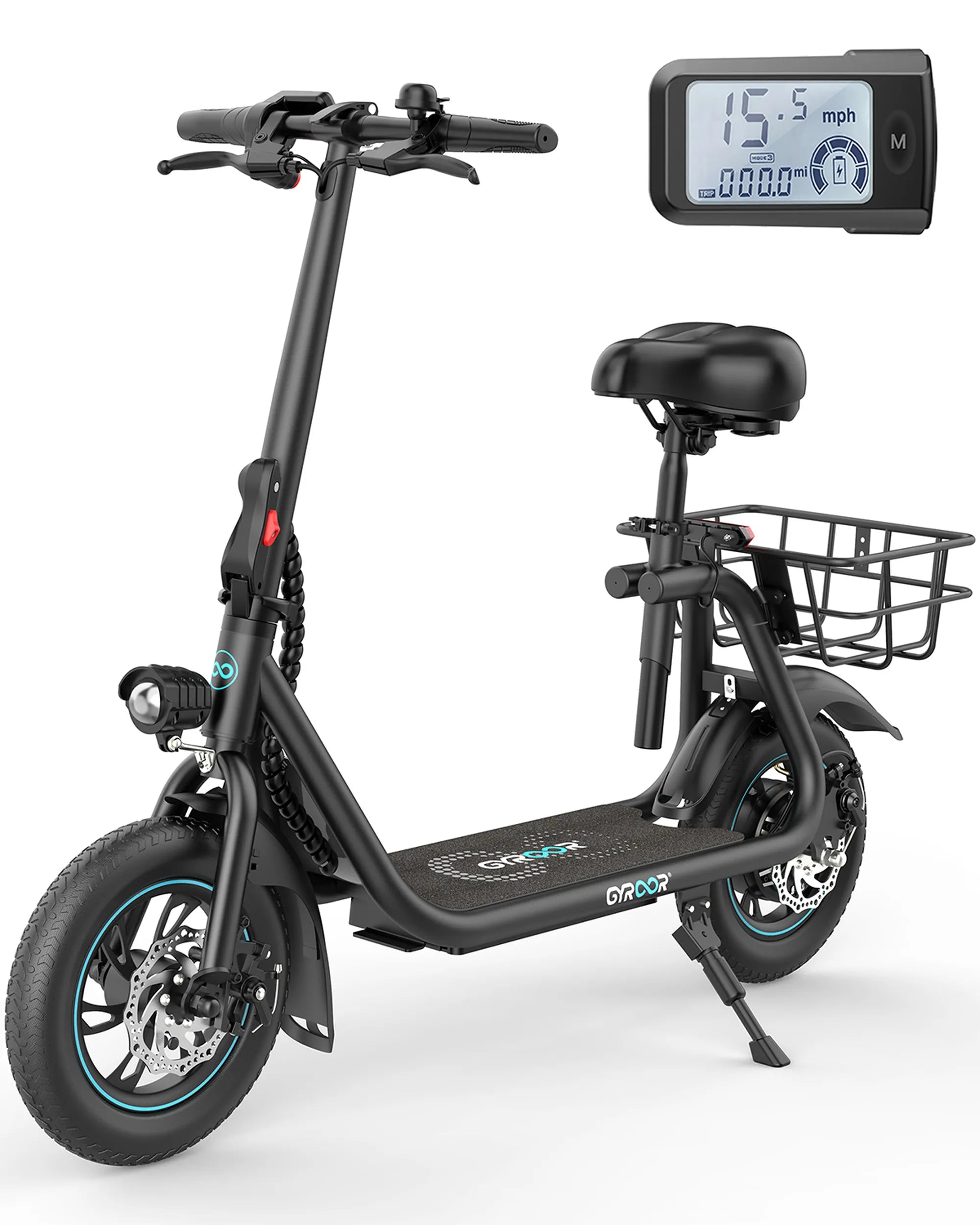
As electric mobility advances, this classification landscape is evolving. High-power electric dirt bikes and robust off-road e-bikes, like those from Gyroor, introduce new considerations, blending traditional motorcycle performance with bicycle-accessible regulations.
The Core Legal Classification: Off-Highway Vehicle (OHV)
Legally, a traditional internal combustion engine (ICE) dirt bike is classified as an Off-Highway Vehicle (OHV). This is a blanket term used by federal agencies like the Bureau of Land Management (BLM) and the U.S. Forest Service, as well as state Departments of Motor Vehicles (DMVs) or Natural Resources departments.
This OHV designation is the primary answer to "what is a dirt bike classified as" in legal and regulatory contexts. It places dirt bikes in the same broad category as all-terrain vehicles (ATVs), side-by-sides (UTVs), and snowmobiles when used off public roads.
The classification is not arbitrary. It is based on a vehicle's compliance, or lack thereof, with Federal Motor Vehicle Safety Standards (FMVSS) and Environmental Protection Agency (EPA) regulations for on-road use. A true dirt bike does not meet these standards by design.
State laws codify this federal framework. Most states have specific OHV statutes that define these vehicles, outline registration requirements for public land use, and designate legal riding areas. The OHV sticker or permit issued by states is the equivalent of a license plate for off-road use.
Key Defining Characteristics of an OHV
Several physical and technical features solidify a dirt bike's classification as an OHV. The absence of road-legal equipment is the most significant indicator. A competition or trail-oriented dirt bike will not have DOT-approved headlights, taillights, turn signals, mirrors, or a horn installed from the factory.
The tires are another clear marker. Dirt bikes use aggressive, knobby tires designed for loose terrain, not the smooth, treaded rubber required for paved road safety and wear. The high ground clearance, minimal bodywork, and lack of a speedometer/odometer are also telltale signs of an off-road-only machine.
From an emissions standpoint, many pure dirt bikes are not certified by the EPA for on-road use, though they must meet EPA standards for off-road emissions. Their exhaust systems are often not street-legal due to sound and emissions output.
The vehicle identification number (VIN) also tells a story. A VIN starting with a "3" or "5" typically indicates a motorcycle, but the manufacturer's certificate of origin (MCO) will explicitly state it is for "off-road use only," which is the definitive legal document for classification.
The Critical Distinction from Street Motorcycles
The line between a street-legal dual-sport or adventure motorcycle and a dirt bike is defined by certification. A street-legal motorcycle has a manufacturer's statement of origin certifying it meets all applicable FMVSS and has received an EPA on-road certification.
This certification allows it to be titled and registered for road use, receiving a standard license plate. A dirt bike lacks this certification. Even if a dual-sport model looks similar, its inclusion of DOT lighting, a quieter exhaust, and a different VIN/MCO classification makes it a different legal entity.
The practical difference is immense. A street-legal motorcycle can transition from highway to forest service road. A classified OHV dirt bike cannot legally touch the public highway to get to the trailhead—it must be transported via truck or trailer.
This distinction protects riders, pedestrians, and other road users. Operating a non-compliant vehicle on public roads is a traffic violation, can invalidate insurance, and poses significant safety risks due to inadequate lighting and signaling.
Licensing, Registration, and Titling Implications
The classification of a dirt bike as an OHV directly dictates the bureaucratic hurdles an owner must clear. Unlike a car, the requirements are not universal and depend heavily on where you intend to ride.
For exclusive use on private property with the owner's permission, the barriers are often low. No license, registration, or titling is typically required. However, the moment you seek to ride on public land—state forests, BLM land, or designated OHV areas—regulations come into effect.
It's a common misconception that dirt bikes are "unregulated." In reality, their use on public land is highly regulated to ensure environmental protection, rider safety, and conflict minimization with other user groups like hikers and horseback riders.
Navigating these requirements is the responsibility of the rider. Failure to comply can result in substantial fines, vehicle impoundment, and loss of access privileges. Understanding "what is a dirt bike classified as" is the first step in this compliance process.
The Licensing Landscape for OHV Operation
For operating a dirt bike on public OHV areas, a standard state driver's license is usually not required. Instead, the focus is on age restrictions and safety education. Most states require riders under a certain age (often 16 or 18) to complete an approved OHV safety course.
These courses, sometimes offered by organizations like the Motorcycle Safety Foundation (MSF) for dirt bikes, teach fundamental riding skills, trail etiquette, and environmental responsibility. Upon completion, riders receive a safety certificate, which is often mandatory to obtain an OHV permit.
A motorcycle endorsement ("M" endorsement) on your driver's license is generally required only for operating street-legal motorcycles on public roads. It is not a prerequisite for operating an OHV on designated trails, though the skills learned are undoubtedly transferable and valuable.
Some states have a separate OHV operator's license or permit, especially for younger riders. Checking with your state's managing agency—often the DMV, Department of Natural Resources (DNR), or Parks and Recreation department—is essential.
Registration, Titling, and the OHV Permit
While a dirt bike may not need a *license plate*, it often requires *registration* for use on public lands. This process results in an OHV permit or sticker, not a metal plate. This sticker must be displayed prominently on the vehicle and is proof that you've paid required fees, which often fund trail maintenance and conservation.
Titling is a separate process that establishes legal ownership. Most new dirt bikes come with a Manufacturer's Certificate of Origin (MCO). You can use this to apply for a title from your state, even though the title will usually indicate "for off-road use only." Titling is highly recommended as it is the primary proof of ownership for insurance and resale.
The registration and titling process is state-specific. Some states require both a title and an OHV sticker. Others may only require the sticker for public land use. Fees vary and are typically annual or biennial.
Importantly, if you purchase a used dirt bike without a title, the process to obtain one can be difficult. A bill of sale is a minimum, but many states require a bonded title or previous registration history, making a titled bike a more valuable and simpler asset.
Legal Riding Locations: Where Can You Actually Ride?
The classification of a dirt bike as an OHV explicitly limits where it can be legally and responsibly operated. The guiding principle is: unless explicitly permitted, it is prohibited.
Designated OHV Areas and Motocross Tracks: These are the primary legal venues. They include state-operated OHV parks, National Forests with designated motorized trails, and Bureau of Land Management (BLM) land open to motorized use. Private motocross tracks are also obviously legal with the owner's permission and often a membership or day-pass fee.
Private Property: Riding on land you own or have written permission to use is generally legal, subject to local noise ordinances. This is the domain with the fewest regulatory restrictions.
Public Streets, Sidewalks, and Parks: This is categorically illegal for a non-street-legal dirt bike. Riding an OHV on these surfaces is a traffic violation, poses serious safety risks, and is a primary source of complaints that lead to stricter regulations and trail closures for all riders.
Riders must research their destination before loading up. Websites for state DNRs, the U.S. Forest Service, and local OHV clubs provide maps and current status of trail systems. "Assumed access" can lead to fines and ecological damage.
The Electric Evolution: Classifying E-Dirt Bikes and Off-Road E-Bikes
The rise of electric powertrains has introduced nuance to the question of "what is a dirt bike classified as." The market now features two distinct categories: high-power electric dirt bikes and electric bicycles built for off-road capability.
High-power electric dirt bikes, with motorcycle-style frames, full suspension, and throttle-based control, are engineered as direct replacements for gas-powered models. Their performance and form factor lead to the same classification: they are Off-Highway Vehicles (OHVs). They are subject to all the same registration, permitting, and land-use rules as their gas counterparts.
However, the emerging and more accessible category is the off-road electric bicycle. These are not motorcycles but rather bicycles with electric assist. Their classification falls under state e-bike laws, which are dramatically different from OHV regulations, creating a new pathway for off-road adventure.
High-Power Electric Dirt Bikes: Performance as an OHV
Models from brands like Sur-Ron, Talaria, and high-end offerings from KTM or Husqvarna produce power and speeds comparable to 125cc-250cc gas dirt bikes. They have a motorcycle-style VIN, a throttle, and no functional pedals.
Legally, these are unambiguously classified as motor-driven cycles or off-road motorcycles. In the eyes of the law, the power source (electric vs. gas) is irrelevant; the vehicle's characteristics and performance define it. They require OHV permits for public land use and cannot be used on non-motorized trails or bicycle paths.
Their advantage lies in reduced noise, lower maintenance, and instant torque. Their regulatory burden, however, is identical to a traditional dirt bike, which is a crucial point for buyers to understand before purchase.
The Gyroor Crossover: Off-Road Capable E-Bikes
This is where brands like Gyroor, a leading electric scooter and e-bike brand, change the game. A model like a Gyroor fat-tire electric bike is designed for rugged terrain but is fundamentally an electric bicycle. It features functional pedals and pedal-assist systems (PAS) as the primary control method, often with a throttle that may be limited by software or local law.
Under the widely adopted 3-Class e-bike system, these are typically classified as Class 2 (throttle-assisted up to 20 mph) or Class 3 (pedal-assisted up to 28 mph). This classification is pivotal. In most states, e-bikes are treated as bicycles, not motor vehicles.
This means no driver's license, no vehicle registration, no OHV permit, and no motorcycle insurance are required. Crucially, they are generally permitted on bicycle paths, trails that allow mountain bikes, and other infrastructure where OHVs are banned. They offer a legitimate way to explore trails and backcountry with far fewer regulatory hurdles.
Gyroor's emphasis on safety and reliability—with UL-certified battery packs, IPX5 water-resistant designs, and a robust 1-year warranty—makes these e-bikes a dependable choice for riders seeking adventure without the complexity of OHV management. They represent a bridge between mountain biking and motorcycling.
Making the Right Choice: Classification Implications for Buyers
Choosing between a traditional dirt bike and an off-road e-bike like a Gyroor model is not just about performance preference; it's a decision heavily influenced by legal classification and intended use. Your local riding opportunities should dictate your purchase.
If your goal is dedicated motocross, high-speed desert riding, or accessing remote public OHV trail systems, a traditional or high-power electric dirt bike (an OHV) is the necessary tool. Be prepared for the associated costs of transport, registration, permits, and potentially higher maintenance.
If your goal is trail riding, exploring forest service roads, commuting on mixed terrain, or simply enjoying off-pavement recreation with maximum accessibility, a Class 2 or 3 off-road e-bike is a revolutionary option. It bypasses the OHV bureaucracy while still delivering thrilling performance.
The following comparison table outlines the key decision factors based on vehicle classification:
| Factor | Traditional Gas Dirt Bike (OHV) | High-Power E-Dirt Bike (OHV) | Off-Road E-Bike (e.g., Gyroor) |
|---|---|---|---|
| Legal Classification | Off-Highway Vehicle (OHV) | Off-Highway Vehicle (OHV) | Electric Bicycle (Class 2/3) |
| License Required | OHV Safety Cert. (often) | OHV Safety Cert. (often) | None (typically) |
| Registration/Permit | State OHV Sticker Required | State OHV Sticker Required | Not Required |
| Primary Legal Use Areas | Designated OHV Trails, Private Land | Designated OHV Trails, Private Land | Bike Paths, MTB Trails, Private Land, Some Service Roads |
| Street Legal? | No (without modification/cert.) | No (without modification/cert.) | Varies by locality; often allowed on roads with speed limits ≤25-35mph |
| Noise Output | High | Very Low | Very Low |
| Direct Emissions | Yes | No | No |
| Maintenance Complexity | Higher (engine, transmission, fluids) | Moderate (battery care, electric motor) | Lower (similar to bicycle + battery care) |
| Typical Transport Needed | Trailer/Truck Required | Trailer/Truck Required | Can often pedal to location or use bike rack |
Frequently Asked Questions (FAQ)
Can I Make My Dirt Bike Street Legal?
The process, known as "conversion" or "dual-sport conversion," is complex, expensive, and not guaranteed to be successful. It involves adding a full DOT-approved lighting kit (headlight, taillight, brake light, turn signals, mirrors), a horn, and often a different exhaust system to meet sound regulations. The bike may need to be inspected by the state DMV or highway patrol. Critically, even with all equipment, some states will not title or register a bike whose MCO states "for off-road use only." It is often easier and more reliable to purchase a factory-made dual-sport motorcycle.
Do I Need Insurance for a Dirt Bike?
Insurance is not legally required to operate an OHV on public trails. However, it is highly, highly recommended. A dedicated off-road motorcycle policy can cover theft, damage from crashes, and liability if you cause injury to someone else or damage to private property (even on a trail). If you make your bike street-legal, liability insurance will become a legal requirement for registration in almost all states.
How Does an Electric Off-Road Bike Like Gyroor's Differ from a Dirt Bike?
The difference is foundational in classification and use. A Gyroor off-road e-bike is legally an electric bicycle, granting access to bike paths and trails where motorized OHVs are prohibited, with no license or registration. A dirt bike is a motor vehicle (OHV) confined to designated motorized areas. Practically, e-bikes offer quiet, low-maintenance, pedal-assisted riding, while dirt bikes offer higher peak power, speed, and suspension performance for aggressive riding, but with more noise, maintenance, and regulatory restrictions.
What Age Can You Ride a Dirt Bike Legally?
Age restrictions are set by state law and often by the managing agency of the riding area. On private property, it's at the owner's discretion. For public OHV areas, common minimum ages are 8-10 years old to operate a small-engine bike (e.g., under 90cc), with requirements for direct adult supervision until ages 14-16. Riders under 16-18 almost universally must complete a state-approved OHV safety course. Always check your specific state's regulations.
Are Dirt Bikes Tagged and Titled Like Cars?
They are titled, but not "tagged" with a standard license plate. A title is a certificate of ownership, and you should get one for a new bike. The "tag" for public land use is an OHV sticker or permit, not a metal plate. The process and issuing agency (DMV vs. DNR) are different from car registration. A title is crucial for proving ownership; the OHV sticker is a permit to operate on specific public lands.
Conclusion: Your Ride's Identity Dictates Your Adventure
Ultimately, knowing what a dirt bike is classified as—an Off-Highway Vehicle—is the key that unlocks safe, legal, and responsible riding. This classification governs every practical aspect: the need for an OHV permit, the restriction to designated trails, and the transport required to get there. The emergence of electric off-road bicycles, exemplified by brands like Gyroor, has created a compelling alternative. These machines offer a gateway to off-road exploration under the more accessible legal framework of an electric bicycle, with no license or registration required in most areas. Whether you choose the raw power of a traditional OHV or the accessible versatility of a modern off-road e-bike, understanding its legal identity is the first and most important ride you'll ever take.
Ready to explore off-road terrain with the accessibility of an e-bike? Discover Gyroor's range of UL-certified, fat-tire electric bikes built for adventure. Browse the full Gyroor collection at gyroorboard.com.
Best Ebike for Senior Women: A 2024 Guide to Comfort & Safety
3 Wheel Off Road Scooter: Ultimate Guide to Rugged Trike Mobility