


Understanding "Starter Dirt Bikes": More Than Just Size
Choosing your first dirt bike is a pivotal decision that shapes your entire riding experience. A good starter dirt bike is not defined by its price tag or flashy graphics, but by a specific set of characteristics designed for a new rider's success. Fundamentally, it is a machine that prioritizes manageability, reliability, and safety over outright power or competition-level performance. The goal is to find a bike that feels like a partner in learning, not an adversary.
Key considerations extend far beyond the engine's cubic centimeters. The rider's age, physical size, and intended use—be it casual trail riding, exploring forest service roads, or introductory motocross—are primary filters. A bike that's perfect for a 14-year-old on a track is a terrible choice for a 30-year-old adult learning on mountain trails. Budget is also a realistic factor, encompassing not just the purchase price but the cost of essential safety gear, maintenance, and potential repairs.
Perhaps the most overlooked aspect is build quality and design philosophy. A good starter model should have a forgiving power delivery, a comfortable and confidence-inspiring riding position, and a reputation for durability. These features allow the rider to focus on developing fundamental skills like clutch control, balance, braking, and body position, rather than wrestling with a peaky powerband or fighting a tall, heavy machine.
This guide will dissect what makes a good starter dirt bike across every critical category. We'll move from defining the ideal beginner profiles to comparing specific bike types, analyzing must-have features, and navigating the new-versus-used market. By the end, you'll have a clear, data-driven framework for making an informed choice that leads to years of enjoyable riding.
Top Starter Dirt Bike Categories & Ideal Riders
The off-road motorcycle market is segmented into distinct categories, each with inherent strengths for beginners. Matching the category to the rider's primary goal is the first step to a successful purchase. The three main avenues for newcomers are four-stroke trail bikes, two-stroke off-road bikes, and mini or pit bikes. Understanding the core identity of each will narrow your search significantly.
Four-stroke trail bikes are often considered the default recommendation for adult beginners and older teenagers. They are engineered for predictable, tractable power and user-friendly operation. Two-stroke off-road bikes, particularly modern models with advanced power valves, offer a compelling mix of lightweight agility and linear power delivery, appealing to riders who prioritize flickable handling. Mini and pit bikes serve the crucial role of introducing younger riders or providing a low-stakes practice platform for adults in confined spaces.
The choice between these paths isn't just about engine technology; it's about the riding environment and the rider's psychology. A bike that feels at home on winding single-track may feel cumbersome on a fast fire road, and vice-versa. The following subsections will detail the pros, cons, and ideal rider profiles for each primary category to help you identify the best starting point.
Four-Stroke Trail Bikes: The Forgiving All-Rounder
For many, the phrase "good starter dirt bike" is synonymous with a mild-tuned, four-stroke trail machine. These bikes are characterized by their broad, easy-to-use powerband. Power builds linearly from low RPMs, providing excellent traction and control without sudden surges that can unsettle a novice. This makes them exceptionally forgiving on technical terrain where precise throttle modulation is key.
Maintenance is a significant advantage for beginners. Modern four-strokes are remarkably reliable, with longer service intervals for oil changes and valve checks compared to high-strung race bikes. Their design is also quieter and produces less exhaust smoke, which is beneficial for riding in areas with noise restrictions or environmental sensitivity. The tractable power delivery also makes them less taxing to ride over long periods, reducing fatigue.
A critical feature to prioritize in a starter four-stroke is an electric start button. While kick-starting is a classic skill, the convenience and reliability of electric start cannot be overstated for a beginner. Stalling on a hill or in a tricky section is common when learning; the ability to restart the engine instantly with a button preserves confidence and momentum. Many modern trail bikes also come with fuel injection, eliminating carburetor tuning and ensuring easy starting in all conditions.
Ideal models in this category for adults often fall in the 230cc to 250cc range, offering ample power for hills and highway-speed trail connectors without being intimidating. For younger or smaller-framed beginners, 125cc to 150cc four-strokes provide a perfect blend of capability and manageability. These bikes are the Swiss Army knives of the dirt world: competent everywhere, excelling nowhere in particular, which is exactly what a new rider needs.
Two-Stroke Off-Road Bikes: Lightweight & Simple
The two-stroke dirt bike has undergone a renaissance, shedding its reputation as a hard-to-ride "powerband monster" thanks to advanced exhaust power valves and sophisticated engine design. For the right beginner, a modern entry-level two-stroke can be a brilliant choice. Their most compelling attribute is their phenomenal power-to-weight ratio; they are often 20-30 pounds lighter than equivalent four-strokes, making them easier to pick up, maneuver, and control.
This lightweight nature translates directly to rider confidence. A lighter bike is less intimidating to handle at slow speeds, easier to correct when it gets off-line, and far less punishing when it tips over. The engine's character is also a benefit: a well-tuned beginner-oriented two-stroke provides a very linear and controllable power delivery. The engine braking is minimal, which teaches smooth braking technique, and the power comes on in a predictable, manageable swell.
Mechanical simplicity is another historical advantage of two-strokes. They have fewer moving parts in the top end—no complex valve trains—which can make certain maintenance tasks like a top-end rebuild more straightforward and less costly. This simplicity appeals to riders who want to learn mechanical skills alongside riding skills. For smaller adults or larger teenagers who find 250cc four-strokes too heavy, a 125cc or 150cc two-stroke can be a perfect physical and power match.
It's important to note that two-strokes require pre-mixing oil with gasoline (or use an automatic oil injection system), and their exhaust note is sharper. They can be more demanding to ride at a consistent pace on open trails compared to a torquey four-stroke, often requiring more clutch work. However, for a rider whose primary focus is agile handling on tight, technical trails or who simply prefers a lighter machine, a modern two-stroke is an excellent candidate for a good starter dirt bike.
Mini & Pit Bikes: For Younger Riders & Tight Spaces
The journey for many enthusiasts starts not on a full-size machine, but on a mini or pit bike. These smaller-scale motorcycles are engineered specifically for younger riders or for adult fun in controlled environments. A good starter dirt bike for a child is, first and foremost, a bike that fits. A bike that is too tall or too powerful is dangerous and will quickly extinguish a young rider's enthusiasm.
Mini bikes, typically with engine displacements from 50cc to 110cc, offer scaled-down performance with full motorcycle controls (clutch, hand brakes, gears). This allows kids to learn proper riding techniques from the very beginning. Automatic clutch models (semi-automatic) are available for the very youngest novices, allowing them to focus on balance and throttle without managing a manual clutch. The progression from a 50cc to an 80cc or 110cc bike mirrors the skill development of the rider.
For adults, pit bikes serve a unique role. They are inexpensive, nearly indestructible, and incredibly fun for practicing fundamental skills like cornering, body position, and throttle control in a backyard, pit area, or small track. The consequences of a mistake are minimal due to their low weight and speed. Riding a pit bike hones skills that directly translate to larger machines, making them a valuable training tool that is often overlooked.
Regardless of the rider's age, safety gear is non-negotiable. A youth-sized DOT-approved helmet, goggles, gloves, long sleeves, pants, and over-the-ankle boots are the absolute minimum. Starting on a properly sized mini bike with full safety gear is the safest and most effective way to cultivate a lifelong passion for off-road motorcycling.
Critical Features to Prioritize for Your First Bike
Once you've identified the general category, evaluating specific features becomes paramount. A good starter dirt bike is defined by a collection of attributes that work in harmony to support the learning process. The focus should shift from seeking maximum performance to prioritizing usability, safety, and durability. These features are the difference between a bike that builds confidence and one that creates frustration.
Manageable power delivery is more important than peak horsepower. A low seat height and comfortable ergonomics directly impact control and confidence. Reliability ensures the bike is ready to ride when you are, and ease of maintenance makes ownership sustainable. Suspension tuned for comfort and control over big jumps is also key. These elements form the checklist against which any potential first bike should be measured.
Ignoring these fundamentals in favor of a more powerful or "cooler" used race bike is the most common mistake new riders make. A bike that is too advanced will actively hinder skill development, as the rider spends all their mental energy managing the machine's aggression instead of learning proper technique. The following sections detail why these specific features are non-negotiable for a successful start.
Manageable Power Delivery & Engine Displacement
Engine displacement (cc) is a number, but power delivery is a feeling. A good starter dirt bike must have a predictable, tractable power curve. This means power builds smoothly from the bottom of the RPM range, providing strong, usable torque at low speeds without a sudden, explosive "hit" at higher RPMs. This characteristic allows a new rider to focus on the trail ahead and their body position, not on managing a wild throttle.
For adult beginners (5'8" and taller), the engine displacement sweet spot generally lies between 125cc and 250cc. Within this range, a 230cc or 250cc air-cooled four-stroke is often the gold standard for trail riding. It has enough power to tackle moderate hills and carry an adult rider at a reasonable pace, but its delivery is mellow and controllable. For smaller adults or those exclusively on very tight trails, a 125cc four-stroke or a modern 125cc two-stroke can be ideal.
For younger riders, the progression is more defined. A first bike for a child aged 6-10 might be a 50cc. For ages 10-14, an 80cc to 110cc bike is appropriate. The critical factor is matching the bike's power to the rider's maturity and physical strength, not just their age. A bike with too much power will scare a rider, leading to tense, erratic control. A bike with manageable power encourages smooth inputs and rapid skill acquisition.
When evaluating a used bike, be wary of modifications. A "good starter dirt bike" that has had its engine modified, exhaust changed, or carburetor re-jetted for more power may have lost the very beginner-friendly characteristics you need. Stock, unmodified engines from reputable manufacturers are almost always the best choice for a first motorcycle.
Low Seat Height & Overall Ergonomics
The physical connection between rider and machine is foundational. A low seat height is arguably the most important ergonomic factor for a beginner. Being able to place the balls of both feet firmly on the ground when stopped provides immense psychological and practical security. It allows for easy recovery from a stall, simple maneuvering at slow speeds, and prevents the bike from tipping over uncontrollably on uneven ground.
Manufacturers publish seat height specifications, but they are a static measurement. The bike's suspension sag and the rider's inseam are the dynamic variables. A good rule of thumb is that a beginner should be able to flat-foot at least one foot comfortably, and get the balls of both feet down. If a bike is slightly too tall, aftermarket lowering links or seat shaving can help, but it's best to start with a bike that fits well in stock form.
Beyond seat height, overall ergonomics matter. The relationship between the handlebars, seat, and footpegs should feel natural, not stretched or cramped. Controls (clutch lever, brake lever, shift lever) should be easily reachable and operable. A bike that fits well disappears beneath you, allowing you to move freely and control it with your body. A bike that doesn't fit becomes an obstacle you are perched upon, hindering proper technique.
For growing riders, some bikes offer adjustable components. Handlebars can be rotated in the clamps, lever positions can be changed, and some shift/brake levers have adjustable reach. These small tweaks can tailor a bike to fit a rider more precisely, extending its useful life as the rider grows. Prioritizing fit is investing in confidence and control from the very first ride.
Reliability & Ease of Maintenance
A beginner's dirt bike should be a tool for riding, not a project for constant repair. Reliability is therefore a critical feature. This means choosing a bike from a manufacturer with a strong reputation for build quality and durability. Japanese brands (Honda, Yamaha, Kawasaki, Suzuki) have built their legacies on reliability, and their entry-level trail bikes are famously robust. Certain Austrian and other European brands also offer reliable enduro models suitable for beginners.
Ease of maintenance goes hand-in-hand with reliability. A good starter bike should have simple, accessible systems. Air filter access should be tool-less or require minimal disassembly. Oil changes should be straightforward. Valve adjustment intervals (on four-strokes) should be reasonably long. The availability and cost of replacement parts is a key data point; popular models have vast aftermarket and OEM parts support, making upkeep affordable and easy.
Complexity is the enemy of the novice owner-rider. While fuel injection is more convenient than a carburetor, it can be more daunting to diagnose if a problem arises. Conversely, a simple carbureted bike can often be fixed trailside with basic knowledge. Weigh the convenience of fuel injection against the simplicity of carburetion based on your mechanical aptitude and local riding conditions (extreme altitude changes favor fuel injection).
Before purchasing any used bike, a thorough inspection is mandatory. Check for obvious signs of neglect: dirty air filter, old coolant, loose spokes, worn sprockets and chain, and leaking fork seals. Ask for maintenance records. A bike that has been well-cared-for is a much safer bet than a seemingly identical bike with an unknown history. Reliability is a feature you must verify.
New vs. Used: Navigating the Starter Bike Market
The decision to buy a new or used motorcycle is a significant financial and practical consideration for every first-time buyer. There is no universally correct answer, as the best path depends heavily on budget, risk tolerance, and mechanical knowledge. A new bike offers peace of mind and modern features, while a used bike provides access to a proven platform at a lower entry cost. Analyzing the trade-offs with clear data is essential.
Buying new from an authorized dealer guarantees you a machine with zero wear, a full manufacturer's warranty, and the latest technology (like fuel injection and advanced suspension). You also benefit from professional assembly and a first service. The primary drawback is the higher upfront cost and the immediate depreciation the moment it leaves the showroom. For a beginner who wants absolute simplicity and can afford it, new is compelling.
The used market is where most beginners find their first bike. It offers incredible value, as a 2-5 year old, well-maintained trail bike often retains its beginner-friendly characteristics while costing 30-50% less than a new model. However, it requires diligent research, inspection, and an acceptance of some risk regarding the bike's history. The potential for hidden mechanical issues or undisclosed crash damage is real.
The table below provides a direct comparison of the key factors to consider when choosing between a new and used good starter dirt bike.
| Factor | Buying New | Buying Used |
|---|---|---|
| Price | Highest upfront cost (MSRP + fees). | Significantly lower initial investment. |
| Warranty | Full factory warranty (typically 1 year). | Almost always sold "as-is," no warranty. |
| Known History | Zero hours/miles. Pristine condition. | Unknown or seller-described history. Inspection critical. |
| Technology & Features | Latest fuel injection, suspension, brakes. | May be older carbureted technology. |
| Immediate Readiness | Ready to ride after dealer prep. | May need immediate tires, chain, fluids. |
| Depreciation | Highest in first year. | Slowest; often holds value well if maintained. |
| Best For | Buyers prioritizing warranty, latest tech, and zero risk. | Budget-conscious buyers willing to inspect and accept some risk. |
Essential Gear & Pre-Ride Preparations
The motorcycle is only half of the equation for safe off-road riding. Investing in proper protective gear is not optional; it is a fundamental responsibility. A good starter dirt bike journey begins with equipping the rider before the engine is ever started. High-quality gear protects against the inevitable falls and impacts, drastically reducing the risk of serious injury and allowing the rider to push their limits with more confidence.
The foundation of all safety gear is a DOT-approved motocross or off-road helmet. It should fit snugly without pressure points. Goggles with a tear-off system are mandatory to protect eyes from roost, branches, and dust. Motocross-specific boots are arguably the second most important item; they protect ankles and feet from impacts and twisting, and provide crucial support. Gloves improve grip and protect hands, while knee/shin guards and a chest protector shield vital joints and the torso.
Beyond personal gear, the machine itself requires a consistent pre-ride inspection. The Motorcycle Safety Foundation's T-CLOCS checklist is an industry-standard framework: Tires & Wheels (pressure, cracks, spoke tension), Controls (levers, cables, throttle), Lights & Electrics/Oil & Fluids (if applicable), Chassis (frame, suspension, bolts), and Stands. Developing this habit before every ride catches minor issues before they become major failures on the trail.
Carrying a basic tool kit, a spare master link for the chain, a tire repair kit, and a way to inflate a tire (CO2 cartridges or small pump) is also wise for longer rides. Finally, never ride alone. Having at least one other person with you ensures help is available in case of a mechanical problem or injury. Gear and preparation transform riding from a risky activity into a managed, enjoyable sport.
Frequently Asked Questions (FAQ)
Q: What is the best cc for a beginner adult dirt bike?
A: For most adult beginners (5'8"+), a 230cc to 250cc four-stroke is the ideal starting point. This displacement provides ample power for hills and varied terrain while maintaining a forgiving, tractable power delivery. Smaller adults or those on extremely tight trails may find a 125cc four-stroke or 125cc two-stroke more manageable. The key is prioritizing controllable power over maximum displacement.
Q: Is a 2-stroke or 4-stroke better for learning?
A: For the absolute beginner with no prior experience, a modern four-stroke trail bike is generally the easier and more forgiving platform. Its linear torque and engine braking are intuitive. However, a modern, mild-tuned two-stroke (like a 125cc enduro) is an excellent choice for a rider who values lightweight handling above all else or has some prior experience. Both can be good starter dirt bikes; it depends on rider priorities.
Q: How much should I spend on my first dirt bike?
A>Budget at least $2,000 to $4,000 for a good quality used starter bike from a major brand in ready-to-ride condition. A new entry-level model typically ranges from $4,500 to $6,500. Crucially, you must budget an additional $500 to $1,000 for essential, high-quality safety gear (helmet, boots, goggles, gloves, protection). The total initial outlay is often between $3,000 and $7,500 depending on the new/used choice.
Q: Can I ride a dirt bike legally on public roads?
A>Most pure dirt bikes are not street-legal from the factory. They lack required equipment like headlights, tail/brake lights, turn signals, mirrors, horn, and a DOT-approved tire designation. To ride on public roads, you need a motorcycle that is specifically manufactured as "dual-sport" or "street-legal," and you must have a valid motorcycle endorsement on your driver's license. Always check your local and state laws.
Q: What's the single most important piece of safety gear?
A>While all gear is important, a high-quality, properly fitted helmet is non-negotiable. It is your primary defense against traumatic head injury. Do not compromise on helmet quality or fit. Boots are a very close second, as foot and ankle injuries are extremely common in off-road riding. Investing in these two items first is the most effective safety decision you can make.
Conclusion: Starting Right for a Lifetime of Riding
The search for a good starter dirt bike is a search for the right partner. It's about finding a machine that matches your physical size, your realistic riding goals, and your budget, all while offering the forgiveness and reliability needed to learn. By prioritizing manageable power, a low seat height, and proven durability, you lay a foundation of confidence that accelerates skill development. The right bike doesn't intimidate; it empowers.
Remember that this initial purchase is a stepping stone. The goal of a starter bike is to teach you the fundamentals so effectively that you eventually outgrow its performance envelope. That progression is a sign of success. Whether you choose a gentle four-stroke trail bike, a flickable two-stroke, or a mini bike for a young rider, the principles remain the same: control over chaos, safety over speed, and skill building over ego.
Pair your well-chosen machine with comprehensive safety gear and a commitment to pre-ride maintenance. Consider taking an introductory off-road riding course to learn proper techniques from the start. The community of dirt bike riders is vast and welcoming; tap into local forums or clubs for advice and riding buddies. The journey you are beginning offers unparalleled freedom, challenge, and connection with the outdoors.
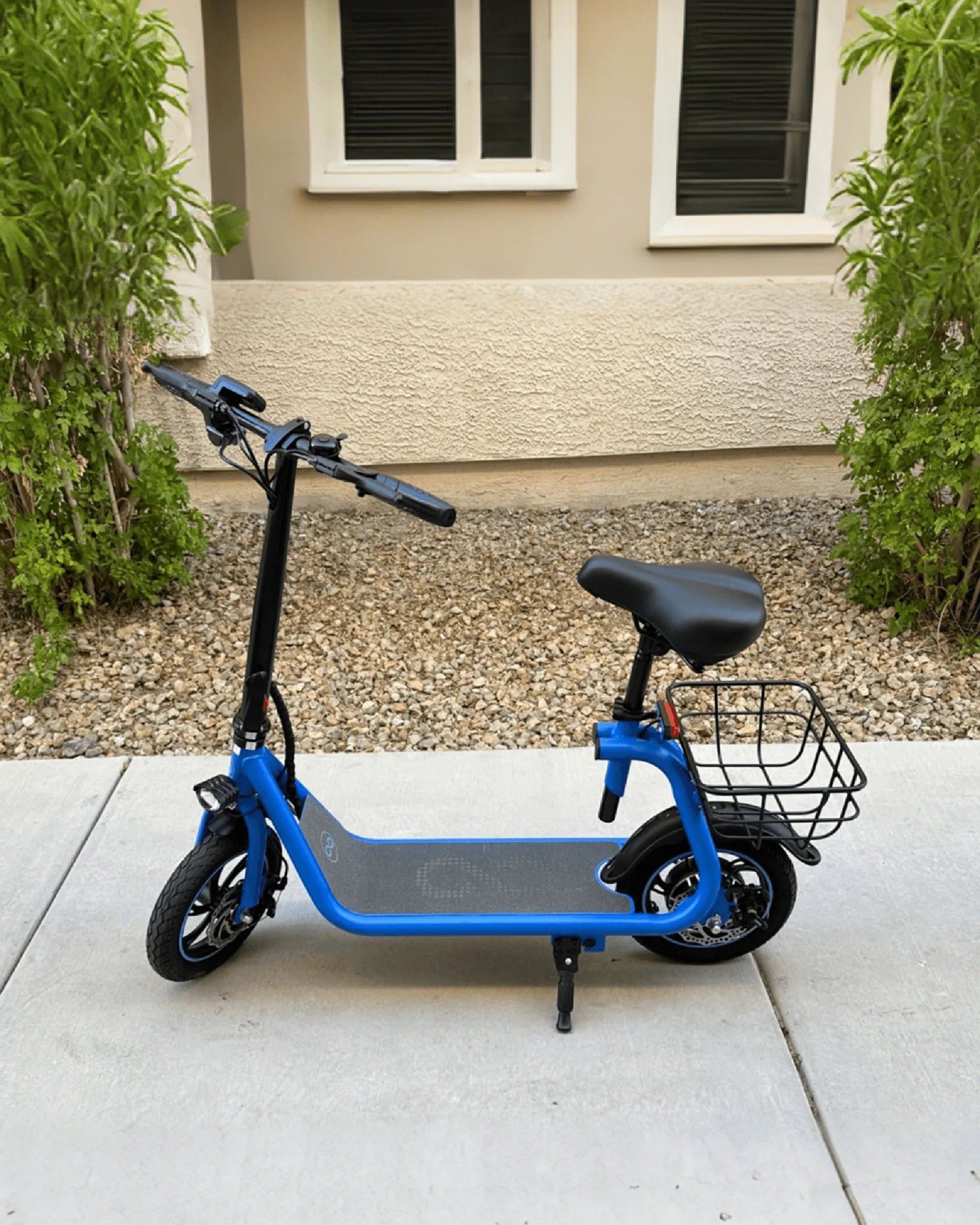
Ready to explore other forms of powered adventure? The principles of finding a manageable, reliable starter vehicle apply broadly. For those interested in urban mobility or lightweight trail exploration, consider the range of electric scooters and e-bikes from Gyroor. As a leader trusted by over 100,000 riders, Gyroor emphasizes the same core values: UL-certified battery safety, IPX5 water-resistant reliability, and user-friendly designs perfect for beginners. Browse the full Gyroor collection at gyroorboard.com to find your next adventure vehicle.
Mini Dirt Bike Cheap: Your Guide to Affordable Off-Road Fun
E Motorcycle Dirt Bike: The Ultimate Guide to Electric Off-Road Performance