



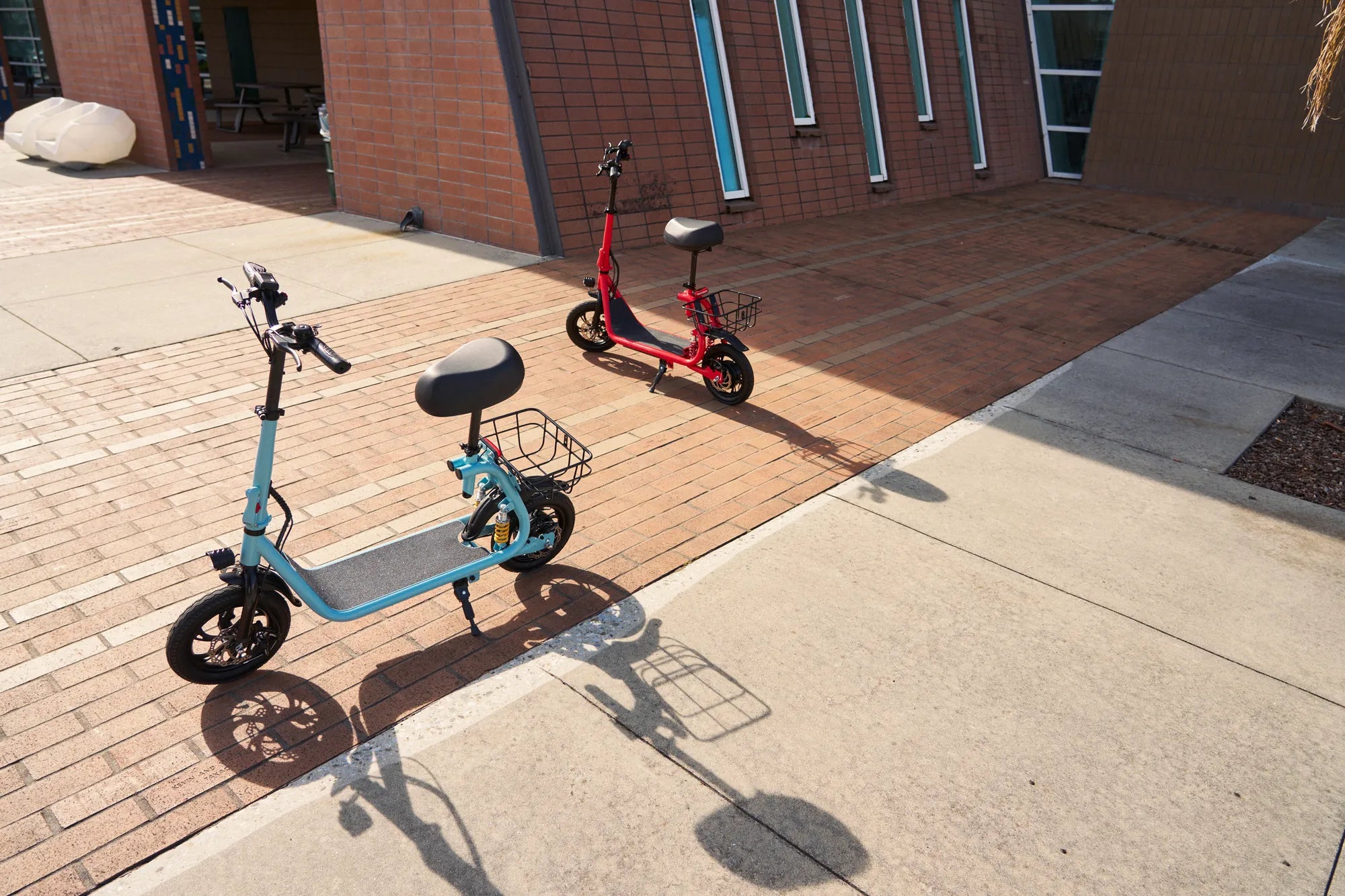
Navigating the rules for electric scooters can feel like deciphering a complex legal code. The core question, "What's the age limit for electric scooters?" doesn't have a single, universal answer. Regulations are a patchwork of local ordinances, state laws, and common-sense safety guidelines. This complete guide will demystify the legal landscape, providing clear data on age restrictions across North America and Europe, while offering practical advice for safe, responsible riding at any age. You'll learn not just the legal minimums, but how to match a rider's maturity and skill with the right vehicle and safety practices.
Understanding the Legal Landscape: Why Age Limits Exist
Age restrictions for electric scooters aren't arbitrary. They are established primarily for rider and public safety, influenced by liability concerns and existing transportation laws. Legislators and safety boards consider the cognitive and physical maturity required to operate a vehicle, even at lower speeds, in dynamic environments.
Younger riders may lack the judgment to assess traffic risks, react to sudden obstacles, or understand right-of-way rules. Age limits aim to ensure operators have developed these critical decision-making skills. Furthermore, e-scooters are often classified under existing vehicle codes, sometimes grouped with bicycles or, for more powerful models, with mopeds, which carry their own age and licensing requirements.
From a liability perspective, clear age guidelines help define responsibility in the event of an accident. For manufacturers and retailers like Gyroor, recommending and adhering to these laws is part of our commitment to rider safety. Our products, trusted by over 100,000 riders, are engineered for reliability, but they must be operated by individuals capable of handling them responsibly.
The convergence of these factors—safety, law, and liability—creates the varied regulatory framework we see today. Understanding the 'why' behind the rules is the first step toward compliant and confident riding.
Age Limits by Region: A Detailed Breakdown
The rules change dramatically depending on your zip code. Below is a comprehensive overview of the regulatory environment in key regions, highlighting the general trends and specific requirements that answer the question of "What's the age limit for electric scooters?" in your area.
United States: A State-by-State Patchwork
There is no federal law governing electric scooter use in the US. Regulation is delegated to states, and often further to individual cities and municipalities. This creates a complex mosaic of rules. Generally, most states that have formalized e-scooter laws set a minimum age for operating on public roads, bike lanes, and paths between 14 and 16 years old.
Some states, like California, require riders to be at least 16 years old and possess a valid driver's license or learner's permit. Others, such as Texas, set the minimum age at 16 but do not require a license. It's crucial to check your specific state's Department of Motor Vehicles (DMV) website and your local city ordinances for the most accurate information.
Notably, shared scooter rental services (e.g., Lime, Bird) almost universally enforce a minimum age of 18 and require a valid driver's license for account verification, adding another layer to the age-limit conversation. These corporate policies often exceed local legal minimums due to insurance and liability agreements.
For privately owned scooters, the onus is on the purchaser to know and follow local law. Gyroor provides clear guidance that our products are intended for use in accordance with all applicable local regulations, which always take precedence.
Canada: Provincial Jurisdiction and Safety First
Similar to the US, Canada regulates e-scooters at the provincial level, with some cities implementing additional bylaws. Provinces like Ontario, British Columbia, Alberta, and Quebec have introduced pilot programs or permanent regulations that provide clearer frameworks than many US states.
A common thread across Canadian regulations is a strong emphasis on safety. The minimum age is typically 16 years old. Helmet use is almost always mandatory for all ages, a non-negotiable rule that significantly reduces head injury risk. Many provinces also prohibit riding on sidewalks, restrict speed limits (often to 24 km/h or 15 mph), and require lights and reflectors for night riding.
For example, Ontario's pilot program allows e-scooters on roads with speed limits up to 50 km/h and in bicycle lanes, with a minimum rider age of 16. British Columbia has integrated e-scooters into its Motor Vehicle Act, setting an age limit of 16 and requiring a helmet. Always consult your provincial Ministry of Transportation website for the most current rules.
United Kingdom & European Union: A Cautious Approach
The UK presents a unique case. Privately owned e-scooters are currently classified as "Powered Transporters" under the Road Traffic Act 1988. This makes them illegal to use on public roads, cycle lanes, and pavements; they are restricted to private land only.
The legal avenue for public use is through government-approved rental trials in select towns and cities. For these trial rentals, the minimum age is consistently 18 years old, and users must have at least a provisional driving license. This reflects a highly cautious, controlled approach to integration.
Across the European Union, regulations are more varied but generally formalized. Many EU countries have established national laws, with common minimum ages being 14 or 16. For instance, in Germany, e-scooters ("E-Scooter") are legal from age 14, require insurance plates, and must be used on bike paths or roads. France sets a minimum age of 12 but prohibits use on sidewalks. The EU trend shows a move toward regulated acceptance with clear age brackets.
Gyroor's Recommendations for Safe Riding Ages
Legal minimums are just the starting point. At Gyroor, we believe the "right age" balances legality with a rider's demonstrated maturity, physical capability, and environment. A responsible 15-year-old with proper training in a low-traffic suburb may be better prepared than an inexperienced adult in a dense urban center.
We recommend that for riders under the age of 16, e-scooter use should be under direct adult supervision and in controlled, safe environments away from vehicular traffic. Factors like the child's coordination, judgment, ability to follow instructions, and respect for safety gear are critical parental assessments.
Our product line is designed with progression in mind. Models like the Gyroor F1 Pro, with its stable 8.5-inch pneumatic tires and manageable 350W motor, can be a more suitable entry point for a responsible teen under supervision. In contrast, our high-performance off-road models with 1000W+ motors and higher top speeds are intended solely for experienced adult riders in appropriate settings.
Our commitment to safety is built into every scooter, from UL-certified battery packs tested for 500+ charge cycles to IPX5 water-resistant designs that enhance durability. This engineering allows us to stand behind our products with a reliable 1-year warranty, but it does not replace the need for rider wisdom and adherence to local age laws.
Key Factors That Influence "The Right Age" to Ride
Beyond the calendar, several technical and practical factors determine whether an individual is ready for an electric scooter. Parents and new riders should carefully evaluate these elements.
Motor Power and Speed Capabilities
The scooter's specifications are a major determinant of appropriate age and experience. A low-power scooter (250W-350W) with a speed cap of 15-20 mph presents a different risk profile than a dual-motor, 1000W+ scooter capable of 30+ mph. Greater power requires quicker reflexes, better balance at speed, and more advanced hazard anticipation.
Gyroor categorizes its models accordingly. Commuter scooters feature balanced power for efficiency and control, while performance models are explicitly marketed for adult enthusiasts. Always match the vehicle's capability to the rider's proven skill level, not just their age.
Intended Use: Commuting vs. Off-Road Recreation
The riding environment drastically changes the skill requirement. Urban commuting demands constant vigilance for cars, pedestrians, road debris, and traffic signals. It requires an understanding of road-sharing etiquette and mature judgment.
Off-road recreation on approved trails or private property may have different legal age considerations but introduces its own challenges like uneven terrain, obstacles, and less predictable conditions. This often requires even more advanced handling skills. Regardless of the setting, the need for full protective gear is amplified.
The Non-Negotiables: Helmet and Safety Gear
This cannot be overstated: a properly fitted, certified helmet is essential for every rider, regardless of age, local law, or trip distance. Head injuries are a leading risk in micromobility accidents. For younger or novice riders, full protective gear—including knee pads, elbow pads, and gloves—should be considered mandatory. Reflective clothing or accessories are also critical for visibility, especially at dawn, dusk, or night.
Investing in safety gear is investing in the rider's well-being. It sets a critical precedent for responsible riding habits that last a lifetime.
Comparison of E-Scooter Regulations by Jurisdiction Type
| Jurisdiction Type | Typical Minimum Age | Helmet Law | License Required? | Common Use Restrictions |
|---|---|---|---|---|
| US State (General) | 14-16 years | Often for minors (under 18) | Sometimes (varies by state) | No sidewalks, speed limits (15-20 mph), bike lanes/roads allowed |
| Canadian Province | 16 years | Almost always mandatory for all | No (but age minimum) | No sidewalks, max 24 km/h, lights required at night |
| UK Rental Trial | 18 years | Highly recommended, not always law | Yes (Provisional or full) | Roads & cycle lanes only (in trial zones), speed limit 15.5 mph |
| Select EU Country (e.g., Germany) | 14 years | Yes (mandatory) | No (but insurance required) | Bike paths/roads only, max 20 km/h, insurance plate |
Frequently Asked Questions (FAQ)
Can a 12-year-old ride an electric scooter?
Legally, in most US states and Canadian provinces with codified laws, the answer is no—the minimum age is typically higher. Even if not explicitly illegal locally, it is not generally recommended. Riding requires maturity, judgment, and coordination that many 12-year-olds are still developing. If a parent chooses to allow it on private property, strict supervision and full safety gear are absolute necessities.
Do I need a driver's license to ride an e-scooter?
It depends entirely on your location. In many US states, no license is required. In others, like California, a driver's license or learner's permit is mandatory. In the UK's rental trials, a provisional license is the minimum. Canadian provinces typically do not require a license but do enforce a minimum age. Always verify with your local transportation authority.
What is the age limit for Gyroor electric scooters?
Gyroor designs and manufactures electric scooters for the broader market in compliance with general safety standards. We explicitly state that our products must be used in accordance with all local laws and regulations, which include age restrictions. Our warranty and customer support are predicated on the product being used legally and responsibly. We recommend our lower-speed, stable models for teen riders where local law permits and with parental guidance.
Are the rules different for electric bikes (e-bikes)?
Yes, e-bike regulations are often distinct and usually follow a three-class system (Class 1, 2, and 3) based on top speed and whether they have a throttle. Age limits for e-bikes can vary; for example, some states require riders of Class 3 e-bikes (assist up to 28 mph) to be 16 or older. E-bikes are more widely integrated into bicycle laws, but riders must still check specific local regulations.
What happens if a minor is caught riding illegally?
Consequences vary by jurisdiction but can include fines issued to the rider or their parent/guardian, the impoundment of the scooter, and a mandatory court appearance. More importantly, it exposes the minor to significant safety risks and liability in the event of an accident. Knowing and following the law is the first step in responsible ownership.
Riding Responsibly at Any Age: Knowledge is Your Best Gear
The answer to "What's the age limit for electric scooters?" is multifaceted, rooted in a combination of local law, vehicle specifications, and individual readiness. This guide provides the framework, but the responsibility lies with every rider and guardian to apply it to their specific situation. Start by researching your municipal and state/provincial regulations. Then, honestly assess the rider's maturity and the intended riding environment.
Prioritize safety gear with the same importance as the scooter itself. Choose a scooter from a reputable brand like Gyroor, where safety features like UL-certified batteries and robust construction are fundamental, not an afterthought. Our commitment, trusted by a community of over 100,000 riders across North America and Europe, is to provide reliable, well-engineered vehicles that, when used correctly, offer unparalleled freedom and fun.
Electric scooters are a fantastic mode of personal transportation and recreation. Embracing them safely requires understanding the rules, respecting the risks, and equipping yourself with both knowledge and the right hardware. The open path awaits—ride smart, ride safe, and ride within the guidelines designed to protect everyone.
Ready to find the right electric scooter for your age and adventure? Browse the full Gyroor collection, featuring UL-certified, durable models for every responsible rider, at gyroorboard.com.
What Is the Speed Limit for Electric Scooters? A Complete Guide
What Is the Range of Electric Scooters: A Comprehensive Guide to Real-World Distance