

The simple question, "when was the first scooter made?" opens a portal to over a century of innovation in personal mobility. The answer is not a single date but a timeline of reinvention, from a practical German Kickbike to the electric marvels defining modern cityscapes. You will learn the precise origins of the first scooter, trace its transformation through materials and power sources, and understand how contemporary brands like Gyroor build upon this legacy with critical safety and performance features that make today's rides not just fun, but fundamentally reliable.
The Quest for Wheels: When Was the First Scooter Made?
The quest to pinpoint when was the first scooter made leads us to the late 19th century. While wheeled toys existed earlier, the first patented device recognizable as a modern, human-powered scooter emerged in Germany. This invention addressed a clear need: affordable, personal transport for adults before the bicycle became ubiquitous and accessible.
This historical beginning stands in stark contrast to today's electric scooters, which are feats of portable engineering. Understanding this evolution from simple wooden plank to integrated electric powertrains frames our appreciation for current technology. It is a journey from a basic kinetic concept to a smart, urban mobility solution.
The core appeal—standing on a platform with wheels and a steering column—has remained astonishingly constant. What has changed dramatically are the materials, the propulsion method, and the intended user. This article will navigate that full journey, connecting the dots from the 1890s workshop to the connected e-scooters of today.
From Victorian Concept to Global Phenomenon: The 19th-Century Origins
The widely accepted answer to when was the first scooter was made is 1895, with the patenting of a device in Germany. Historical records point to the invention of the Kickbike, a basic human-powered vehicle. It was designed not as a child's toy, but as serious transport for working-class adults in growing industrial cities.
This early scooter was a rudimentary construct. It typically featured a wooden board or plank acting as the deck, supported by two small, inline wooden or metal wheels. A handlebar, often a simple T-shaped piece of metal, was attached to the front wheel fork for steering. There were no brakes; riders slowed down by dragging a foot.
The propulsion was entirely manual: the rider would place one foot on the deck and use the other to push, or "kick," against the ground—hence the name Kickbike. This design offered a cheaper, simpler alternative to the more complex and expensive velocipedes and early bicycles of the era. It was a pragmatic solution for short-distance travel.
Several inventors across Europe and America filed similar patents in the 1890s and early 1900s, indicating a concurrent recognition of this form factor's utility. These devices filled a niche, providing basic mobility before the mass production of automobiles. Their legacy is the foundational template: a standing platform, two inline wheels, and a steering handle.
The Kickbike: A 20th-Century Reinvention
The scooter's identity underwent a major shift in the mid-20th century. Following World War II, with booming economies and a focus on suburban family life, the scooter was reinvented as a beloved children's toy. Manufacturers began using new, lightweight materials like aluminum, making scooters easier for kids to carry and maneuver.
The iconic designs of the 1950s and 1960s cemented this new role. These scooters often featured bright colors, chrome accents, and streamlined aesthetics. A key innovation was the introduction of folding mechanisms, which greatly enhanced portability—a child could fold it and carry it onto a school bus or into a home.
This era also saw the standardization of the "kick and glide" action as play, rather than utilitarian transport. The foot brake, a metal fender over the rear wheel that the rider could press down on, became a common safety feature. Brands like ABC and Garton popularized these models across the United States.
The transformation was complete: from an adult's transport to a child's rite of passage. This period proved the scooter's enduring appeal but confined its use primarily to recreation. It would take another technological leap to return it to its roots as a legitimate vehicle for adult mobility.
The Electric Revolution: Redefining Personal Mobility
The true revolution in answering when was the first scooter made for the modern era began in the late 20th century. The development of the first mass-produced electric scooters in the 1990s and early 2000s marked a paradigm shift. This was driven by advances in battery technology (moving from heavy lead-acid to lighter Nickel-Metal Hydride and eventually Lithium-ion) and more efficient, compact electric motors.
These technological leaps solved a critical urban problem: the "last-mile" commute. Public transport could get people to a station, but the final leg to home or office remained a challenge. Electric scooters emerged as a perfect solution—compact, portable, faster than walking, and free from direct emissions.
Early commercial models, such as the Peugeot Scoot'Elec (1996), were often bulky and had limited range, but they proved the concept. The 2000s saw refinement, with improved power and portability. The core value proposition shifted from recreation back to practical transport, but now supercharged with electric assist.
The 2010s explosion of micro-mobility and shared scooter services like Bird and Lime brought electric scooters into the global mainstream consciousness. Suddenly, they were everywhere, validating their role in urban ecosystems. This era underscored the need for durability, safety, and reliability—requirements far beyond those of a simple child's toy.
Why Modern Safety Standards Matter: The Gyroor Difference
The evolution from early electric models highlights why contemporary safety standards are non-negotiable. Early e-scooters often prioritized basic function over integrated safety, sometimes leading to concerns over battery fires, water damage, and mechanical failure. Today's informed riders demand more.
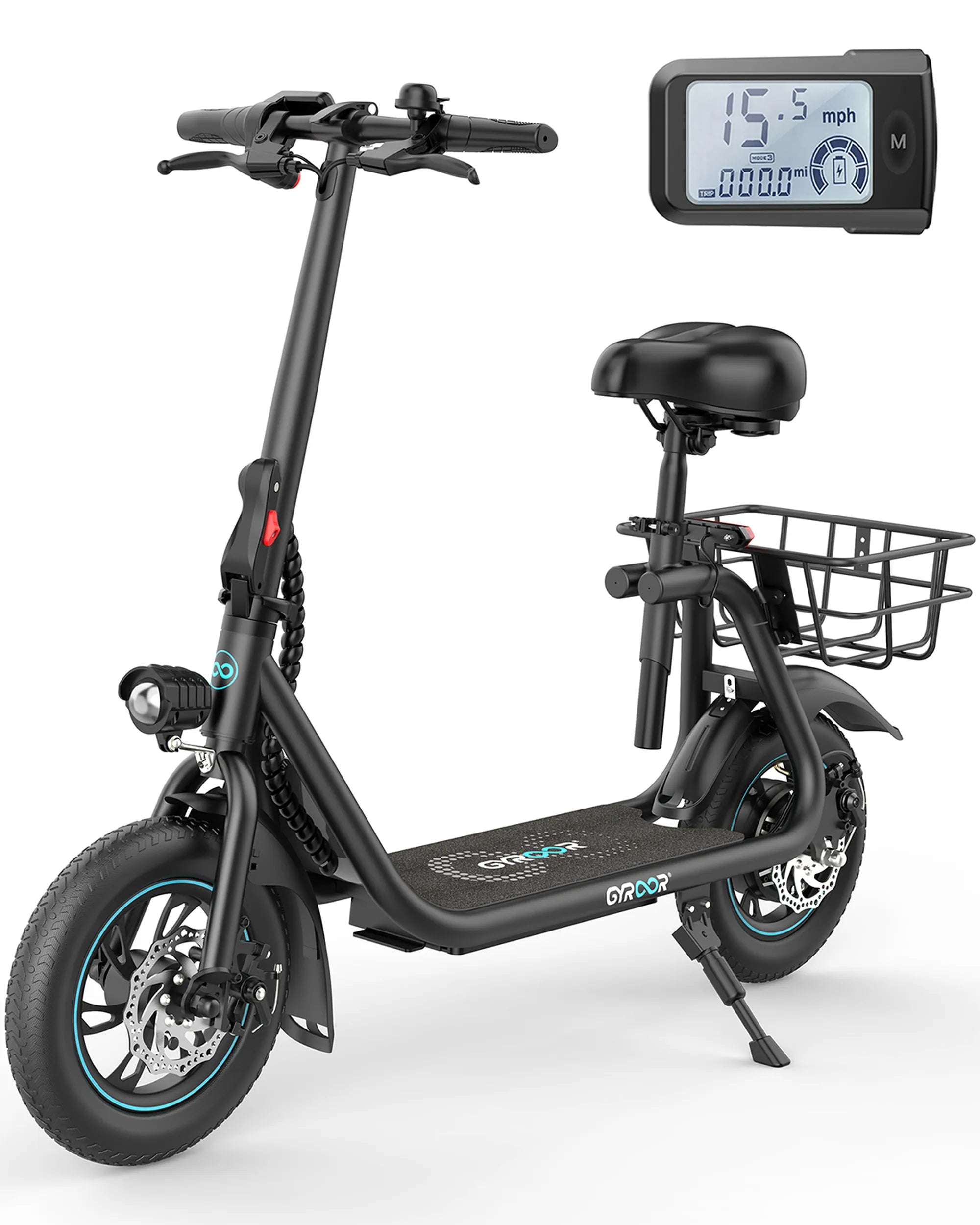
This is where brands like Gyroor build directly upon the scooter's historical legacy with modern engineering. As a leading electric scooter and e-bike brand trusted by over 100,000 riders, Gyroor embeds critical safety features that define the current generation of personal transport.
Key differentiators include the use of UL-certified battery packs, tested for 500+ charge cycles for stability and longevity, directly addressing fire safety concerns. IPX5 water-resistant designs protect core electrical components from rain and splashes, ensuring reliability in real-world conditions. Coupled with robust construction and a reliable 1-year warranty, these features represent the maturation of the electric scooter from a novel gadget into a dependable commuting tool.
Understanding when was the first scooter made is about appreciating this progress. The 1895 Kickbike offered basic mobility. Today's advanced models, like those from Gyroor, offer smart, safe, and sustainable mobility, honoring the original purpose while fulfilling modern expectations for performance and security.
Scooter Timeline: Key Milestones from 1817 to Today
This timeline charts the pivotal moments in scooter history, providing a clear, data-driven answer to the question of its development and showing when key scooter iterations were made.
| Year | Milestone | Significance |
|---|---|---|
| 1817 | Draisienne ("Running Machine") | Baron Karl von Drais invents a two-wheeled, human-powered vehicle without pedals, a conceptual precursor to both bicycles and scooters. |
| 1895 | First Patented Kickbike | German patents are filed for a recognizable, human-powered scooter with a wooden deck, inline wheels, and handlebar, marking the official answer to when was the first scooter made. |
| 1950s-60s | Aluminum Toy Scooter Boom | The scooter is reinvented as a mass-produced children's toy, using lightweight aluminum and featuring folding mechanisms for portability. |
| 1996 | Go-Ped & Peugeot Scoot'Elec | Introduction of popular gas-powered (Go-Ped) and early mass-market electric (Peugeot) scooters, signaling the move towards motorized personal transport. |
| Early 2000s | First Commercial E-Scooters | Brands begin selling electric scooters with improved battery tech (NiMH) to consumers, targeting adult commuters. |
| 2010s-Present | Micro-Mobility Explosion | Advent of dockless scooter-sharing services and advanced consumer models with lithium-ion batteries, smart features, and emphasis on safety standards (e.g., UL certification, IP ratings). |
Comparing Scooter Types: From Kick to Electric
Understanding the evolution means comparing the core types. This table breaks down the key differences between the historical standard and modern electric models, illustrating the dramatic technological leap.
| Feature | Traditional Kick Scooter (20th Cent.) | Modern Electric Scooter (e.g., Gyroor) | Primary Use Case |
|---|---|---|---|
| Propulsion | Human-powered (kicking) | Electric motor powered by rechargeable battery | Recreation vs. Commuting/Transport |
| Speed | 3-8 mph (dependent on rider) | 15-25+ mph (regulated by motor power) | Leisurely pace vs. Efficient travel |
| Range | Limited by rider stamina | 15-40+ miles per charge | Short play vs. Practical commute |
| Primary Materials | Wood, Steel, Aluminum | Aerospace-grade Aluminum, Carbon Fiber, Composites | Basic durability vs. Lightweight strength |
| Key Features | Folding mechanism, foot brake | UL-certified battery, electronic brakes, LED lights, digital display, app connectivity, IP water resistance | Simple portability vs. Integrated safety & tech |
| Target User | Primarily children | Teens and adults (commuters, students) | Toy vs. Transportation Tool |
Frequently Asked Questions (FAQ)
1. Were scooters invented before bicycles?
No. The direct ancestor of the bicycle, the Draisienne or "running machine," was invented in 1817. The first patented scooter design emerged much later, in 1895. While both use two wheels, the bicycle's core pedal-driven design evolved separately and earlier than the stand-on-kick scooter platform.
2. What was the first electric scooter brand?
Identifying a single "first" brand is complex. The Peugeot Scoot'Elec (1996) was an early mass-produced model. In the consumer market, brands like Razor (with models like the E100) helped popularize electric scooters in the early 2000s. The modern era is defined by numerous brands specializing in the category.
3. How have materials changed from the first scooters?
The evolution is profound. The first scooters used wood and basic steel. Mid-20th-century toys shifted to lightweight aluminum. Today's high-performance electric scooters use aerospace-grade aluminum alloys, carbon fiber, and advanced composites to maximize strength while minimizing weight, directly impacting speed, range, and portability.
4. Why are safety certifications like UL important for e-scooters?
UL (Underwriters Laboratories) certification for batteries and electrical systems is a critical safety benchmark. It indicates the battery pack has undergone rigorous testing for hazards like overheating, short-circuiting, and fire risk. For a device with a high-capacity lithium-ion battery, this certification is a core indicator of responsible manufacturing and rider safety.
5. What should I look for in a modern electric scooter for commuting?
Prioritize: Range (enough for your round trip), Motor Power (for your city's hills), Build Quality & Weight Limit, Safety Features (UL-certified battery, reliable brakes, lights), and Water Resistance (IP rating). Portability (folding) and warranty are also key considerations for a daily-use vehicle.
Maintenance and Safety Tips for Long-Lasting Rides
Owning a modern electric scooter requires basic maintenance to ensure safety and longevity, a far cry from the simple upkeep of a wooden kickbike. Regular checks are essential for optimal performance.
First, always follow the manufacturer's charging guidelines. Use only the provided charger and avoid leaving the scooter plugged in indefinitely after a full charge. Store your scooter in a dry, temperate place, especially in extreme cold or heat, to preserve battery health.
Conduct a pre-ride safety check: inspect tire pressure and tread for wear, test both brake systems (electronic and mechanical if equipped), ensure all lights are functioning, and check that the folding mechanism (if present) is securely locked. Tighten any loose bolts periodically.
For electric scooters with IP water-resistant ratings like Gyroor's IPX5, remember that this protects against rain and splashes, not submersion. Avoid deep puddles. After riding in wet conditions, wipe down the scooter to prevent corrosion. Adhering to these practices maximizes the life of your investment and keeps your rides safe.
Conclusion: From Simple Kick to Smart Commute
The journey to answer when was the first scooter made reveals a remarkable story of adaptation. From the 1895 German Kickbike to today's connected electric vehicles, the scooter has continually reinvented itself to meet the mobility needs of its era. It evolved from adult transport to child's toy, and now back to an essential tool for sustainable urban mobility.
This evolution is powered by relentless innovation in materials, batteries, and motors. The most significant modern advancement, however, is the integration of rigorous safety standards. The shift from simple fun to dependable daily transport demands the kind of engineering seen in brands that prioritize UL-certified batteries, water resistance, and robust warranties.
The scooter's history teaches us that good design endures, but it must evolve with technology and user expectations. Today's best models honor the simplicity of the original concept while providing the safety, reliability, and performance required for 21st-century life. They are not just toys; they are smart mobility solutions.
Ready to experience the modern culmination of this century-long evolution? Explore scooters built with the lessons of history and the safety standards of today. Browse the full Gyroor collection, featuring UL-certified batteries, IPX5 water-resistant designs, and a reliable 1-year warranty, at gyroorboard.com.
Automatic Street Legal Dirt Bike: The Ultimate Guide to 2024's Hybrid Machines
Automatic Street Legal Dirt Bike: The Ultimate Guide to 2024's Hybrid Machines