


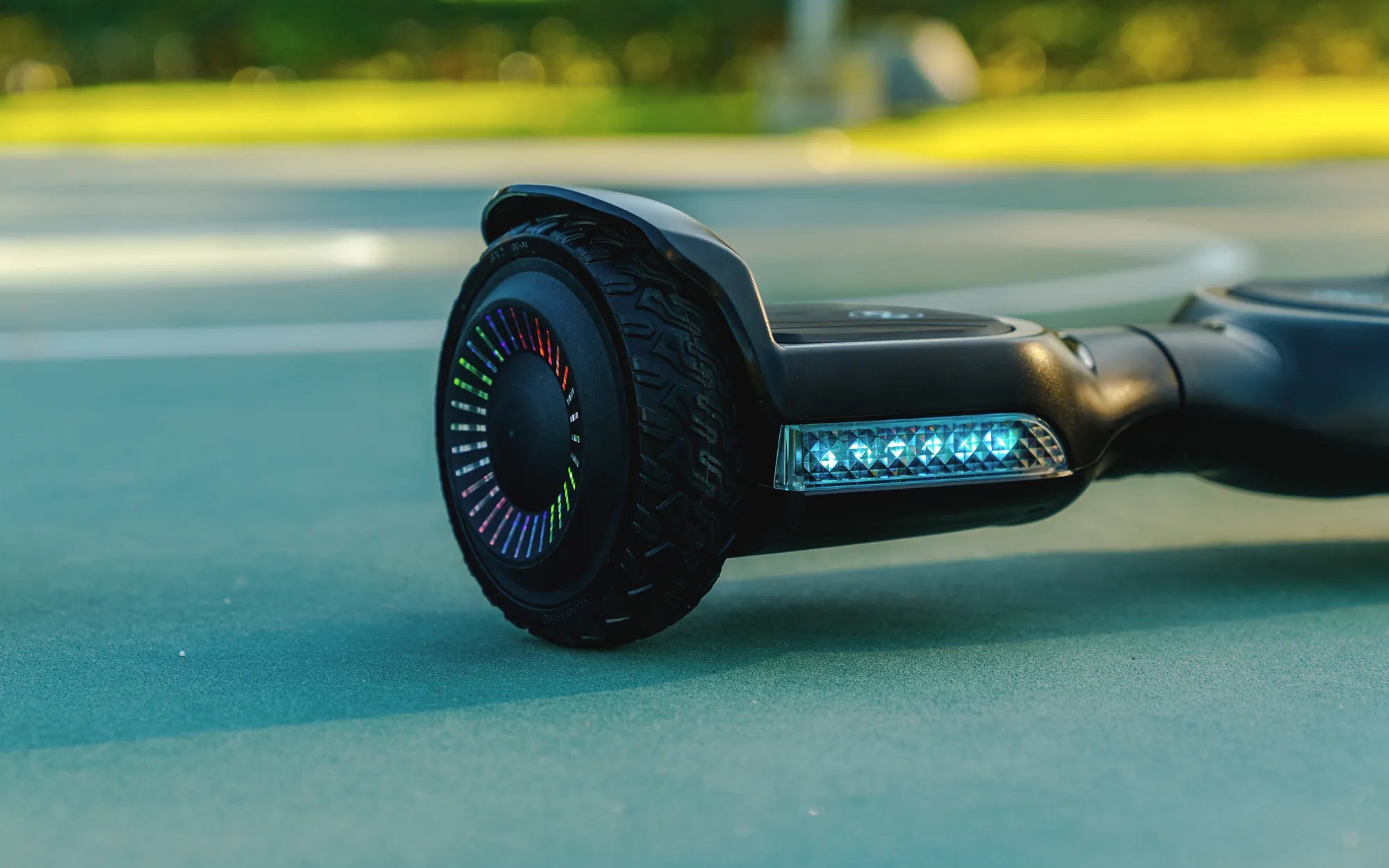
Introduction: Why a White Scooter is a Top Choice for Kids
Choosing a white scooter for kids is about more than just color; it's a decision that blends style, safety, and smart engineering. The crisp, clean aesthetic of a white scooter offers unmatched versatility, complementing any outfit or set of riding gear while providing enhanced visibility during daytime rides. This guide will walk you through every consideration, from non-negotiable safety features to decoding technical specifications, ensuring you find a ride that is both thrilling and trustworthy for your child.
Parents often seek a white scooter for kids for its modern look and the practical benefit of being more noticeable to drivers and pedestrians. Beyond aesthetics, the right scooter must be a tool for development and adventure, built to withstand rigorous use. We will explore how leading brands, such as Gyroor, combine this sought-after style with serious engineering, including UL-certified batteries and IPX5 water-resistant designs, to create products that prioritize safety without compromising on fun.
This ultimate guide is designed to demystify the purchasing process. You will learn to match a scooter to your child's age and skill level, understand the importance of wheel size and deck design, and make an informed choice between electric and kick-powered models. Our goal is to equip you with the knowledge to select a white scooter for kids that promises durability, security, and endless enjoyment, making it the perfect ride for countless adventures ahead.
Key Factors to Consider Before Buying a White Kids' Scooter
Selecting the perfect white scooter for kids requires moving beyond color to evaluate fundamental engineering and design principles. The primary factors—size, safety, and sturdiness—form the non-negotiable foundation of a smart purchase. Ignoring these can lead to a poor fit, safety risks, or a scooter that breaks down after minimal use, turning a source of joy into a disappointment.
Data from consumer reports and safety organizations consistently shows that improperly sized scooters are a leading cause of minor accidents and loss of control in young riders. A scooter that is too tall or too heavy can intimidate a child and hinder their ability to learn proper balance and steering techniques. Therefore, the first step is always to consult the manufacturer's recommended age, weight, and height ranges, which are based on rigorous product testing.
Furthermore, the build quality directly correlates with the scooter's lifespan and your child's safety. A flimsy folding mechanism or a deck made from low-grade materials can fail unexpectedly. Investing in a scooter from a reputable brand known for durability, like Gyroor, which offers a comprehensive 1-year warranty, is an investment in long-term value and peace of mind. This section will break down these critical pre-purchase considerations in detail.
Age, Weight, and Height Recommendations
Matching the scooter to your child's physical development is paramount. A white scooter for kids that is correctly sized ensures control, comfort, and confidence. Handlebar height is the most critical dimension; when standing on the deck, the handles should reach between the child's waist and lower chest, allowing for a slight bend in the elbows for optimal steering control.
Deck size and weight limit are equally important. A deck that is too narrow or short forces an unstable, cramped stance. For younger children (ages 3-5), look for decks around 10-12 inches long and 4 inches wide. For older kids (6-12), decks should be 15+ inches long and 5+ inches wide to accommodate growing feet. Always respect the maximum weight limit, which includes the child plus any backpack; exceeding it can stress the frame and compromise braking performance.
Safety as the Top Priority: Non-Negotiable Features
Safety engineering cannot be an afterthought. The essential features of a safe white scooter for kids start with a reliable braking system. A rear fender brake (activated by stepping on the rear fender) is common and effective for kick scooters, teaching intuitive braking. For electric models, a combination of electronic brake and a mechanical hand or foot brake provides redundancy.
Wheel design is crucial for stability. Wider wheels with a grippy polyurethane (PU) surface provide better traction and smoother rides over small cracks and debris. A low-to-the-ground deck design significantly lowers the center of gravity, making the scooter more stable and less prone to tipping, especially during sharp turns or sudden stops. These features, combined with a sturdy, wobble-free steering column, form the bedrock of safe scooter operation.
Durability & Build Quality: Withstanding Kid-Powered Adventures
Durability translates to value. A well-built white scooter for kids will survive drops, jumps, and daily commutes to the park. The frame material is the first indicator of quality; aircraft-grade aluminum alloy offers an excellent strength-to-weight ratio, resisting dents and corrosion while keeping the scooter light enough for a child to carry.
Inspect all connection points. The folding mechanism, if present, should lock securely with a distinct click and have no lateral play. Handlebars and the steering column should not wiggle. Wheel bearings should spin smoothly and quietly. Brands like Gyroor subject their scooters to rigorous stress tests, ensuring components like the deck and stem can withstand impacts far beyond normal use, which is why their warranty confidently covers a full year of adventurous riding.
Decoding Scooter Specifications: What Makes a Great Ride?
Understanding scooter specifications allows you to predict real-world performance. Terms like wheel durometer, deck length, and adjustability aren't just marketing jargon; they directly impact handling, comfort, and how long the scooter will remain useful as your child grows. A great white scooter for kids optimizes these specs for its target age group.
For instance, wheel size and material determine how the scooter handles different terrains. Similarly, the deck's texture and dimensions affect how secure a child feels while riding. These specifications work together to create a riding experience that is either confident and enjoyable or shaky and frustrating. By learning to decode these details, you can choose a scooter that not only looks good in white but performs exceptionally well where it matters most.
Wheel Size and Material: Balancing Speed and Stability
Wheels are the primary contact point with the ground. Smaller wheels (e.g., 120mm) offer quicker acceleration and sharper maneuverability, ideal for trick-oriented scooters in skate parks. Larger wheels (e.g., 200mm+) provide greater stability, roll over cracks and pebbles more easily, and maintain higher speeds with less effort, making them better for commuting or neighborhood cruising.
The material is almost always polyurethane (PU). The key specification is the durometer, or hardness rating. A softer wheel (e.g., 78A-85A) provides more grip and a smoother, quieter ride, absorbing vibrations from rough pavement. A harder wheel (e.g., 88A-95A) offers less rolling resistance for more speed and is more durable against wear, but provides a rougher ride. For most kids, a medium-soft wheel offers the best balance of comfort, grip, and durability for everyday surfaces.
Deck Design and Foot Space: Comfort for Confident Riding
The deck is your child's platform for control. A wide, sufficiently long deck allows for a natural, shoulder-width stance, which is fundamental for balance. Look for a deck width of at least 4 inches for young riders and 5 inches or more for older children. The length should allow the child to place one foot behind the other comfortably without their heels hanging off.
Surface texture is critical for grip. A durable, abrasive grip tape (like on a skateboard) or raised rubberized patterns molded into the deck prevents feet from slipping, especially during kick-off or braking. A concave deck design, where the edges are slightly raised, can also help "lock" the feet in place, boosting confidence during rides.
Adjustability: Growing with Your Child
An adjustable scooter is a smarter long-term investment. The most valuable adjustment is handlebar height. Systems that use a quick-release clamp or a series of pre-set holes allow you to raise the handlebars by several inches as your child grows. This can extend the useful life of a single scooter by 2-3 years, providing excellent value.
Some advanced models may also offer adjustable steering dampening or interchangeable components. However, for a white scooter for kids, the primary focus should be on a robust and easy-to-use height adjustment mechanism. This feature ensures the scooter remains ergonomically correct, promoting proper posture and control throughout childhood growth spurts, making it a core component of a great ride.
Why Gyroor's White Kids' Scooters Stand Out
In a crowded market, Gyroor distinguishes itself by engineering white scooter for kids options that merge premium safety standards with robust durability and thoughtful design. Trusted by over 100,000 riders, the brand's commitment is evident in its use of UL-certified battery packs, IPX5 water resistance, and a reliable 1-year warranty. This translates to a product where style is backed by substance.
Gyroor's approach treats a kids' scooter not as a toy, but as a legitimate vehicle. This philosophy drives decisions around component selection, testing protocols, and customer support. For parents, this means the appealing white finish is not just a coat of paint but part of a cohesive product designed for real-world use, from the materials chosen to resist scuffs to the engineering that prioritizes stability and control. Choosing a Gyroor scooter means selecting verified performance and safety.
Engineered for Safety: Beyond the Basics
Gyroor integrates safety at a fundamental level. All electric models feature UL 2271 certified battery packs, which have undergone stringent testing for thermal, electrical, and mechanical safety, significantly reducing any risk of fire—a paramount concern for parents. Furthermore, an IPX5 water-resistant rating means the scooter's electronics are protected against low-pressure water jets, making it resilient to wet roads and puddles.
The braking systems are designed for progressive, predictable stopping power. Many models combine regenerative electronic braking with a physical disc or drum brake, giving the rider control in various conditions. Wide, air-filled or high-quality PU wheels enhance stability, and the low deck design ensures a safe, confident riding posture. These features demonstrate that safety for Gyroor is a comprehensive system, not a checklist of isolated parts.
Built to Last: The Durability Promise
Durability is a core tenet of Gyroor's design. Frames are constructed from reinforced aluminum alloy, capable of supporting weights well above the stated limit to account for dynamic stresses. The folding mechanisms employ high-strength steel latches and locking pins, tested over thousands of cycles to ensure they remain secure.
This durability is backed by a straightforward 1-year warranty covering manufacturing defects, supported by a US-based customer service team. This warranty reflects the brand's confidence in its products. For a white scooter for kids, this means the pristine look is supported by a build quality meant to endure scrapes, jumps, and daily adventures, maintaining its integrity and appearance over time.
Design That Delights: The White Aesthetic Meets Function
Gyroor's white scooters are designed with both form and maintenance in mind. The white finishes are often a high-quality, scratch-resistant coating or a molded polymer that is easy to wipe clean with a damp cloth. The design avoids unnecessary crevices where dirt can accumulate, keeping the scooter looking newer for longer.
Functional design elements are integrated seamlessly. Cable routing is internal for a clean look and protection. LED lighting is often incorporated into the deck or stem, enhancing visibility and adding to the sleek aesthetic. This thoughtful approach ensures that the scooter's stylish white appearance is practical, durable, and central to a fun, modern riding experience that kids love.
Electric vs. Kick: Choosing the Right Type of White Scooter
The choice between an electric and a kick scooter is one of the most significant decisions. Each type offers distinct benefits tailored to different ages, activity levels, and use cases. A traditional kick white scooter for kids promotes physical development, while an electric model expands range and introduces responsible tech use. Understanding this distinction is key to matching the scooter to your child's needs and your family's lifestyle.
Kick scooters are unparalleled for developing gross motor skills, coordination, and providing cardiovascular exercise. They are mechanically simple, often lighter, and require no charging. Electric scooters, conversely, are ideal for longer family outings, commuting to school (where age-appropriate and legal), or for older children who want to cover more ground. They teach concepts like battery management, speed awareness, and require a heightened focus on safety gear and rules.
The Classic Choice: Kick Scooters for Development & Fun
Kick scooters are the foundational tool for young riders. They require the child to propel themselves, building leg strength, improving balance, and enhancing cardiovascular health. The learning curve is gentle, making them excellent for children as young as 3 years old. Their simplicity means fewer parts that can fail, and they are generally more affordable upfront.
For parents, a kick scooter offers peace of mind through speed limitation—a child can only go as fast as they can kick. This makes them suitable for sidewalks and parks where close supervision is easier. A high-quality kick white scooter for kids, with smooth-rolling wheels and a responsive brake, can provide years of active, imaginative play and is a timeless choice for fostering a love of outdoor activity.
The Modern Thrill: Electric Scooters for Extended Adventures
Electric scooters unlock new possibilities for family mobility. They allow children to join adults on longer bike rides or errands without becoming fatigued. Models from reputable brands like Gyroor feature speed limiters (often adjustable via an app), allowing parents to cap the maximum speed based on the child's skill level, typically starting at a walking pace for beginners.
Safety is paramount with electric models. A full-face helmet, knee pads, and elbow pads are non-negotiable. Riding should be restricted to safe, controlled environments away from vehicle traffic, and children must be taught proper braking distance and etiquette. For responsible older kids (generally 8+), an electric white scooter for kids can be a fantastic way to develop independence and technical understanding while enjoying the thrill of powered movement.
Comparison Table: Kick vs. Electric at a Glance
| Feature | Kick Scooter | Electric Scooter |
|---|---|---|
| Power Source | Child's leg power | Rechargeable battery (UL-certified) |
| Max Speed | Determined by kicking | Typically 10-15 mph (often limited) |
| Best For Age | 3 years and up | 8 years and up (with supervision) |
| Physical Activity | High: Provides exercise | Low to Moderate: Standing ride |
| Average Range | Unlimited | 10-15 miles per charge |
| Key Consideration | Promotes physical development, simpler mechanics. | Requires safety gear, charging, and supervised riding. |
Maintenance and Care: Keeping the White Scooter Looking New
Proper maintenance ensures your white scooter for kids remains safe, functional, and aesthetically pleasing for years. A simple, regular care routine can prevent minor issues from becoming major problems and keep the bright white finish looking its best. This upkeep is especially important for electric models, where battery and electronic care are additional considerations.
Establishing a monthly check-up habit takes only minutes but significantly extends the scooter's lifespan. It also provides an opportunity to teach your child about responsibility and taking care of their belongings. By following these basic steps, you protect your investment and ensure every ride is as safe and enjoyable as the first.
Routine Cleaning and Check-ups
For the white finish, use a soft cloth dampened with mild soapy water to wipe down the frame, deck, and wheels. Avoid harsh chemicals or abrasive pads that can scratch the surface. For the deck's grip tape, a stiff brush can dislodge dirt. After cleaning, dry the scooter with a towel to prevent water spots.
During monthly check-ups, tighten all bolts, especially those on the handlebars, stem, and folding mechanism. Check wheels for wear, cracks, or debris stuck in the tread. Spin the wheels to ensure they rotate freely and without wobble. Test the brakes for responsiveness and check that the brake pad (if present) isn't overly worn. This proactive approach catches issues before they affect safety.
Battery Care for Electric Models (If Applicable)
Proper battery care is crucial for performance and safety. Follow the manufacturer's charging instructions precisely. Avoid leaving the scooter plugged in for extended periods after it's fully charged. Do not let the battery fully deplete regularly; try to recharge when it reaches 20-30% capacity.
Store the scooter and battery in a cool, dry place, away from direct sunlight or extreme temperatures. If storing for more than a month, charge the battery to about 50-60% first. Gyroor's use of UL-certified battery packs provides a built-in safety advantage, but proper user handling ensures these batteries deliver their full 500+ charge cycle lifespan. Never attempt to open or modify the battery pack.
Safe Storage Solutions
Good storage prevents accidents and damage. When not in use, store the scooter indoors or in a dry garage. Use a wall hook to hang it vertically, saving floor space and keeping it out of the way. If folding, ensure the mechanism is fully locked before leaning it against a wall.
For electric models, avoid storing them in a state of full charge or complete discharge for long periods. Keeping the scooter stored properly not only protects its physical components from bumps and weather but also helps maintain its like-new white appearance, ready for the next adventure.
Frequently Asked Questions (FAQs)
Q1: What is the best age for a child to start using a scooter?
Most children are ready for a basic three-wheeled kick scooter around age 3, as they have developed sufficient balance and coordination. Two-wheeled kick scooters are generally suitable from age 5 or 6, depending on the child's confidence and physical development. Electric scooters are recommended for children aged 8 and older, assuming they can understand safety rules, have good balance, and will always ride under supervision with full protective gear.
Q2: Is a white scooter harder to keep clean? How do I maintain it?
While white can show dirt more readily, modern scooters from quality brands use finishes that are easy to clean. A simple wipe-down with a damp, soapy cloth is usually sufficient for the frame. Avoid riding through deep mud or oily surfaces. For the deck's grip tape, a dry brush works well. Regular cleaning not only keeps it looking new but also lets you inspect for any wear or damage.
Q3: Are electric scooters safe for kids? What safety features are most important?
Electric scooters can be safe for responsible older kids when key features are present and rules are followed. Essential safety features include: a speed limiter (adjustable is best), a reliable braking system (dual brakes are ideal), a low, stable deck, wide grippy wheels, and bright LED lights for visibility. The most critical factor, however, is parental supervision, enforced helmet and pad use, and restricting riding to safe, pedestrian-only areas away from traffic.
Q4: How does Gyroor's warranty and support work if I need help?
Gyroor offers a 1-year warranty against manufacturing defects on its scooters. This covers issues with the frame, electronics, battery, and other components under normal use. If you encounter a problem, you can contact their US-based customer support team via the website. They typically guide you through troubleshooting and, if necessary, provide replacement parts or a repair solution. Always register your product after purchase for smoother service.
Q5: Can the handlebar height be adjusted as my child grows?
Yes, most quality scooters, including Gyroor models, feature an adjustable handlebar system. This is usually done via a quick-release lever or a clamp that allows you to raise the stem to several different pre-set heights. This adjustability can extend the useful life of a scooter by 2-3 years, making it a highly valuable feature and a key consideration when purchasing a white scooter for kids.
Conclusion: Finding the Perfect White Scooter Match
Selecting the ideal white scooter for kids is a balance of practical safety, durable engineering, and joyful design. By prioritizing the correct size, non-negotiable safety features like robust brakes and stable wheels, and a build quality that can withstand active play, you invest in more than a toy—you invest in a vehicle for childhood exploration and development. Whether you choose the active simplicity of a kick model or the extended-range thrill of a responsibly used electric scooter, the right choice empowers your child with confidence and freedom.
Brands that stand behind their products with comprehensive warranties and verified safety certifications, like Gyroor, offer invaluable peace of mind. Their commitment to UL-certified batteries, water-resistant designs, and sturdy construction ensures that the stylish white aesthetic is backed by serious performance. This combination results in a scooter that not only looks great but also performs reliably ride after ride, season after season.
The perfect white scooter awaits to become a backdrop for countless memories. It's a tool for physical activity, a catalyst for outdoor adventure, and a source of pure, simple fun. Equip your young rider with a scooter that matches their spirit and your standards for safety and quality. Ready to explore a range that combines iconic style with trusted engineering? Browse the full Gyroor collection at gyroorboard.com to find the perfect white ride for your child's next adventure.
Self Balancing Scooter $200: The Ultimate Guide to Affordable Personal Transportation
Smart Balance Hoverboard: The Future of Personal Transportation