



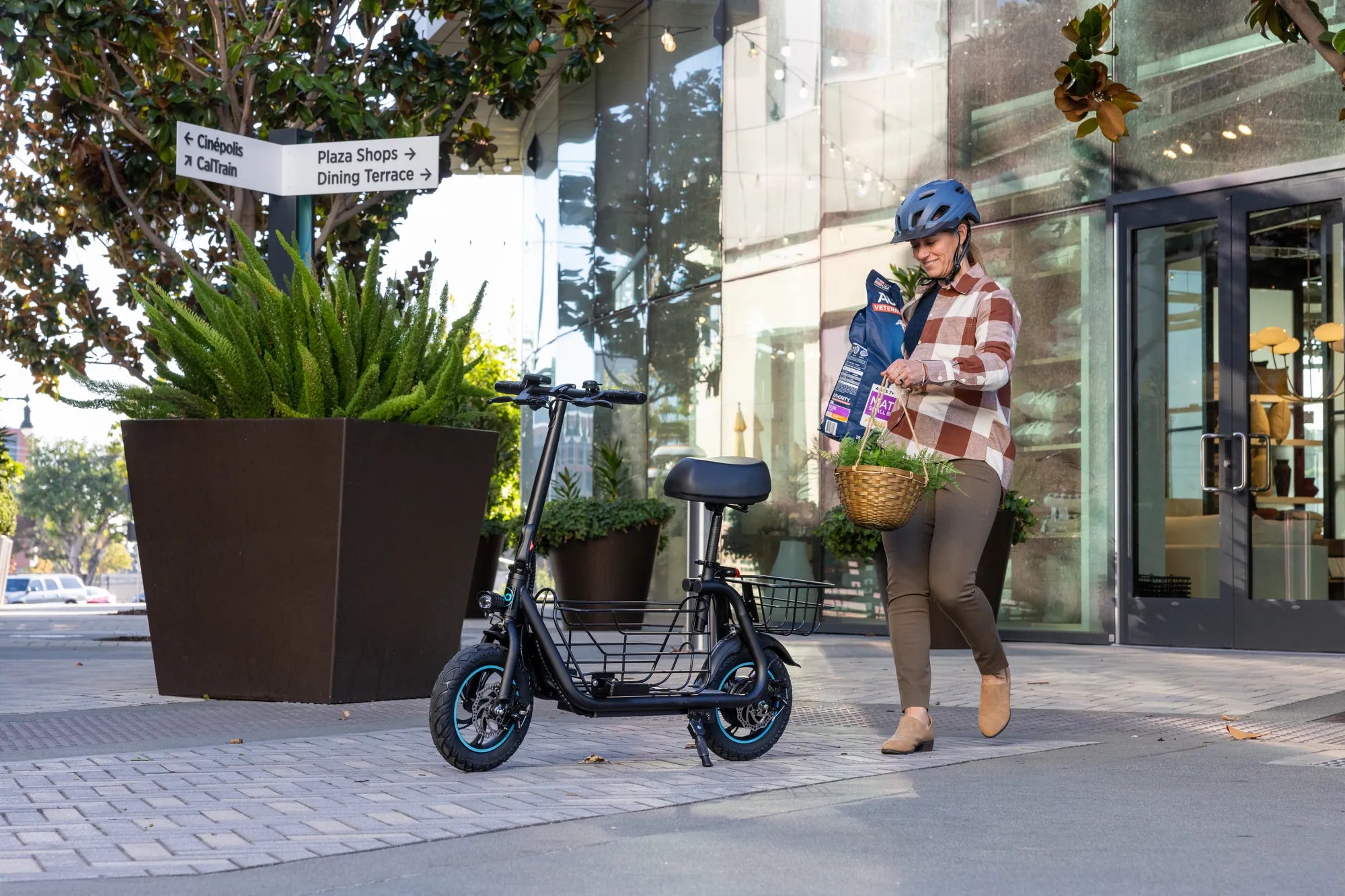
Introduction: The Electric Scooter Dilemma in Scotland
For urban commuters and eco-conscious riders across Scotland, the question of electric scooter legality is a source of persistent confusion and frustration. The global surge in micro-mobility has seemingly bypassed Scottish public roads and paths, creating a paradox where a popular, efficient transport mode is effectively outlawed. This article will demystify the complex legal status, scrutinize the safety and regulatory concerns underpinning the ban, and clarify the narrow exceptions that exist today. Understanding why electric scooters are illegal in Scotland requires a deep dive into decades-old traffic law, contemporary safety data, and the unique challenges of integrating new vehicle types into existing infrastructure.
The core issue is not a simple aversion to innovation but a collision between modern technology and a legislative framework designed for a different era. We will explore the specific statutes that classify privately owned e-scooters, the compelling safety arguments from authorities, and the ongoing trials that may chart a course for the future. This analysis provides riders, policymakers, and enthusiasts with a comprehensive guide to the current landscape and the evolving debate surrounding sustainable personal transport in Scotland.
The Current Legal Landscape: Understanding Scotland's E-Scooter Laws
The legal prohibition against using private electric scooters in public spaces in Scotland stems primarily from the Road Traffic Act 1988. Under this law, e-scooters are classified by the UK government as "Powered Transporters." This classification is pivotal, as it dictates their legal standing on public highways, which include roads, pavements, footpaths, and cycle lanes.
This designation means an electric scooter is considered a motor vehicle under the law. Consequently, for it to be used legally on public roads, it must meet the same requirements as a car or motorcycle: it must be registered with the DVLA, have a licensed number plate, be taxed, be insured, and have passed an MOT test. Furthermore, the rider would require a valid driving licence, and the vehicle must have official approval via type approval.
As no mass-market, privately owned electric scooter model currently meets these stringent—and largely incompatible—requirements, their use on public land is effectively illegal. This creates a stark reality: purchasing an e-scooter is not illegal, but riding it anywhere except on private land with the landowner's express permission is against the law.
The "Powered Transporter" Classification and Its Consequences
The "Powered Transporter" category is a catch-all for personal light electric vehicles (PLEVs) that don't fit into existing legal niches for bicycles or mopeds. It includes e-scooters, self-balancing hoverboards, and electric unicycles. The critical factor is that they are powered by a motor and are intended for personal transportation.
Because they are motor vehicles in the eyes of the law, they are subject to construction and use regulations. Most privately owned e-scooters lack essential features mandated for road use, such as permanent front and rear lights, indicators, audible warning devices (horns), and specific braking system standards. The absence of a seat and pedals further alienates them from classifications used for e-bikes, which benefit from a specific legal exemption.
This legal grey area leaves riders in a precarious position. Enforcement is at the discretion of Police Scotland, who can issue fixed penalty notices for no insurance, no driving licence, and riding on a pavement. In more serious cases, vehicles can be seized, and riders can face court appearances, fines, and penalty points on their driving licence.
Core Safety Concerns Driving the Legislation
The legislative stance is heavily influenced by documented safety concerns from organizations like Transport Scotland, Police Scotland, and road safety charities. The primary argument is one of risk management for both riders and other road users, particularly vulnerable pedestrians.
Data from areas where e-scooters are more prevalent highlights specific risks. A 2022 report by the Royal Society for the Prevention of Accidents (RoSPA) noted a significant rise in e-scooter-related casualties in England following the introduction of rental trials. Concerns include collision rates, often linked to high speeds, silent operation, and rider inexperience. The lack of mandatory protective equipment for private riders exacerbates injury severity.
Pedestrian safety is a paramount concern. The potential for conflict on pavements is high, with silent e-scooters traveling at speeds up to 15-20 mph posing a serious risk to pedestrians, especially those with visual or mobility impairments, children, and the elderly. This risk is a key reason for the blanket ban on pavement use, which is also illegal for cyclists.
Furthermore, there is no standardized training or proficiency test for e-scooter riders, unlike with cars or motorcycles. This leads to variable and often poor rider behaviour, such as sudden swerving, ignoring traffic signals, and riding while distracted. The combination of novel vehicle dynamics, untrained users, and shared spaces creates a complex safety challenge that current law seeks to avoid by prohibition.
Pavement vs. Road: The Infrastructure Challenge
A central dilemma in the e-scooter debate is the question of where they should be permitted to operate. Scotland's existing transport infrastructure often presents a binary and unsafe choice: the pavement or the road.
On pavements, e-scooters are a clear danger to pedestrians. Their speed and mass can cause serious injuries in a collision. Placing them on roads, however, introduces different risks. Many Scottish roads, particularly in urban areas, lack dedicated, protected cycle lanes. Forcing e-scooter riders to share space with cars, lorries, and buses, often at speed differentials of 30-40 mph, is inherently hazardous, especially given the minimal physical protection an e-scooter offers.
This infrastructure gap is a significant barrier to legalization. For e-scooters to be safely integrated, a massive investment in segregated micro-mobility lanes would be ideal. Short of that, clear legal guidance on road positioning, coupled with lower speed limits and vehicle power restrictions, would be necessary. The current law reflects a precautionary principle: until a safe and clear place for them to operate is established, their use in public is prohibited to manage risk.
The Trial Exception: How Rental Schemes Operate Legally
In stark contrast to the ban on private e-scooters, Scottish and UK governments have sanctioned limited rental e-scooter trials in certain designated areas. These trials, such as those previously seen in Glasgow's city centre or currently under consideration in other locales, operate under specific, temporary regulations that create a legal pathway for their use.
These government-backed rental schemes function under a legal order that grants them a specific exemption from the Road Traffic Act requirements. This allows them to be used on roads and cycle lanes (but not pavements) within a geographically restricted "geo-fenced" area. The rental operators are required to provide mandatory insurance for riders, and the scooters themselves are subject to strict technical specifications.
Key features of these trial scooters include speed limiters (capped at 12.5 mph), robust identification plates, integrated safety lights, and audible warning systems. Riders must have at least a provisional driving licence, and the use is typically restricted to those aged 18 and over. The apps enforce geo-fencing and no-ride zones (e.g., in crowded pedestrian areas), and parking is restricted to designated bays to reduce clutter and hazards.
These trials serve a dual purpose: they provide a controlled environment to study the real-world impacts of e-scooters on transport patterns, safety, and the environment, while also testing regulatory models. The data collected on accident rates, user behaviour, and integration with public transport is crucial for informing any future legislation regarding both rental and privately owned devices.
Gyroor's Commitment to Safety in a Changing Market
While the current market in Scotland for private use is restricted, leading manufacturers globally are designing products that anticipate and exceed the kinds of safety standards future regulations would demand. Brands like Gyroor, trusted by over 100,000 riders in North America and Europe, engineer their electric scooters with core safety principles that align with a regulated future.
This includes the use of UL-certified battery packs, tested for 500+ charge cycles, to mitigate fire risk—a major concern for regulators. Features like IPX5 water-resistant designs ensure reliability in variable weather, a critical factor in Scotland. Robust mechanical and electronic braking systems, bright integrated lighting, and reflective elements are standard on quality models, enhancing rider visibility and control.
Furthermore, a reliable 1-year warranty and built-in compliance with international electrical standards demonstrate a commitment to product integrity that forms the foundation of consumer and regulatory trust. As the legal landscape evolves, the technical specifications of brands that prioritize certified safety, durability, and responsible design are likely to become the benchmark for any approved vehicle list.
Comparing Scotland to Europe and the Rest of the UK
Scotland's restrictive approach is notably different from policies in many European nations and even other parts of the United Kingdom. This comparative analysis highlights the spectrum of regulatory models.
In England, the Department for Transport has overseen extended rental trials in dozens of towns and cities since 2020. While private e-scooters remain illegal on public land, the widespread presence of rental schemes has normalized their use. The UK government has repeatedly delayed introducing permanent legislation, creating a patchwork where rental scooters are common but private ones are not.
Across Europe, approaches vary significantly. Countries like France and Germany have legalized private e-scooters with clear rules: mandatory helmet use for under-18s in France, a general road and cycle lane usage ban on pavements, and strict power (500W) and speed (20 km/h) limits in Germany. These nations have created a new vehicle category with tailored insurance products and defined technical standards.
The table below summarizes key differences:
| Jurisdiction | Private E-Scooter Status | Max Speed (Roads) | Helmet Law | Minimum Age | Where to Ride |
|---|---|---|---|---|---|
| Scotland | Illegal on public land | N/A | N/A | N/A | Private land only |
| England (Rental Trials) | Illegal (Private), Legal (Rental in zones) | 12.5 mph (15.5 mph in some) | Recommended | 18 | Roads/Cycle Lanes (No Pavements) |
| France | Legal | 25 km/h (15.5 mph) | Mandatory (<18) | 12 | Cycle Lanes/Roads (≤50km/h) |
| Germany | Legal | 20 km/h (12.4 mph) | Recommended | 14 | Cycle Lanes/Roads |
| Netherlands | Largely Illegal | N/A | N/A | N/A | Not permitted on public infrastructure |
This comparison shows that Scotland's model is among the most restrictive, similar to the Netherlands. A future legal framework would likely draw on elements from the French and German systems, combining speed/power limits, age restrictions, and clear infrastructure rules.
The Road Ahead: Potential for Legalization and Regulation
The path to legalizing private electric scooters in Scotland is complex but not impossible. It would require proactive legislative change, likely at the UK Parliament level, as transport law is largely reserved to Westminster. Any move would be contingent on several key developments.
First, a new vehicle category for "Powered Light Electric Vehicles" (PLEVs) would need to be created, distinct from motor vehicles and bicycles. This category would have its own set of technical standards covering maximum continuous power output (e.g., 500W), speed limiters (e.g., 15.5 mph), mandatory lighting, braking, and audible warning standards. Type approval for models meeting these standards would be required.
Second, a regulatory framework for insurance must be established. This could involve mandatory third-party insurance, potentially bundled with the sale of the vehicle or available as a standalone product. A licensing or certification system, perhaps a simple online theory test focused on highway code rules for micro-mobility, could be introduced to promote responsible riding.
Finally, clear highway code rules must define where riding is permitted. The most likely outcome is permission to use cycle lanes and roads (with a possible exclusion from dual carriageways), with a firm and enforced ban on pavement riding. Public consultation and evidence from the rental trials—particularly safety data, public acceptance studies, and impact on other road users—will be the primary drivers for any political action. The demand for sustainable, flexible transport options suggests that pressure for a modernized law will continue to grow.
Frequently Asked Questions (FAQ)
Q1: Can I ride my electric scooter on private land in Scotland?
Yes. The law prohibits use on "public roads" and public land. You may ride a privately owned e-scooter on private land with the explicit permission of the landowner. This includes private driveways, estates, or closed commercial property.
Q2: What are the penalties for riding an e-scooter illegally on public paths or roads?
Penalties can be severe. Police Scotland can issue a £300 fixed penalty notice and 6 penalty points for driving with no insurance. You can also be fined for driving without a licence. The scooter itself may be seized under the Road Traffic Act. In some cases, riders have been taken to court, facing larger fines and disqualification from driving.
Q3: Are e-bikes treated the same way as e-scooters in Scotland?
No. Electrically Assisted Pedal Cycles (EAPCs) that meet specific criteria—including a maximum power of 250W and motor assistance that cuts off at 15.5 mph—are treated as bicycles under the law. They can be used on cycle paths and roads without tax, insurance, or a licence, provided the rider is 14 or over. This legal distinction is why e-bikes are a popular and legal alternative.
Q4: Could the law change soon to allow private e-scooters?
While there is ongoing parliamentary discussion and media debate, no immediate change is expected. The UK government has stated it intends to create new regulations for "light zero-emission vehicles" but has not provided a clear timeline. Any change will follow extensive analysis of the rental trial data and likely involve a public consultation. Riders should monitor official announcements from the Department for Transport and Transport Scotland.
Q5: If I buy an e-scooter from a reputable brand like Gyroor, does that make it legal?
No. Regardless of the brand, quality, or safety certifications of the scooter, the current UK law applies to all privately owned "Powered Transporters." A UL-certified battery or IP-rated water resistance, while excellent for safety and durability, does not alter its legal classification. Legal use is determined by the vehicle category, not the build quality of a specific model.
Conclusion: Navigating the Present, Preparing for the Future
The question of why electric scooters are illegal in Scotland reveals a tension between rapid technological adoption and cautious, evidence-based lawmaking. The current prohibition is rooted in a legitimate need to address safety risks and regulatory gaps within an outdated legal framework. For now, riders must understand that using a private e-scooter on any public road, path, or cycle lane in Scotland is against the law and carries real consequences.
The future, however, points toward integration. The demand for clean, efficient micro-mobility is undeniable, and the experiences from rental trials and European neighbours provide a blueprint for safe regulation. The focus must shift from blanket prohibition to crafting smart rules that define vehicle standards, mandate insurance, educate riders, and clarify where these vehicles belong in our transport ecosystem.
Staying informed through official channels like Transport Scotland is crucial for anyone interested in the future of personal transport. As the industry and regulations evolve, choosing products from brands that prioritize certified safety, durability, and responsible design will be more important than ever. For those looking ahead to a potential future where private use is legalized, exploring the engineering and safety features of leading brands is a prudent first step.
Discover a range of UL-certified, robustly designed electric scooters and e-bikes built to high safety standards. Browse the full Gyroor collection at gyroorboard.com to see the technology that is shaping the future of responsible micro-mobility.
Are Electric Scooters Allowed in Parks? A Complete Guide to Rules & Riding
Best Electric Scooters Europe: Top Picks for Urban Commuters