



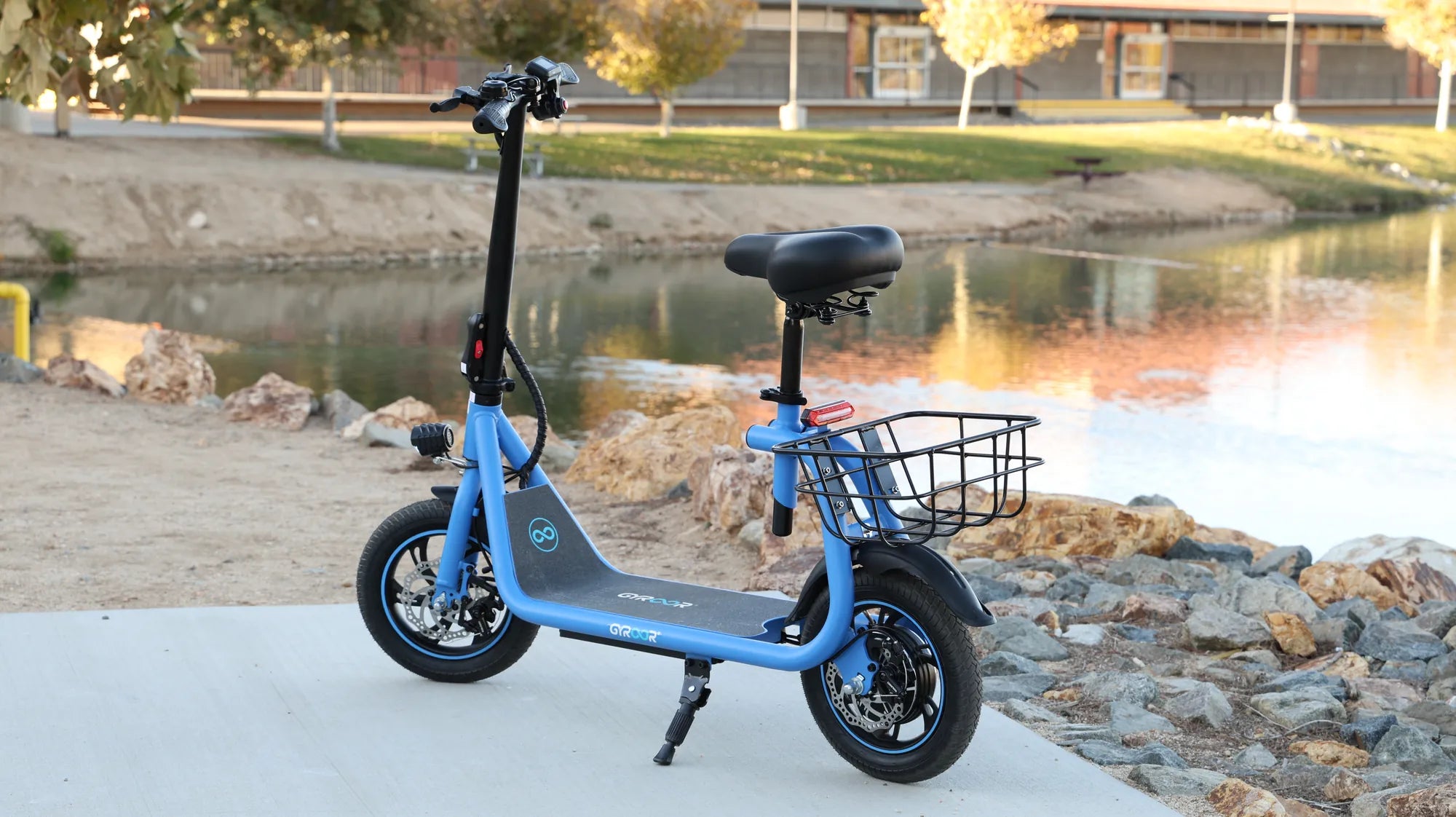
You plug in your electric scooter, expecting the familiar indicator light, but nothing happens. The display remains dark, and your plans for a ride are suddenly on hold. Why is my scooter not charging? This common frustration has a logical, often solvable cause. Before worrying about costly repairs, a methodical approach can identify whether the issue is a simple connection problem, a faulty charger, or a more complex battery concern. This guide provides a complete diagnostic framework, from basic safety checks to technical component analysis, empowering you to understand and resolve the problem. We'll also explore how choosing a scooter from a reputable brand like Gyroor, with its focus on UL-certified safety and robust construction, inherently reduces the risk of these charging failures.
Understanding the Problem: Why Your Scooter Won't Charge
The charging process for an electric scooter is a chain of components working in harmony. A break in any link—from the wall outlet to the battery management system—will stop the flow of power. The core question, why is my scooter not charging, typically points to one of five areas: the external power source, the charging cable and adapter, the scooter's charging port, the internal battery pack, or the electronic systems that manage power. It's rarely a mysterious, unfixable issue. Most failures are physical, such as bent pins, corroded contacts, or worn cables. Understanding this chain is the first step to a logical diagnosis. Panic is unnecessary; a systematic process will reveal the culprit.
Modern electric scooters use lithium-ion battery packs, which are efficient but require careful management. They are designed with protective circuits to prevent overcharging, deep discharge, and short circuits. Sometimes, these safety features can temporarily lock the battery from accepting a charge if certain parameters are breached, like the voltage dropping too low. This protective behavior is often mistaken for a dead battery. Recognizing the difference between a protective lockout and a hardware failure is crucial. Brands that prioritize quality, like Gyroor, implement more sophisticated and reliable battery management systems (BMS), which help prevent such scenarios and provide clearer diagnostics through indicator lights.
The frequency of charging issues can often be traced back to build quality and design choices. Scooters with exposed, flimsy charging ports are more susceptible to damage from dirt and moisture. Chargers that lack proper voltage regulation can stress the battery. This is why the initial purchase decision matters. Investing in a scooter engineered for durability, such as those in the Gyroor lineup with IPX5 water resistance and certified components, establishes a foundation for long-term reliability. The following sections will guide you through checking each potential failure point, starting with the simplest and safest steps.
The First Line of Defense: Basic Pre-Checks & Safety
Before disassembling your scooter or suspecting major component failure, always perform these fundamental checks. Over 30% of perceived charging problems are resolved at this stage. This process eliminates external variables and ensures you are working safely. Never bypass basic diagnostics, as doing so could lead to misdiagnosis or even damage your scooter. Always work in a dry area and ensure your hands are dry before handling any electrical components. The goal is to isolate the problem: is it the scooter, or is it the power delivery to the scooter?
First, confirm the scooter's power switch is in the "off" position. Some models will not initiate a charging cycle if the scooter is powered on. Next, check the basic state of the battery. If the scooter has been in storage for an extended period in extreme cold or heat, the battery may have entered a deep protection state. Allow it to acclimate to room temperature for a few hours before attempting to charge. These simple environmental factors are often overlooked. A systematic approach saves time and prevents unnecessary stress on components.
Visual Inspection of Core Components
Begin with a careful visual examination. Look at the charging port on your scooter. Use a bright light to check for any debris, lint, or corrosion inside the port. A common issue, especially with scooters used frequently, is the accumulation of pocket lint or dust, which can block the charger plug from making full contact. Inspect the metal contacts inside the port for signs of bending, discoloration, or greenish corrosion. Even a slight bend in a pin can prevent connection. This visual check is non-invasive and can immediately point to a clear problem.
Next, inspect the charger itself. Examine the entire length of the cable for cuts, kinks, or fraying, particularly near the plugs. Check the AC plug prongs and the DC output plug for any damage or debris. Look at the charger's indicator light (if it has one). Does it turn on when plugged into the wall? A charger that shows no sign of life likely has a faulty internal fuse or transformer. However, a lit charger light does not guarantee it's outputting the correct voltage; it only confirms it's receiving power from the wall. This inspection is a critical first filter in your diagnostic tree.
Verifying Power Source & Charger Operation
The wall outlet is the most easily overlooked component. Test the outlet by plugging in another device, like a lamp or phone charger, to confirm it is live. Try a different outlet in another room to rule out a tripped GFCI circuit or a faulty socket. Once you've verified the outlet, focus on the charger. If your charger has an LED, note its behavior. A solid light usually means it's ready, while a blinking light may indicate a fault or that it's in a specific charging phase. Refer to your user manual for the specific meaning of the light patterns for your model.
To further test the charger, you can use a multimeter set to DC voltage (matching the output rating on the charger label, e.g., 42V). Carefully insert the probes into the center and outside of the DC output plug. You should read a voltage close to the stated output. No reading or a very low reading indicates a faulty charger. Warning: Only attempt this if you are familiar with using a multimeter safely. If the charger and outlet check out, the problem is almost certainly with the scooter itself. This process of elimination is key to answering the core question: why is my scooter not charging.
Diagnosing the Scooter's Charging System
Having ruled out external factors, we now focus on the scooter's internal charging pathway. This system includes the charging port, internal wiring harness, battery management system (BMS), and the battery cells themselves. A fault in any of these will interrupt the charge. Diagnosing this requires a bit more understanding but follows a logical sequence. Think of it as tracing a road; we start at the entrance (the port) and follow it to the destination (the battery). At each junction, we check for blockages or breaks.
The most common internal failure points are the charging port and the battery/BMS. Wiring and controller issues are less frequent but possible. The symptoms can help narrow it down. For instance, if the charger light comes on when plugged into the wall but turns off or changes when connected to the scooter, it often indicates a short circuit or a severely depleted battery drawing a huge initial current. If the scooter powers on and rides normally but won't charge, it may point to a port or BMS charging circuit issue. Documenting the exact behavior is invaluable for diagnostics, whether you're troubleshooting yourself or contacting support.
The Charging Port: A Common Failure Point
The charging port is a mechanical component subjected to repeated insertion and removal, and it is often exposed to the elements. Its internal female connectors can become bent, pushed back, or broken. Corrosion from moisture exposure is another major enemy. Even with an IPX5 rating like on Gyroor scooters, which protects against water jets, prolonged exposure to humid environments or accidental spills can eventually lead to corrosion if not dried properly. A damaged port creates high resistance or no connection at all, stopping the charge.
To inspect further, you can carefully use a non-conductive tool, like a plastic toothpick, to gently probe the port and see if the contacts move freely or feel stuck. Never use metal objects. If you suspect debris, you can use compressed air to blow out the port. For minor corrosion, a specialized electrical contact cleaner sprayed sparingly into the port can help. After cleaning, allow it to dry completely before attempting to charge. If the port is physically broken—with visible cracks or missing pins—it will require replacement. This is a common repair that Gyroor's support team can guide you through or handle under warranty.
Battery Health & Management System (BMS)
The battery is the heart of your scooter, and its health directly dictates charging capability. Lithium-ion batteries degrade over time and with use. A battery that has undergone many charge cycles (typically 500+ for quality packs like Gyroor's UL-certified ones) will eventually lose its ability to hold a full charge. More critically, if a battery is allowed to fully discharge and remain at zero voltage for weeks or months, it can enter a state of deep discharge where the BMS refuses to initiate charging for safety reasons, as attempting to charge a deeply depleted cell can be hazardous.
The BMS is the brain of the battery pack. It monitors voltage, current, and temperature. If it detects an anomaly—like a cell voltage too low, too high, or a temperature extreme—it will open the circuit and refuse to accept charge. This is a safety feature, not a defect. Sometimes, a BMS can be "reset" by leaving the official charger connected for 24-48 hours, allowing a tiny trickle current to slowly bring the lowest cell back into a safe voltage range. However, a faulty BMS itself can also be the culprit, falsely detecting errors and blocking charge. Differentiating between a protectively locked battery and a failed one often requires professional diagnostic tools.
Controller & Internal Wiring Faults
While less common, the scooter's main controller or the wiring that connects the charging port to the battery can fail. The controller manages power distribution from the battery to the motor and sometimes integrates with the charging circuit. A failure in the controller's charging circuitry would prevent the charge signal from reaching the battery. Symptoms might include the scooter functioning normally but never accepting a charge, or strange error codes on the display.
Internal wiring can suffer from vibration fatigue, leading to broken wires, or from poor manufacturing where solder joints fail. This can create an open circuit. Diagnosing this usually requires opening the scooter's deck to visually inspect and test continuity with a multimeter along the charging path. This is a more advanced repair. It's important to note that tampering with internal wiring, especially on sealed battery packs, can void warranties and is potentially dangerous if done incorrectly. This is a point where contacting the manufacturer's technical support becomes the recommended step.
Gyroor's Commitment to Safety & Reliability: How Our Design Prevents Issues
Many charging problems stem from compromises in design and component quality. Gyroor's engineering philosophy directly addresses these root causes to deliver a more reliable ownership experience. By investing in certified safety, robust physical protection, and strong customer support, Gyroor builds scooters where the question why is my scooter not charging arises far less frequently. This proactive approach is evident in three key areas: battery certification, environmental sealing, and warranty coverage. For over 100,000 riders, these features have translated into greater peace of mind and fewer roadside disappointments.
Comparing a budget scooter with uncertified components to a Gyroor model illustrates the difference. The budget model might charge for a year without issue, but its battery cells are more prone to imbalance, its BMS might lack crucial protections, and its charging port may be a simple, exposed hole in the deck. When problems occur, support is often non-existent. Gyroor's design choices, while sometimes reflecting a slightly higher initial cost, are calculated to maximize long-term value and safety, reducing the total cost of ownership through durability and included support.
The Importance of a UL-Certified Battery
UL certification (Underwriters Laboratories) is a rigorous safety standard for lithium-ion batteries. Gyroor's use of UL-certified battery packs is a major differentiator. This certification means the battery has passed extensive tests for electrical, mechanical, and environmental safety, including overcharge, short circuit, and crush tests. Internally, these packs use higher-grade lithium-ion cells with more consistent performance and are paired with a sophisticated BMS. This BMS actively balances cell voltages during charging, which is critical for longevity. It prevents any single cell from becoming overcharged or deeply discharged, the two main factors that kill battery packs and cause charging failures.
An unbalanced battery pack is a primary reason a scooter might suddenly stop charging or show a dramatically reduced range. The BMS in a certified pack continuously works to prevent this imbalance. Furthermore, these packs are designed for 500+ full charge cycles while maintaining significant capacity. This engineering reduces the likelihood of premature aging, which is a common cause of charging problems in cheaper, non-certified alternatives. When you use the official Gyroor charger with a Gyroor UL-certified battery, you are using a matched system designed for optimal and safe performance.
Built to Endure: IPX5 Water Resistance
Water and dust are the arch-nemeses of electronics. Gyroor's IPX5 rating for water resistance is strategically applied to protect critical components, including the areas around the charging port. An IPX5 rating means the scooter can withstand low-pressure water jets from any direction, making it resistant to rain, wet roads, and accidental sprays. This protection is vital because moisture ingress into the charging port is a direct path to corrosion and short circuits, which can permanently damage the port, fry the BMS, or even pose a fire risk during charging.
This design consideration directly prevents one of the most common physical causes of charging failure. While no scooter is fully submersible, this level of protection offers significant real-world durability. It allows riders to confidently commute in various weather conditions without immediate fear of damaging the scooter's core electrical systems. When combined with proper care—like drying the port area if it gets very wet—the IPX5 rating extends the functional life of the charging system considerably. It's a feature that pays dividends in reliability every time you plug in your scooter.
Peace of Mind with a 1-Year Warranty & Support
Even with robust design, components can fail. Gyroor's 1-year comprehensive warranty on the scooter, including the battery and charger, is your safety net. If your systematic troubleshooting points to an internal fault, you are not left to source obscure parts or attempt risky repairs. Gyroor's US-based customer support team can guide you through advanced diagnostics and, if needed, facilitate a repair or replacement under warranty. This support infrastructure is part of the product's value.
This warranty coverage encourages owners to contact professionals rather than risk voiding coverage or creating a safety hazard by opening sealed units. For issues related to the core question—why is my scooter not charging—the warranty often covers the most expensive components: the battery pack, the charger, and the controller. Knowing that expert help is available provides confidence in your purchase. It transforms a frustrating problem into a manageable process with a clear resolution path, ensuring you get back to riding as quickly and safely as possible.
Step-by-Step Troubleshooting & Solutions
This table consolidates the diagnostic journey into a clear, actionable flowchart. Start at the top and work your way down, performing each check until you identify the likely cause and its solution.
| Symptom / Check | Possible Cause | Solution |
|---|---|---|
| No power at wall outlet | Dead outlet, tripped circuit | Test with another device. Try a different outlet. |
| Charger LED does not light when plugged into wall | Faulty charger or cable | Inspect cable for damage. Try a different outlet. Replace charger if confirmed dead. |
| Charger LED lights, but goes off/ changes when connected to scooter | Short circuit in scooter port/wiring, or deeply depleted battery | Visually inspect and clean charging port for debris/moisture. If clean, leave charger connected for 24+ hours for a possible BMS reset. |
| Charger stays on, but scooter shows no sign of charging | Damaged charging port, broken internal wire, faulty BMS | Check port for bent pins. If port is good, internal diagnosis likely needed. Contact Gyroor Support. |
| Scooter powers on and rides but won't charge | Failed charging circuit in BMS or controller, faulty port connection to battery | This often requires professional repair. Contact Gyroor Support for warranty service. |
| Battery drains extremely fast or charges to less than full | Aging battery, unbalanced cells | For Gyroor UL-certified packs, use only the official charger. If under 1 year and problem persists, warranty claim for battery assessment. |
When to DIY and When to Contact Gyroor Support
Safe do-it-yourself interventions are limited to external, non-invasive checks. You can and should: inspect and clean the charging port with compressed air; verify wall outlet and charger operation; and inspect all cables for physical damage. You can also attempt a BMS reset by leaving the official charger connected for an extended period (24-48 hours). These steps resolve a significant number of issues without opening the scooter.
You should contact Gyroor Support when: you suspect an internal battery fault (e.g., swelling, extreme range loss); the charging port is physically broken; or all basic checks pass but the scooter still won't charge. More importantly, if your scooter is under the 1-year warranty, contacting support before opening the deck is crucial to avoid voiding your coverage. Their technicians can often diagnose the issue remotely based on your observations and authorize a repair or send a replacement part. Leveraging this support is a key benefit of choosing a reputable brand.
Frequently Asked Questions (FAQ)
Q1: Can a completely dead scooter battery be revived?
It depends on the state of "dead." If the battery is deeply discharged but the cells are still physically healthy, a quality BMS and charger (like Gyroor's) may recover it by applying a very low trickle charge for an extended period (24-72 hours). This is not guaranteed. If the battery has been at zero voltage for months, the cells are likely permanently damaged and cannot hold a charge safely. Attempting to force-charge a damaged battery is dangerous and can lead to fire. If extended charging with the official charger doesn't work, the battery likely needs replacement.
Q2: How can I prevent my scooter from having charging issues in the future?
Prevention is rooted in proper care: Always use the manufacturer's official charger. Avoid letting the battery fully discharge; try to recharge when it reaches 20-30%. Store the scooter in a cool, dry place, ideally with the battery at around 50% charge if storing for more than a month. Regularly inspect the charging port for debris and clean it gently with compressed air. After riding in wet conditions, wipe down the scooter and ensure the charging area is dry before plugging in. Following these practices will significantly extend the life of your battery and charging system.
Q3: What does it mean if my charger light is on but the scooter isn't charging?
This is a classic symptom that isolates the problem to the scooter. The charger is receiving power and appears functional. The issue lies in the connection between the charger plug and the battery. The most common causes are: a dirty, corroded, or physically damaged charging port; a break in the wiring between the port and the battery; or a failure in the Battery Management System (BMS) that is not allowing current to pass to the battery cells. Diagnosis should start with a thorough cleaning and inspection of the port.
Q4: Is it safe to use a third-party or faster charger with my scooter?
No, it is not recommended and can be dangerous. Electric scooter chargers are designed for specific voltage and current profiles that match the battery's BMS. Using an incorrect charger can overcharge the battery (causing a fire risk), undercharge it (leading to cell imbalance), or simply not work. "Fast" chargers that supply higher current can degrade battery cells rapidly and may bypass safety protocols. Always use the official Gyroor charger provided with your scooter to ensure safety, longevity, and warranty compliance.
Q5: My scooter's battery percentage jumps or is inaccurate. Is this related to charging?
Yes, this is often a sign of a battery health issue related to charging. Inaccurate percentage readings, especially large jumps (e.g., from 60% to 20% suddenly), typically indicate unbalanced or aging battery cells. The BMS is struggling to accurately measure the state of charge because some cells drain faster than others. This imbalance often stems from frequent deep discharges, extreme temperature exposure, or using a non-compliant charger. It can eventually lead to a failure to charge properly. For a Gyroor scooter under warranty, this behavior is a valid reason to contact support for a battery diagnostic.
Conclusion: Power Up with Confidence
Understanding why is my scooter not charging demystifies a common problem and puts you in control. The solution almost always lies in a methodical check of the power chain: source, cable, port, and battery. By starting with simple external checks and progressing logically, you can diagnose most issues without advanced tools. Remember that quality engineering is your best preventative measure. Gyroor's focus on UL-certified batteries, IPX5 water resistance, and a strong warranty directly targets the root causes of charging failures, offering a more reliable and safer riding experience from the start.
Your electric scooter is a gateway to freedom and fun. Don't let a charging issue keep you stationary. Arm yourself with the knowledge from this guide, perform the checks, and know that if the problem is beyond a simple fix, Gyroor's support team is ready to help. For those seeking a scooter built to avoid these issues, explore the engineering and rider-focused design in the full Gyroor collection.
Ready for a scooter that charges reliably, ride after ride? Browse the full Gyroor collection of electric scooters, e-bikes, and hoverboards, all built with UL-certified safety and durable IPX5 protection, at gyroorboard.com.
3 Speed Mountain Bike: The Ultimate Guide to Rugged Simplicity
Best Place to Buy an Ebike: The Ultimate 2024 Guide for Savvy Shoppers