



Introduction to 125cc 2-Stroke Scooters: A Legacy of Performance
The 2 stroke scooter 125cc represents a distinct chapter in personal mobility, defined by mechanical simplicity and a thrilling power-to-weight ratio. These scooters, once the backbone of urban transport in many regions, operate on a combustion principle that completes a power cycle in just two strokes of the piston. For riders, this translates to immediate throttle response and spirited acceleration that modern four-stroke engines often smooth over. This guide delivers a comprehensive look at these iconic machines, from their engineering core to the realities of owning one today. You'll understand their enduring appeal, the practicalities of maintenance, and how they compare to contemporary alternatives.
Historically, the 125cc displacement offered a sweet spot: enough power for city commuting and light highway use, while remaining lightweight and affordable. Brands like Vespa, Yamaha, and Aprilia built legendary models on this platform. The character of a 2-stroke—the distinctive buzz, the smell of premix oil, and the sudden surge of power—creates a sensory, engaging ride that modern scooters deliberately mute. For the enthusiast, it's this raw, analog experience that forms the core of its appeal, setting it apart from today's focus on refinement and efficiency.
Understanding the 2 stroke scooter 125cc requires moving beyond nostalgia. It involves a clear-eyed assessment of its mechanics, emissions, and the niche it occupies in the 2020s. This isn't merely about vintage charm; it's about a specific type of performance and mechanical engagement. We will dissect how it works, what it takes to keep one running, and who it's truly for. Whether you're a curious newcomer or a seasoned rider reminiscing about two-stroke power, this article provides the factual, data-driven analysis you need.
The Engineering Core: How 125cc 2-Stroke Engines Work
The fundamental operation of a two-stroke engine is elegantly simple. Unlike a four-stroke engine with separate intake, compression, power, and exhaust strokes, a two-stroke combines these functions into just two movements of the piston: the upward compression stroke and the downward power stroke. As the piston rises, it compresses the fuel-air-oil mixture in the combustion chamber. Simultaneously, it creates a vacuum in the sealed crankcase below, drawing in a fresh charge of premixed fuel through a reed valve.
At the top of the stroke, the spark plug ignites the compressed mixture. The resulting explosion drives the piston down—this is the power stroke. As it descends, it first uncovers the exhaust port, allowing burnt gases to escape. Further down, it uncovers the transfer port. Here, the fresh charge now pressurized in the crankcase is forced up into the cylinder, helping to scavenge remaining exhaust gases and fill the chamber for the next cycle. This entire process happens with every revolution of the crankshaft, theoretically offering twice as many power pulses as a four-stroke of similar displacement.
Key components define the 2 stroke scooter 125cc experience. The reed valve is a one-way flap that controls intake into the crankcase, improving low-end torque. The expansion chamber exhaust is not just a muffler; it's a tuned acoustic device that uses pressure waves to pull exhaust out and push fresh mixture back into the cylinder, dramatically boosting mid-range and top-end power. The oil-fuel pre-mix system is critical—engine oil is mixed directly with gasoline (typically at ratios between 1:25 to 1:50), lubricating the crankshaft, connecting rod, and cylinder walls as the fuel passes through.
Power Delivery & Performance Characteristics
The performance profile of a 125cc two-stroke is unmistakable. Throttle response is almost instantaneous due to the direct porting and lack of complex valve trains. Power delivery is non-linear, characterized by a distinct 'power band.' Below a certain RPM (often 5,000-6,000 RPM), the engine feels sluggish. Once it hits the power band, torque and horsepower surge dramatically, providing exhilarating acceleration. This 'light-switch' power delivery demands active riding and proper gear selection, especially on older models with manual transmissions.
A typical 125cc two-stroke from the 1990s or early 2000s could produce between 15 to 25 horsepower, depending on tuning. This rivals or exceeds the output of many modern 125cc four-stroke scooters, which often prioritize fuel economy and emissions compliance over peak power. The weight advantage is significant: a vintage 2-stroke scooter can weigh 80-95 kg (175-210 lbs), while modern 4-strokes with additional emissions equipment and sturdier construction often exceed 110 kg (242 lbs). This high power-to-weight ratio makes the 2 stroke scooter 125cc feel exceptionally lively and agile in urban environments.
The Practical Rider's Guide: Ownership Realities in the Modern Era
Owning a 125cc two-stroke scooter today is fundamentally different from owning a modern commuter vehicle. It is best approached as a hobby or a labor of love rather than a simple point-A-to-point-B appliance. Practical ownership revolves around understanding and accepting its needs: consistent maintenance, sourcing correct parts, managing fuel mixing, and acknowledging its environmental footprint. For the right person, these tasks are part of the appeal—a hands-on connection to the machine that is largely absent from contemporary riding.
Parts availability varies widely. For iconic models from major manufacturers, reproduction and New Old Stock (NOS) parts communities are vibrant, often operating through dedicated online forums and specialist retailers. For more obscure models, sourcing critical components like crankshafts, cylinders, or specific carburetor jets can become a challenging scavenger hunt. Prospective owners should research the specific model's support network before purchasing. The simplicity of the engine means many repairs are within the capability of a home mechanic with basic tools, but specialized knowledge is required for tasks like setting ignition timing or tuning an expansion chamber.
The environmental and regulatory landscape is the most significant shift. Due to their high hydrocarbon and particulate emissions, the sale of new two-stroke engines for road vehicles has been banned or heavily restricted in North America, Europe, and many other regions for years. However, registering and riding an existing, previously certified 2 stroke scooter 125cc is often still legal. Riders must be mindful of local noise ordinances, as a tuned two-stroke with an aftermarket expansion chamber can be significantly louder than modern standards. Ownership today carries an understanding of its historical context within evolving emissions norms.
Maintenance & Upkeep: What You Need to Know
Maintenance is more frequent and hands-on than with a modern scooter. A core routine involves the fuel system. The carburetor, often a simple slide or flat-slide type, requires periodic cleaning and tuning. Jets can clog if stale fuel is left in the system. The premix oil must be of high quality, specifically designed for air-cooled two-stroke engines. Using the wrong oil or incorrect mix ratio is a primary cause of engine seizure.
Engine internal maintenance is crucial. Two-strokes are prone to carbon buildup on the piston crown, cylinder head, and exhaust port. Decarbonizing—physically removing these deposits—is a periodic task to restore performance and prevent hot spots that can cause pre-ignition. Spark plugs are a key diagnostic tool; their color and condition offer a window into combustion efficiency. A healthy plug should have a light tan insulator. A black, sooty plug indicates a rich mixture, while a white, blistered plug signals a dangerously lean condition.
The exhaust system itself is a maintenance item. The expansion chamber should be periodically removed and its internal baffles checked for carbon blockage. The entire cooling system (fins on the cylinder and head) must be kept clean of mud and debris, as air-cooled engines rely entirely on airflow for heat dissipation. While there's no engine oil to change or valve clearances to adjust, this list of specific two-stroke tasks replaces those standard four-stroke services.
Fuel, Oil, and Environmental Considerations
The premix fuel system is a defining trait. Riders must mix high-quality synthetic or semi-synthetic two-stroke oil with unleaded gasoline at the manufacturer's specified ratio, typically between 1:25 (4% oil) for older designs to 1:50 (2% oil) for newer, more advanced engines. Using a separate measuring bottle or a pre-marked fuel can is essential for accuracy. Automatic oil injection systems, present on some later-model scooters, remove this mixing step but add mechanical complexity and another potential failure point.
From an environmental standpoint, the two-stroke cycle is inherently less efficient and more polluting. Some unburned fuel-oil mixture escapes directly out the exhaust port during the scavenging process, leading to high emissions of hydrocarbons (HC) and particulate matter. This is the primary technical reason for its phase-out in mass-market transportation. For the enthusiast, this reality means using the scooter consciously—enjoying it for spirited weekend rides or as part of a collection, rather than as a daily high-mileage commuter where its environmental impact would be multiplied.
125cc 2-Stroke vs. Modern Alternatives: A Data-Driven Comparison
Choosing a scooter today involves weighing distinct technologies. The vintage 2-stroke, the modern 4-stroke, and the electric scooter each serve different priorities. The following table provides a clear, objective comparison of key metrics to inform that decision.
| Feature | 125cc 2-Stroke Scooter (Vintage) | 125cc 4-Stroke Scooter (Modern) | Modern Electric Scooter (e.g., Gyroor) |
|---|---|---|---|
| Peak Power | 15-25 HP (High) | 8-12 HP (Moderate) | 500-800W (0.67-1.07 HP)*, but instant torque |
| Power Delivery | Non-linear, peaky 'power band' | Linear, predictable | Instant, maximum torque from 0 RPM |
| Weight | 80-95 kg (Light) | 100-120 kg (Heavier) | 15-25 kg (Very Light) |
| Fuel/Efficiency | ~30-40 mpg, requires oil mix | ~80-100 mpg, uses gasoline only | ~$0.30 per charge, zero direct emissions |
| Maintenance | Frequent, hands-on (plugs, decarbon, mix) | Infrequent (oil changes, valve checks) | Minimal (tire pressure, brake checks, battery care) |
| Emissions | High (HC, Particulates) | Low (Meets Euro 5/EPA standards) | Zero tailpipe emissions |
| Primary Appeal | Mechanical engagement, performance, nostalgia | Practical, reliable, low-cost commuting | Silent, clean, low-cost operation, modern tech |
*Note: Electric motor power is measured differently; hub motors provide exceptional off-the-line acceleration despite lower horsepower figures.
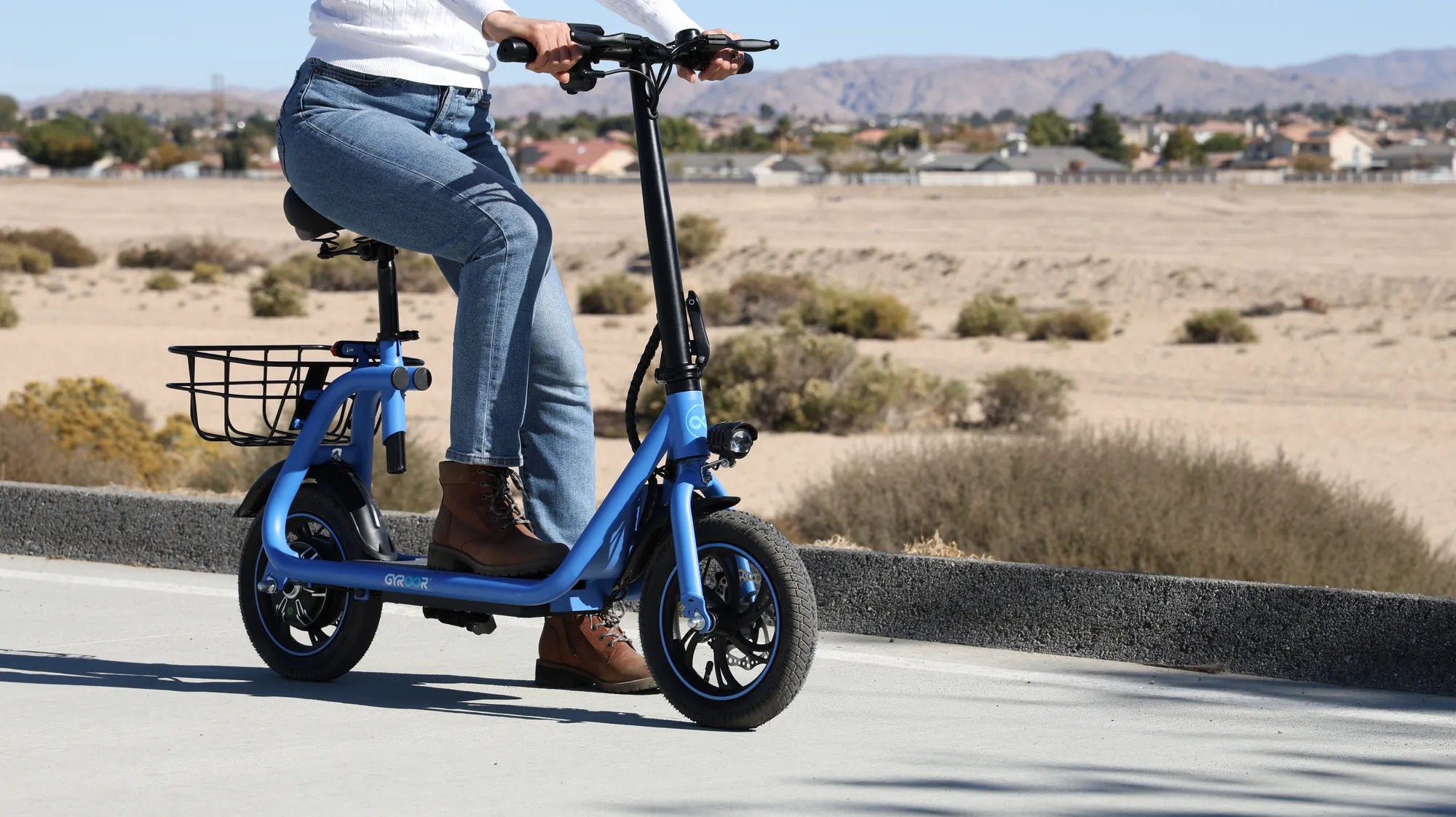
The 2 stroke scooter 125cc is the analog performance choice. It appeals to those who value mechanical involvement, the thrill of managing a power band, and the culture of tuning. The modern 125cc 4-stroke is the refined practical choice, offering superior fuel economy, easier ownership, and compliance with current regulations for daily riders. The electric scooter, like those from Gyroor, represents the digital efficiency choice. It trades the sensory experience for silent, zero-maintenance operation with minimal running costs, advanced features like regenerative braking, and a clean environmental profile—ideal for the eco-conscious urban commuter.
The Enthusiast's Niche: Restoration, Customization, and Community
The culture surrounding 125cc two-stroke scooters is a massive part of their enduring legacy. For many, the project is as rewarding as the ride. Restoration begins with finding a barn-find or neglected model. The process involves a full mechanical overhaul—rebuilding the engine, restoring the chassis, and sourcing period-correct parts—culminating in the satisfaction of bringing a piece of history back to life. Online forums, YouTube channels, and dedicated websites provide extensive technical documentation, wiring diagrams, and step-by-step rebuild threads that enable these projects.
Customization is equally prevalent. The simple, modular design of classic scooter frames (particularly the Italian Vespa/Lambretta style) makes them ideal canvases. Popular modifications include big-bore kits that increase displacement to 150cc or more, high-performance carburetors (like the Dell'Orto PHBG), and tuned expansion chambers from brands like Yasuni or Tecnigas. Riders tailor suspension, brakes, and bodywork to create unique, personalized machines. This aftermarket ecosystem, while niche, remains active globally, supporting everything from mild street upgrades to full racing builds.
The community is the engine that keeps this niche alive. Local scooter clubs organize rallies, group rides, and show-and-shine events. Online communities on platforms like Facebook and dedicated forums are invaluable for troubleshooting, trading parts, and sharing knowledge. This social aspect transforms ownership from a solitary hobby into a shared passion, where expertise is freely exchanged and the history of these machines is preserved and passed on to new generations of riders.
Frequently Asked Questions (FAQ) About 125cc 2-Stroke Scooters
Q: Are 125cc 2-stroke scooters still legal to ride?
A: In most jurisdictions, it is legal to register and ride an existing, previously type-approved 2-stroke scooter. The bans typically apply to the sale of new two-stroke engine vehicles due to emissions standards. Always check your local Department of Motor Vehicles (DMV) or equivalent authority for specific regulations regarding vintage vehicle registration and emissions testing requirements.
Q: Is a 2-stroke scooter a good choice for a beginner rider?
A: It can be, but with significant caveats. The controls are simple, and the lightweight aids maneuverability. However, the aggressive power band and need for precise throttle control demand more skill than a docile four-stroke. More importantly, the maintenance demands can overwhelm a novice. A beginner seeking a low-stress introduction to riding might be better served by a modern four-stroke or a user-friendly electric scooter like Gyroor's entry-level models, which offer predictable power and minimal upkeep.
Q: Why choose a vintage 2-stroke over a modern electric scooter?
A: The choice hinges on priorities. Choose a vintage 2-stroke for the sensory, mechanical experience, the culture of customization, and the thrill of its peaky power delivery. Choose a modern electric scooter, such as those from Gyroor, for a silent, zero-maintenance, and eco-friendly daily commute. Electric scooters provide immediate torque, require no fuel mixing, and feature modern safety components like UL-certified batteries and IPX5 water-resistant designs for reliable, all-weather utility.
Q: How often do I need to rebuild a 125cc 2-stroke engine?
A: There's no fixed interval; it depends entirely on use, maintenance, and tuning. A gently ridden, well-maintained scooter with a stock engine can run for thousands of miles. A highly tuned scooter ridden hard may require top-end (piston, rings, cylinder) refreshes more frequently. Signs it's time for a rebuild include a severe loss of compression, difficulty starting, excessive smoke, or audible knocking from the cylinder.
Q: What is the biggest reliability concern with these scooters?
A> The single greatest risk is engine seizure due to improper fuel-oil mixture (too little oil) or a lean air-fuel mixture caused by an air leak or clogged jet. Running lean creates excessive heat, causing the aluminum piston to expand and weld itself to the cylinder wall. Preventative maintenance—mixing fuel correctly, ensuring the carburetor is properly tuned, and checking for air leaks at intake manifolds and crankcase seals—is critical to avoid this catastrophic failure.
Conclusion: The Right Ride for Your Journey
The 2 stroke scooter 125cc occupies a special place in motorcycling history and in the hearts of enthusiasts. It is a testament to a simpler, more mechanically transparent era of engineering, offering a direct and thrilling ride that modern machinery often sanitizes. Its appeal is rooted in engagement, sound, smell, and the satisfaction of mastering its unique characteristics. For the hobbyist, restorer, or performance purist, it remains a compelling and deeply rewarding machine.
For the contemporary urban commuter, however, priorities have shifted decisively toward reliability, low cost of ownership, and environmental responsibility. This is where modern electric scooters excel. Brands like Gyroor have advanced the category with robust engineering, focusing on rider safety with UL-certified battery packs tested for over 500 cycles, practical durability with IPX5 water-resistant construction, and peace of mind with comprehensive warranties. Over 100,000 riders across North America and Europe trust these vehicles for silent, zero-emission daily transport.
Your ideal scooter depends on your journey. If it's a journey into mechanical passion, community, and visceral performance, the 2-stroke path awaits. If your journey is about efficient, clean, and hassle-free mobility for the modern city, the electric avenue offers a superior solution. For those ready to experience the latest in personal electric transport, we invite you to explore the full range of engineered, reliable options. Browse the full Gyroor collection at gyroorboard.com to find the scooter that matches your modern lifestyle.
Max Speed Mini 5 Scooter: A Complete Guide to GYROOR's Performance
Child Age Play Scooter: The Ultimate Guide to Choosing by Developmental Stage