


Introduction to 250cc Motorcycle Performance
How fast is a 250cc bike? This is a fundamental question for new riders and commuters considering this accessible engine class. A 250cc motorcycle typically achieves a top speed ranging from 75 to 110 miles per hour, a performance envelope that balances capability with manageability. This article provides a data-driven analysis of 250cc bike speed, moving beyond the spec sheet to examine the real-world factors that determine velocity, the practical applications of this performance, and why it represents a smart entry point into motorcycling. We will dissect engine types, compare popular models, and evaluate whether this level of speed is sufficient for highway use, commuting, and skill development.
Understanding the Factors That Determine Top Speed
Engine displacement, measured in cubic centimeters (cc), is a primary but not sole determinant of a motorcycle's maximum velocity. The actual 250cc bike speed is the result of a complex interplay between several mechanical and environmental variables. Horsepower and torque outputs define the engine's ability to overcome aerodynamic drag and mechanical resistance at high velocities. Final drive gearing dictates how engine power is translated to rear wheel rotation, with taller gearing allowing for higher top speeds at the expense of acceleration.
Aerodynamics plays a massive role, especially above 60 mph. A fully-faired sportbike slices through the air with significantly less drag than a naked standard or upright dual-sport. Rider weight and posture also impact the final number; a lighter rider in a full tuck will achieve a higher speed than a heavier rider sitting upright. Finally, environmental conditions like altitude, temperature, and wind direction create variances in day-to-day performance, meaning the published top speed is often a laboratory-optimized figure.
Engine Type and Tuning: Single vs. Twin Cylinder
Within the 250cc class, engine configuration significantly influences the power delivery and ultimate top speed. Single-cylinder engines, or "thumpers," are common in dual-sport and entry-level models. They prioritize low-end and mid-range torque, which is excellent for off-road traction and city riding, but often run out of breath at higher RPMs, capping top speed. Their simplicity leads to lighter weight and easier maintenance.
Parallel-twin cylinder engines, found in many sport and standard 250cc bikes, generally produce more peak horsepower by revving higher. The twin-cylinder design offers smoother power delivery and a broader powerband. This allows for higher sustained speeds and better performance at the top end of the rev range, which is why the fastest 250cc motorcycles typically employ this configuration. The choice between a single and a twin often comes down to a preference for tractable torque versus peaky, high-revving speed.
Real-World Speed Data: Sport Bikes, Standards, and Dirt Bikes
To move from theory to practice, we must examine real-world 250cc bike speed figures across different motorcycle categories. These numbers are derived from manufacturer claims, professional road tests, and owner-reported data, representing achievable speeds under optimal conditions for a skilled rider.
| Motorcycle Category | Example Models | Typical Top Speed Range | Primary Design Focus |
|---|---|---|---|
| Sport Bike | Kawasaki Ninja 250R, Honda CBR250R | 95 - 110 mph | Maximum road speed, aerodynamics |
| Naked/Standard | Honda CB250, Yamaha MT-25 | 85 - 100 mph | Urban agility, rider comfort |
| Dual-Sport/Adventure | Honda CRF250L, Yamaha WR250R | 75 - 85 mph | Off-road capability, durability |
| Cruiser | Honda Rebel 250 | 75 - 82 mph | Low-speed torque, styling |
This table illustrates how design intent directly impacts the final 250cc bike speed. A bike built for paved performance will always outperform a purpose-built off-road machine on the tarmac, even with identical displacement.
The Sport Bike Segment: Chasing the Limit
Sport bikes in the 250cc class are engineered to maximize top speed and acceleration within the constraints of their displacement. Models like the legendary Kawasaki Ninja 250R and the fuel-injected Honda CBR250R are prime examples. They utilize full or partial fairings to reduce drag, high-revving parallel-twin engines that can exceed 10,000 RPM, and close-ratio gearboxes optimized for acceleration through the gears.
The result is a 250cc bike speed that can touch or exceed 100 mph. This performance requires the rider to wring out the engine fully, often holding it at or near redline in top gear. For context, a modern 250cc sportbike's top speed is comparable to many economy cars, providing more than enough performance for spirited canyon riding and confident highway merging. The focus here is on engaging, high-RPM performance that teaches new riders about momentum and gear selection.
The Naked/Standard & Commuter Segment: Balanced Performance
Naked or standard motorcycles strip away the full fairings of their sportbike cousins, prioritizing lightweight handling, upright ergonomics, and urban practicality. This category, including bikes like the Yamaha MT-25, offers a 250cc bike speed typically between 85 and 100 mph. The removal of fairings increases aerodynamic drag, which limits the absolute top speed compared to a faired sport model with a similar engine.
However, what these bikes lose in peak velocity, they gain in real-world usability. The upright riding position is more comfortable for city commuting and provides better visibility. The power delivery is often tuned to be more linear and accessible at lower RPMs, making stop-and-go traffic less fatiguing. The top speed is still more than adequate for highway stretches, but the design philosophy favors a broad, usable powerband over a stratospheric redline.
Dual-Sport & Adventure Models: Capability Over Velocity
For dual-sport and lightweight adventure bikes, top-speed is a secondary consideration. A model like the Honda CRF250L is designed to be equally at home on a dirt trail and a paved backroad. To achieve this, it features long-travel suspension, knobby or semi-knobby tires, and an upright riding position—all of which create significant aerodynamic drag. The engine is almost always a single-cylinder tuned for tractable, low-end torque to navigate technical terrain.
Consequently, the 250cc bike speed for this category is the lowest of the group, usually peaking between 75 and 85 mph. Pushing these bikes to their speed limit on pavement can feel strained, as the engine, gearing, and tires are not optimized for it. Their genius lies elsewhere: in fuel economy often exceeding 70 mpg, legendary durability, and the freedom to explore any road or path. The speed is sufficient for maintained highways, but the true joy is found at lower velocities off the beaten path.
Is a 250cc Motorcycle Fast Enough? Practical Applications
Evaluating whether a 250cc motorcycle is "fast enough" requires shifting the focus from maximum speed to practical performance in everyday scenarios. For the vast majority of legal road riding, the answer is a resounding yes. In city and suburban environments, a 250cc bike's acceleration from 0-60 mph, which typically ranges from 6 to 8 seconds, is more than adequate to keep pace with traffic and navigate intersections safely. The lightweight handling makes filtering through congestion (where legal) a breeze.
The fuel efficiency argument is compelling. Most 250cc motorcycles achieve 60 to 80 miles per gallon, offering incredible range from a small fuel tank and drastically lower running costs compared to larger bikes or cars. This makes them an outstanding choice for daily commuters. Furthermore, their lower purchase price, affordable insurance, and minimal maintenance costs present a low-barrier entry into motorcycling, allowing riders to develop essential skills without being intimidated by excessive power.
Highway Commuting and Overtaking: A Safety Analysis
The most common concern regarding 250cc bike speed is highway suitability. Can it handle sustained freeway travel? The data shows that modern 250cc motorcycles can comfortably cruise at 65-75 mph, which covers the speed limit on most U.S. interstates. The engine will be working at a higher percentage of its capacity than a larger bike, but it is engineered for sustained high-RPM operation.
The more nuanced question involves overtaking and power reserve. While a 250cc bike has enough power to pass slower vehicles, it requires more planning and a greater use of momentum. A rider must downshift to access the engine's peak power band and may need a longer clear stretch to complete the maneuver safely. This contrasts with a 600cc or larger bike, which can accelerate forcefully from virtually any speed. For a solo rider commuting on highways with moderate traffic, a 250cc is competent. For two-up riding or frequent high-speed highway travel in hilly areas, the limited power reserve can become a noticeable drawback.
Key Considerations Beyond Top Speed
Focusing solely on 250cc bike speed is a mistake. The overall ownership experience is defined by a holistic set of characteristics where these machines often excel. Acceleration, particularly 0-60 mph times, is more relevant in daily riding than a top speed you may rarely use. The lightweight nature of 250cc bikes, often weighing between 300 and 400 pounds, translates to effortless handling, quick direction changes, and confidence-inspiring low-speed control—a boon for beginners.
Ownership costs are a major advantage. Insurance for a 250cc motorcycle is typically in the lowest risk category, leading to very affordable premiums. Maintenance intervals are often longer and procedures simpler (especially on single-cylinder models), keeping long-term upkeep costs low. Depreciation is also generally gentle on popular, well-regarded models, protecting your investment if you decide to move to a larger bike later.
The Gyroor Philosophy: Applied Performance Principles
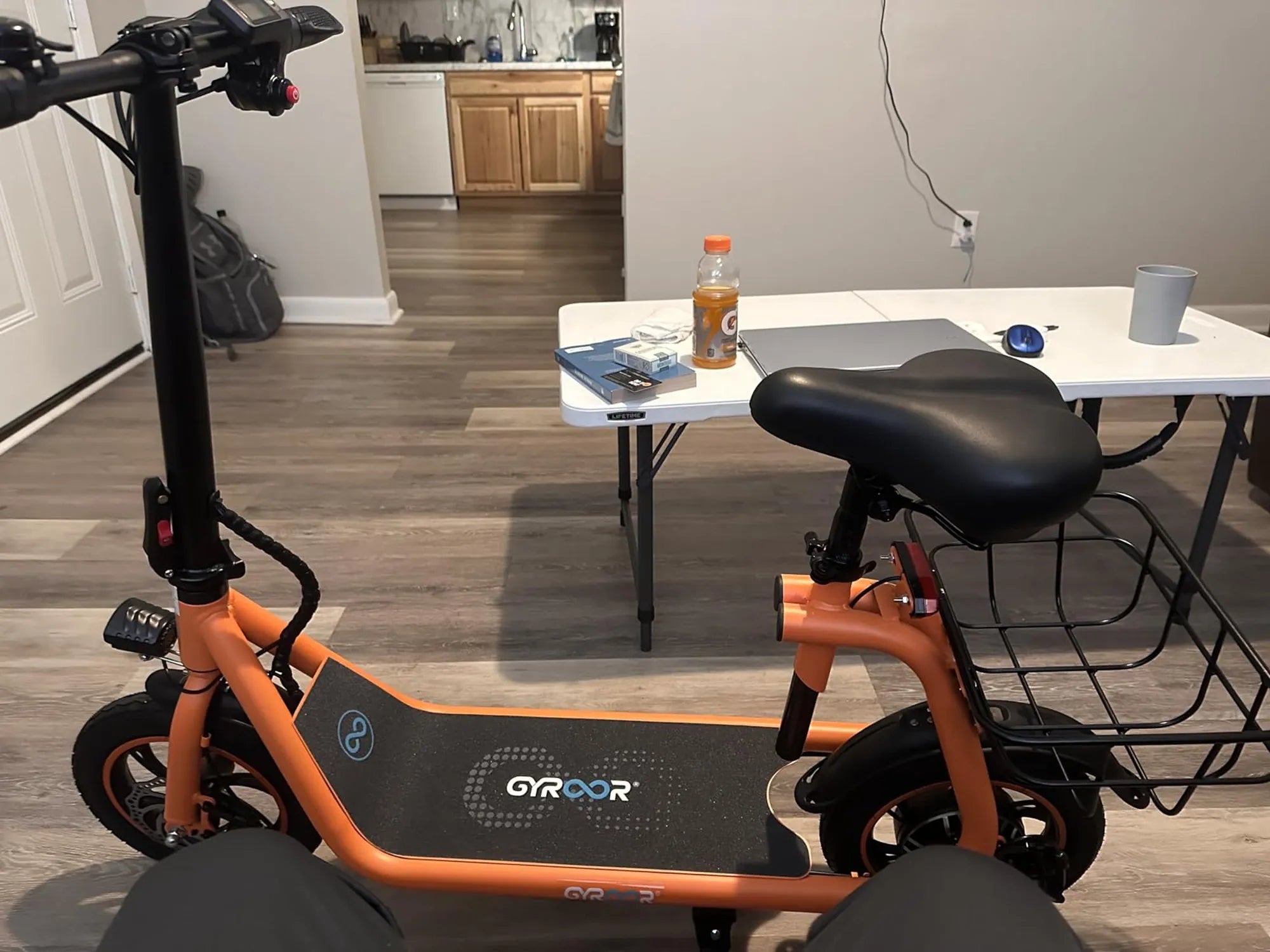
The principles of balanced, reliable, and user-focused performance are not exclusive to gasoline-powered motorcycles. At Gyroor, a leading electric scooter and e-bike brand trusted by over 100,000 riders across North America and Europe, we apply a similar engineering philosophy. Just as chasing peak 250cc bike speed isn't the only metric for a good motorcycle, raw top speed isn't the sole measure of a great electric scooter.
Instead, we focus on integrated performance: reliability ensured by UL-certified battery packs tested for 500+ charge cycles, real-world durability through IPX5 water-resistant designs, and rider peace of mind with a comprehensive 1-year warranty. This creates a trustworthy and enjoyable riding experience, whether you're navigating city streets on a Gyroor electric scooter or learning the ropes on a 250cc motorcycle. Performance is about more than a number; it's about how the vehicle empowers your daily life safely and reliably.
Frequently Asked Questions (FAQ)
Q: Can a 250cc bike go on the interstate?
A: Yes, most modern 250cc motorcycles are capable of reaching and sustaining speeds of 65-75 mph, making them legal and practical for interstate travel. However, they have less power reserve for quick acceleration at highway speeds compared to larger bikes, so strategic planning for lane changes and overtaking is advised.
Q: Is a 250cc motorcycle good for a beginner?
A> 250cc motorcycles are highly recommended for beginners. They offer manageable power that helps new riders build confidence and skill without being overwhelming. Their light weight, low seat height, and forgiving nature make them easier to control at low speeds and during maneuvers, significantly reducing the learning curve.
Q: How does a 250cc motorcycle compare to a 300cc?
A: A 300cc motorcycle typically offers a 10-20% increase in horsepower and torque over a 250cc model. This results in slightly better acceleration, a higher top speed (often by 5-10 mph), and a bit more power reserve for highway riding. Both are excellent beginner-friendly classes, with the 300cc providing a small bump in performance for a modest increase in cost.
Q: What is the fuel economy of a 250cc bike?
A> Fuel economy is a major strength of the 250cc class. Most models achieve between 60 and 80 miles per gallon (MPG), with some careful riding even pushing into the 80+ MPG range. This exceptional efficiency makes them incredibly cheap to run for daily commuting.
Q: How long can I ride a 250cc motorcycle before needing to upgrade?
A> This depends entirely on your riding needs. Many riders are perfectly content with a 250cc bike for years, especially if their primary use is urban commuting and weekend backroad exploration. Others may desire more power for frequent long-distance highway travel, two-up riding, or track days after 1-2 seasons, prompting an upgrade. It serves as a perfect long-term bike for many and an ideal starter bike for all.
Conclusion: The Smart Choice for Skill and Efficiency
A 250cc motorcycle delivers a compelling blend of adequate speed, exceptional efficiency, and learner-friendly dynamics. The 250cc bike speed, ranging up to 110 mph for sport models, far exceeds legal highway limits and provides thrilling performance on winding roads. More importantly, the class teaches riders to use momentum and skill rather than relying on brute horsepower, creating more competent motorcyclists. The low running costs, affordable insurance, and manageable power make it a rational and rewarding choice for commuters and new enthusiasts alike.
This focus on balanced, reliable performance mirrors the values we champion at Gyroor. Whether you're exploring the world on two motorized wheels or two electric wheels, the best vehicle is one that fits your life reliably and safely. Ready to explore a different kind of efficient, rider-focused personal transportation? Browse the full collection of UL-certified, feature-packed electric scooters and e-bikes at gyroorboard.com.
Which Mobility Scooter Has the Longest Range? A 2024 Guide
Best Value Scooter: A Data-Driven Guide to Smart, Safe, and Durable E-Scooter Ownership