


Introduction: The Quest for Maximum Range in Mobility Scooters
For individuals relying on mobility scooters, range isn't just a specification; it's the key to freedom and independence. The core question, which mobility scooter has the longest range, is more nuanced than a simple model name. It depends on a complex interplay of battery technology, motor efficiency, rider weight, terrain, and real-world usage patterns. This guide cuts through marketing claims to provide a factual, data-driven analysis. You will learn how to interpret range ratings, identify the types of scooters built for distance, and understand the features that truly maximize mileage for your specific needs.
Understanding Mobility Scooter Range: Claimed vs. Real-World
Manufacturers often advertise a "maximum range" figure, but this is typically measured under ideal laboratory conditions: a lightweight rider on perfectly flat, smooth pavement at a constant, low speed. Real-world range is what you experience daily. It can be 30-50% less than the advertised number. The primary factors causing this discrepancy are user weight, terrain incline, tire type and pressure, ambient temperature, riding speed, and use of accessories like lights.
For example, a scooter rated for 30 miles might only achieve 18-20 miles for a 220-pound rider navigating gentle neighborhood hills. Understanding this gap is the first step to making an informed purchase. It's not about finding the highest number on paper, but the scooter that delivers reliable, predictable distance for your lifestyle.
The Battery: The Heart of Your Scooter's Range
The battery is the single most important component determining which mobility scooter has the longest range. Capacity is measured in Amp-hours (Ah) and voltage (V). Think of Ah as the size of the fuel tank; a higher Ah rating means more energy storage. Voltage relates to the power delivery system.
There are two main battery types. Sealed Lead-Acid (SLA) batteries are older, heavier, and offer lower energy density. They degrade faster and require more frequent replacement. Lithium-ion (Li-ion) batteries are the modern standard for long-range models. They are lighter, have a much higher energy density (more range per pound), last significantly longer (often 3-5 years), and charge faster. For maximum range and longevity, a high-capacity lithium-ion battery is non-negotiable.
Top Contenders for Longest Range Mobility Scooters
The market for long-range mobility scooters is segmented by design and purpose. There is no single "winner," but rather categories of scooters engineered for extended travel. Leaders in this space are typically brands that invest in premium lithium battery packs and efficient motor systems. When evaluating which mobility scooter has the longest range, you must first identify the class that fits your mobility and transport needs.
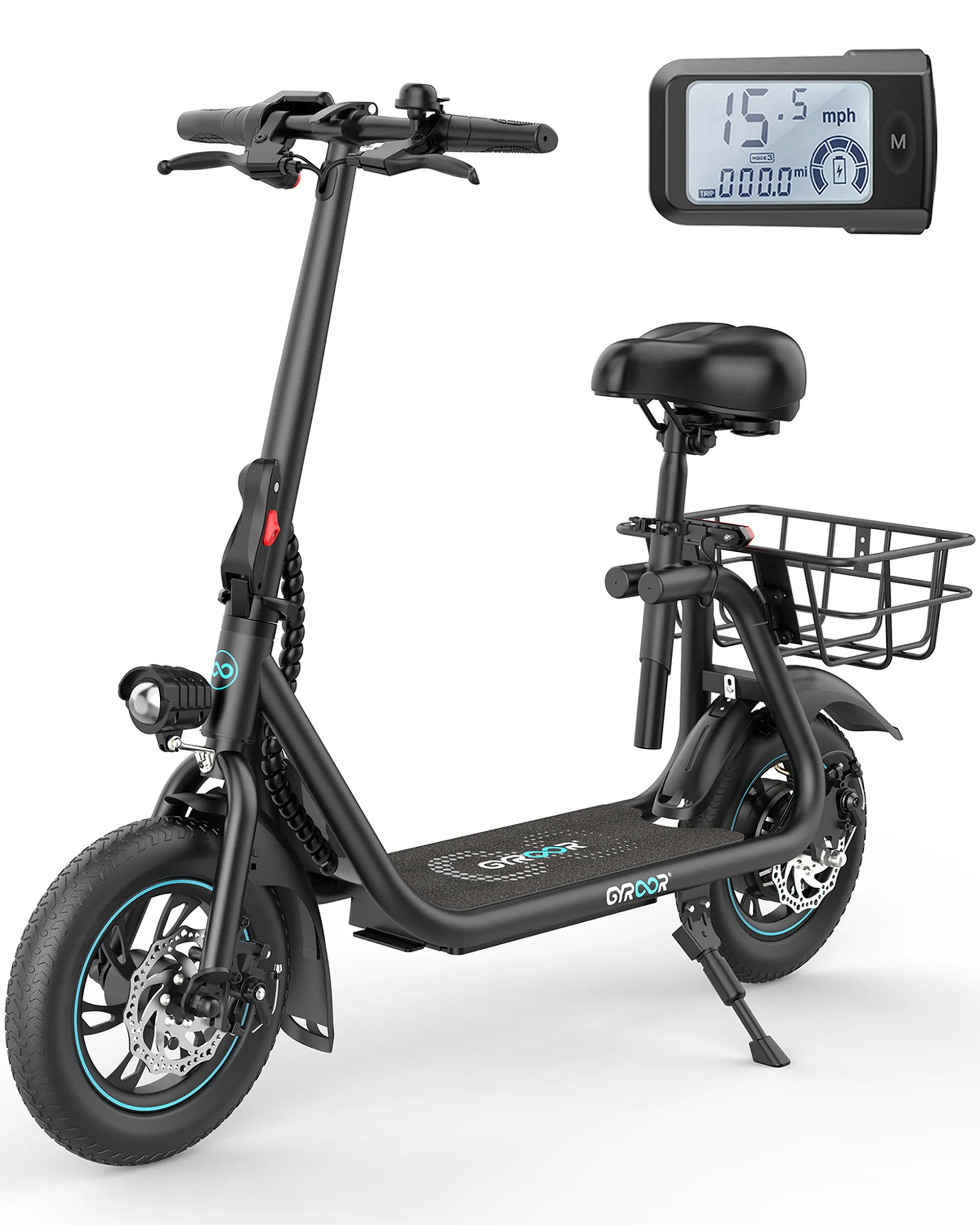
It's crucial to purchase from reputable manufacturers with clear warranty and safety certifications. Brands like Gyroor, for instance, build their reputation on using UL-certified battery packs tested for over 500 charge cycles, ensuring both range and safety are prioritized from the ground up.
Heavy-Duty / All-Terrain Long-Range Models
These are the powerhouses of the mobility world. Built with reinforced frames, large motors (often 500W+), and full suspension, they are designed to handle varied terrain like grass, gravel, and moderate inclines. To achieve long range, they frequently feature dual-battery systems or extra-large single batteries.
A heavy-duty scooter might advertise a maximum range of 40-60 miles. In real-world conditions, a realistic expectation for a rider of average weight on mixed terrain is 25-40 miles. The trade-off is size and weight; these scooters are less portable and often require a van lift for transport. They are ideal for users with active lifestyles who need a robust, go-anywhere vehicle for all-day excursions.
Premium Folding / Travel Scooters with Extended Range
Advancements in lithium battery technology have revolutionized portable scooters. Modern folding models can now offer impressive range without sacrificing the compact, lightweight design essential for travel and car transport.
These scooters use high-density lithium packs to achieve advertised ranges of 20-35 miles. Real-world, a user can expect 15-25 miles of reliable travel. They are perfect for daily errands, shopping trips, and vacations where the scooter must be easily disassembled and stored. When considering which mobility scooter has the longest range in this category, look for models with batteries that are integrated yet removable for easy charging.
Key Features Beyond the Battery That Maximize Range
While the battery is critical, other design elements significantly impact how far you can go on a single charge. A brushless DC motor is more efficient and durable than an older brushed motor, converting battery power to motion with less waste energy. Regenerative braking is a valuable feature that recaptures a small amount of energy during braking or downhill travel, feeding it back to the battery.
Tire choice matters greatly. Pneumatic (air-filled) tires offer a smoother ride and less rolling resistance on pavement, which can slightly extend range compared to solid tires. However, solid tires are puncture-proof. Finally, programmable speed settings or an "Eco" mode are essential. Riding at a steady, moderate pace (e.g., 4-5 mph) instead of top speed can dramatically increase your total mileage.
Data-Driven Comparison: What Does "Longest Range" Actually Mean for You?
To visualize the impact of real-world conditions, the table below provides estimated range comparisons. It demonstrates why the question of which mobility scooter has the longest range is personal. A scooter's performance is directly tied to how and where it is used.
| Scooter Class | Typical Battery | Claimed Max Range | Est. Real-World Range (180 lbs, Flat) | Est. Real-World Range (300 lbs, Mild Hills) |
|---|---|---|---|---|
| Premium Folding | 48V 15Ah Li-ion | 30 miles | 22-26 miles | 14-18 miles |
| Heavy-Duty All-Terrain | Dual 48V 20Ah Li-ion | 55 miles | 35-42 miles | 24-30 miles |
| Mid-Size 3-Wheel | 48V 18Ah Li-ion | 35 miles | 25-30 miles | 17-22 miles |
This data underscores a critical point: always buy a scooter with a range buffer that exceeds your daily needs by at least 30-50% to account for variables like weather, detours, or battery aging.
Making the Right Choice: A Buyer's Checklist for Maximum Range
Use this actionable checklist to find the scooter that best answers which mobility scooter has the longest range for you.
- Step 1: Calculate Your True Needs. Track or estimate your longest typical daily trip. Add a 50% buffer for errands, social visits, and safety.
- Step 2: Prioritize Lithium-Ion. Insist on a scooter with a UL-certified lithium-ion battery. Check the Ah rating; for long range, look for 15Ah and above in portable models, and 20Ah+ in heavy-duty models.
- Step 3: Match Scooter Class to Lifestyle. Be honest about portability needs. Will you lift it into a car? If yes, a long-range folding model is key. If portability is less critical, a heavy-duty model offers more range and stability.
- Step 4: Test for Comfort on Long Rides. A scooter you avoid using due to discomfort defeats the purpose. Ensure the seat, controls, and ride stability are comfortable for extended periods.
- Step 5: Verify Warranty & Support. Long-range batteries and motors should be backed by a strong warranty (at least 1 year on the battery). Choose brands with established customer service.
FAQ: Your Long-Range Mobility Scooter Questions Answered
Q: Can I add a second battery to extend my scooter's range?
A: Some heavy-duty models are designed for dual batteries from the factory. For others, aftermarket modifications are possible but can void warranties and must be done by a professional to avoid electrical hazards. It's safer to purchase a model with your desired range from the start.
Q: How does cold weather affect my scooter's range?
A> Cold temperatures (below 40°F/4°C) can reduce lithium battery efficiency by 20-30%. Store and charge the scooter indoors when possible, and allow the battery to warm up before use. Plan for reduced range in winter.
Q: What maintenance maximizes battery life and range?
A> Avoid fully draining the battery. Charge it after each use, even if only partially drained. Store the scooter with a 50-70% charge if not in use for long periods. Keep tires properly inflated to reduce rolling resistance.
Q: Is a longer-range scooter always heavier?
A> Generally, yes, because a larger battery adds weight. However, lithium-ion technology minimizes this penalty. A long-range lithium scooter can be lighter than a short-range scooter with old SLA batteries.
Q: How important is the motor power (wattage) for range?
A> A more powerful motor (e.g., 500W vs. 300W) doesn't directly increase range; it provides better torque for hills and all-terrain use. However, an efficient brushless motor paired with that power is crucial to avoid wasting energy, thereby protecting range.
Conclusion: Empowering Your Journey with Confidence
Determining which mobility scooter has the longest range is a personalized calculation that balances technical specs with your daily reality. The goal is not just a high number on a brochure, but reliable, predictable freedom. By understanding the supremacy of lithium-ion batteries, the impact of real-world conditions, and the importance of features like efficient motors and eco-modes, you are equipped to make a confident choice. Prioritize scooters from brands that build reliability into their design with safety-certified components and strong customer support. For those seeking a blend of performance, safety, and innovative design in personal electric mobility, exploring a trusted brand's offerings is a logical next step. Discover models engineered for distance and durability by browsing the full Gyroor collection at gyroorboard.com.
People 150 Scooter: The Ultimate Guide for 150 lb Riders
250cc Bike Speed: The Complete Data-Driven Performance Guide