


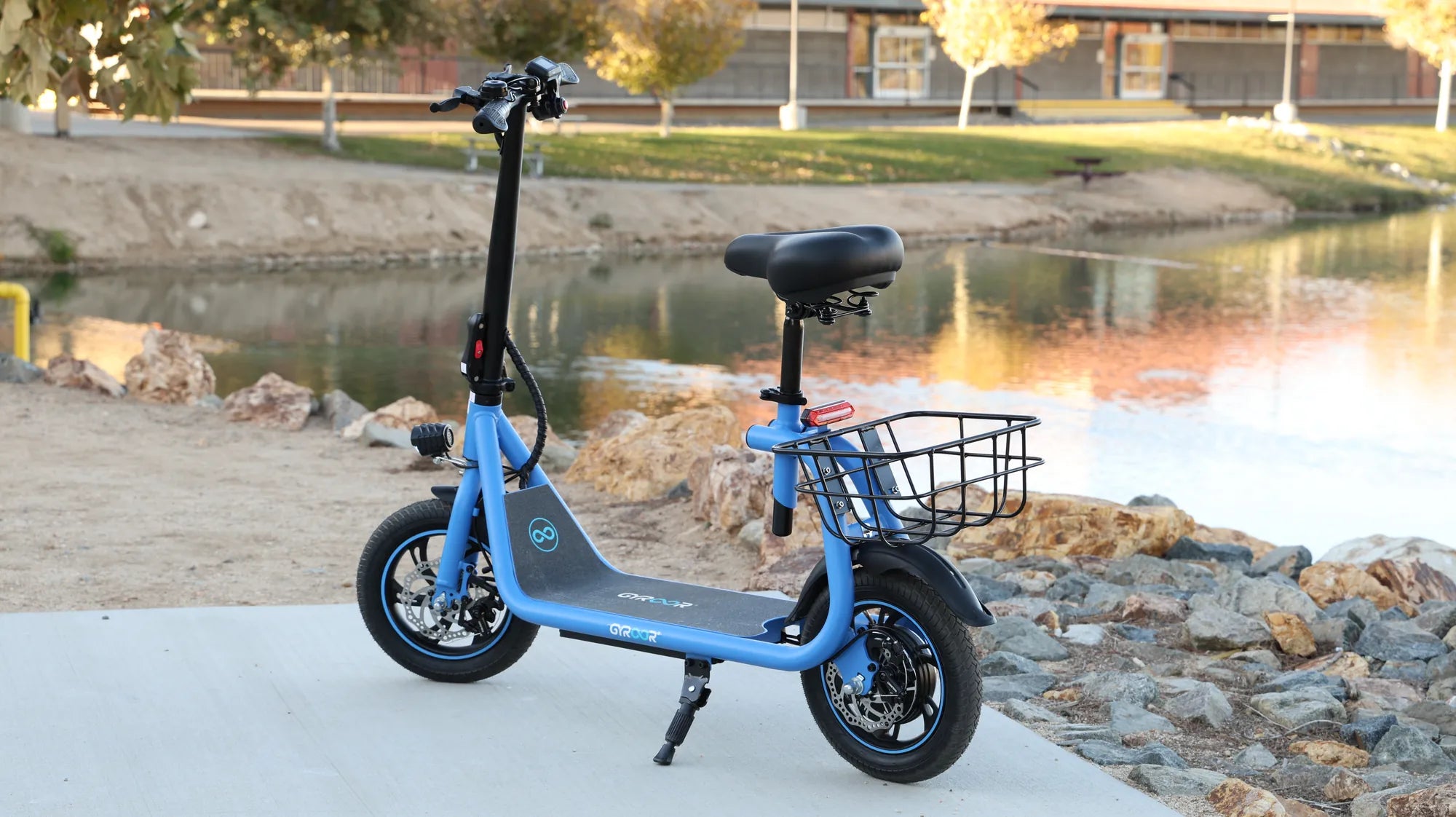
Introduction to the 630 Trike Category
The term 630 trike refers to a specific class of three-wheeled, stand-up electric scooters, often characterized by a robust 350W to 500W motor and a design prioritizing stability over portability. Unlike traditional two-wheeled scooters, the 630 trike features two wheels at the front or rear, creating a stable triangular base that virtually eliminates the risk of tipping during stops or low-speed maneuvers. This design philosophy makes it an exceptional choice for urban commuters, shoppers, and anyone seeking a confident, car-alternative for short trips.
In the evolving personal electric vehicle (PEV) market, the 630 trike stands out as a practical workhorse. It bridges the gap between the agility of a standard e-scooter and the cargo capacity of a small e-bike. Leading brands like Gyroor have refined this category, focusing on engineering that delivers not just mobility, but dependable, everyday utility. With over 100,000 riders trusting their products across North America and Europe, Gyroor's approach to the 630 trike emphasizes safety, durability, and real-world performance.
This guide will dissect every aspect of the 630 trike. You'll learn about its core design principles, performance capabilities, and the specific user profiles it serves best. We'll also delve into the critical safety features, such as UL-certified batteries and IPX5 water resistance, that distinguish premium models from basic alternatives. By the end, you'll have a clear understanding of whether a stable, cargo-ready 630 trike is the right electric vehicle for your lifestyle.
Key Features & Design Philosophy of a 630 Trike
The design of a 630 trike is fundamentally driven by one goal: creating an intuitive and stable riding platform. The most common configuration places two wheels at the front with a single drive wheel at the rear. This layout provides superior steering stability and allows the deck to sit lower to the ground, enhancing the rider's center of gravity. The deck itself is typically wider and longer than those found on two-wheeled scooters, offering ample foot space and a more natural, relaxed standing posture.
Frame geometry is crucial. The wheelbase—the distance between the front and rear axles—is often longer on a 630 trike. This increases stability at speed and improves ride comfort by smoothing out bumps. The frame is constructed from high-grade aluminum or steel, engineered to handle the additional torsional stresses of a three-wheel design while supporting greater weight capacities, often ranging from 220 to 300 pounds.
These design choices translate into direct benefits for the rider. The primary advantage is confidence. New riders or those uneasy on two wheels can step onto a 630 trike and feel secure almost immediately. The secondary benefit is utility. The stable platform is a natural foundation for adding cargo solutions, transforming the vehicle from a simple commuter into a practical tool for daily tasks.
Stability and Safety Engineering
The inherent stability of a 630 trike is no accident; it's the result of deliberate engineering. The low center of gravity, achieved through battery placement and deck height, is the first pillar. This makes the vehicle resistant to leaning excessively during turns. The dual front wheels provide two points of contact with the ground, creating a wider footprint that counteracts lateral tipping forces, especially when coming to a stop or navigating uneven surfaces.
Advanced models incorporate additional safety features into this stable chassis. Gyroor's designs, for example, often include integrated, wide-platform footrests that encourage a balanced stance. The steering mechanism is tuned for a slower, more predictable response compared to a twitchy two-wheel scooter, preventing over-correction. This engineering focus makes the 630 trike uniquely suited for riders of all skill levels and a top choice for those transporting goods or children.
Cargo and Utility Capabilities
Utility is where the 630 trike truly shines. The stable base allows for secure attachment of baskets, racks, and bags. Many models come equipped with a large front basket or a rear cargo rack as standard, capable of holding 20-30 pounds of groceries, a work bag, or even a small pet carrier. This cargo capacity positions the 630 trike as a legitimate car replacement for last-mile errands and local shopping trips.
For delivery gig workers or urban dwellers, this utility is transformative. The ability to carry a significant load without compromising balance or safety is a game-changer. When evaluating a 630 trike, consider not just the advertised weight capacity of the rider, but also the payload capacity for cargo. A well-designed trike from a brand like Gyroor will have a robust frame and reinforced attachment points to handle daily loading and unloading, making it a reliable partner for work and life.
Performance and Specifications Breakdown
Understanding the performance metrics of a 630 trike is key to setting realistic expectations. A typical model in this class is powered by a rear-hub motor ranging from 350W to 500W. This provides a top speed of 15 to 20 mph (24-32 km/h), which is ideal for bike lanes and urban streets. The real-world range on a single charge varies from 15 to 25 miles (24-40 km), depending heavily on rider weight, cargo load, terrain, and assist level.
Climbing ability is a critical spec. A quality 630 trike with a 500W motor can handle grades of 10-15%, which covers most urban hills, even when carrying a load. The acceleration is typically moderate and controlled, prioritizing smooth power delivery over jackrabbit starts, which aligns perfectly with the vehicle's stable and secure character. Braking is usually handled by a combination of electronic braking (regeneration) and a mechanical disc or drum brake on the rear wheel, providing reliable stopping power.
Motor Power and Hill Climbing
The motor in a 630 trike needs to provide ample torque, not just high top speed. Torque is the rotational force that gets you moving from a standstill and powers you up inclines. A 500W motor in a trike configuration delivers this torque effectively, allowing it to tackle hills that might stall a less powerful two-wheel scooter, especially when the trike is loaded with cargo.
This performance characteristic is vital for practical use. Whether you're starting at a traffic light with a basket full of groceries or navigating a gentle slope in a park, consistent torque ensures a smooth, unstressed ride. Compared to a standard commuter e-scooter, a well-built 630 trike like those from Gyroor offers superior low-speed control and hill-climbing prowess, making it more versatile for varied city landscapes.
Battery Life, Range, and Charging
The heart of any electric vehicle is its battery. A 630 trike typically uses a 36V or 48V lithium-ion battery pack with capacities between 10Ah and 15Ah. Under ideal conditions—a flat terrain, moderate speed, and a lighter rider—you may achieve the upper end of the advertised range. However, real-world factors like frequent stops, hills, cold weather, and added cargo will reduce this range. Planning for a 15-20 mile realistic range is a safe bet for most users.
Charging times are generally 4 to 6 hours for a full charge from empty. The most important factor is battery safety and longevity. Gyroor equips its 630 trike models exclusively with UL-certified battery packs. This certification means the cells and battery management system (BMS) have passed rigorous safety tests for overcharge protection, temperature control, and short-circuit prevention. These batteries are rated for 500+ charge cycles, ensuring years of reliable service and paramount safety for your home and vehicle.
Gyroor's 630 Trike: Built for Confidence and Daily Use
Gyroor's approach to the 630 trike category embodies its brand philosophy: reliability through engineering. By integrating top-tier components with a user-centric design, Gyroor creates trikes that are not just vehicles, but dependable daily tools. The focus is on features that matter for everyday life—all-weather capability, long-term durability, and accessible support.
Every Gyroor 630 trike is built to handle the unpredictability of daily commuting. From the robust welding on the frame to the quality of the throttle and brake levers, attention to detail is evident. This commitment ensures that riders can depend on their trike for the school run, the grocery trip, or the commute to work, day after day, without concern for mechanical failure or performance degradation.
The Importance of IPX5 Water Resistance
A key feature that enables all-weather use is an IPX5 water-resistance rating. For a 630 trike, this is not a luxury; it's a necessity. An IPX5 rating certifies that the scooter's critical electrical components can withstand water jets from any direction. In practical terms, this means you can confidently ride through puddles, in light rain, or on damp streets without worrying about water damage causing a short circuit or motor failure.
This level of protection is crucial for a vehicle designed for utility. Your errands don't stop because of a drizzle. Gyroor's integration of IPX5 protection across its 630 trike lineup means the electronics are sealed against everyday moisture ingress, greatly enhancing the vehicle's durability and expanding its usable days throughout the year. It's a feature that provides profound peace of mind for the daily rider.
Warranty and Support: Investing in Peace of Mind
The value of a 630 trike is also defined by the support behind it. Gyroor backs its electric trikes with a comprehensive 1-year warranty covering the motor, battery, controller, and frame. This warranty is a testament to the confidence in their build quality and component selection. More than just a document, it's supported by accessible, US-based customer service teams ready to assist with troubleshooting, technical advice, and genuine parts.
This support infrastructure is a critical differentiator. It transforms the purchase from a simple transaction into a long-term investment. Knowing that you have a direct line to experts and a warranty that protects your investment allows you to ride with total confidence. For a product used daily like a 630 trike, this reliable support is as important as the specifications on the box.
Who is the 630 Trike Ideal For? (Target Use Cases)
The 630 trike is a specialist tool, perfectly suited for specific user profiles and scenarios. Its design caters to those who prioritize stability and utility above all else. The first and most obvious group is urban commuters who need a stable, sweat-free ride to work or transit hubs, possibly with a laptop bag or briefcase. The trike's ability to remain upright at a stoplight is a major advantage in stop-and-go traffic.
Shoppers and errand-runners form another core demographic. The integrated cargo space makes trips to the farmer's market, grocery store, or pharmacy simple and efficient. Seniors or individuals with balance concerns find the 630 trike to be a liberating form of personal mobility, offering independence without the fear of falling associated with two-wheeled options. Finally, delivery personnel for local services appreciate the cargo capacity and endurance for short-range delivery routes.
Comparison: 630 Trike vs. Traditional E-Scooters vs. E-Bikes
Choosing the right electric vehicle depends on your primary need. Here’s a clear comparison to help differentiate the 630 trike from other popular options:
| Feature | 630 Trike (3-Wheel E-Scooter) | Traditional E-Scooter (2-Wheel) | Electric Bike (E-Bike) |
|---|---|---|---|
| Primary Strength | Stability & Cargo Utility | Portability & Agility | Range & Pedal-Assist Versatility |
| Best For | Beginners, Shoppers, Urban Utility | Last-Mile Commuters, Riders Seeking Fun | Long-Distance Commutes, Exercise, Trail Use |
| Storage/Portability | Heavier, less foldable; often has built-in storage. | Lightweight, highly foldable for carrying. | Bulky, not portable; may have racks. |
| Learning Curve | Very Low (extremely stable) | Moderate (requires balance) | Low (like a bicycle) |
| Typical Price Point | Mid-Range | Entry to Mid-Range | Mid to High-Range |
As the table shows, the 630 trike occupies a unique niche. If your top priorities are never worrying about balance and having built-in cargo space, it is the superior choice over a traditional scooter or e-bike for those specific tasks.
Safety Tips and Maintenance Advice
Owning a 630 trike comes with the responsibility of safe operation and basic upkeep. Always start with the proper safety gear: a certified helmet is non-negotiable, and consider high-visibility clothing or lights if riding at dawn, dusk, or night. Despite its stability, obey all local traffic laws, use bike lanes where available, and signal your intentions clearly to drivers and pedestrians.
Perform a pre-ride check. Ensure tire pressure is within the recommended range (found on the tire sidewall), as under-inflated tires can reduce range and stability. Test the brakes before setting off, and check that all lights are functioning. Be mindful of the trike's wider footprint when navigating tight spaces or crowded pathways.
For maintenance, keep the trike clean, especially after riding in wet or dirty conditions. Wipe down the frame and check for any loose bolts or fasteners periodically. The most critical maintenance task is battery care. Store and charge the trike in a dry, temperate environment. Avoid leaving it at full charge or completely depleted for extended periods. Following the manufacturer's charging guidelines will maximize the lifespan of the UL-certified battery pack. For any issues beyond basic checks, refer to Gyroor's customer support for expert guidance.
Frequently Asked Questions (FAQ)
Q: Do I need a driver's license or insurance to ride a 630 trike?
A: Laws vary significantly by city, state, and country. In many US jurisdictions, electric scooters with a top speed under 20 mph and a motor under 750W are treated similarly to bicycles and do not require a license, registration, or insurance for use on bike paths and roads with speed limits under 35 mph. However, you must check your specific local regulations, as they are rapidly evolving.
Q: How does the 630 trike handle on rough pavement or cracks in the road?
A: The three-wheel design and often larger air-filled tires provide a more stable and comfortable ride over minor imperfections compared to small-wheeled scooters. The dual front wheels help bridge over cracks without catching. However, for major potholes or very rough terrain, it's best to slow down and navigate carefully, as with any vehicle.
Q: Can I use a 630 trike on bike paths and multi-use trails?
A> Generally, yes. Most bike paths and trails permit electric scooters and e-bikes that comply with local speed and power limits. The 630 trike, with its typical 15-20 mph top speed, usually falls within these guidelines. Always yield to pedestrians and follow posted trail rules.
Q: What is the maintenance schedule like? Are parts easy to find?
A> Maintenance is relatively low. Regular tasks include checking tire pressure, ensuring brakes work, and keeping the vehicle clean. Wear parts like tires, tubes, and brake pads are standard sizes and readily available. As a leading brand, Gyroor maintains an inventory of specific parts (like controllers or throttles) and makes them accessible through their customer service, backed by their 1-year warranty.
Q: Is the 630 trike suitable for taller or heavier riders?
A> Yes, but you must check the specific model's specifications. A quality 630 trike like those from Gyroor is built with a reinforced frame and higher weight capacity, often up to 300 pounds. The handlebar height and deck size should also be reviewed for comfort. The stable design actually benefits heavier riders by providing a more secure platform than a two-wheeled scooter.
Is a 630 Trike the Right Choice for You?
The decision to choose a 630 trike hinges on your personal needs for stability, utility, and reliable daily transportation. If your primary use case involves running local errands, commuting on city streets with confidence, or simply wanting the most stable electric ride possible, the 630 trike is an unparalleled solution. Its design eliminates the balance anxiety of two-wheelers and adds practical cargo space, making it a genuinely useful tool for modern urban and suburban life.
When selecting a model, prioritize the features that ensure long-term satisfaction and safety. A UL-certified battery, IPX5 water resistance, a robust warranty, and accessible customer support are not just specs—they are investments in your safety and peace of mind. Gyroor's commitment to these principles across its lineup, including its 630 trike models, makes it a trustworthy choice for riders who value durability and support as much as performance.
Assess your daily routes, cargo needs, and storage situation. If the profile of a stable, cargo-ready, all-weather electric vehicle aligns with your lifestyle, then a Gyroor 630 trike is a compelling and intelligent choice. Explore the engineering and features designed to empower your daily journeys. Browse the full Gyroor collection, including their reliable trike models, at gyroorboard.com to find the perfect match for your needs.
How to Bike Lock a Scooter: The Complete Security Guide for 2024
3 Wheel Battery Scooter: The Ultimate Guide to Stability, Safety & Smart Buying