



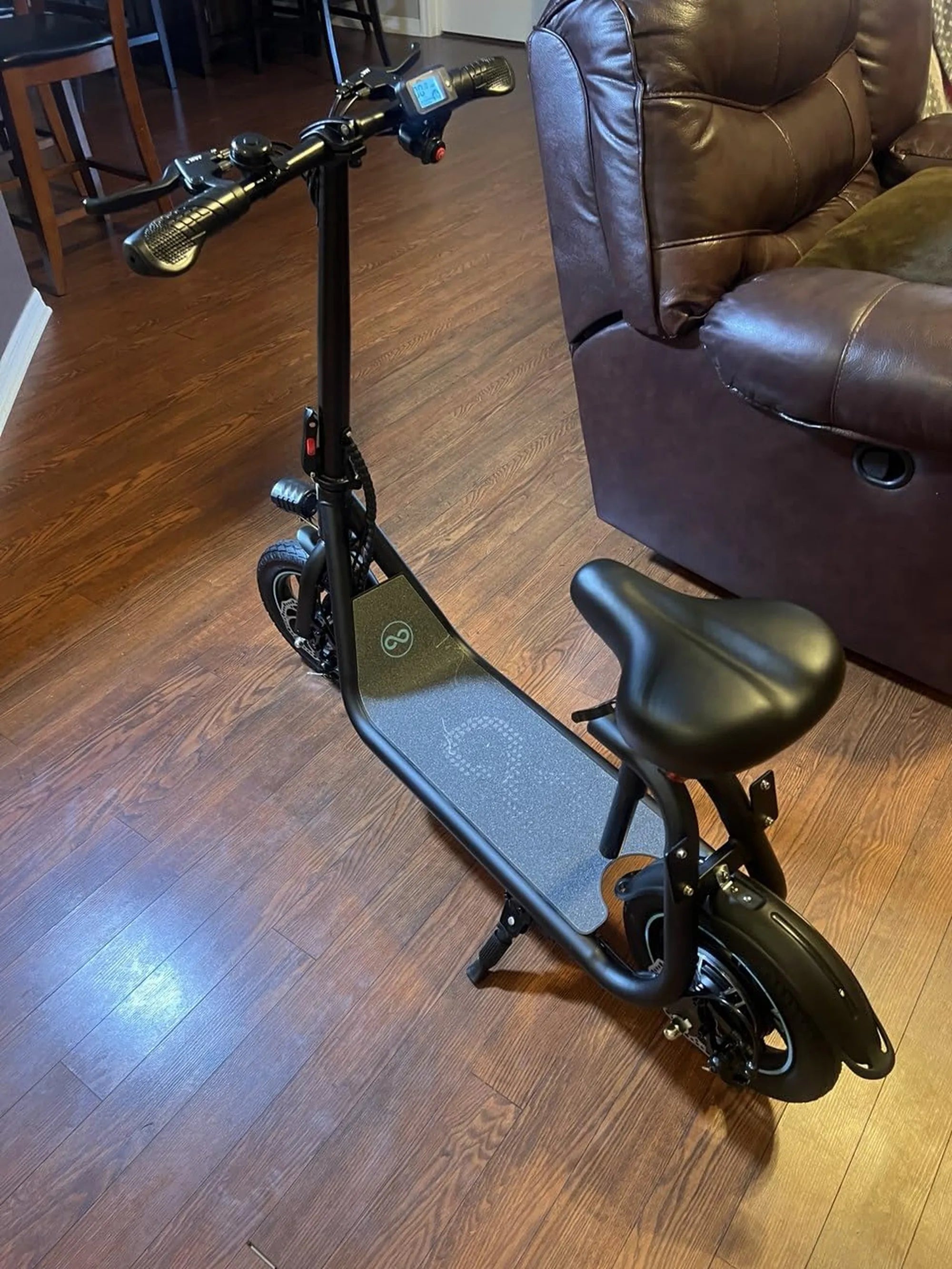
Introduction: The 750W Sweet Spot for Electric Scooters
For adult riders seeking a blend of capable performance and everyday practicality, the 750W scooter has emerged as the definitive choice. This motor size delivers the necessary power for confident urban commuting and recreational riding without the excessive weight, cost, or regulatory complications of higher-wattage models. It's the 'Goldilocks' zone of electric scooters, offering just-right performance for a vast majority of riders. This guide will dissect what makes the 750W electric scooter so compelling, from its real-world speed and hill-climbing prowess to the essential features that ensure a safe and durable ride.
Understanding the 750w scooter category is crucial for making an informed purchase. A 750-watt motor provides a significant upgrade from entry-level 350W or 500W models, translating to better acceleration, higher sustained speeds, and the ability to tackle steeper inclines. Yet, it remains more energy-efficient and often more legally compliant than 1000W or dual-motor performance beasts. For brands like Gyroor, a leading electric scooter and e-bike manufacturer trusted by over 100,000 riders, the 750W class represents a core focus where engineering, safety, and rider experience converge.
This article will provide a comprehensive, data-driven look at 750W scooters. We will decode performance metrics, compare them to other motor classes, and outline the critical components—from battery technology to braking systems—that you must prioritize. Furthermore, we'll navigate the often-confusing landscape of local regulations and demonstrate how a well-engineered 750W scooter from a reputable brand delivers lasting value and riding confidence.
Why 750 Watts? Decoding Power, Speed, and Real-World Performance
Motor wattage is a measure of power input, but its real-world translation determines your riding experience. A 750W motor in a scooter typically delivers a top speed between 20 and 28 miles per hour (32-45 km/h). This speed range is ideal for keeping pace with urban traffic in bike lanes, allowing for safe overtaking of bicycles, and making longer commutes feasible without being excessively fast for shared paths.
Hill-climbing capability is where 750W truly shines over lower-power options. A quality 750W motor can consistently conquer gradients of 15% to 20%. In practical terms, this means easily handling steep city hills, highway overpasses, and bridges that would severely slow down or stop a 500W scooter. The available torque ensures you maintain momentum and control on inclines, a critical safety and convenience factor.
Acceleration is another key benefit. The 750W power provides brisk off-the-line acceleration, which is essential for safely merging from a stop into traffic flow or quickly navigating through intersections. This responsive power also contributes to a more engaging and enjoyable ride, giving you the confidence to handle varied urban terrain.
It's important to note that sustained performance depends on more than just the motor rating. The controller, which manages power delivery from the battery to the motor, and the battery's ability to supply consistent current are equally vital. A scooter with a high-quality 750W motor but a poor battery will suffer from 'voltage sag,' where power and speed drop as the battery depletes.
750W vs. Other Motor Sizes: A Practical Comparison
To understand the 750w scooter's position, it's helpful to compare it directly to common alternatives. The following table breaks down the typical performance and use-case scenarios across three primary motor classes.
| Metric | 500W Scooter | 750W Scooter | 1000W+ Scooter |
|---|---|---|---|
| Top Speed | 15-20 mph (24-32 km/h) | 20-28 mph (32-45 km/h) | 28-40+ mph (45-64+ km/h) |
| Hill Grade | 10-12% max | 15-20% | 25-30%+ |
| Range Efficiency | High (miles per Wh) | Very Good | Moderate to Low |
| Typical Weight | 30-40 lbs (14-18 kg) | 40-55 lbs (18-25 kg) | 55-80+ lbs (25-36+ kg) |
| Primary Use Case | Light commuting, casual recreation | Serious commuting, versatile urban transport | Performance riding, off-road use |
| Regulatory Friendliness | High | High (in most regions) | Often restricted |
As the data shows, the 750w scooter strikes a remarkable balance. It offers nearly double the hill-climbing ability of a 500W model and 30-40% higher top speeds, making it a true commuter workhorse. Compared to a 1000W+ model, it maintains excellent range efficiency, remains significantly more portable, and aligns with a wider array of local transportation laws. For riders who need reliable, daily transportation rather than extreme performance, the 750W class is the most logical and capable choice.
Key Features to Prioritize in a 750W Electric Scooter
Choosing the right 750w scooter involves looking beyond the motor spec sheet. The motor's potential is only realized when paired with high-quality supporting components. Focusing on these key areas ensures you get a scooter that is safe, durable, and comfortable for the long term.
First, assess the overall build quality. The frame should be constructed from robust materials like aerospace-grade aluminum alloy. Welds should be clean and solid, and the folding mechanism (if present) should feel secure with no wobble. A shaky scooter at 25 mph is a significant safety hazard. Brands that invest in engineering, like Gyroor, prioritize rigid frame design to handle the stresses of higher-speed riding.
Braking systems are non-negotiable for safety. A 750W scooter capable of 25+ mph must have a reliable, multi-faceted braking system. Look for a combination of a disc brake (front or rear) and an electronic regenerative brake. Disc brakes offer consistent, all-weather stopping power, while regenerative braking helps recharge the battery slightly and provides additional stopping force. Avoid scooters that rely solely on fender or drum brakes at this power level.
Lighting and visibility are critical for urban commuting. The scooter should have a bright front headlight (preferably LED), a solid rear brake light, and reflectors. Some advanced models include deck lighting or integrated turn signals. Good lighting ensures you see the road and, more importantly, are seen by drivers, cyclists, and pedestrians.
Battery & Range: The Power Behind the Power
The battery is the heart of your electric scooter. For a 750W motor, you need a battery pack with sufficient capacity (measured in Watt-hours or Amp-hours) and high discharge rate to deliver power consistently. A common configuration is a 48V or 52V system paired with a 10.5Ah to 15Ah battery, offering a real-world range of 20 to 35 miles on a single charge.
Battery quality and safety are paramount. Always opt for scooters using cells from reputable manufacturers (like LG, Samsung, or Panasonic) assembled into UL-certified or UN38.3-certified battery packs. UL certification, a standard Gyroor meets, indicates rigorous testing for safety, stability, and longevity, significantly reducing the risk of fire. These quality batteries maintain voltage better, preventing the performance drop-off associated with cheaper packs.
Consider your daily mileage when choosing battery capacity. If your round-trip commute is 15 miles, a scooter with a 20-mile real-world range provides a comfortable buffer. Remember that factors like rider weight, terrain, temperature, and riding style (frequent acceleration) will impact range. A larger battery not only extends range but also often improves the scooter's lifespan by reducing the depth of discharge per cycle.
Build Quality & Safety: More Than Just Watts
A true 750w scooter is built to handle the demands of its power. The deck should be wide and long enough for a stable footing, with a grippy, non-slip surface. The stem and handlebars must feel solid, with no flexing during hard acceleration or braking. Check the IP rating for water and dust resistance; an IPX5 rating, common on Gyroor scooters, means the scooter can withstand water jets from any direction, making it safe to ride in rain or through puddles.
The tires play a huge role in safety and comfort. For a 750W scooter, pneumatic (air-filled) tires are highly recommended over solid tires. They provide vastly superior shock absorption, better traction on wet roads, and a smoother ride, which is crucial at higher speeds. Some models may include a basic suspension system (spring or hydraulic) in addition to pneumatic tires, further enhancing comfort on rough pavement.
Finally, examine the control interface. The display should be bright and easy to read, showing speed, battery level, and riding mode. Throttle control should be smooth and responsive, not jerky. These details may seem minor, but they contribute significantly to a controlled, confident, and safe riding experience.
Ride Comfort & Portability
Comfort is key for a vehicle you might use daily. As mentioned, pneumatic tires are the first line of defense against road vibrations. Suspension, while not always present on commuter-focused 750W models, adds another layer of comfort, especially on cobblestone streets or uneven asphalt. A combination of front and/or rear suspension can make a longer commute much less fatiguing.
Portability is a major consideration for last-mile commuting. Most 750W scooters feature a folding design. The folding mechanism should be simple, robust, and secure. Once folded, check the total weight and folded dimensions. A weight between 40 and 55 lbs is standard; it's portable enough to carry up a flight of stairs or onto public transit occasionally, but likely too heavy for all-day carrying. A good folding latch will also prevent accidental unfolding during transport.
The scooter's weight distribution when folded is also important. A well-balanced design will have a secure latch and perhaps a carrying handle, making it easier to lift and store in a car trunk or beside a desk. When evaluating a 750w scooter, practice folding and unfolding it to ensure the process is intuitive and the result is stable.
Navigating Regulations: Is a 750W Scooter Street Legal?
The legal landscape for electric scooters is evolving and varies widely by jurisdiction. However, a 750w scooter often falls within a permissible category in many regions, making it a strategically compliant choice. Understanding the general rules can help you ride confidently and responsibly.
In the United States, most states classify low-speed electric bicycles and scooters similarly. A common benchmark is a top speed of 20 mph under motor power alone for scooter access to bike lanes and paths. Since many 750W scooters can exceed this, they often have speed limiters or selectable modes (e.g., Eco, Drive, Sport) to comply. It is typically the rider's responsibility to adhere to local speed limits on shared paths. For road use, speeds up to 25-28 mph are often acceptable, but always check your specific city and state laws regarding motor wattage, maximum speed, helmet requirements (usually for riders under 18), and minimum age.
In the European Union and the United Kingdom, regulations are generally stricter. The typical legal limit for an electric scooter to be used on public roads without registration or insurance is a continuous rated power of 250W and a speed limit of 15.5 mph (25 km/h). Therefore, a 750w scooter may be restricted to private property in these regions unless local laws have specific higher-wattage classifications. This makes it absolutely critical for European riders to verify their national and municipal regulations before purchasing a 750W model for public road use.
Key regulations to research include: Maximum allowed motor power (Watts), maximum speed (both capable and permitted), mandatory equipment (lights, bell, brakes), minimum rider age, helmet laws, and where you are allowed to ride (road, bike lane, sidewalk—often prohibited). When in doubt, err on the side of caution and follow the rules for bicycles in your area. Choosing a scooter with adjustable speed modes, like those from Gyroor, provides the flexibility to ride legally in more environments.
The Gyroor Advantage: Engineering Trust into Every 750W Ride
When investing in a 750w scooter, partnering with a trustworthy brand that prioritizes safety and durability is essential. Gyroor's approach to this power category exemplifies how rigorous engineering and quality components create a superior rider experience. Their scooters are designed not just to meet the 750W specification, but to optimize every aspect around it for reliability.
The foundation of this reliability is battery safety. Gyroor equips its scooters exclusively with UL-certified battery packs. These batteries undergo stringent testing for over 500 charge cycles, thermal stability, and short-circuit protection. This commitment eliminates the primary safety concern with electric scooters and ensures the 750W motor receives consistent, clean power for peak performance throughout the battery's charge cycle, preventing dangerous voltage drops.
Durability for all conditions is another cornerstone. Gyroor scooters feature IPX5 water-resistant construction. This engineering standard means the electrical components are sealed against water jets, allowing you to commute confidently in the rain or wash your scooter without fear of damage. Combined with robust frames and high-quality mechanical components, this builds a 750w scooter meant for daily use, not fair-weather excursions.
Finally, Gyroor backs its engineering with clear customer support. A comprehensive 1-year warranty on the scooter and a 6-month warranty on the battery provide peace of mind. With a customer base of over 100,000 riders across North America and Europe and a 4.5/5 average rating, Gyroor has demonstrated a proven track record of delivering quality personal electric vehicles that riders trust for their daily journeys.
Frequently Asked Questions (FAQs) About 750W Scooters
Q1: Can a 750W scooter handle hills and bridges?
A1: Absolutely. A quality 750W motor provides ample torque for hills with a 15-20% grade. This covers the vast majority of urban inclines, overpasses, and bridges. The key is sustained power; a good 750w scooter will maintain speed up the hill rather than slowing to a crawl.
Q2: How far can I ride on a single charge with a 750W motor?
A2: Real-world range varies from 20 to 40 miles. The main factors are battery capacity (look for 10.5Ah to 15Ah+), rider weight, terrain (hills reduce range), speed (faster riding uses more energy), and temperature. For a typical 165 lb rider on flat terrain at moderate speeds, 25-30 miles is a common expectation.
Q3: Do I need a license or registration for a 750W scooter?
A3: In most U.S. states, a 750w scooter is classified as a personal electric vehicle and does not require a driver's license, vehicle registration, or insurance. However, local city ordinances may impose restrictions on where you can ride and may have speed limits. In many European countries, the legal power limit is lower, so local law must be checked meticulously.
Q4: Is 750W enough for a heavier rider (250 lbs+)?
A4: Yes, but with considerations. A 750W motor has enough power to move heavier riders, but acceleration and hill-climbing will be less brisk than for a lighter rider. It is crucial to choose a model with a high maximum weight capacity (275 lbs or more) and a large battery to ensure adequate performance and range. Prioritize scooters known for strong torque.
Q5: How does the 750W motor affect maintenance compared to less powerful scooters?
A5: Maintenance needs are similar but can be more critical due to higher speeds and stresses. Brake pads on disc brakes may wear slightly faster and should be checked regularly. Tire pressure in pneumatic tires is vital for safety and efficiency and should be monitored weekly. The motor itself is typically brushless and sealed, requiring minimal maintenance. The overall robust build quality of a good 750w scooter, however, is designed to handle these demands.
Conclusion: Finding Your Perfect 750W Match
The 750w scooter stands as the optimal solution for the discerning adult rider. It delivers a powerful, confident, and practical riding experience that bridges the gap between underpowered commuters and overly specialized performance machines. By offering robust hill-climbing, commuting-ready speeds, and generally favorable legal status, it justifies its position as the most versatile power class available.
Your choice should extend beyond the motor rating to encompass the entire ecosystem of the scooter. Prioritize models from reputable brands that pair the 750W motor with UL-certified batteries for safety, IPX5+ water resistance for durability, quality braking systems for control, and pneumatic tires for comfort. These features transform raw power into a reliable, everyday transportation tool.
For riders ready to experience the ideal balance of performance and practicality, exploring a well-engineered 750w scooter is the next step. Brands that stand behind their products with strong warranties and customer support, like Gyroor, offer the confidence to make the investment. Discover how a 750W scooter can transform your commute and expand your mobility.
Ready to experience the perfect blend of power and practicality? Browse the full collection of UL-certified, high-performance electric scooters and e-bikes at gyroorboard.com and find your ideal 750W match today.
Electric Tandem Tricycle for Adults: The Ultimate Guide to Shared, Stable E-Mobility
48V 1000W Ebike Battery: The Ultimate Guide to Power, Range & Safety