



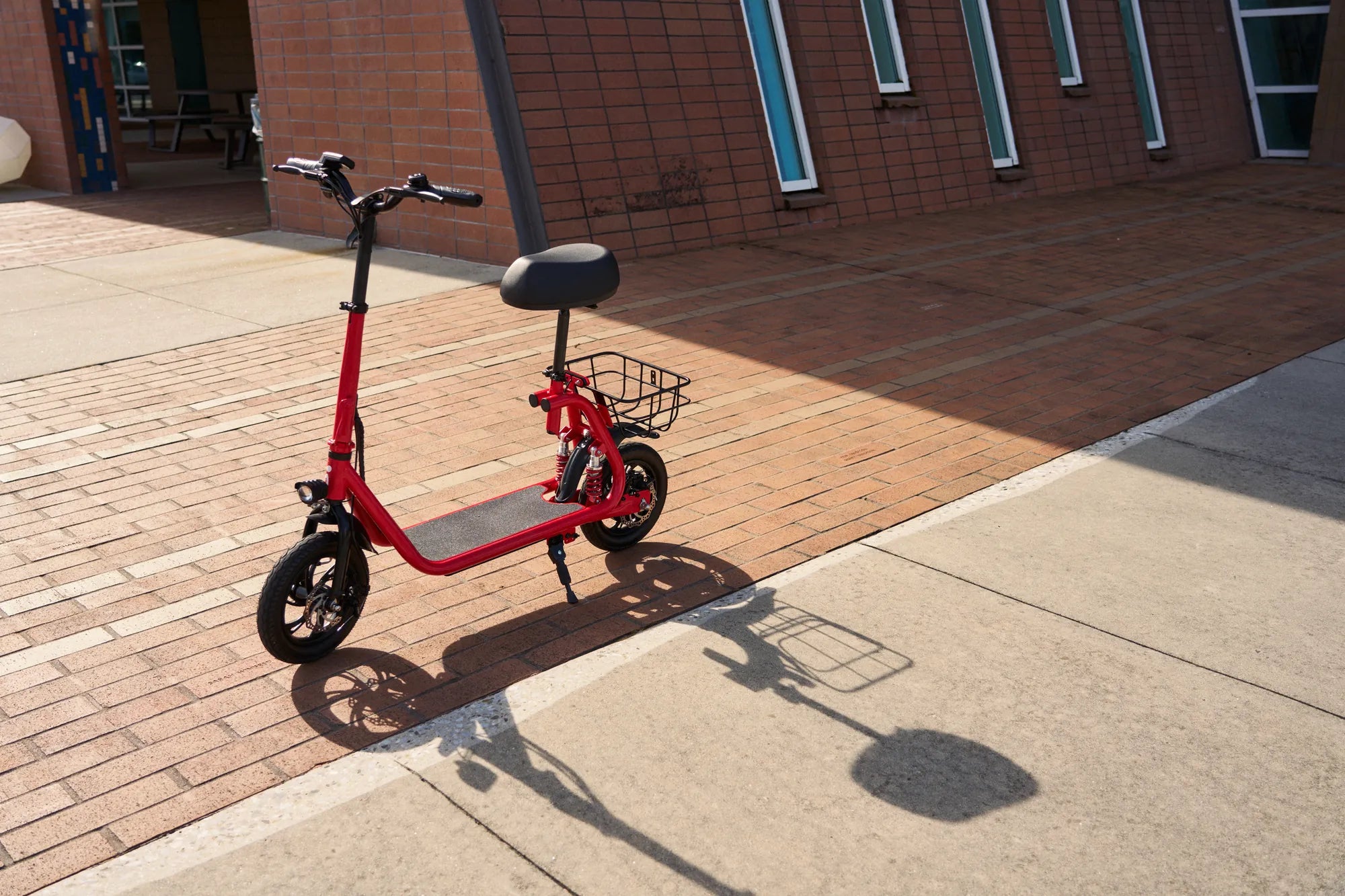
The Rise of Adult Electric Scooters
Urban mobility is undergoing a quiet revolution, and at its forefront is the adult electric scooter. No longer just a recreational toy, these vehicles have matured into sophisticated, practical machines designed specifically for grown-up needs. They directly address the chronic pain points of city living: traffic gridlock, scarce parking, rising fuel costs, and environmental concerns.
This article will provide a detailed, objective analysis of adult electric scooters for adults as a serious commuting solution. You will learn how to interpret technical specifications for real-world use, identify critical safety features, and compare the cost-benefit analysis against traditional transport. We will reference engineering and design principles from leading brands like Gyroor, trusted by over 100,000 riders for their focus on safety and reliability.
The modern adult electric scooter represents a convergence of battery technology, compact engineering, and urban design. It offers a uniquely efficient last-mile solution that integrates seamlessly with public transit or serves as a standalone vehicle for shorter trips. The market has shifted from novelty to necessity, with models now built to handle daily commutes, adult rider weights, and varying urban terrains.
Understanding this shift requires moving beyond hype to examine the data, specifications, and practical considerations that define a quality product. The right adult electric scooter for adults can transform a stressful commute into an efficient, enjoyable, and cost-effective journey.
Why Adults Are Choosing Electric Scooters: Beyond the Hype
The adoption of electric scooters by adults is driven by tangible, measurable benefits. The primary appeal is time efficiency. In dense urban corridors, the average car speed often falls below 15 mph during rush hour, while a capable e-scooter can maintain a consistent 15-20 mph, using bike lanes and pathways to bypass stationary traffic.
Financial savings present a compelling case. The operating cost is a fraction of car ownership. Charging a scooter typically costs between 5 to 15 cents per charge, translating to a cost per mile of less than one cent. When compared to monthly car payments, insurance, fuel, parking fees, and maintenance, the annual savings can amount to thousands of dollars.
Environmental impact is a significant factor for many riders. Electric scooters produce zero direct emissions. Their small battery footprint and high energy efficiency make them one of the most sustainable motorized personal transport options available, contributing to improved urban air quality and reduced carbon footprints.
Finally, the convenience of portability and parking cannot be overstated. The ability to fold and carry a scooter into an office, onto public transit, or store it in a small apartment eliminates the hunt for parking and provides door-to-door flexibility that cars and even many e-bikes cannot match.
Key Considerations Before You Buy
Purchasing an adult electric scooter for adults requires a clear assessment of your specific needs. Start by defining your primary use case: Is it for a daily commute, running errands, or recreational weekend rides? This will dictate the necessary range, speed, and portability.
Calculate your typical trip distance. Always choose a scooter with a rated range that exceeds your longest regular trip by at least 30-40%. Advertised range is based on ideal conditions; real-world factors like rider weight, hills, temperature, and riding style significantly reduce it.
Verify the weight capacity. A robust adult scooter should support a minimum of 220 lbs (100 kg), with many quality models rated for 265 lbs (120 kg) or more. Exceeding this limit stresses the frame, motor, and battery, compromising safety and longevity.
Research local laws and regulations. Rules governing where you can ride (bike lanes, roads, sidewalks), maximum speed limits, helmet requirements, and whether registration is needed vary widely by city, state, and country. Compliance is non-negotiable for safe and legal operation.
Decoding the Specs: What Really Matters for Adult Riders
Technical specifications are the blueprint of performance. Motor power, measured in watts (W), determines acceleration and hill-climbing ability. For flat urban commutes, a 350W motor is often sufficient. For cities with hills or heavier riders, a 500W or dual-motor system provides necessary torque and maintains speed on inclines.
Battery capacity is the most critical spec for range. It's measured in watt-hours (Wh). A simple formula is: Battery Voltage (V) x Amp-Hours (Ah) = Watt-Hours (Wh). A higher Wh number generally means more range. For example, a 36V 10Ah battery is 360Wh. Expect approximately 1 mile of real-world range per 20-25Wh, depending on conditions.
Wheel size and suspension define ride comfort. Larger wheels (9-10 inches) roll over cracks and imperfections more easily than smaller ones. Air-filled (pneumatic) tires offer better shock absorption than solid tires. A scooter with a front or dual suspension system dramatically improves comfort on rough pavement, reducing fatigue on longer commutes.
The frame's build quality and folding mechanism are vital for durability and portability. Look for aircraft-grade aluminum frames and secure, wobble-free folding latches. The deck should be long and wide enough for a stable, comfortable foot stance. These elements directly impact safety and the overall user experience.
Safety First: Non-Negotiable Features for Adult Commuters
Effective braking is paramount. A combination braking system is ideal. Disc brakes offer strong, consistent stopping power in all weather conditions. Electronic (regenerative) brakes help save battery life but should not be the sole braking system. Look for scooters with both front and rear brakes.
Comprehensive lighting is essential for visibility. A bright front headlight (200 lumens or more), a rear brake light, and side reflectors are mandatory for dawn, dusk, or night riding. Some advanced models feature integrated turn signals and deck lighting for 360-degree visibility.
The deck surface must have a grippy, non-slip texture to keep feet firmly planted, especially in wet conditions. Wide, stable handlebars with responsive throttle and brake controls are crucial for maintaining control. A loud electronic bell or horn is a necessary communication tool in shared spaces.
Weather resistance is a key safety and durability feature. An IPX5 water-resistance rating, like those found on Gyroor scooters, means the unit can withstand water jets from any direction. This protects the electrical components from rain, puddles, and street spray, ensuring reliable operation and reducing corrosion risk.
Gyroor's Commitment to Safe and Reliable Adult Riding
For adult commuters, reliability is as important as performance. Gyroor's foundational commitment centers on certified safety. The use of UL-certified lithium-ion battery packs in their models is a critical differentiator. These batteries undergo rigorous testing for over 500 charge cycles, thermal stability, and short-circuit protection, significantly mitigating fire risk and ensuring long-term performance.
The IPX5 water-resistant engineering extends beyond a marketing claim. It involves sealed battery compartments, protected wiring connectors, and waterproofed control units. This design philosophy ensures that a sudden rain shower or wet road doesn't end your commute or lead to costly repairs, providing true all-weather capability for the daily rider.
Durability is built into the chassis. High-tensile aluminum alloy frames are engineered to handle the stresses of adult weight and daily use on urban roads. Reinforced folding mechanisms and sturdy stems prevent the dangerous wobble or failure found in lesser-built models, a direct investment in rider safety.
Supporting this hardware is a clear, comprehensive 1-year warranty on the scooter and a 6-month warranty on the battery, backed by US-based customer service. This warranty coverage reflects confidence in product longevity and provides peace of mind, knowing that a single point of failure won't result in a total loss on your investment.
Model Comparison: Finding Your Perfect Gyroor Fit
Choosing the right model depends on balancing range, power, portability, and budget. Below is a comparison of key specifications for different adult commuting scenarios.
| Use Case & Model Type | Max Range* | Top Speed | Motor Power | Key Features | Best For |
|---|---|---|---|---|---|
| City Commuter (e.g., Gyroor F1 Pro) | 18-22 miles | 19 mph | 350W | Lightweight, foldable, IPX5, UL battery | Short trips, mixed with transit, easy carrying |
| Long-Range Pro (e.g., Gyroor ES50) | 28-32 miles | 25 mph | 500W | Larger battery, dual suspension, dual brakes | Full commutes, comfort on rough roads |
| Performance & Terrain (e.g., Gyroor Xtreme) | 25-30 miles | 28 mph | 800W Dual Motor | All-terrain tires, high torque, advanced display | Steep hills, varied surfaces, higher speed needs |
*Real-world range varies based on rider weight, terrain, and temperature.
This comparison illustrates that there is no one-size-fits-all adult electric scooter for adults. The City Commuter prioritizes portability for the multi-modal rider. The Long-Range Pro focuses on comfort and distance for the dedicated commuter. The Performance model offers power and versatility for challenging routes.
Adult E-Scooter vs. Other Transport: A Data-Driven Look
A quantitative comparison highlights the e-scooter's unique value proposition. Against car ownership, the savings are stark. The average annual cost to own and operate a new car in the US exceeds $10,000. An e-scooter used for a 5-mile commute can cost under $500 annually for electricity and maintenance, saving over $9,500 per year, not to mention time saved avoiding traffic.
Compared to public transit, e-scooters offer superior point-to-point time efficiency and flexibility. A monthly transit pass in a major city can cost $100-$150. For many, an e-scooter's upfront cost is recouped within 6-12 months, after which travel becomes nearly free, with no waiting for schedules or navigating indirect routes.
Versus e-bikes, e-scooters typically win on portability and storage. E-bikes are heavier, harder to bring indoors or onto trains, and often require more secure (and expensive) parking. E-scooters offer a more compact, lightweight solution for the last mile and are generally more affordable at comparable performance levels.
The data supports the adult electric scooter for adults as the optimal tool for short-to-medium urban trips (1-10 miles). It occupies a sweet spot between the high cost and inefficiency of cars, the fixed routes of public transit, and the bulk of e-bikes, providing an unmatched blend of affordability, speed, and convenience.
Maximizing Your Investment: Maintenance and Care
Proper maintenance ensures safety, performance, and longevity. Regularly check tire pressure if your model has pneumatic tires. Under-inflated tires increase rolling resistance, drastically reducing range, and make the scooter more prone to punctures.
Keep the mechanical components clean and lubricated. Wipe down the scooter after riding in wet conditions. Periodically check brake pads for wear and ensure calipers are aligned. Tighten any bolts, especially on the stem and folding mechanisms, as vibrations can loosen them over time.
Battery care is crucial. Avoid draining the battery to 0% regularly; try to recharge when it reaches 20-30%. Store the scooter in a cool, dry place, and avoid leaving it at full charge for extended periods (weeks) if not in use. Following the manufacturer's charging instructions preserves battery health over hundreds of cycles.
Conduct a pre-ride safety check: verify brakes are responsive, lights are functional, the throttle returns to zero, and there is no unusual play in the steering or folding joints. This 30-second routine can prevent accidents and identify minor issues before they become major failures.
FAQ: Your Top Questions About Adult Electric Scooters, Answered
Q: How far can I really go on a single charge?
A: Real-world range is typically 70-80% of the advertised maximum. Advertised range is tested under ideal conditions: lightweight rider, flat terrain, warm weather, and slow, steady speed. For a realistic estimate, subtract 3-5 miles from the claimed range for moderate use, or use the 20-25Wh per mile guideline based on your battery capacity.
Q: Are they safe to use in the rain?
A: Scooters with a rating of IPX5 or higher (like Gyroor models) are designed to withstand rain and wet roads. However, safety is paramount. Reduce speed, avoid deep puddles which can submerge electronics, and be extra cautious with braking as traction is reduced. Even water-resistant scooters are not designed for flooding or submersion.
Q: What is the legal riding age and where am I allowed to ride?
A: Laws vary significantly. In most US states, the minimum age is 16-18. Riding is generally permitted in bike lanes and on roads with speed limits under 35 mph. Riding on sidewalks is prohibited in most major cities due to pedestrian safety. Always wear a helmet, as it is legally required in many jurisdictions and is your most important safety gear.
Q: How do I maintain my e-scooter's battery?
A> Use only the provided charger. Charge in a dry, indoor area. Avoid exposing the battery to extreme temperatures (below freezing or above 95°F/35°C) for prolonged periods, especially while charging. If storing the scooter for more than a month, charge the battery to about 60% and store in a cool place.
Q: What does a good warranty cover?
A: A comprehensive warranty, like Gyroor's 1-year coverage, typically includes defects in materials and workmanship for the frame, motor, and controller. Battery warranties are often shorter (e.g., 6 months). It should cover parts and labor. Crucially, warranties do not cover damage from accidents, misuse, water damage on non-rated models, or normal wear and tear like tires and brake pads.
Embracing a Smarter Way to Move
The evidence is clear: a well-chosen adult electric scooter for adults is a transformative tool for urban mobility. It solves practical problems of cost, time, and access while offering a sustainable and enjoyable mode of transport. The key to a positive experience lies in informed selection—prioritizing safety certifications, realistic performance specs, and durable construction over mere headline speed or price.
Brands that invest in UL-certified batteries, robust water resistance, and strong warranties demonstrate a commitment to the adult rider's long-term needs. This engineering focus translates directly to daily reliability and safety on crowded city streets. The shift to personal electric vehicles is not a trend but a rational adaptation to modern urban landscapes.
Your commute is more than just a journey; it's time and resources that can be reclaimed. By choosing a legitimate, safety-focused electric scooter, you invest in efficiency, freedom, and a tangible improvement to your daily routine. The ultimate urban commuting solution is one that balances smart engineering with practical reality.
Ready to transform your commute? Explore the full range of UL-certified, IPX5 water-resistant models designed for adult riders. Browse the full Gyroor collection at gyroorboard.com to find the scooter that matches your distance, terrain, and lifestyle needs.
American Electric Scooters: The Future of Urban Mobility
Electric Scooters for Kids Under $200: A Parent's Guide to Safe Fun