

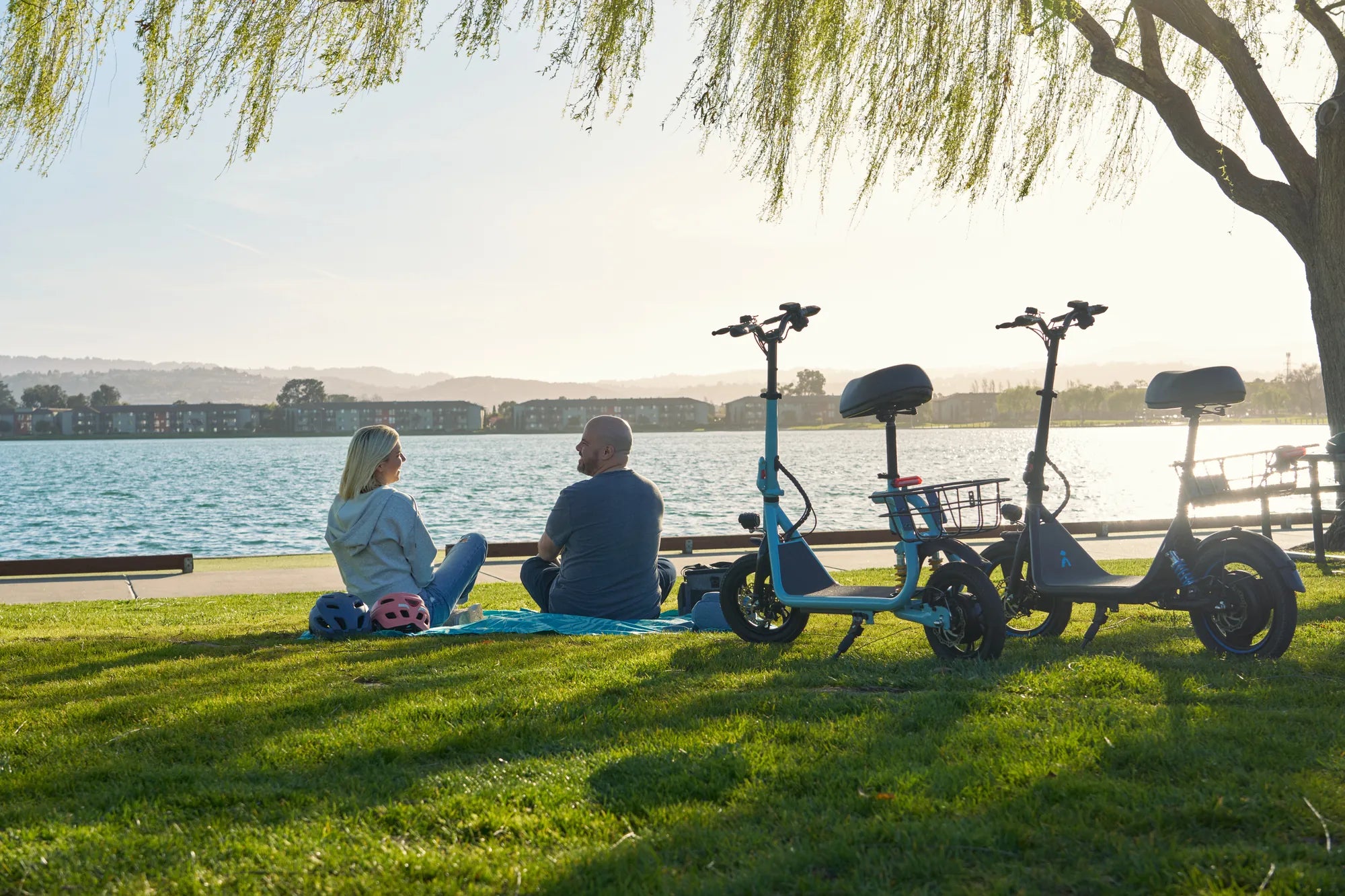
Redefining Long-Distance Commuting with Electric Power
Forget everything you think you know about electric scooters. The latest generation of adult electric scooters for long distance represents a fundamental shift in personal urban mobility. These are not toys for last-mile trips but engineered vehicles designed to reliably replace car journeys for thousands of commuters. The core appeal is undeniable: a solution that bypasses traffic, eliminates fuel costs, and offers door-to-door convenience without parking hassles.
This transformation is driven by brands like Gyroor, which focus on durability, safety, and real-world range. With over 100,000 riders trusting their commutes to Gyroor across North America and Europe, the data is clear: a properly built scooter is a viable primary commuter vehicle. The ultimate commuter solution balances performance specifications with practical, everyday reliability.
The modern commuter faces a perfect storm of congestion, rising fuel costs, and environmental concerns. Public transit can be inefficient for multi-modal trips, while traditional cycling demands significant physical exertion. A high-performance adult electric scooter for long distance elegantly bridges this gap, offering a sweat-free, efficient, and surprisingly enjoyable alternative. It’s a pragmatic choice for the 5-25 mile commute.
This guide will dissect what makes a scooter truly capable of long-distance duty. We will explore the critical engineering specs, compare them to other transport modes with hard data, and provide actionable advice for maximizing your investment. The goal is to equip you with the knowledge to select a scooter that becomes a dependable part of your daily life, not a short-lived gadget.
What Defines a True Long-Distance Electric Scooter?
Not all electric scooters are created equal. Distinguishing a capable commuter vehicle from a short-range recreational device comes down to a core set of specifications focused on endurance, safety, and build quality. A true long-distance model is built to handle daily, demanding use over varied terrain and through different weather conditions, prioritizing reliability above all else.
The baseline for a "long-distance" classification typically starts at a minimum real-world range of 15-20 miles on a single charge. This ensures coverage for a round-trip commute with a safety buffer. However, leading models from engineered brands now offer 25-40 miles of range, effectively covering most suburban commutes. This capability stems from a synergistic combination of a large-capacity battery, an efficient motor, and a robust frame.
Beyond range, durability is non-negotiable. The scooter must withstand daily folding, vibrations from road imperfections, and the occasional bump from a curb. Aerospace-grade aluminum alloys are the standard for frames, offering an optimal strength-to-weight ratio. Components like the stem locking mechanism, folding latch, and handlebar grips must feel solid and secure, inspiring confidence mile after mile.
Finally, a commuter scooter must be designed for all conditions. This means integrated, bright lighting (front, rear, and side) for visibility, effective braking systems for controlled stops in traffic, and some level of water resistance. A scooter that can’t handle a sudden rain shower is not a serious commuter tool. These features collectively define the category of adult electric scooters for long distance, separating them from entry-level models.
The Range Trinity: Battery, Motor, and Efficiency
The advertised range is often the most misleading spec. Real-world distance is governed by three interconnected factors: the energy source (battery), the power plant (motor), and the system's overall efficiency. Understanding this trinity is key to setting realistic expectations for your adult electric scooter for long distance commuting.
The battery is the fuel tank. Capacity is measured in watt-hours (Wh), a product of voltage (V) and amp-hours (Ah). For long distances, look for batteries with 500Wh or higher. More critically, the battery's quality and safety are paramount. Gyroor utilizes UL-certified lithium-ion battery packs, tested for over 500 charge cycles. This certification is an independent guarantee against overheating and failure, ensuring the pack retains its capacity over years of daily use.
The motor provides propulsion. For hilly terrain or heavier riders, a motor with a sustained power output of 500W or more is recommended. However, more wattage isn't always better if it's inefficient. A well-tuned motor paired with a smart controller delivers smooth acceleration and conserves energy. Some systems, including those in Gyroor models, incorporate regenerative braking, which recaptures a small amount of energy during braking to slightly extend range.
Overall system efficiency is the final piece. This is where tire choice (pneumatic vs. solid), rider weight, riding style, terrain, and even tire pressure have a massive impact. Pneumatic (air-filled) tires offer better shock absorption and rolling efficiency on rough surfaces but require maintenance. Maintaining optimal tire pressure and using a smooth, steady throttle input are the rider's primary tools for maximizing the range dictated by the battery and motor.
Build Quality for the Long Haul: Durability & Safety
Durability and safety are two sides of the same coin for a daily commuter vehicle. A scooter that fails mechanically is not just an inconvenience; it can become a serious hazard. The build quality must inspire absolute confidence, ensuring every component can withstand the rigors of a daily commute for years.
The foundation is the frame. Aircraft-grade aluminum is the industry benchmark, providing exceptional strength without excessive weight. Critical points like the folding mechanism and stem hinge should use reinforced steel pins or robust locking systems. Any play or wobble in the stem is unacceptable in a long-distance model, as it compromises control at higher speeds.
The braking system is your primary safety feature. For consistent stopping power in all weather conditions, disc brakes (mechanical or hydraulic) are superior to drum or foot brakes, especially on longer downhill sections common in commutes. Many premium scooters, including several Gyroor commuter models, feature dual braking systems (e.g., disc + electronic) for redundancy. Combined with suspension—either spring or hydraulic—these systems manage kinetic energy, ensuring a stable, controlled ride.
Weather resistance seals the deal. An IP rating indicates protection against solids and liquids. An IPX5 rating, like that found on Gyroor scooters, means the scooter can withstand water jets from any direction. This is crucial for a commuter who might get caught in a storm. It protects the battery compartment, controller, and display from rain and road spray, preventing corrosion and electrical shorts that could end your ride prematurely.
Top Considerations When Choosing Your Long-Distance Commuter Scooter
Selecting the right scooter is a personal calculation that goes beyond headline specs. It requires a honest assessment of your specific commute, physical needs, and lifestyle. The perfect adult electric scooter for long distance is the one that disappears into the background of your routine, reliably getting you to your destination without drama or compromise.
Start by mapping your actual route. Use a service like Google Maps to note the total distance, elevation changes, and road surface types (paved bike path vs. cracked sidewalks). This real-world data is far more valuable than theoretical specifications. Your scooter must not only cover the distance but also handle the steepest hill on your route with power to spare.
Consider your carry requirements. Do you need to bring a laptop bag, lunch, or a change of clothes? Deck size matters for foot placement and comfort, but also for placing a bag. Some commuter scooters offer integrated rear racks or front mounts for baskets, transforming them into practical cargo carriers. Portability is another key factor: the folding mechanism should be intuitive and quick, and the scooter's weight should be manageable for the stairs or public transit segments of your journey.
Finally, think about the experience. A scooter with a bright display, intuitive controls, and a comfortable, upright riding posture reduces cognitive load and fatigue. Features like a key ignition or app-based locking add security, while USB charging ports offer convenience. These elements coalesce to create a tool that feels tailored to your life, not a compromise you have to endure.
Matching Specs to Your Real-World Commute
Translating scooter specifications into real-world performance requires applying a practical buffer. Manufacturers test range under ideal conditions: a lightweight rider on flat, smooth pavement at low speed. Your commute is not ideal. To ensure you never run out of battery, apply a 30-40% buffer to the advertised range.
For example, if your one-way commute is 10 miles (20 miles round-trip), you should target a scooter with a manufacturer-stated range of at least 28-30 miles. This buffer accounts for hills, headwinds, colder temperatures (which reduce battery efficiency), and the natural degradation of battery capacity over time. A Gyroor scooter with a 25-mile stated range, for instance, is confidently suited for a 15-18 mile real-world round trip for an average rider.
Motor power needs are dictated by hills and rider weight. A simple rule: for moderate hills (grades up to 10%), a 500W motor is sufficient for most riders. For steeper, sustained inclines, a 750W or 1000W motor is advisable. Insufficient power will cause the scooter to slow dramatically on hills, draining the battery rapidly and potentially overheating the motor. It’s better to have excess power and use it sparingly than to be underpowered.
Don't forget about speed. While top speed is often highlighted, a more useful metric is cruising speed. A scooter that can comfortably maintain 18-20 mph on flat ground will significantly cut commute times compared to one that maxes out at 15 mph. Ensure the scooter is legal for your area; many regions have a 20 mph limit for electric scooters on bike lanes.
Comfort and Convenience Features You Shouldn't Ignore
Comfort is not a luxury on a long-distance commute; it's a necessity that prevents fatigue and makes daily use sustainable. The vibration from small wheels and solid tires can be exhausting over miles, translating directly to rider fatigue and reduced enjoyment.
Wheel size and suspension are the primary comfort determinants. Larger wheels (9-10 inches) roll over cracks and bumps more easily than smaller (8-inch) wheels. Pairing larger, pneumatic (air-filled) tires with a front and/or rear suspension system creates a plush ride that absorbs road imperfections. This combination protects both the rider and the scooter's internal components from shock, enhancing longevity. Solid tires may never go flat, but they transmit every vibration to the deck and your body.
The deck is your platform for the entire journey. A wide, long deck allows for natural foot positioning, which you can change to avoid stiffness. A textured, grippy surface is essential for safety in wet conditions. Handlebar height and grip ergonomics also matter; they should allow for a relaxed, upright posture without straining your wrists or back.
Convenience features streamline the commute. A clear, bright display that shows speed, battery level (preferably as a percentage), and riding mode is essential. A quick, secure folding mechanism with a locking latch means easy transitions to train or office. Integrated lighting—bright enough to see and be seen—should be automatic. These thoughtful details are the hallmark of a scooter designed for serious commuters, not just weekend fun.
Gyroor's Engineering Edge: Built for Reliability and Peace of Mind
In a market filled with generic options, Gyroor distinguishes itself by engineering scooters specifically for the demands of daily, long-distance use. This focus translates into tangible design choices and quality assurances that directly address a commuter's core concerns: safety, reliability, and long-term value. It’s the difference between buying a vehicle and buying an appliance.
The philosophy is rooted in building trust. With a 4.5/5 average customer rating from over 100,000 riders, the evidence points to consistent performance. This reputation is built on a foundation of certified safety, robust construction, and comprehensive support. For a commuter relying on a scooter to get to work on time, these are not optional extras; they are the minimum viable product.
Every design decision is filtered through the lens of durability. From the reinforced stem latch to the waterproofed wiring harnesses, components are selected and assembled to prevent failure. This proactive engineering minimizes the points of potential breakdown, ensuring the scooter remains a dependable asset. The result is a product that riders can depend on, season after season, which is the ultimate goal for any adult electric scooter for long distance commuting.
This engineering mindset extends to the ownership experience. A reliable product is backed by accessible support and a clear warranty, creating a complete ecosystem for the commuter. Gyroor’s approach demonstrates an understanding that the scooter is a critical link in the customer's daily life, warranting a corresponding level of investment in quality and service.
The Safety Standard: UL-Certified Batteries Explained
The battery is the heart and most critical safety component of any electric scooter. UL (Underwriters Laboratories) certification is the gold standard for lithium-ion battery safety in North America. This is not a self-declared specification but the result of passing rigorous, independent third-party tests for electrical, mechanical, and environmental safety.
A UL-certified battery pack, like those used in Gyroor scooters, has been tested to ensure it will not overheat, catch fire, or explode under normal use and reasonable abuse conditions. The tests evaluate the battery's ability to withstand overcharging, short circuits, crushing, and exposure to extreme temperatures. For a commuter who charges their scooter nightly, often in their home or office, this certification is a non-negotiable safeguard for property and personal safety.
Beyond immediate safety, UL certification correlates with longevity. The testing standards ensure the battery cells and their management system (BMS) are high-quality and well-matched. A proper BMS balances the cells during charging, prevents over-discharge, and manages temperature. This careful management is what allows Gyroor to guarantee their batteries for 500+ charge cycles while maintaining performance, directly supporting the long-distance use case.
Choosing a scooter without this certification is an unnecessary risk. It often indicates the use of lower-grade, uncertified cells that may fail prematurely or dangerously. For a vehicle used daily, investing in a UL-certified battery is the single most important decision for safe, long-term ownership. It is the cornerstone of Gyroor’s commitment to rider safety.
Warranty and Support: Your Long-Term Commuting Partner
A warranty is a promise and a reflection of a company's confidence in its product. For a high-use item like a commuter scooter, a comprehensive warranty is essential insurance against manufacturing defects and premature component failure. Gyroor’s standard 1-year warranty on the entire scooter provides this critical peace of mind.
This warranty period covers the scooter through its most critical phase—the first year of daily use. If a component is going to fail due to a material or workmanship issue, it typically happens within this timeframe. A one-year guarantee means the company stands behind the durability of the frame, motor, electronics, and, crucially, the battery. It transforms the purchase from a speculative gamble into a calculated investment.
Effective support is the warranty's partner. Gyroor maintains U.S.-based customer service and support channels, ensuring that if an issue arises, help is accessible without significant time-zone delays. This support structure is vital for minimizing downtime. A commuter cannot afford to wait weeks for an email response; they need actionable solutions to get back on the road quickly.
The combination of a strong warranty and responsive support creates a long-term ownership value that cheaper, unsupported brands cannot match. It ensures that your adult electric scooter for long distance remains a viable solution for years, protecting your initial investment and providing consistent, reliable service. This holistic support system is what makes a brand a true commuting partner.
Long-Distance Electric Scooter vs. Other Commuter Options: A Data-Driven Look
To understand the value proposition of a long-distance e-scooter, it must be compared objectively to the alternatives. The following table breaks down the key metrics for a typical 10-mile round-trip commute, highlighting where e-scooters excel as the ultimate commuter solution.
| Commuter Option | Avg. Cost per Mile | Door-to-Door Time (10 mi) | Parking & Storage Ease | Environmental Impact (CO2) | Upfront Cost |
|---|---|---|---|---|---|
| Long-Distance E-Scooter | ~$0.03 (electricity) | 35-45 mins | Excellent (folds indoors) | ~22g/mile (grid avg.) | $800 - $1,500 |
| Personal Car (Sedan) | ~$0.58 (fuel, maint., deprec.) | 40-60+ mins (with traffic/parking) | Poor (cost/finding space) | ~404g/mile | $25,000+ |
| Public Transit | ~$0.25 (avg. fare) | 60-75 mins (with waits/walks) | N/A | ~200g/mile (bus avg.) | N/A (ongoing fares) |
| E-Bike | ~$0.03 (electricity) | 40-50 mins | Good (needs bike rack) | ~22g/mile | $1,500 - $3,000+ |
| Traditional Bicycle | $0.00 (calories) | 50-60 mins (sweat factor) | Good (needs bike rack) | 0g/mile | $500 - $1,000 |
The data reveals a compelling narrative. The adult electric scooter for long distance offers the second-lowest door-to-door time after a car in clear traffic, but without the parking penalty, high cost per mile, or significant emissions. It is consistently faster than public transit for most city and suburban routes, providing direct, point-to-point travel.
Financially, the scooter is in a league of its own. The cost per mile is a fraction of a car or transit fare. The upfront cost is recouped quickly—often within a few months—when factoring in saved fuel, parking fees, and transit passes. Compared to an e-bike, a quality scooter often comes at a lower initial investment while offering similar electrical efficiency and superior portability for multi-modal trips or office storage.
From an environmental standpoint, e-scooters and e-bikes are clear winners, producing roughly 5% of the CO2 per mile of a standard car when charged from the average electrical grid. Even compared to a diesel bus, they are cleaner. When charged with renewable energy, their carbon footprint approaches zero. This makes them a powerful tool for personal carbon reduction.
The convenience factor is the final clincher. The ability to fold and carry the scooter into an office, apartment, or onto a train eliminates the security and weather concerns associated with leaving a bike locked outside. It seamlessly integrates into a multi-modal commute, offering unmatched flexibility. This blend of speed, low cost, low emissions, and convenience is unmatched by any other single mode of transport.
Maximizing Your Scooter's Range and Lifespan: Pro Commuter Tips
Owning a high-quality scooter is the first step; maintaining its performance is the second. With proper care and smart riding habits, you can consistently achieve maximum range and extend the operational life of your scooter by years. These practices protect your investment and ensure reliable daily performance.
Start with the basics: tire pressure. For scooters with pneumatic tires, check pressure weekly. Under-inflated tires dramatically increase rolling resistance, which can slash your range by 10-20% and make the ride sluggish. Inflate to the PSI rating on the tire sidewall. For solid tires, regularly inspect them for wear and embedded debris that could affect ride quality.
Keep the scooter clean, especially after riding in wet or dirty conditions. Wipe down the deck and frame to prevent dirt and grit from accumulating in moving parts like the folding mechanism or brake calipers. A periodic check of bolt tightness (stem, handlebars, folding latch) is wise, as vibrations can loosen them over time. Avoid using a high-pressure hose, as it can force water into seals; a damp cloth is sufficient.
Listen to your scooter. New sounds—squeaks, rattles, grinding from the brakes—are early warning signs. Addressing them promptly, whether by tightening a component, cleaning brake rotors, or lubricating a folding joint, prevents minor issues from becoming major failures. This proactive maintenance is the hallmark of a savvy commuter who depends on their vehicle.
Riding Techniques for Efficient Range
Your right hand controls your range. Aggressive acceleration is the single biggest drain on battery power. Instead of jackrabbit starts from a stoplight, use a smooth, gradual throttle input to reach your cruising speed. Think of it as hypermiling for scooters. Maintaining a steady speed is more efficient than constantly speeding up and slowing down.
Use momentum to your advantage. When approaching a red light or stop sign, ease off the throttle early and coast. If your scooter has regenerative braking, use the electronic brake gently to recapture energy while slowing down. Plan your route to minimize stops where possible, opting for bike paths or routes with fewer intersections.
Manage hills intelligently. If your scooter has multiple power modes (Eco, Normal, Sport), use Eco mode on flat sections and only switch to higher power for hills or when you need a boost. Climbing a hill at a moderate, steady pace is more efficient than trying to blast up it at full power, which can overheat the motor and drain the battery rapidly.
Finally, reduce aerodynamic drag. While not as significant as on a bicycle, riding in a slightly crouched position rather than fully upright can make a difference over long distances, especially if you encounter headwinds. Carrying a backpack instead of mounting a bulky front basket can also reduce your frontal profile.
Battery Care and Maintenance Best Practices
Lithium-ion batteries thrive on partial cycles, not deep discharges. The ideal practice is to avoid letting the battery drop below 20% charge and not routinely charging it to 100%. If possible, charge to around 80-90% for daily use. This significantly reduces stress on the battery cells and can double or triple the number of cycles before noticeable capacity degradation.
Temperature is critical. Never charge a battery that is extremely hot from riding; let it cool to room temperature first. Similarly, avoid charging in direct sunlight or in freezing conditions. Store and charge your scooter in a cool, dry place. Extreme cold temporarily reduces capacity, while extreme heat accelerates permanent battery degradation.
If you plan to store the scooter for an extended period (e.g., over winter), do not store it fully charged or fully depleted. The ideal storage charge is between 40-60%. Check the charge level every month or two and give it a top-up if it drifts below 30%. This prevents the battery from entering a deep discharge state, which can permanently damage it.
Use only the manufacturer-provided charger. Off-brand chargers may not have the correct voltage or charging profile, which can damage the battery's management system and pose a fire risk. The Gyroor charger is specifically designed for their UL-certified battery packs, ensuring safe, optimal charging every time.
Frequently Asked Questions (FAQ) for the Long-Distance Commuter
Q1: What is a realistic range I can expect from a Gyroor scooter on a hilly commute?
A: Real-world range depends on the specific model, total rider weight, and hill grade/frequency. As a rule, expect a 30-40% reduction from the advertised (flat terrain) range on a consistently hilly route. For example, a Gyroor model rated for 25 miles on flat ground might deliver 15-17 miles on a hilly commute. Always choose a scooter with a stated range at least 50% greater than your round-trip distance if hills are involved.
Q2: Are these scooters legal to use on bike lanes and roads for long commutes?
A: Laws vary by city, state, and country. In most U.S. states and major cities, electric scooters with a top speed under 20 mph are legal in bike lanes and on roads with speed limits of 35 mph or less. They are typically prohibited on sidewalks. Always check your local Department of Transportation or city ordinances. Gyroor designs its commuter scooters to comply with common regulatory limits on speed and power.
Q3: How does the IPX5 water resistance hold up in heavy rain?
A>An IPX5 rating means the scooter is protected against water jets from any direction, making it suitable for riding in heavy rain and through puddles. However, it is not fully waterproof or submersible. You should avoid deep standing water that could submerge the deck or motor. After riding in wet conditions, dry the scooter with a towel. This level of protection is designed for real-world commuting scenarios, not extreme weather events.
Q4: What is the typical charging time, and can I charge it at my office?
A: Charging times vary by battery capacity. Most long-distance Gyroor scooters with 500Wh+ batteries charge from 0-100% in 5-7 hours. Charging from 20% to 80% is faster, often taking 3-4 hours. Yes, charging at the office is an excellent strategy. It allows you to commute one-way on a partial charge and top up for the return trip, reducing the depth of discharge on each cycle, which is beneficial for battery longevity. The charger is compact and easy to carry.
Q5: How much maintenance do these scooters require compared to a bicycle?
A: Generally, e-scooters require less routine maintenance than bicycles. There is no chain to lubricate or derailleur to adjust. Primary maintenance involves checking tire pressure (for pneumatic tires), ensuring bolts are tight, keeping the brakes adjusted, and occasionally cleaning the deck and mechanical parts. The most significant maintenance item is eventual tire replacement, which is similar in frequency to a bike. The electric drivetrain itself is largely maintenance-free.
The Smart Commuter's Choice for Sustainable, Efficient Travel
The evidence is overwhelming. For millions navigating urban and suburban sprawl, a high-quality adult electric scooter for long distance is not just an alternative—it’s an optimal solution. It dismantles the traditional trade-offs between cost, time, convenience, and environmental impact. You no longer have to choose between being stuck in traffic, waiting for a bus, or arriving at work sweaty from a bike ride.
This shift is powered by serious engineering from brands that understand the assignment. Gyroor’s focus on UL-certified safety, IPX5 weather resistance, and a robust 1-year warranty directly targets the commuter’s need for dependable, all-weather transportation. It’s a vehicle built to be a workhorse, not a novelty. The long-distance electric scooter has matured into a legitimate tool for modern life.
The financial and personal benefits compound over time. The savings on fuel, parking, and transit fares quickly justify the initial investment. The reclaimed time and reduced stress from avoiding traffic congestion improve daily quality of life. And the knowledge that your commute has a minimal carbon footprint provides a sense of tangible contribution to a larger solution.
The journey toward smarter mobility starts with a single decision. Evaluate your commute, understand the specifications that matter, and choose a partner built for the long haul. Embrace the efficiency, freedom, and simplicity that a dedicated commuter scooter provides. Your future self—less stressed, richer, and on time—will thank you. Explore the engineered reliability built for your journey and browse the full Gyroor collection for long-distance commuters at gyroorboard.com.
Electric Scooters for Adults Under $150: Affordable and Efficient Commuting Solutions
Are There Electric Scooters in Honolulu? A Complete Guide to Island Micromobility