



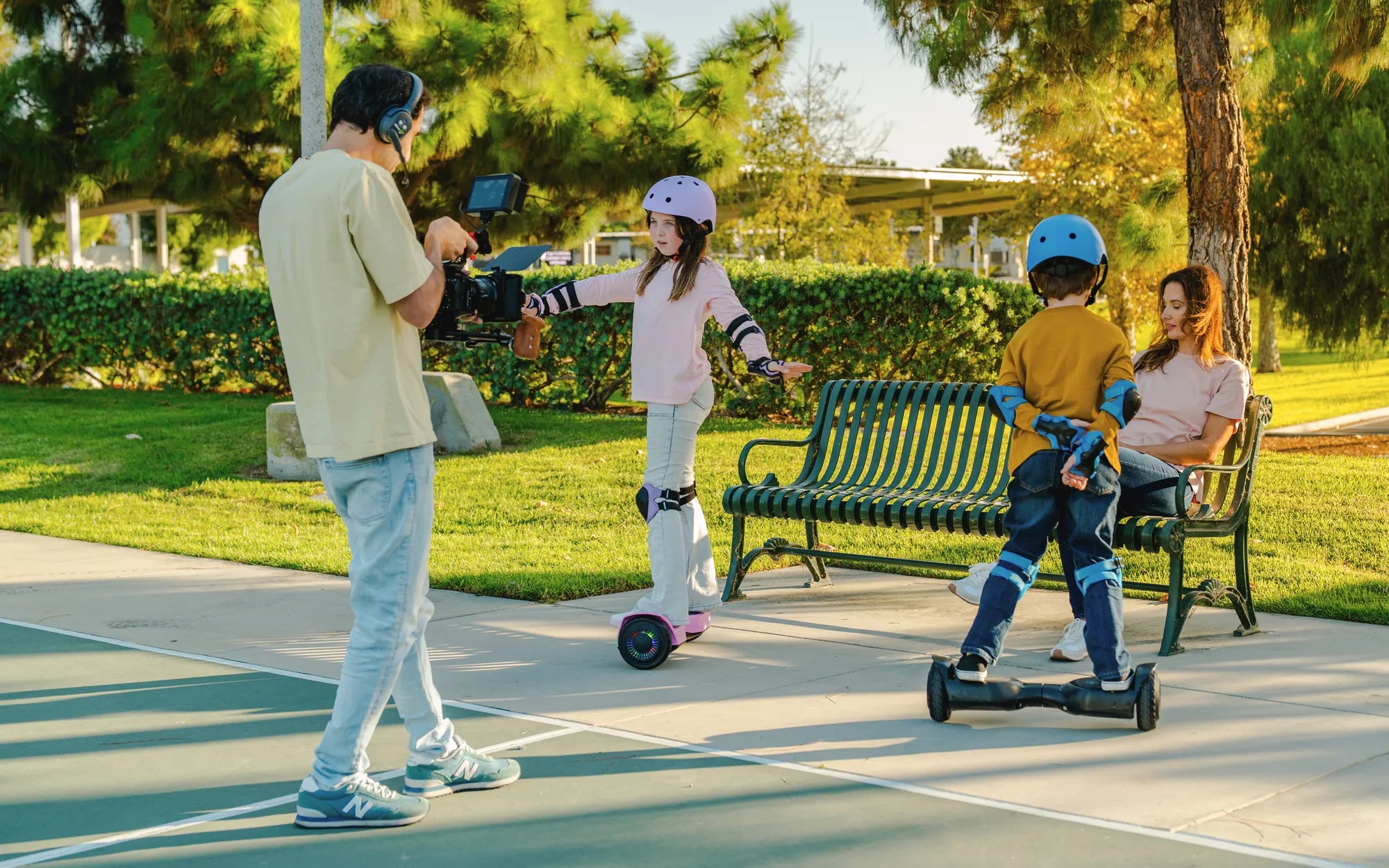
Introduction: Redefining the Commute with Self-Balancing Technology
Forget gridlocked traffic and crowded subways. The adult size electric scooter self balancing bike technology represents a fundamental leap in personal urban transport, merging sophisticated gyroscopic systems with powerful electric propulsion. This article will dissect how this technology works, its tangible benefits for city dwellers, and how it compares to other micro-mobility options. You'll learn why this hands-free, single-track vehicle is more than a novelty—it's a highly efficient, data-driven solution for the first and last mile of your journey.
Often categorized as electric unicycles (EUCs) or self-balancing scooters, these devices are engineered for adults, featuring larger wheels, more robust motors, and extended battery ranges than their toy-like predecessors. They are designed not for play, but for practical, daily commuting. The core promise is agility: navigating urban landscapes with a footprint smaller than a pedestrian yet covering distances at speeds that rival local traffic.
The convergence of advanced sensor arrays, machine learning algorithms, and high-density battery packs has finally made this form of transportation reliable and accessible. We are moving beyond the initial hype phase into an era of refined, user-centric engineering. This shift is powered by brands committed to safety and durability, transforming a futuristic concept into a dependable daily tool.
Understanding this technology is key to appreciating its potential role in reshaping city mobility. It’s not merely about replacing a car or a bus ride; it’s about introducing a new, fluid layer of transportation that seamlessly integrates with urban life. The journey begins with the science that keeps these remarkable machines upright and responsive.
The Core Technology: How Self-Balancing Electric Bikes Actually Work
At first glance, a self-balancing bike seems to defy physics. The magic lies in a complex, high-speed feedback loop between sensors, a processor, and a motor. An array of gyroscopes and accelerometers constantly measures the device's tilt angle and angular velocity hundreds of times per second. This real-time data is fed to a central processing unit (CPU) running a proprietary control algorithm.
The CPU acts as the brain, calculating the precise torque needed from the electric motor to counteract any lean and maintain equilibrium. If you lean forward, the system interprets this as a command to accelerate the wheel forward to "catch" you, propelling the device. Lean back, and it applies braking force. This creates an incredibly intuitive control scheme: your body becomes the joystick.
This is a stark contrast to a traditional electric scooter, where throttle and brake are manual inputs and balance is entirely the rider's responsibility. The self-balancing system provides stability even at a complete stop, lowering the initial learning barrier while enabling advanced maneuvers once mastered. The motor isn't just for propulsion; it's the primary actuator for dynamic stability control.
Gyroscopic Stability vs. Traditional Bike Balance
A common misconception is that these devices rely on the gyroscopic effect of a spinning wheel, like a toy top. While the wheel's rotation contributes minor stabilizing forces, it is not the primary mechanism. A traditional bicycle uses forward motion and careful rider steering inputs (counter-steering) to maintain balance. At a standstill, it falls over.
An electric self-balancing bike uses its electronic control system to remain upright statically. The gyroscopic sensors detect the slightest deviation from vertical, and the motor instantly corrects it. This means the rider does not need to learn the complex art of balancing; they only need to learn to trust and direct the device's innate stability. This fundamental difference in operation is what makes the technology both accessible and uniquely suited to stop-and-go urban environments.
Why Choose an Adult-Sized Self-Balancing Bike? Key Benefits for Urban Riders
The advantages of this transport form are multifaceted, addressing core urban pain points. First is unparalleled spatial efficiency. With a single-track footprint often narrower than a human's shoulders, these devices can filter through stalled traffic, navigate crowded sidewalks with care, and be stored effortlessly under a desk or in a closet. This solves the pervasive "parking problem" endemic to cars, scooters, and even some bicycles.
Second is the hands-free operation. Unlike e-scooters or e-bikes that require at least one hand on the handlebars, a self-balancing bike leaves your hands completely free. This enhances situational awareness, allows for natural arm movement for balance, and lets you easily carry a bag or check a phone (when stopped safely). This freedom translates to a more engaged and less physically constrained riding experience.
Third is performance density. Packing a powerful motor (often 500W to 2000W+) and a large battery into a single wheel or compact frame results in impressive torque for hill climbing and acceleration. Many adult models offer ranges of 20-40 miles per charge and top speeds of 20-30 mph, effectively covering most intra-city trips faster than a car during rush hour.
The Eco-Conscious and Economic Angle
From an environmental standpoint, these vehicles are champions of efficiency. They produce zero direct emissions and have a minuscule operational carbon footprint, especially when charged on a grid increasingly powered by renewables. The energy cost is trivial—often less than ten cents for a full charge that can cover a 20-mile commute.
Economically, the savings are substantial. Eliminating fuel, parking fees, and significant public transit fares, the device can pay for itself within a few months to a year for a dedicated commuter. With fewer moving parts than a car or even an e-bike, maintenance costs are typically lower, focusing mainly on tire wear and periodic battery care. It represents a high-tech, low-overhead solution to personal mobility.
Gyroor's Approach: Engineering Trust in Advanced Mobility
As a leading electric scooter and e-bike brand trusted by over 100,000 riders across North America and Europe, Gyroor applies its philosophy of reliability and safety to the realm of advanced self-balancing technology. The brand understands that consumer adoption hinges on overcoming concerns about battery safety, build quality, and long-term support. Their approach is to engineer trust directly into the product.
By focusing on UL-certified components, robust construction, and clear warranty backing, Gyroor demystifies cutting-edge tech and makes it feel dependable for everyday use. This is critical for a product category where the rider's safety is directly tied to the device's electronic and mechanical integrity. It’s not just about selling a vehicle; it’s about providing a confident mobility solution.
Safety First: UL-Certified Batteries and Robust Builds
The battery is the heart of any electric vehicle, and its safety is paramount. Gyroor exclusively uses UL-certified lithium-ion battery packs, which have undergone rigorous independent testing for electrical, mechanical, and environmental safety. These batteries are engineered to be stable across hundreds of charge cycles, resist thermal runaway, and provide consistent power output. This certification is a non-negotiable benchmark for quality and risk mitigation.
Complementing this is an IPX5 water-resistant rating. This engineering standard means the core electronics and battery compartments are protected against water jets from any direction, making the device resilient to heavy rain, puddle splashes, and wet road conditions. This durability ensures the sophisticated gyroscopic and motor systems remain protected from the elements, a crucial feature for a daily commuter vehicle.
Confidence on the Road: The 1-Year Warranty & Support Promise
Investing in new technology requires assurance. Gyroor backs its adult-size self-balancing bikes with a comprehensive 1-year warranty covering manufacturing defects in the motor, battery, frame, and electronic systems. This warranty acts as a guarantee of the product's intended durability and provides significant peace of mind.
Coupling this with accessible customer support channels, including US-based service, ensures riders are not left stranded with a technical issue. This support ecosystem transforms the purchase from a gadget buy into a long-term mobility partnership, encouraging daily use and integration into the user's lifestyle.
Data-Driven Comparison: How Does It Stack Up Against Other E-Transport?
Choosing the right micro-mobility device depends on individual needs. The following comparison highlights where adult-size self-balancing bike technology excels and where alternatives like e-scooters or e-bikes might be more suitable. Key metrics include portability, learning curve, performance, and use-case.
| Feature | Adult Self-Balancing Bike (EUC) | Electric Scooter | Electric Bike | Electric Skateboard |
|---|---|---|---|---|
| Portability (Weight/Size) | High. Single, compact form; 25-50 lbs; easiest for carrying upstairs or on transit. | Medium. Folding mechanism; 30-40 lbs; handlebar can be bulky. | Low. Large frame; 40-70 lbs; difficult to carry or store in small spaces. | High. Slim profile; 15-25 lbs; very easy to carry. |
| Learning Curve | Steepest. Requires 2-8 hours of practice for basic competency. Balance is electronic but direction must be learned. | Easiest. Intuitive; most can ride in minutes. Manual balance. | Easy. Like a regular bike; instant for cyclists. | Medium. Requires skateboarding balance; 1-2 hours for basics. |
| Top Speed / Range | High. 20-30 mph, 20-40 mile range common. | Medium. 15-25 mph, 15-30 mile range. | High. 20-28 mph, 30-60+ mile range. | Medium-High. 20-30 mph, 10-25 mile range. |
| Terrain Handling | High. Large air-filled tire (often 16"+) handles potholes, cracks, and mild off-road well. | Low-Medium. Small solid or air tires transmit vibrations; poor on rough pavement. | Highest. Multiple gears & large tires; best for hills and varied terrain. | Low. Small wheels; very sensitive to road surface quality. |
| Primary Use Case | The agile, all-weather commuter seeking the ultimate in maneuverability and storage. | The casual rider or last-mile connector wanting simplicity and low cost. | The distance commuter or fitness rider needing versatility and cargo capacity. | The thrill-seeking rider on pristine pavement prioritizing fun and portability. |
This analysis shows the self-balancing bike is the specialist's choice for dense urban navigation where storage space is limited and route flexibility is key. It trades a longer initial learning period for superior long-term agility and a compact footprint.
Navigating the Future: Integration and Urban Policy
The widespread adoption of adult size electric scooter self balancing bike technology is not just a technological challenge but a regulatory and infrastructural one. Currently, the legal landscape is a patchwork. In some jurisdictions, they are classified similarly to e-bikes, in others as motorized scooters, and in some, their status is undefined. Riders must proactively check local ordinances regarding where they can be ridden (bike lanes, roads, sidewalks) and what safety equipment (helmet, lights) is required.
The future growth of this sector depends on the development of smart micro-mobility infrastructure. This includes not just more bike lanes, but lanes designed for a variety of smaller, slower electric vehicles. Secure parking and charging stations at transit hubs would facilitate seamless multi-modal journeys. Cities that proactively plan for this diversity will reap benefits in reduced congestion and lower emissions.
Finally, rider education and responsible use are paramount for community acceptance. This includes respecting pedestrian spaces, using appropriate lighting at night, and adhering to speed limits. As the technology matures, standardized training or certification could become valuable, ensuring all users understand the capabilities and responsibilities of operating such an agile vehicle in shared spaces.
Frequently Asked Questions (FAQ)
Q: Is an adult self-balancing bike hard to learn?
A: There is a learning curve, typically requiring 2-5 hours of dedicated practice in a safe, open area to achieve basic comfort and control. Mastery takes longer. The key is patience and trusting the device's internal balancing system. It is learnable for most adults with average coordination.
Q: How far can it go on a single charge?
A> Range varies by model, battery capacity, rider weight, terrain, and speed. Modern adult models from reputable brands like Gyroor offer ranges between 20 and 40 miles on a full charge, sufficient for most daily commutes and errands.
Q: Is it safe to ride in the rain?
A> Devices with a high Ingress Protection (IP) rating, such as IPX5, are designed to withstand water jets and rain. This makes them safe for riding on wet roads and in light to moderate rain. However, avoiding deep puddles and extreme weather is always advised to protect the bearings and electronics long-term.
Q: Where is it legal to ride one?
A> Laws vary significantly by city, state, and country. Generally, they are often permitted in bicycle lanes and on roads with speed limits under 25-35 mph. Riding on sidewalks is frequently prohibited. It is the rider's responsibility to research and comply with all local regulations for electric personal assistive mobility devices (EPAMDs) or similar classifications.
Q: What maintenance does it require?
A> Maintenance is relatively minimal. Primary tasks include keeping the tire properly inflated, checking for loose bolts periodically, keeping the device clean and dry, and following proper battery charging practices (avoiding full depletion, not leaving it at 100% charge for extended periods). Annual professional check-ups are recommended for complex electronics.
Conclusion: Your Next Step in Personal Transportation
The adult size electric scooter self balancing bike technology is no longer a sci-fi prototype but a mature, high-performance tool for the modern urbanite. It represents a logical evolution in personal transport, prioritizing efficiency, agility, and sustainability. By mastering the synergy of gyroscopes, accelerometers, and powerful motors, this technology offers a uniquely fluid way to move through cities.
With leading brands like Gyroor embedding critical safety features like UL-certified batteries and IPX5 water resistance, and backing them with strong warranties, the barriers to confident ownership are lower than ever. The future of urban mobility is not a single solution but an ecosystem of options. For those who value a compact footprint, hands-free operation, and the ability to glide through traffic where others are stuck, this technology is a compelling answer.
Consider your daily commute, your storage options, and your willingness to learn a new skill. If the benefits of unparalleled maneuverability and tech-forward travel align with your needs, the next step is clear. Experience the future of agile, eco-friendly mobility firsthand. Browse the full Gyroor collection, featuring UL-certified, weather-resilient models, at gyroorboard.com to find the machine that matches your urban journey.
Best Electric Scooter for College Kids: Top Picks for Campus Commutes
Kids Scooter Safety Tips Every Parent Should Know: The Ultimate Guide