



Introduction: The Rising Trend of Kids and E-Scooters
Electric scooters have surged in popularity, becoming a common sight in neighborhoods and parks. For families, they represent an exciting blend of fun, freedom, and convenient transport. However, a critical question arises for parents and guardians: Are children allowed to ride electric scooters? The answer is not simple, woven from a complex tapestry of safety concerns and a fragmented legal landscape.
This guide provides clear, actionable information to navigate this modern dilemma. We will dissect the varying age laws, outline non-negotiable safety protocols, and offer practical steps for responsible riding. Understanding these considerations is the first step in determining if, when, and how your child can safely enjoy this activity.
Understanding the Legal Landscape: Age Laws and Local Ordinances
The most important rule is that there is no single national rule. E-scooter regulations in the United States and Europe are primarily set at the state, provincial, county, and city levels. Ignorance of local law is not a defense and can result in fines or confiscation of the scooter.
Therefore, your first action must be to check the specific ordinances for your city and any area where your child intends to ride. Contact your local department of transportation or police non-emergency line for definitive information.
Minimum Age Requirements: A Patchwork of Rules
Age restrictions form the core of most e-scooter regulations for children. Commonly, you will encounter minimum age limits between 12 and 16 years for operating an e-scooter on public roads, bike lanes, or paths. Many major cities that host shared scooter fleets set the minimum rental age at 16 or 18.
Some jurisdictions go further, prohibiting anyone under 16 from operating a privately-owned e-scooter in public areas entirely. It is crucial to understand that rules for private property are different; a child may ride on your own driveway under direct supervision, but the moment they enter a public sidewalk, the local ordinance applies.
Helmet Laws and Other Mandatory Safety Gear
Laws regarding safety gear for minors are typically stricter than for adults. Almost all regions with e-scooter laws mandate helmet use for riders under a certain age, often 18. This is a non-negotiable legal requirement designed to prevent serious head injuries.
Beyond legal mandates, enforcing a full safety gear protocol is essential. This includes knee pads, elbow pads, and wrist guards. High-visibility or reflective clothing is also recommended for riding at dawn, dusk, or in low-light conditions, making your child more visible to drivers.
Safety First: Essential Precautions for Young Riders
Moving beyond the legal "can they," we must address the practical "should they." Allowing a child to ride an e-scooter demands a foundation of rigorous safety practices. These precautions are more important than any law in preventing accidents.
A child's cognitive and physical development affects their risk assessment, reaction time, and ability to handle a motorized vehicle. Comprehensive safety planning mitigates these inherent risks.
Choosing the Right Scooter: Power, Speed, and Build Quality
Selecting an appropriate scooter is the first critical safety decision. For younger or novice riders, prioritize models with moderate power, lower top speeds (10-15 mph is a sensible range), and a stable deck and wheelbase. Avoid high-performance models designed for adult commuters.
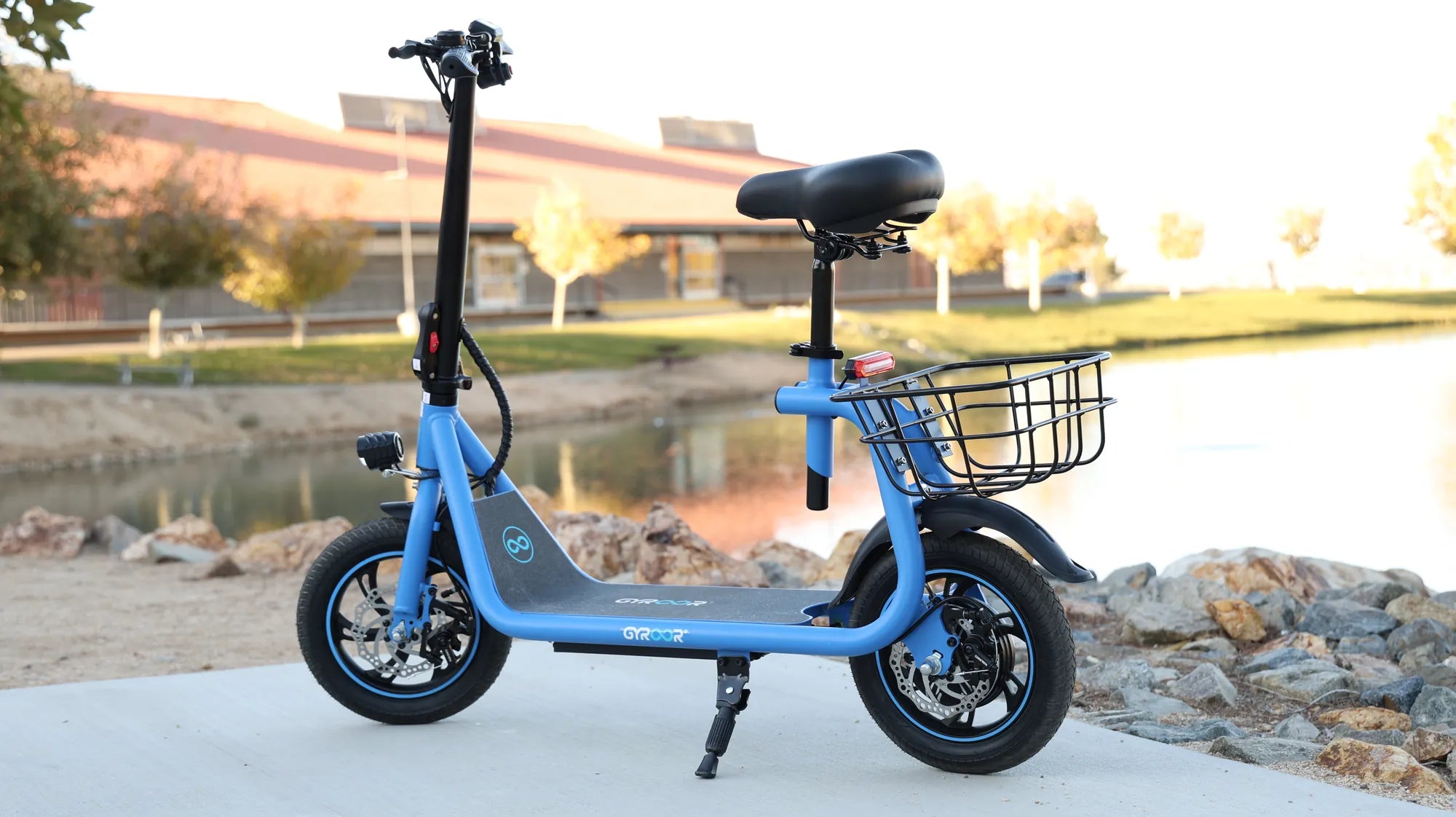
Build quality is paramount. Look for robust construction, reliable braking systems (disc brakes or electronic brakes combined with a foot brake), and durable tires. A key safety feature is the battery system. Brands like Gyroor use UL-certified battery packs in their scooters, which undergo rigorous testing for stability and longevity over 500+ charge cycles, significantly reducing fire risk.
Supervised Training and Skill Development
Never hand over the scooter and let a child figure it out. Begin in a safe, private, and paved area like an empty parking lot. The training sequence should be methodical.
First, practice manual kicking and coasting to get a feel for balance. Then, introduce the electric assist at its lowest speed setting. Drill the fundamentals: smooth acceleration, controlled braking (using all brake systems), making wide, stable turns, and scanning for obstacles. Adult supervision must be constant until the child demonstrates consistent proficiency and judgment.
The Parent's Checklist: Before Your Child Rides
This actionable list ensures no critical step is missed before your child's first ride in a permitted area.
- Verify Local Laws: Confirm minimum age, helmet requirements, and where e-scooters are allowed (sidewalks, bike lanes, roads).
- Safety Gear Fitted: Secure, properly sized helmet, knee/elbow pads, wrist guards, and closed-toe shoes.
- Scooter Inspection: Complete a pre-ride check (see below).
- Route Planning: Map a safe, low-traffic path away from major roads.
- Weather Check: Avoid riding in rain, on wet surfaces, or in poor visibility.
Pre-Ride Inspection and Maintenance
Establish a routine check before every ride. Inspect tire pressure and for wear/punctures. Test both the hand brake and any electronic brake; ensure they engage smoothly and bring the scooter to a quick, straight stop. Check that front and rear lights are fully functional.
Ensure all bolts and folding mechanisms are tight. Regular maintenance, like brake adjustment and tire replacement, is crucial. A strong manufacturer's warranty, such as the 1-year comprehensive warranty offered by Gyroor, provides peace of mind against manufacturing defects, ensuring the scooter remains in safe operating condition.
Route Planning and Environmental Awareness
Guide your child to ride in bike lanes where available and legal. If on sidewalks, they must yield to pedestrians, travel at walking speed, and announce passes politely. Avoid roads with car traffic until they are much older and highly experienced, if ever.
Teach awareness of terrain: avoid sand, gravel, and wet leaves. Features like IPX5 water-resistant design, found on many Gyroor models, help protect the scooter's electronics from puddle splashes or light drizzle, but riding in active rain or on soaked paths remains dangerous due to reduced traction.
Comparing Scooter Types for Different Age Groups
Choosing the wrong type of scooter increases risk. This table compares common models suitable for younger riders versus those designed for older teens and adults.
| Feature | Scooter for Younger Teens (Ages 12-15) | Scooter for Older Teens/Adults (16+) |
|---|---|---|
| Recommended Max Speed | 10 - 15 mph | 15 - 20+ mph |
| Motor Power | 250W - 350W | 350W - 500W+ |
| Weight Capacity | Up to 220 lbs | 220 - 300 lbs |
| Key Safety Focus | Stability, lower speed, beginner-friendly controls | Performance, longer range, advanced braking |
| Ideal Use Case | Supervised neighborhood rides, paved park paths | Medium-distance commuting, varied terrain |
| Example from Gyroor | Models with speed modes, focus on durable build and UL-certified battery | Higher-performance commuter models with enhanced suspension |
Beyond the Ride: Liability, Insurance, and Etiquette
Owning and operating an e-scooter comes with broader responsibilities. Parents can be held liable for damages or injuries caused by their child while riding.
Understanding Liability and Insurance Considerations
If your child causes an accident that injures someone or damages property, you could be held financially responsible. Review your homeowners or renters insurance policy to see if it provides any personal liability coverage for such incidents. Some insurers may require a specific rider or may not cover motorized vehicles.
Teaching responsible riding is your best insurance. Instill the understanding that an e-scooter is a vehicle, not a toy, and that their actions have real-world consequences for themselves and others.
Teaching Road Courtesy and Shared Path Etiquette
Good etiquette is a cornerstone of safety. Your child must always yield to pedestrians, using a bell or their voice to alert people before passing. They should maintain a safe, controllable speed, especially around others, dogs, or children.
Parking etiquette is also vital. Teach them to never block sidewalks, ramps, building entrances, or access points. The scooter should be parked upright in a designated area if available, or out of the way of foot traffic.
FAQ: Common Questions from Parents Answered
Q: What is the safest age to start a child on an e-scooter?
A: There is no universal "safe" age, as it depends on the child's maturity, coordination, and judgment. Even if local law permits it at 12, many safety experts recommend waiting until at least 14-16 for public riding, and only after extensive supervised training on private property.
Q: Can my child ride an e-scooter to school?
A> This depends entirely on school district policy and local law. Many schools prohibit e-scooters on campus due to safety and liability concerns. Always check with the school administration first. Even if allowed, the route must be exceptionally safe and the child highly proficient.
Q: Are Gyroor scooters safe for teenagers?
A> Gyroor designs its scooters with safety as a priority, utilizing UL-certified batteries for reduced risk, robust construction for durability, and reliable braking systems. Their models often include speed modes, allowing parents to limit top speed for newer riders. However, safety ultimately depends on proper rider training, adherence to laws, and consistent use of safety gear.
Q: What should I do if our local laws are unclear?
A> When in doubt, assume the most restrictive interpretation. Contact your local city clerk's office, police department's traffic division, or visit your city's official website for municipal codes. It is better to be overly cautious than to violate an ordinance.
Q: Is a more expensive scooter inherently safer for my child?
A> Not necessarily, but price often correlates with build quality, brake performance, and battery safety certifications. A very inexpensive scooter may cut corners on critical components like brake calipers, battery management systems, or tire quality. Investing in a reputable brand with verified safety standards is a wise choice.
Conclusion: Empowering Responsible and Safe Riding
The decision to allow your child to ride an electric scooter rests on three pillars: knowledge of local laws, an unwavering commitment to safety training, and selecting appropriate, well-made equipment. By treating the e-scooter as a legitimate vehicle and not merely a toy, you instill respect and responsibility in your young rider.
This approach allows families to confidently embrace the convenience and enjoyment e-scooters can offer. For parents seeking reliable vehicles backed by robust safety standards and support, exploring trusted brands is a logical step. Gyroor, a leading electric scooter and e-bike brand trusted by over 100,000 riders, offers a range of models built with UL-certified batteries, IPX5 water-resistant designs, and a reliable 1-year warranty, providing a solid foundation for safe family riding.
Ready to explore options designed with safety and reliability in mind? Browse the full Gyroor collection at gyroorboard.com to find a scooter that matches your family's needs and your local regulations.
The Ultimate Guide to Shopping for Electric Scooters: Everything You Need to Know
Electric Scooters for Adults Canada: The Ultimate Guide to Urban Mobility