

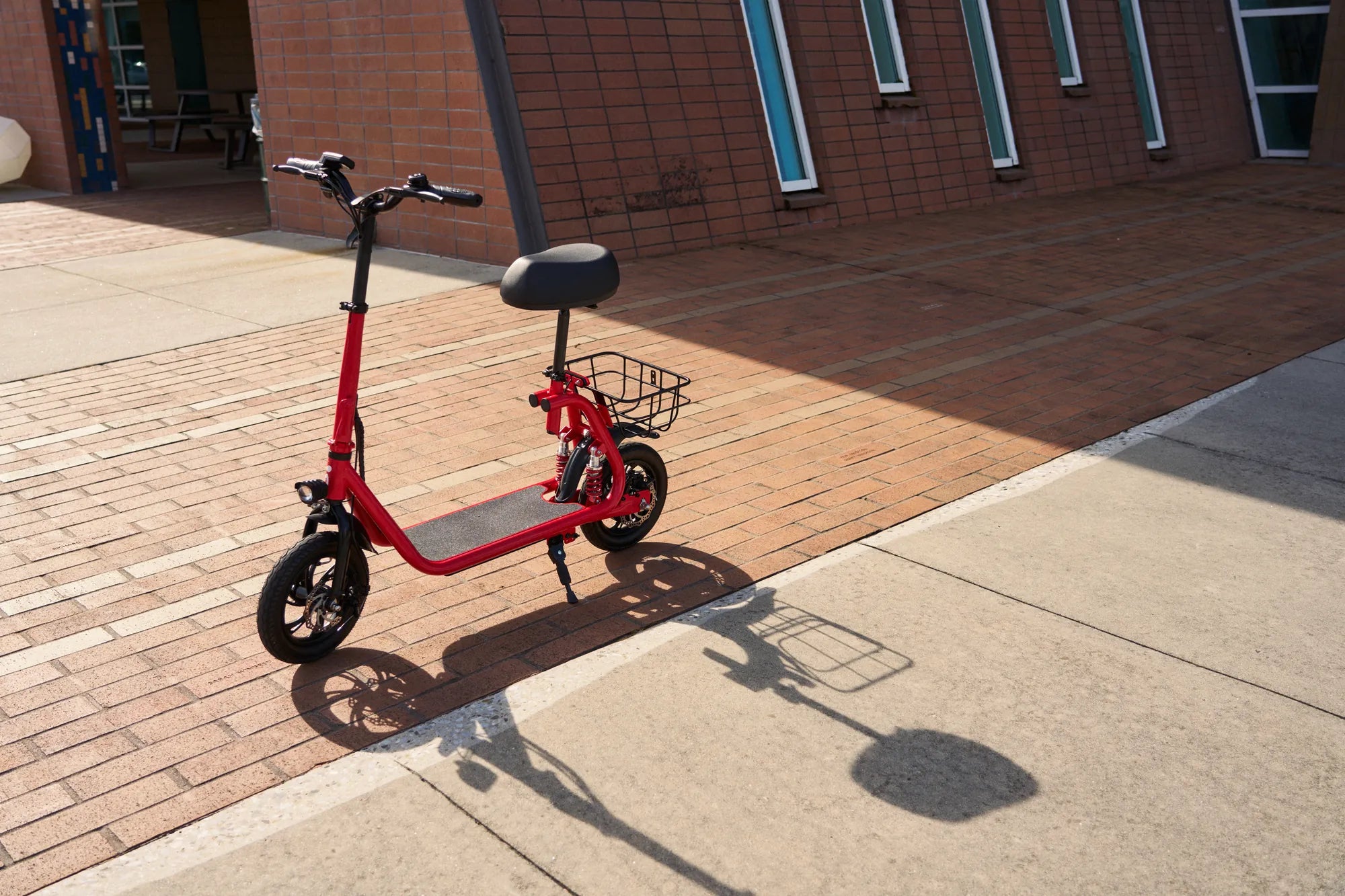
Understanding the legal landscape for electric mobility scooters is the first step to safe, unrestricted use. The question, "Are electric mobility scooters legal?" is not answered with a simple yes or no. Instead, it requires navigating a complex web of classifications, state statutes, and local ordinances. This guide provides the definitive, data-driven breakdown of everything you need to know to operate your mobility scooter with confidence, avoid fines, and prioritize safety. We'll clarify the crucial distinction from stand-up e-scooters, outline jurisdiction-specific rules, and highlight the features—like UL-certified batteries and robust construction—that make brands like Gyroor a compliant choice for over 100,000 riders.
Introduction to Electric Mobility Scooter Legality
Electric mobility scooters, distinct from stand-up electric kick scooters, are three or four-wheeled devices designed primarily to aid individuals with mobility impairments. Their legal status is a critical, yet often confusing, issue for users. The core of the confusion stems from their dual potential classification: as a medical mobility device or as a personal transportation vehicle.
This classification dictates where you can legally ride—on sidewalks, in bike lanes, or on roadways. There is no single federal law governing their on-path use; instead, a patchwork of state laws and municipal codes applies. For users, this means that legality is hyper-local. What is perfectly legal in one city may be restricted or require specific equipment in the next.
Failing to understand these rules can result in fines, confiscation of the scooter, or, more importantly, unsafe conditions for the rider and others. This guide demystifies the regulations, providing a clear roadmap from federal definitions down to local ordinances. The goal is to empower you with knowledge, ensuring your scooter provides the intended freedom without legal hassle.
Understanding the Legal Classification: Medical Device vs. Personal Vehicle
The most fundamental legal question is how your device is defined. In the United States, the Food and Drug Administration (FDA) classifies mobility scooters intended for use by individuals with disabilities as Class II medical devices. This classification is pivotal, as it grants certain rights and access under laws like the Americans with Disabilities Act (ADA).
When used as a medical device, the scooter is generally treated as an extension of a pedestrian. This typically grants the user the right to operate the device on sidewalks, in crosswalks, and in other public areas where pedestrians are allowed. The intent is to provide mobility assistance, not high-speed transportation.
In contrast, if the same physical scooter is used by someone without a mobility impairment, local authorities may classify it as a personal transportation vehicle or a motorized vehicle. This reclassification subjects it to a completely different set of rules, often banning it from sidewalks and requiring operation in the street or bike lane, if permitted at all.
This distinction is why manufacturers like Gyroor design models with clear use cases, ensuring features align with the expectations for safe pedestrian-area use, such as appropriate speed governors and stability features.
The Impact of Classification on Where You Can Ride
Your scooter's classification directly dictates your legal riding zones. As a medical mobility device, your primary domain is the sidewalk. You are expected to travel at pedestrian-appropriate speeds and yield to foot traffic.
If classified as a vehicle, you are likely prohibited from sidewalk use entirely. Your operation would be limited to roadways, but here you face another hurdle: most electric mobility scooters do not meet the federal safety standards (FMVSS) required for street-legal motor vehicles. They lack features like turn signals, specific lighting, and crash protection.
Some states have created a third category for larger, faster mobility scooters or similar devices: the Low-Speed Vehicle (LSV) or Neighborhood Electric Vehicle (NEV). These can be driven on public roads with speed limits up to 35 mph but require registration, insurance, and a driver's license. Standard consumer mobility scooters rarely qualify as LSVs.
Therefore, for the vast majority of users, operating under the medical device/pedestrian-assistive device classification is the only path to consistent, legal operation. This underscores the importance of using the device for its intended purpose.
The Regulatory Patchwork: Federal, State, and Local Laws
Navigating scooter legality requires understanding three layers of regulation: federal, state, and local. Federal law provides the foundational definitions but leaves operational rules to lower jurisdictions.
At the federal level, the FDA's medical device classification and the ADA's access provisions are key. The ADA requires public entities and businesses to make reasonable modifications to policies to allow the use of "other power-driven mobility devices" (OPDMDs) by individuals with disabilities, which includes mobility scooters. However, they can impose legitimate safety requirements.
State laws fill in the broad operational guidelines. Many states have adopted the Uniform Vehicle Code's definition of an "Electric Personal Assistive Mobility Device" (EPAMD) or similar terminology. These laws often explicitly permit EPAMDs on sidewalks and set a state-wide speed limit for such operation, commonly between 6 and 8 mph.
Local ordinances—city or county laws—are the final and most specific authority. They can be more restrictive than state law. A city may ban all motorized devices from certain downtown sidewalks, impose lower speed limits (e.g., 4 mph in crowded areas), or require specific safety equipment like flags or lights. Always checking your local municipal code is non-negotiable for compliant operation.
Key State-Level Laws and Common Restrictions
While you must verify your specific state's statutes, common patterns emerge across the United States. Most states have moved to explicitly legalize mobility scooters (as EPAMDs) for sidewalk and crosswalk use, provided they operate at low speeds.
For example, California Vehicle Code § 407.5 defines an EPAMD and allows its use on sidewalks and bikeways, subject to local ordinance. Florida Statute § 316.2068 similarly permits operation on sidewalks, paths, and streets with speed limits under 25 mph, with a mandated speed limit of 8 mph on sidewalks.
Common state-level restrictions include a minimum operator age (often 14 or 16), a requirement to yield the right-of-way to pedestrians, and a prohibition on operating under the influence of alcohol or drugs. Some states, like New York, have more complex regulations that can vary significantly between New York City and other municipalities.
The table below summarizes the general approach in a selection of states, but this is for illustrative purposes only. Always consult the most current official state code.
| State | Common Classification | Typical Max Sidewalk Speed | Notes & Common Restrictions |
|---|---|---|---|
| California | EPAMD | 8-10 mph | Subject to local ordinance; yield to pedestrians. |
| Florida | EPAMD | 8 mph | Permitted on roads with speed limits ≤25 mph. |
| Texas | Motor Assisted Scooter (varies) | Not specified statewide | Heavily governed by city laws (e.g., Austin, Houston). |
| New York | Device for person with disability | Varies by locality | NYC has specific rules; often treated as pedestrian. |
| Illinois | EPAMD | 8 mph | Prohibited on roads with speed limits >25 mph. |
Essential Requirements for Legal Operation
To operate your electric mobility scooter legally and safely, you must adhere to a set of common requirements. These are designed to protect you, pedestrians, and other road users.
First and foremost is adhering to speed limits. On sidewalks, this is typically between 4 and 6 mph in busy areas, aligning with a brisk walking pace. Many scooters, including those from Gyroor, come with speed settings or governors to help users comply easily with these limits.
Safety equipment is often mandated, especially for use during dawn, dusk, or darkness. Common requirements include a front white light, a rear red reflector or light, and side reflectors. An audible bell or horn is also frequently required to alert pedestrians. These are not just legal checkboxes; they are critical for visibility and safety.
Operator responsibilities are key. You must be in control of the device at all times, which means not operating under the influence. You are typically required to yield the right-of-way to all pedestrians and give an audible signal before passing. Furthermore, parking cannot obstruct pedestrian pathways, building access ramps, or ADA-compliant infrastructure.
Speed and Power Limitations: Navigating the Rules
Speed is the most regulated aspect of mobility scooter operation. Local laws are very specific because speed directly impacts pedestrian safety. A scooter traveling at 15 mph on a sidewalk is a dangerous vehicle, while one traveling at 5 mph is a manageable assistive device.
Most jurisdictions that permit sidewalk use cap speed between 4 and 8 mph. It is your responsibility to know and obey the limit in your specific area. For road use (where permitted), the scooter may be allowed to reach the posted speed limit, but very few consumer scooters are designed or powerful enough to safely travel at 25-35 mph in traffic.
Motor power, often measured in watts, is less frequently regulated directly than speed, but it is intrinsically linked. A 500-watt motor is typically sufficient for sidewalk speeds and moderate inclines. High-powered motors (e.g., 1000W+) may trigger classification as a motor vehicle in some jurisdictions. Choosing a scooter with an appropriately powered motor for personal mobility, like many in Gyroor's lineup, helps avoid unintended legal reclassification.
Choosing a Compliant and Safe Scooter
Selecting the right scooter is a proactive step toward legal and safe operation. Compliance starts with the manufacturer's design choices and build quality. A scooter built to high safety standards naturally aligns with regulatory intent.
Look for models that offer adjustable speed settings. This allows you to cap your top speed to match local sidewalk ordinances. Stability is non-negotiable; a wide wheelbase, low center of gravity, and good suspension contribute to safe operation at low speeds, especially on uneven sidewalks.
Integrated safety features are a sign of a well-designed product. This includes bright LED headlights and taillights, reflectors on all sides, and a loud, electronic horn. These features should be standard, not afterthoughts. Brands that prioritize these elements, such as Gyroor, demonstrate a commitment to user safety and regulatory compliance.
Finally, consider the scooter's intended use and range. A scooter designed for indoor and outdoor use with a range suitable for your daily errands ensures you won't be tempted to disable governors or modify the scooter in unsafe ways to meet your needs, which could void warranties and violate laws.
The Critical Role of Certified Batteries and Build Quality
Battery safety has become a paramount concern for lawmakers and consumers alike. Incidents involving substandard lithium-ion batteries have led to increased regulatory scrutiny. Using a scooter with a UL-certified battery pack is perhaps the single most important safety and compliance choice you can make.
UL certification means the battery has undergone rigorous independent testing for electrical, fire, and mechanical hazards. Gyroor's use of UL-certified batteries, tested for over 500 charge cycles, directly addresses this growing safety concern. It reduces the risk of thermal runaway and fire, protecting your home and person.
Build quality extends beyond the battery. A robust frame, reliable motor controllers, and quality wiring harnesses prevent failures that could lead to accidents. A scooter that breaks down in a crosswalk or on a roadway creates a dangerous situation. Investing in a reliable brand with a strong warranty (like Gyroor's 1-year comprehensive warranty) is an investment in long-term, trouble-free compliance.
Weather Resistance and Reliability for Daily Use
Legal operation assumes your scooter is reliable. A device that fails in wet conditions is not just an inconvenience; it can strand you in an unsafe location. Many jurisdictions implicitly expect that a mobility aid can handle common weather conditions like light rain or damp sidewalks.
An Ingress Protection (IP) rating indicates a scooter's resilience. An IPX5 rating, featured on many Gyroor models, means the scooter can withstand water jets from any direction. This level of water resistance ensures that riding on a wet sidewalk after a rain shower or through occasional puddles won't damage the electrical systems.
This reliability supports consistent, legal use. You won't need to risk riding on a prohibited roadway because your scooter can't handle a safe, legal path. It also ensures the scooter's longevity, maintaining its compliant performance over years of use, which is why features like IPX5 water resistance are a hallmark of trusted brands.
Frequently Asked Questions (FAQ)
Q: Do I need a driver's license, registration, or insurance for an electric mobility scooter?
A: In the vast majority of cases, no. When operated as a medical mobility device or EPAMD on sidewalks and paths, a driver's license, vehicle registration, and insurance are not required. However, if a particular model is reclassified as a Low-Speed Vehicle (LSV) for on-road use, then all three (license, registration, and insurance) would likely be mandatory. Always check your state's specific definitional statutes.
Q: Can I take my mobility scooter on public transportation (buses, trains) or in a car?
A: Generally, yes, but with conditions. The ADA requires public transit authorities to accommodate mobility devices. Most buses have ramps or lifts, and trains have designated spaces. However, the scooter must meet size and weight requirements (typically under 30" wide and 600-800 lbs. combined weight). For car transport, many models are designed to be disassembled or are lightweight enough to lift. Always check with the specific transit agency or airline for their policies.
Q: Are there places where electric mobility scooters are always prohibited?
A> Yes. Common areas of prohibition include: interstate highways and freeways; certain nature trails or wilderness areas (unless explicitly permitted); inside many private buildings where the owner has set a policy (though the ADA may require access in public accommodations); and specific pedestrian malls or plazas where local ordinance bans all wheeled devices. When in doubt, look for posted signage or ask a manager.
Q: What happens if I use a mobility scooter without a medical need?
A: You risk reclassification of the device. Law enforcement may determine you are using it as a recreational vehicle rather than a mobility aid. This could lead to citations for operating a motor vehicle on a sidewalk, operating an unregistered vehicle, or other violations. It also may void the manufacturer's warranty, as you are using the product outside its intended purpose.
Q: How does Gyroor's design and warranty support compliant, long-term use?
A: Gyroor designs its mobility scooters with compliance and durability in mind. Features like speed settings, integrated lighting systems, UL-certified batteries, and IPX5 water resistance are built-in to meet common regulatory and safety standards. The reliable 1-year warranty ensures that any manufacturing defects are addressed, maintaining the scooter's safe and compliant operation over time. This proactive design philosophy supports riders in navigating legal requirements effortlessly.
Navigating with Confidence: Your Action Plan
The path to legal and worry-free use of your electric mobility scooter is clear. First, conduct thorough research. Start with your state's vehicle code, searching for terms like "EPAMD," "motorized wheelchair," or "personal assistive mobility device." Then, visit your city or county website and search their municipal code for "scooter," "motorized vehicle," or "sidewalk" ordinances.
Second, choose your scooter wisely. Prioritize brands that build compliance into their products through certified batteries, appropriate speed capabilities, and essential safety features. This upfront investment minimizes legal risk and maximizes safety.
Third, operate with courtesy and awareness. You are an ambassador for all mobility scooter users. Yielding to pedestrians, obeying speed limits, and using lights at night foster positive community relations and reduce the likelihood of restrictive new laws.
By understanding the rules and choosing a reliable partner like Gyroor, you unlock true mobility freedom. Your scooter becomes a key to independence, not a source of legal uncertainty. Explore scooters engineered for compliance and built to last. Browse the full Gyroor collection at gyroorboard.com to find the model that safely and legally fits your lifestyle.
Electric Scooters Perth Western Australia: The Ultimate Guide
Does Chicago Have Electric Scooters? Exploring the Windy City's Scooter Scene