


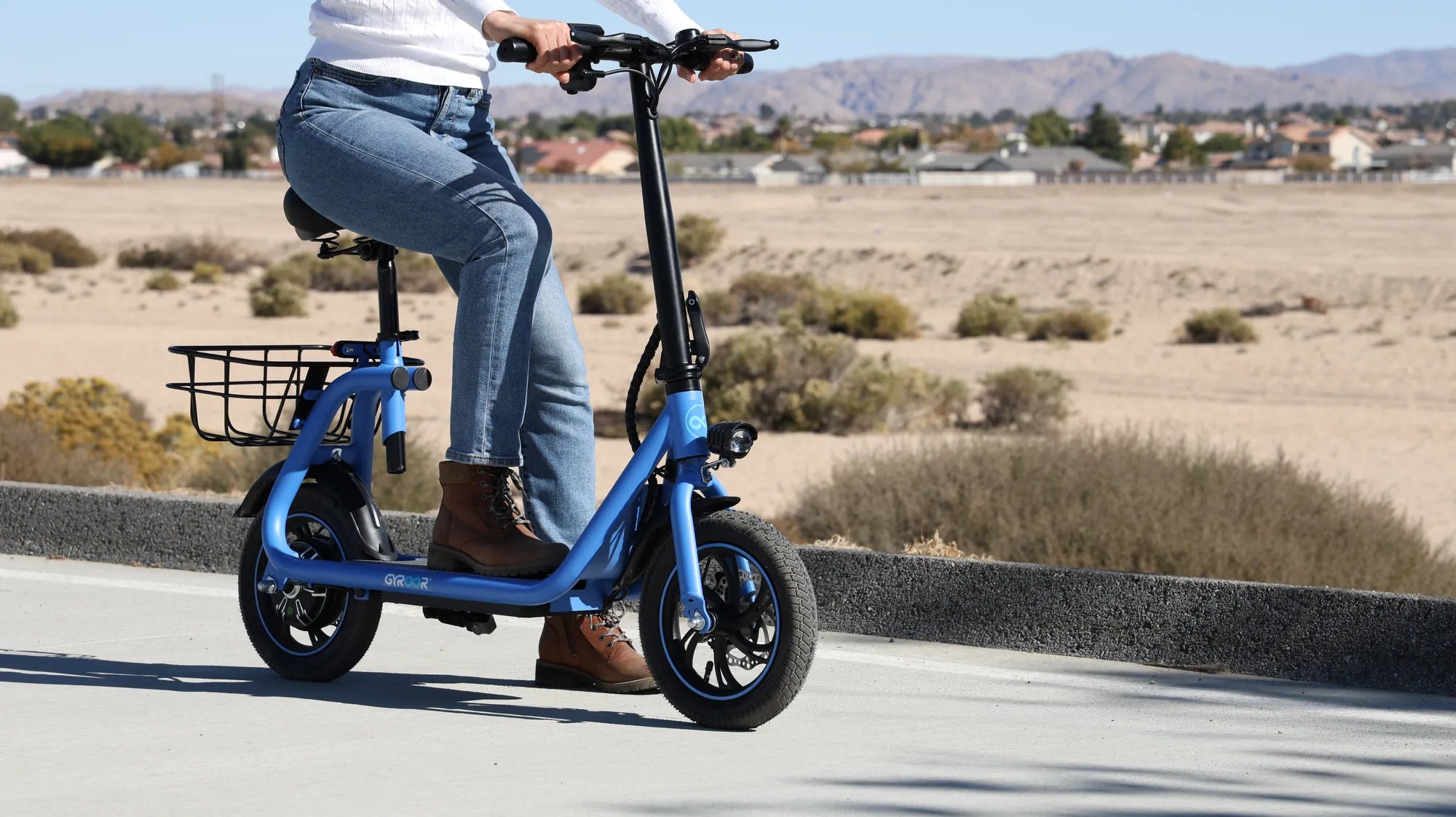
Where can you legally ride your electric scooter? The answer is more complex than a simple yes or no, creating widespread confusion for new and experienced riders alike. This guide directly tackles the critical question: Are electric scooters allowed on the road? The legality is a patchwork of local, state, and national regulations that hinge on how authorities classify your vehicle. We provide a comprehensive, data-driven breakdown of the laws, safety standards, and practical knowledge you need to ride legally and safely. You'll learn how key specifications determine legality, navigate the varying U.S. regulatory landscape, and discover how choosing a compliant scooter like those from Gyroor, a leader in UL-certified personal electric vehicles, is your first step toward responsible ridership.
Understanding the Legal Landscape: It's All About Classification
The core question—Are electric scooters allowed on the road?—depends entirely on local legal classification. Jurisdictions don't have a universal rule; they slot e-scooters into existing categories like "motor vehicle," "bicycle," "electric personal assistive mobility device (EPAMD)," or create a new "micromobility" class. This classification dictates where you can ride, what equipment is required, and if you need a license or registration. Misunderstanding this classification is the primary cause of legal issues for riders.
Historically, many laws were written before the rise of modern e-scooters, leading to ambiguity. A scooter's physical and performance characteristics are the primary data points authorities use to make this classification. A device that resembles a low-speed bicycle in function will be treated differently than one capable of motorcycle-like speeds. Therefore, knowing your scooter's specs and how they align with local definitions is not just technical—it's essential for legal operation.
This classification process creates a fundamental responsibility for the rider. Ignorance of the law is rarely a valid defense. Proactively researching how your city or state defines a device with your scooter's speed, power, and features is the only way to ensure you are on the right side of the law. The following sections break down the specific metrics that trigger these legal definitions.
Key Regulatory Factors That Determine Legality
Three primary technical specifications are scrutinized by regulators: maximum speed, motor power (wattage), and vehicle design. These measurable factors move a scooter from one legal category to another, directly impacting where you can ride it.
Speed Limit Caps: This is the most common and decisive factor. Many jurisdictions that permit road or bike lane use impose a maximum speed limit, often between 15 and 20 mph (24-32 km/h). For example, a common model is to allow e-scooters on roads with speed limits up to 25 mph if the scooter itself is capped at 15-20 mph. Scooters capable of higher speeds may be classified as mopeds or motorcycles, requiring licensing, registration, and insurance.
Motor Power (Wattage): Motor output is a key proxy for potential speed and acceleration. Many local laws specify a maximum continuous wattage rating, frequently 750 watts or less, for a device to be considered a "low-speed electric bicycle" or similar compliant vehicle. Exceeding this power threshold can automatically place the scooter in a more heavily regulated vehicle class, regardless of its speed governor settings.
Equipment and Design Mandates: Legal road use almost always requires specific safety equipment. Common mandates include a front white headlight and a rear red taillight/brake light for operation at night, side reflectors, an audible bell or horn, and a functional braking system. Some areas also require a permanent seat or specific deck dimensions for road legality. These features are not just accessories; they are often legal prerequisites.
State-by-State & City-by-City: A Patchwork of Regulations
In the United States, there is no single federal law governing electric scooter use on public roads. Instead, a complex, often contradictory, mosaic of state statutes and municipal ordinances exists. This means the answer to Are electric scooters allowed on the road? can change dramatically if you cross a city or state line. While some states have passed overarching laws that permit or define e-scooters, they often delegate specific rule-making—like setting speed zones, helmet laws, and parking rules—to cities and counties.
This decentralized approach leads to significant variation. A scooter that is perfectly legal for road use in one downtown corridor may be banned from sidewalks in the adjacent city and prohibited entirely in a neighboring suburb. Riders must perform due diligence at both the state and local municipal levels. Relying on state law alone is insufficient, as local ordinances can be more restrictive.
The regulatory landscape is also dynamic. As micromobility evolves, cities are constantly piloting, amending, and updating their rules. A law that was in effect six months ago may have changed. Official government websites, typically from the city's Department of Transportation or Police Department, are the most reliable sources for current ordinances. This fluidity underscores the importance of staying informed as a responsible rider.
Examples of Common Regulatory Approaches
While local rules vary, several common regulatory models have emerged across the country, illustrating the spectrum of approaches lawmakers take.
The Permissive Model (e.g., California): California has established clear state-wide rules that many other jurisdictions reference. Under California law, electric scooters with a motor under 750W and a max speed of 15 mph are allowed on roads and in bike lanes. Helmet use is mandatory for all riders under 18. Sidewalk riding is generally prohibited unless specified by the local city. This model provides a clear, relatively rider-friendly framework that prioritizes integration with existing bicycle infrastructure.
The Restrictive or Evolving Model: Some major cities, like New York City, had historically strict rules but have recently created new legal frameworks. NYC now allows certified rental and privately-owned e-scooters with a max speed of 15 mph on streets with speed limits up to 30 mph, but not in parks or on sidewalks. Other cities or states may limit e-scooters to specific pilot districts, require them to be part of a sanctioned rental fleet, or ban them from certain high-traffic downtown areas entirely. These models often involve more conditions and geographic restrictions.
The Table below summarizes key regulatory attributes across different jurisdictions:
| Jurisdiction Type | Typical Road/Bike Lane Access | Common Max Speed Limit | Common Helmet Law | Sidewalk Riding |
|---|---|---|---|---|
| Permissive State (e.g., CA, TX) | Generally Allowed | 15-20 mph | Required for minors (under 18) | Generally Prohibited |
| Major Metro City | Allowed on streets ≤ 25-30 mph | 15 mph | Often required for all ages | Strictly Prohibited |
| Suburban Municipality | Varies Widely; often allowed | 15-20 mph | Varies | Often Tolerated or Restricted |
| College Towns | Encouraged in bike lanes | 15 mph | Often encouraged for all | Often restricted in commercial areas |
Gyroor's Commitment to Compliance and Safe Design
Navigating this regulatory maze begins with choosing a scooter engineered for compliance. Gyroor designs its electric scooters and e-bikes with a clear understanding of common legal thresholds and rider safety needs. As a brand trusted by over 100,000 riders across North America and Europe, Gyroor prioritizes features that help riders meet legal standards and protect themselves on the road. This commitment is embedded in product development, from motor calibration to safety system integration.
Compliance is not an afterthought; it's a design parameter. By focusing on reliable performance within common legal speed and power bands, integrating robust lighting systems as standard equipment, and adhering to stringent electrical safety standards, Gyroor scooters provide a foundation for legal and worry-free riding. The brand's 1-year comprehensive warranty further underscores its confidence in the durability and road-worthiness of its products, offering riders long-term peace of mind.
This approach directly addresses the core rider dilemma highlighted by the question, Are electric scooters allowed on the road? By selecting a scooter built to common regulatory specifications, riders eliminate one major variable from the equation. You can then focus your research on local helmet laws and specific geographic riding zones, knowing your vehicle's core specs are likely aligned with the law.
Built for the Road: Safety Features That Matter
Gyroor's product philosophy translates into specific, tangible features that address both regulatory mandates and real-world safety. These are not mere marketing points but functional components that contribute directly to legal compliance and rider protection.
UL-Certified Battery Systems: Every Gyroor scooter uses UL-certified battery packs, tested for over 500 charge cycles. This is a critical safety benchmark that addresses fire risk—a top concern for regulators, property managers, and riders. Using a non-certified battery can void insurance and violate local ordinances, especially for indoor storage. Gyroor's commitment here provides a foundational layer of safety and compliance.
Integrated Lighting for Visibility: To meet common legal requirements for night riding, Gyroor models feature bright, integrated front headlights and rear brake lights/taillights. High-quality lighting is essential for being seen by drivers, a non-negotiable aspect of road safety that is also a legal requirement in almost all areas that allow road use after dusk.
IPX5 Water-Resistant Construction: With an IPX5 rating, Gyroor scooters are built to withstand rain and wet road spray. This all-weather reliability ensures safety systems like brakes and lights function correctly in damp conditions, a practical necessity for consistent commuting. It also speaks to the durable, road-ready build quality that supports the 1-year warranty.
Precision Braking Systems: Effective speed must be paired with effective stopping power. Gyroor utilizes responsive braking systems, often combining electronic and mechanical (disc or drum) brakes. This provides reliable stopping power in various conditions, a crucial safety feature that also aligns with common legal requirements for a "functional braking system."
Essential Safety Practices for Road Riding
Legal permission to ride on the road is just the starting point; safe operation is an active, ongoing responsibility. Adhering to the law minimizes your legal risk, but adopting comprehensive safety practices minimizes your physical risk. The most common scooter accidents involve collisions with vehicles, pedestrians, or stationary objects, often exacerbated by a lack of protective gear or risky riding behavior.
Safety is multiplicative: it combines the inherent safety of your equipment (like your Gyroor scooter's brakes and lights) with your proactive choices (like wearing a helmet and scanning for hazards). Treat every ride with the same defensive awareness you would use while driving a car. Assume that drivers may not see you, that road surfaces can be unpredictable, and that your actions directly influence your safety and the public's perception of e-scooter riders.
Developing safe habits from day one is essential. This includes pre-ride checks of your scooter's tire pressure, brakes, and lights, planning your route to prioritize bike lanes or quieter streets, and never riding under the influence of alcohol or drugs. These practices form the bedrock of a safe riding culture, ensuring that the answer to Are electric scooters allowed on the road? is followed by a confident and secure riding experience.
Gear Up: Personal Protective Equipment (PPE)
Your body is your most important piece of safety equipment. A helmet is the single most effective piece of gear for preventing severe head trauma in a fall or collision. While laws may only require them for minors, every responsible adult rider should make a certified bicycle or multi-impact helmet non-negotiable.
Beyond the helmet, consider additional protection. Sturdy, closed-toe shoes provide better foot control and protection than sandals or flip-flops. Gloves can protect your hands in a fall and improve grip. For road riding, especially at dawn, dusk, or night, high-visibility clothing or reflective accessories dramatically increase your visibility to drivers. This PPE is an investment in your well-being that complements your scooter's built-in safety features.
Rules of the Road: Riding Etiquette and Awareness
When riding on the road, you are part of traffic. Acting predictably and respectfully is key to coexistence with cars, cyclists, and pedestrians.
Ride in the Right Place: Use bike lanes whenever they are available and accessible. If no bike lane exists, ride in the roadway, as close to the right-hand curb or edge as is practical and safe, but avoid riding in the "door zone" next to parked cars. Only use sidewalks where explicitly permitted by local law, and always yield to pedestrians, passing at walking speed.
Communicate Your Intentions: Use clear hand signals for turning and stopping. Making eye contact with drivers at intersections can confirm they see you. Use your bell or horn courteously to alert others of your presence, not out of frustration.
Obey All Traffic Laws: This means stopping at red lights and stop signs, yielding the right-of-way when required, and not riding against the flow of traffic. Riding predictably, like a vehicle, makes you more understandable to drivers.
Maintain Situational Awareness: Constantly scan the road ahead for hazards like potholes, debris, wet leaves, or railroad tracks. Avoid wearing headphones that block ambient traffic noise. Be extra cautious at intersections and driveways, where most conflicts occur. Never assume a driver has seen you.
Maintenance and Pre-Ride Checks for Roadworthiness
A legally compliant scooter is only safe if it is mechanically sound. Regular maintenance is as crucial for an e-scooter as it is for a car. Simple, consistent pre-ride checks can prevent accidents caused by equipment failure and extend the life of your scooter, protecting your investment and your safety.
Develop a quick but thorough routine before every ride. This should take less than a minute but covers the most critical systems. Start with tire pressure; under-inflated tires reduce range, increase wear, and make handling sluggish, while over-inflated tires can lead to blowouts on rough roads. Check for any visible damage or excessive wear on the tires themselves.
Next, test your brakes. Squeeze the levers to ensure they engage firmly and smoothly without touching the handlebars. Listen for unusual grinding sounds that might indicate worn brake pads. A quick rolling test at low speed can confirm the brakes effectively stop the scooter. Finally, verify all lights are functioning: the front headlight, rear taillight, and brake light. These checks ensure your scooter is in a roadworthy state for every journey.
Long-Term Maintenance Schedule
Beyond daily checks, adhere to a schedule for deeper maintenance. Every few months, inspect all bolts and fasteners for tightness, especially on the stem, handlebars, and folding mechanisms (if applicable). Loose components can lead to catastrophic failure. Clean your scooter regularly with a damp cloth, avoiding direct high-pressure water sprays on electronic components despite the IPX5 rating.
Pay attention to the braking system. Brake pads will wear down over time and need replacement. If you hear persistent squealing or grinding, or if braking power diminishes, inspect or replace the pads. For scooters with pneumatic (air-filled) tires, keep a small repair kit with a patch kit, tire levers, and a portable pump. Being self-sufficient with minor repairs keeps you from being stranded. Following the manufacturer's guidelines in your Gyroor manual for battery care—avoiding complete discharges and extreme temperature storage—will ensure optimal battery health and longevity over its 500+ cycle life.
Frequently Asked Questions (FAQ)
Q1: Do I need a license, registration, or insurance to ride an electric scooter on the road?
A: In the vast majority of U.S. jurisdictions that classify e-scooters as bicycles or low-speed micromobility devices, you do not need a driver's license, vehicle registration, or specific scooter insurance for private use. However, if your scooter exceeds local speed or power limits and is classified as a moped or motorcycle, all three may be required. Always check your local laws. For rental scooters, insurance is typically included in the rental agreement.
Q2: Can I ride my electric scooter on sidewalks?
A: Sidewalk riding is frequently prohibited, especially in downtown and business districts, as it poses a significant risk to pedestrians. Laws vary, but many cities that allow road use explicitly ban sidewalk riding. Some suburban areas may allow it. The default assumption should be that sidewalks are for pedestrians unless a local ordinance clearly states otherwise. When in doubt, use the road or a bike lane.
Q3: What happens if I'm caught riding an e-scooter that doesn't meet local power or speed limits?
A: Penalties vary but can be severe. You may be issued a citation and fined. In some cases, law enforcement can impound the non-compliant vehicle. If the device is classified as an unregistered motor vehicle, you could face additional charges for operating without a license or insurance. It is the rider's responsibility to ensure their vehicle is legal for the area in which they are riding.
Q4: Are Gyroor scooters designed to meet common road-legal specifications?
A: Yes. Gyroor designs its electric scooter lineup with common North American and European regulations in mind. Key models feature speed settings that can be adjusted to comply with common 15-20 mph limits, motors within typical 350W-750W power bands, and integrated lighting systems to meet equipment mandates. Their UL-certified batteries also address growing local safety ordinances regarding battery fire standards.
Q5: Where is the safest place to ride if my neighborhood has no bike lanes?
A: On the roadway, riding in the same direction as traffic, as far to the right as is safe and practical. Avoid hugging the curb where debris collects. Take the full lane if the road is too narrow for a car to safely pass you within the lane—this encourages drivers to change lanes to overtake. Always be hyper-visible and predictable. Never ride on the sidewalk facing against the direction of road traffic, as this creates dangerous, unexpected conflicts at driveways and intersections.
Conclusion: Ride Informed, Ride Safe, Ride Gyroor
The question of whether electric scooters are allowed on the road has a clear answer: it depends, and the responsibility lies with you to find the specific rules for your location. Legality is determined by a combination of your scooter's specifications and a complex web of local ordinances. By understanding the key factors of speed, power, and required equipment, and by diligently checking your state and city laws, you can ride with confidence and within the bounds of the law.
Safety, however, transcends legality. Equipping yourself with proper protective gear, adopting defensive riding habits, and maintaining your scooter are non-negotiable components of responsible ownership. Choosing a scooter from a reputable brand like Gyroor, engineered with compliance and durability in mind, provides a solid foundation. With UL-certified batteries, water-resistant builds, integrated safety lighting, and a commitment to reliable performance, Gyroor supports your journey toward safe, legal, and enjoyable mobility.
Your next step is to combine this knowledge with action. Research your local Department of Transportation website for the latest micromobility rules. Then, explore a scooter built to help you meet those standards. Discover the range of road-ready, safety-focused electric scooters and e-bikes designed for the real world. Browse the full Gyroor collection at gyroorboard.com and find the model that matches your commute, your local laws, and your commitment to safe riding.
Waterproof Electric Scooters: The Ultimate Guide to All-Weather Commuting
Light Weight Electric Scooters: The Future of Urban Mobility