


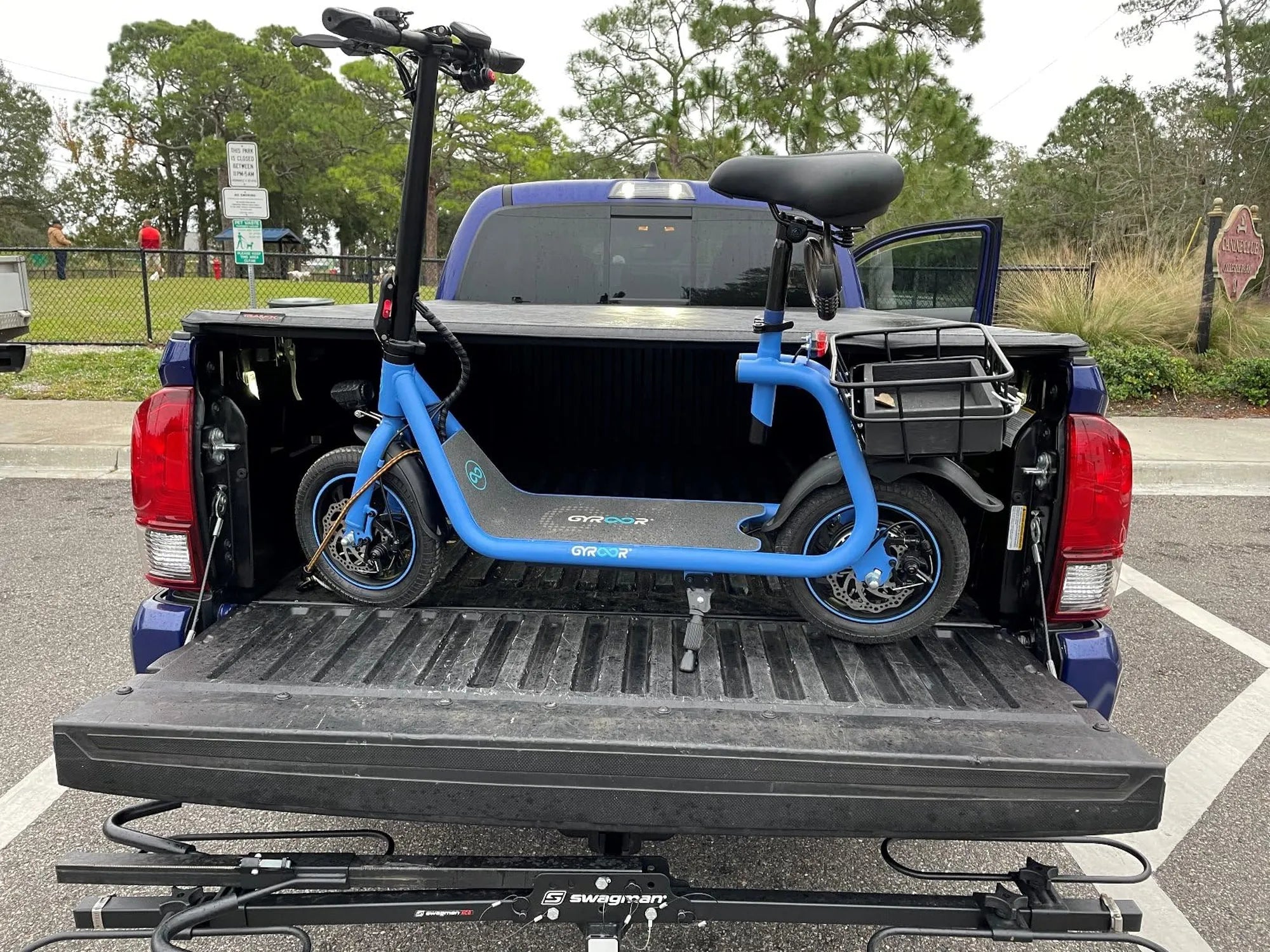
Introduction: Why Waterproofing is Non-Negotiable for Your E-Scooter
Your daily commute shouldn't be canceled by a sudden downpour. A waterproof electric scooter transforms from a fair-weather convenience into a dependable, year-round transportation solution. This guide provides the essential knowledge to select, use, and maintain a scooter that won't leave you stranded.
Water damage is the leading cause of premature failure in unprotected e-scooters, affecting critical components like the battery, motor, and controller. Investing in a properly waterproofed model protects your investment and ensures consistent performance. It's a decision that directly impacts safety, reliability, and total cost of ownership.
We will decode technical specifications, highlight crucial design features beyond marketing claims, and outline the necessary care routines. By the end, you'll understand why Waterproof Electric Scooters: The Ultimate Guide to All-Weather Commuting is your roadmap to confident, uninterrupted riding.
Understanding IP Ratings: Decoding the Waterproofing Code
The Ingress Protection (IP) code is an international standard (IEC 60529) that classifies the degree of protection provided by an enclosure. For electric scooters, it's your primary objective metric for dust and water resistance. The code consists of the letters "IP" followed by two digits.
The first digit indicates protection against solid objects like dust and debris, on a scale of 0-6. A '5' means dust-protected (limited ingress, no harmful deposits), while a '6' is dust-tight. The second digit rates protection against liquids, on a scale of 0-9K. Common ratings for scooters include IPX4 (splash resistance from all directions) and the more robust IPX5 (protection against water jets from any direction).
An 'X' in place of a digit means the enclosure was not rated or the protection is not specified for that type of ingress. A scooter advertised as "water-resistant" without a stated IP rating offers no verifiable level of protection. Always demand the specific IP rating.
IPX5 vs. IP54: What's the Difference for Riders?
This distinction is critical for real-world use. An IPX5-rated scooter is tested to withstand water jets (12.5 liters per minute at 30 kPa from a 6.3mm nozzle) from any direction for at least 3 minutes. It's designed for heavy rain and riding through wet streets. However, the 'X' means its dust resistance is not formally guaranteed.
An IP54-rated scooter provides defined protection against both elements. The '5' denotes protection against limited dust ingress, and the '4' protects against water splashes from all directions. It's suitable for light rain and dusty urban environments. For most commuters, IPX5 offers superior water protection, while IP54 provides a more balanced, all-around defense.
Choosing between them depends on your environment. If your primary concern is heavy rain and puddles, IPX5 is the stronger choice for waterproofing. If you frequently encounter dusty construction sites or dry, sandy paths in addition to rain, the dust protection of an IP54 model may be beneficial.
Key Waterproof Features Beyond the IP Rating
A high IP rating is the result of integrated design, not a single feature. It signifies that all potential entry points have been systematically sealed. Understanding these points helps you assess a scooter's true all-weather capability during your research and maintenance.
The deck seal is the first line of defense. A well-designed deck has a continuous, compressed rubber gasket between the deck plate and the chassis, preventing water from seeping into the internal compartment where the battery and controller often reside. A non-slip, textured surface also improves safety in wet conditions.
Cable management is equally important. All wiring harnesses—for the throttle, brakes, lights, and display—must enter the sealed compartments through waterproof gland connectors. These connectors compress around the cables to form a tight seal. Simply having a rubber flap over a port is insufficient for sustained wet-weather riding.
Battery and Electronics Protection
The battery pack and motor controller are the most expensive and sensitive components. True waterproofing involves housing them in a sealed, hard-shell enclosure, often with a secondary internal sealant like silicone or epoxy potting on the controller's circuit board. This conformal coating protects against corrosion from humidity and minor condensation.
Brands like Gyroor emphasize the use of UL-certified battery packs, which is a critical safety benchmark. These batteries undergo rigorous testing for stability and safety under various conditions. In a waterproof scooter, this certification adds a layer of confidence that the battery's internal management system (BMS) is robust enough to handle the environmental stresses of all-weather use.
The charging port must have a secure, rubberized cover that clicks firmly into place. A loose or flimsy cover is a common failure point. Some advanced models feature magnetic waterproof charging ports that only connect when the correct charger is attached, eliminating the need for a physical cover that can wear out.
Deck, Tire, and Brake Considerations
Tire choice significantly impacts wet-weather performance. Pneumatic (air-filled) tires generally offer better traction on wet surfaces due to their ability to conform to the road and channel water away. However, they are susceptible to punctures. Solid or honeycomb tires eliminate flats but can be more slippery in the rain and offer a harsher ride.
Look for tires with siped tread patterns—small grooves or cuts in the rubber blocks that improve grip on wet pavement. Brake performance is also altered by water. Disc brakes, especially hydraulic ones, tend to maintain stronger stopping power in the wet compared to drum brakes or regenerative electronic brakes alone, which can see reduced effectiveness.
Fenders are a practical but crucial component. Long, wide fenders that closely follow the tire's contour are far more effective at preventing road spray from soaking the deck and rider. Short, stylish fenders often leave the rider's back and the scooter's underside exposed to grimy water.
The Gyroor Advantage: Engineered for Confidence in Any Weather
With over 100,000 riders across North America and Europe, Gyroor has built a reputation for reliable, performance-oriented personal electric vehicles. A core pillar of this reliability is a design philosophy that prioritizes real-world durability, making their scooters a benchmark for all-weather commuting.
This commitment is demonstrated by a consistent, clearly stated IPX5 water-resistant design across their model lineup. This uniformity means commuters can choose a scooter based on their desired speed, range, and portability, with the confidence that the fundamental waterproof integrity is not compromised. There's no need to decipher varying fine print between models.
Coupled with a comprehensive 1-year warranty and a 4.5/5 average customer rating, this approach provides tangible peace of mind. Riders know their scooter is built to handle the unexpected shower and the daily demands of a practical commute, backed by a brand that stands behind its waterproofing claims.
UL-Certified Battery Safety in Damp Conditions
Gyroor's use of UL 2271 or UL 2849 certified battery packs is a non-negotiable safety feature, especially for waterproof scooters. These certifications require the battery to pass crush, shock, overcharge, short-circuit, and immersion tests. While a waterproof scooter should prevent immersion, this certification ensures the battery's internal cells and BMS are inherently safer.
In the context of waterproofing, this is vital. Should a minor seal failure occur or condensation build up over time, a UL-certified battery pack is engineered with higher safety margins to prevent thermal runaway—a critical consideration for a device used in variable weather. It’s an added layer of protection that goes beyond the IP rating alone.
These batteries are also rated for 500+ charge cycles while maintaining performance, ensuring that the scooter's range and reliability last for years, even with frequent use in less-than-ideal conditions. This longevity is a key part of the value proposition for a true all-weather vehicle.
Maintenance and Care for Your Waterproof Electric Scooter
"Waterproof" is not synonymous with "submersible" or "maintenance-free." Proactive care is essential to preserve the scooter's seals and electronic components over its lifespan. A simple, consistent post-ride routine can prevent most issues related to wet-weather riding.
Always refer to your owner's manual for manufacturer-specific advice. However, universal principles apply. The goal is to remove standing water, road salt, and debris that could degrade seals or cause corrosion. Neglecting this routine is the fastest way to void your waterproofing protection.
Post-Ride Rituals for Wet Weather
After riding in rain or on wet roads, take five minutes for these steps. First, use a dry microfiber or absorbent towel to wipe down the entire scooter, paying special attention to the deck, stem, and all seams. This removes surface water and grime.
Second, gently tip the scooter to drain any water pooled in the deck seams or around the fender mounts. Avoid using a high-pressure hose or spray directly on seals, joints, or the charging port, as forced water can exceed the IP rating's parameters. Never submerge any part of the scooter for cleaning.
Most importantly, let the scooter air-dry completely in a well-ventilated, dry area before plugging it in to charge. Charging a scooter or battery with residual moisture in or around the ports is a significant safety hazard and can cause irreparable damage to the electronics.
Long-Term Seal and Component Checks
Every few months, or after a particularly harsh season, perform a detailed inspection. Check all rubber gaskets around the deck cover and cable entries for signs of cracking, brittleness, or deformation. These seals can degrade with UV exposure and temperature cycles.
Inspect the charging port cover for a tight fit and integrity. Listen for any sloshing sounds from inside the deck, which could indicate a compromised seal and internal water accumulation. Check tire tread for adequate depth to maintain wet-weather traction and ensure brake pads are not overly worn.
If you discover a damaged seal, contact the manufacturer or a certified technician for repair. Attempting a DIY fix with generic sealant may not restore the original IP rating and could trap moisture inside, leading to corrosion.
Comparative Analysis: Waterproof Electric Scooter Capabilities
The table below compares key attributes relevant to all-weather commuting across different scooter classifications. This data illustrates how design choices impact real-world performance in wet conditions.
| Feature / Scooter Type | Entry-Level Commuter (e.g., Basic Models) | Performance All-Weather (e.g., Gyroor Z8 Pro) | High-Performance Off-Road |
|---|---|---|---|
| Typical IP Rating | IPX4 or Unspecified | IPX5 | IP54 or IPX5 |
| Primary Water Protection | Light splashes only | Sustained heavy rain, water jets | Heavy rain, dust, mud splashes |
| Battery Certification | Often unspecified | UL-Certified (Standard) | Varies; high-end models use UL |
| Tire Type (Typical) | Solid/Honeycomb | Pneumatic or Advanced Solids | Large, knobby pneumatic |
| Wet Traction | Fair to Poor | Good to Very Good | Excellent (with appropriate tires) |
| Brake System | Electronic + Foot/Drum | Dual Disc Brakes (Mechanical/Hydraulic) | Dual Hydraulic Disc |
| Suitability for Daily Wet Commute | Low - Risky in rain | High - Designed for it | Moderate - Overbuilt for pavement |
This comparison shows that a dedicated all-weather commuter scooter strikes an optimal balance, offering certified waterproofing, safety-focused components, and practical features for daily use, often at a more accessible price point than specialized off-road machines.
FAQ: Your Waterproof E-Scooter Questions Answered
Q: Can I ride my IPX5 scooter through a deep puddle?
A: Exercise extreme caution. The IPX5 test simulates water jets, not immersion. Riding through a puddle deeper than the bottom of your deck risks submerging the motor, wheel bearings, and other unsealed components. Water deeper than 2-3 inches (roughly hub height) should be avoided to prevent damage not covered by the waterproof rating.
Q: Does the 1-year warranty cover water damage?
A: For brands like Gyroor that explicitly rate their scooters (e.g., IPX5) and include comprehensive warranty terms, water damage incurred during normal use within that rating's scope is typically covered. However, warranties void coverage for submersion, neglect, or using a high-pressure washer. Always review the specific warranty document for your model.
Q: How does water exposure affect my scooter's range and battery life?
A: Proper waterproofing prevents direct damage. However, riding in wet conditions inherently increases rolling resistance and requires more energy, potentially reducing range by 10-20% on a given trip. Cold, wet weather also temporarily reduces lithium-ion battery efficiency. Long-term battery life is protected by the waterproof seals, preventing the corrosion that truly shortens lifespan.
Q: Is it safe to store my waterproof scooter outdoors?
A: Not recommended for extended periods. While built to withstand rain during use, constant UV exposure degrades plastic, rubber seals, and tires. Temperature extremes and humidity can also stress electronics. For longevity, store your scooter in a dry, temperature-controlled environment like a garage or indoors.
Q: Can I upgrade a non-waterproof scooter to be waterproof?
A: Effectively, no. True waterproofing requires integrated design from the outset: sealed compartments, potted electronics, waterproof connectors, and gasketed covers. Aftermarket sprays or silicone sealant are unreliable, can trap heat, and may void your warranty. It is safer and more cost-effective to invest in a scooter designed for all-weather use from the start.
Conclusion: Investing in Peace of Mind for Your Daily Commute
Choosing a waterproof electric scooter is a practical decision that prioritizes reliability over the long term. It transforms your commute from a weather-dependent activity into a consistent, dependable routine. The knowledge of IP ratings, sealed components, and proper maintenance empowers you as a rider, ensuring you get the full value and service life from your vehicle.
The data is clear: scooters engineered for all-weather conditions, featuring robust IPX5 or IP54 ratings, UL-certified batteries, and considered designs for wet traction, provide a fundamentally different ownership experience. They reduce anxiety about the forecast and eliminate the hidden costs of water-related repairs.
For a commute that doesn't stop for rain, explore scooters built with this purpose in mind. Browse the full Gyroor collection at gyroorboard.com to find a model that matches your range, speed, and portability needs, backed by the confidence of certified waterproofing and a trusted warranty. Your journey, regardless of the weather, awaits.
Electric Scooters for Kids Under $100: Affordable Fun and Safety Tips
Are Electric Scooters Allowed on the Road? A Complete Guide to Laws and Safety