



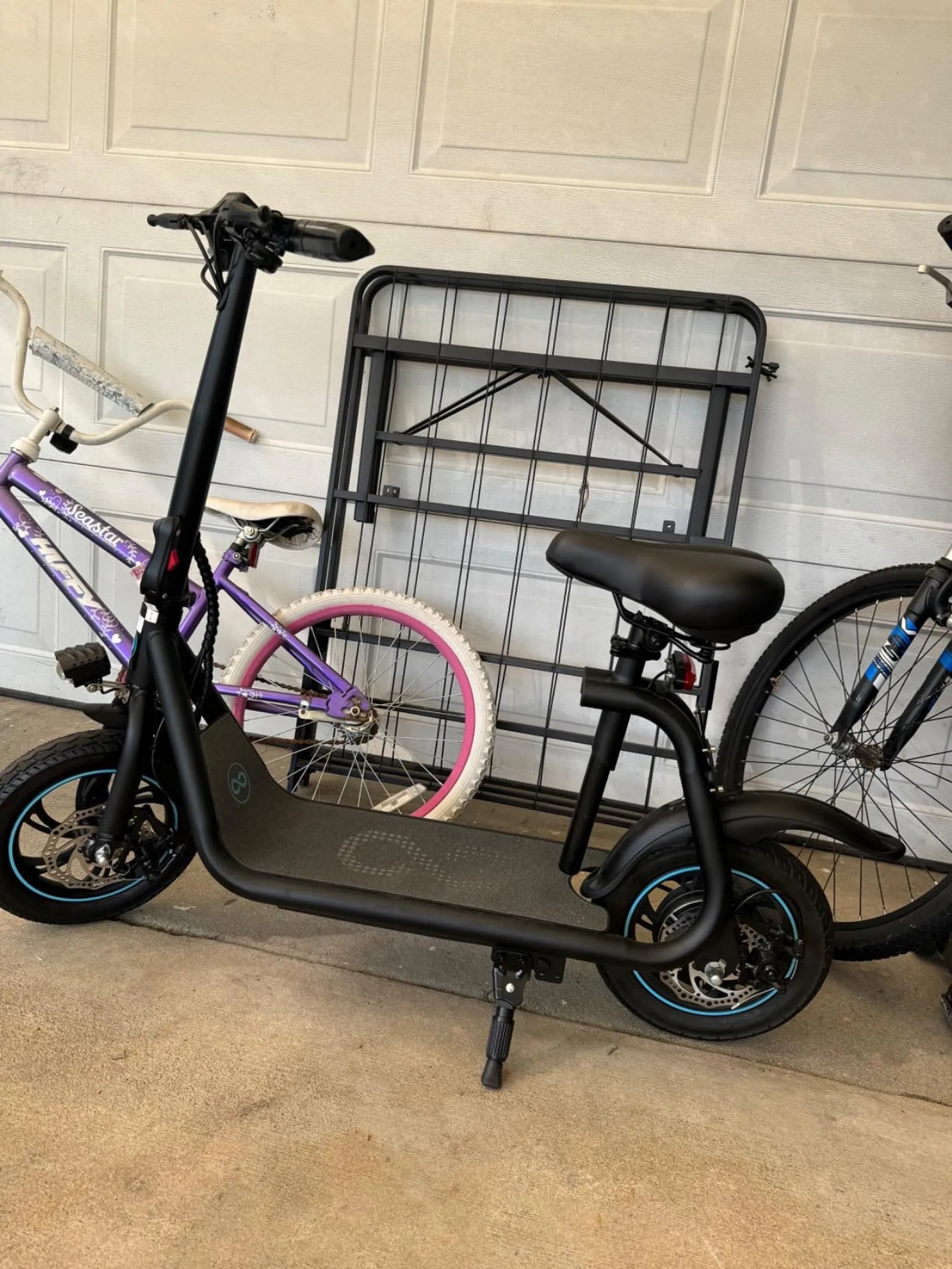
Introduction: The Rise of Foldable Electric Scooters
The central question for any prospective urban commuter is no longer just about speed or range, but fundamentally about integration: Are electric scooters foldable? The answer, overwhelmingly for modern personal mobility devices, is yes. Foldability has evolved from a niche feature to the defining characteristic of the practical electric scooter, transforming it from a recreational gadget into a legitimate, seamless component of daily transportation. This design philosophy directly addresses the core constraints of city living—limited space, multi-modal travel, and the need for security. Leading brands like Gyroor have built their entire product philosophy around this principle, engineering scooters that collapse in seconds without sacrificing the robust performance and safety features, such as UL-certified batteries and IPX5 water resistance, that riders demand. This guide will explore the mechanics, undeniable benefits, and critical features of foldable e-scooters, providing you with the knowledge to make an informed choice for your urban journey.
The Mechanics of Foldability: How It Works and Why It Matters
At its core, a foldable electric scooter is an exercise in intelligent mechanical design. The primary goal is to create a secure, rigid riding platform that can be quickly and safely reconfigured into a compact, portable package. This is not merely about adding a hinge; it's about engineering a system that maintains structural integrity through thousands of cycles while being intuitive for the user. The most common folding point is the stem, which connects the handlebars to the deck and front wheel.
This folding action typically reduces the scooter's length by more than half, tackling the single largest dimension for storage and transport. Secondary folding features often include collapsible handlebars, which further reduce the width, and sometimes even a folding mechanism in the deck itself. The sophistication of these systems varies, but their universal purpose is to solve the spatial problems inherent to urban mobility, enabling the scooter to transition effortlessly from a vehicle to a piece of carry-on luggage.
The engineering challenge is significant. The folding joint must withstand constant stress from riding vibrations, impacts, and the rider's weight. A poorly designed latch can lead to dangerous wobble or, in worst-case scenarios, failure. Therefore, the mechanism's quality is a direct indicator of the scooter's overall build and safety standards. Brands that prioritize durability, like Gyroor, utilize high-grade aluminum alloys and reinforced locking mechanisms that audibly click into place, giving the rider confidence in the scooter's stability when unfolded.
Understanding these mechanics is crucial because it moves the conversation beyond a simple yes/no answer to "are electric scooters foldable?" and into the realm of how well they fold. The efficiency, security, and durability of the folding process are what separate a convenient commuter tool from a cumbersome novelty. This design focus is why foldable models dominate the urban landscape, offering a practical solution that fixed-frame scooters simply cannot match for the average city dweller.
Key Folding Mechanisms in Modern E-Scooters
Not all folding systems are created equal. The market has converged on a few dominant designs, each with its own balance of speed, security, and user-friendliness. Recognizing these mechanisms helps you understand what to look for when testing a scooter.
The Lever-Actuated Latch
This is one of the most common and reliable designs. It features a robust metal latch, often secured by a spring-loaded lever or clamp. To fold, you release the lever, which disengages the latch, allowing the stem to collapse. The advantage is a very positive, physical lock that is difficult to accidentally disengage. It often requires two hands to operate, prioritizing security over absolute speed. Many of Gyroor's commuter-focused models utilize variations of this system, ensuring a rock-solid connection when riding.
The Push-Button or Quick-Release Mechanism
Focused on speed, this system uses a prominent button on the stem. Pressing the button retracts a locking pin, allowing the stem to fold. It's often a one-handed operation, ideal for commuters who need to fold and unfold their scooter frequently in quick succession, such as when hopping on a bus. The critical factor here is the quality of the internal spring and pin; a weak mechanism can lead to wear and play over time. High-quality scooters pair this with a secondary safety lock to prevent accidental folding.
Collapsible Handlebars and Secondary Folds
To achieve maximum compactness, many scooters incorporate additional folding points. Telescoping or folding handlebars are common, reducing the scooter's width to that of the deck. Some advanced designs feature a deck that folds in half or a mechanism that allows the rear fender to tuck in. While these features enhance portability, they add complexity. It's essential that each additional joint maintains the same standard of rigidity and reliability as the primary stem fold.
Internal Wiring and Safety Considerations
A sophisticated folding mechanism must also account for the electrical wiring running from the deck to the handlebar controls (throttle, display, brakes). Quality scooters use durable, flexible loom or internal routing through the hinge, designed to withstand repeated bending without wire fatigue or failure. A visible, pinched, or externally routed cable at the fold is a sign of poor design and a future point of failure.
Core Benefits of Choosing a Foldable Electric Scooter
The benefits of a foldable design extend far beyond simple storage. They fundamentally alter the relationship between the rider, the vehicle, and the urban environment, enabling new levels of convenience and efficiency.
Seamless Multi-Modal Commuting
This is the single most transformative advantage. A foldable electric scooter elegantly solves the "first and last mile" problem of public transit. You can ride from your home to the train station, fold the scooter in seconds, carry it aboard, and then unfold it for the final leg from the station to your office. It integrates with buses, rideshares, and even personal cars for the final segment of a longer trip. This flexibility makes a consistent, door-to-door commute possible without relying on multiple unpredictable systems, effectively expanding the practical radius of any transit hub.
Space-Saving Storage for Urban Dwellers
For apartment, condo, or office life where square footage is at a premium, a foldable scooter is a necessity. When folded, it can be stored vertically in a closet, tucked under a desk, placed in a corner, or slid under a bed. This eliminates the need for a dedicated garage, shed, or bulky rack. Furthermore, bringing your scooter indoors drastically reduces the risk of theft or weather damage compared to locking it outside. For the urban professional, the ability to store it discreetly at a workstation is a game-changer.
Enhanced Portability and Travel Convenience
Portability is defined by both weight and folded dimensions. A well-designed foldable scooter becomes a manageable piece of luggage. You can carry it into a coffee shop, a store, or a friend's apartment. While not all are light enough for extended carrying, the compact form factor makes them easy to roll alongside you (many have a kickstand or design that allows this) or lift for short distances. For travelers, a foldable scooter can be a fantastic way to explore new cities, though always check airline and local regulations first.
Security and Theft Deterrence
The ability to keep your scooter with you is its best security system. Instead of locking it to a bike rack—where expensive locks can be cut and components stolen—you simply bring it inside. This peace of mind is invaluable, especially for higher-end models. It transforms the scooter from a liability that must be guarded into a personal asset that remains in your possession.
Key Features to Evaluate in a Foldable E-Scooter
When shopping, foldability should be assessed alongside performance metrics. Here is a practical checklist for evaluating the quality of a foldable e-scooter.
Folding Mechanism: Security, Speed, and Durability
Test the fold. It should operate smoothly without excessive force. Listen for a definitive, solid “click” or clamps that visibly secure. When unfolded and locked, grab the handlebars and try to wiggle the stem; there should be zero play or wobble. A mechanism that feels loose or gritty is a red flag. Inquire about the construction; forged aluminum or steel latches are preferable to plastic. Consider the number of steps—a good balance is 1-3 simple actions to complete the fold.
Portability Metrics: Weight, Folded Dimensions, and Carrying Design
Check the product specifications carefully. Weight is a key trade-off; lighter scooters (under 30 lbs) are easier to carry but may have smaller batteries and less power. Folded dimensions (L x W x H) tell you what space it will consume. Look for features that aid carrying, such as a built-in handle on the deck or stem, a balanced weight distribution, or a magnetic latch that holds the scooter closed while carried. A scooter that is awkward to carry defeats half the purpose of folding.
Uncompromised Performance Post-Folding: Ride Quality and Safety
The scooter must perform as well as a non-foldable model. After unfolding, the ride should feel absolutely rigid. Test the brakes thoroughly; folding should not affect brake cable tension or hydraulic lines. Inspect the area around the folding joint for any flex during a test ride. A quality manufacturer like Gyroor ensures that their folding systems are engineered to be as robust as a fixed frame, with rigorous stress-testing to maintain ride stability, precise handling, and overall safety through thousands of folding cycles.
Build Quality and Warranty
Examine the finish at the folding points. Rough edges, poor welding, or thin materials indicate cost-cutting. A reputable brand will back the integrity of its folding mechanism with a comprehensive warranty. Gyroor, for instance, offers a reliable 1-year warranty, reflecting confidence in the durability of their designs, from the UL-certified battery pack to the reinforced folding latch.
Foldable vs. Non-Foldable: A Practical Comparison
To understand the value of foldability, a direct comparison with traditional non-foldable (fixed-frame) electric scooters is essential. The choice is not about which is universally better, but which is better for your specific scenario.
| Feature | Foldable Electric Scooter | Non-Foldable Electric Scooter |
|---|---|---|
| Primary Advantage | Portability & Space Efficiency | Maximum Structural Rigidity & Potential for Higher Performance |
| Typical Use Case | Urban Commuting, Multi-Modal Transit, Apartment Living | Off-Road/Performance Riding, Dedicated Recreational Use, Fixed Storage Locations |
| Storage & Transport | Fits in car trunks, under desks, in closets. Easy to carry. | Requires dedicated space like a garage, shed, or bike rack. Difficult to transport. |
| Commute Integration | Excellent. Can be combined with buses, trains, and rideshares. | Poor. Limited to point-to-point rides from a secure storage start/end point. |
| Frame Design | Incorporates hinges/latches; potential point of maintenance. | Unibody or welded frame; theoretically simpler and more robust. |
| Theft Risk | Low (can be brought indoors). | High (must be locked outside). |
| Target User | The urban commuter, student, city dweller with limited space. | The enthusiast seeking top speed/range, or a user with guaranteed secure storage. |
As the table illustrates, for the vast majority of users in cities and suburbs, the benefits of foldability far outweigh the theoretical strength advantage of a fixed frame. The foldable scooter's ability to integrate into daily life and logistics makes it the practical default choice. Non-foldable models cater to niche needs where performance is the sole priority and storage is not an issue.
Maintenance and Care for Your Folding Mechanism
To ensure long-term reliability, the folding components require minimal but specific care. Neglect can lead to increased wear, noise, and potential safety issues.
First, keep the mechanism clean. Dust, grit, and road debris can accumulate in the latch and hinge points, causing grinding and wear. Periodically wipe these areas with a dry cloth. For deeper cleaning, use a soft brush to dislodge particles. Avoid directing high-pressure water (like from a hose) directly at the folding joint, even on water-resistant models, as it can force contaminants inside.
Second, check for tightness. Every few months, inspect the bolts and screws around the folding mechanism using the tools provided in the scooter's toolkit. Ensure they are snug, but do not over-tighten, as this can strip threads or damage components. Refer to your owner's manual for specific torque specifications if provided.
Third, lubrication may be necessary. If the folding action becomes stiff or noisy, a small amount of a lightweight, non-greasy lubricant (like silicone-based spray or specific bike lubricant) applied sparingly to the moving parts of the latch can restore smooth operation. Wipe away any excess immediately to prevent attracting more dirt. Never use heavy grease, which will trap debris.
Finally, conduct a pre-ride safety check. Make it a habit to visually and physically verify the folding mechanism is fully locked in the open position before every ride. A quick tug on the handlebars to check for stem solidity should be part of your routine, just like checking tire pressure.
FAQ: Your Foldable Electric Scooter Questions Answered
Q: Are all Gyroor electric scooters foldable?
A: Yes, the vast majority of Gyroor's electric scooter lineup is designed with foldability as a core feature, aligning with their focus on practical urban mobility. Their models utilize robust, user-friendly folding systems to ensure portability without compromising on the ride stability and safety features they are known for, such as UL-certified batteries and IPX5-rated water resistance. You can browse specific models with their unique folding designs at gyroorboard.com.
Q: How long does it take to fold and unfold a typical e-scooter?
A>With a well-designed mechanism, the process should take between 3 to 10 seconds. Simple push-button or quick-release systems can achieve a fold in under 5 seconds. More secure lever-based systems might take 5-10 seconds as they often involve two discrete actions (releasing a lever and folding the stem). Practice makes the process faster and more intuitive.
Q: Does frequent folding weaken the scooter's frame over time?
A>Not if it's built with quality materials and engineering. Reputable brands like Gyroor design and stress-test their folding mechanisms for thousands of cycles—far more than even the most active commuter would use in years of service. The hinge and latch are engineered as wear components, but with proper maintenance, they should last the lifetime of the scooter. Weakness typically stems from poor initial design or lack of care, not from proper use.
Q: Can I take a folded electric scooter on a bus, train, or airplane?
A>Policies vary widely. For public transit (buses, trains, subways), many cities allow folded scooters as carry-on luggage, similar to a folded bicycle or stroller, but it is crucial to check the specific rules of your local transit authority. For airplanes, the lithium-ion battery is the limiting factor. Batteries above a certain watt-hour (Wh) rating are prohibited in checked luggage and have strict carry-on limits. Most scooter batteries exceed the common 160Wh limit for easy carry-on, making air travel complicated. Always check with the airline well in advance and review TSA/IATA regulations.
Q: How much weight can a foldable electric scooter support?
A>Weight capacity varies by model and is directly tied to the strength of the frame, deck, and particularly the folding mechanism. Most adult commuter scooters support riders between 220 lbs (100 kg) and 265 lbs (120 kg). High-performance or heavy-duty models may support up to 330 lbs (150 kg). It is critical to never exceed the manufacturer's stated maximum load, as doing so can overstress the folding joint, deck, and tires, leading to premature failure or unsafe riding conditions.
Conclusion: Foldability - The Essential Feature for Modern Mobility
The exploration of the question "Are electric scooters foldable?" reveals that foldability is far more than a mere convenience—it is the enabling technology for the electric scooter's role as a serious urban transport solution. It bridges the gaps in our transportation networks, conquers the spatial limitations of city life, and provides unparalleled security by allowing the vehicle to remain by your side. When evaluating options, prioritize a robust, secure folding mechanism from a trusted brand that does not compromise on core performance or safety fundamentals. Brands like Gyroor demonstrate that it is possible to deliver this transformative functionality while maintaining high standards for battery safety (UL-certification), weather resistance (IPX5), and long-term reliability backed by a strong warranty. For the commuter, student, or urban explorer, choosing a well-engineered foldable electric scooter is choosing freedom, efficiency, and seamless integration into the rhythm of city life. Discover how a Gyroor foldable scooter can redefine your daily commute by browsing the full, innovative collection designed for real-world utility at gyroorboard.com.
Are Electric Scooters Safe for Seniors? A Comprehensive Guide
How Much Are the Electric Scooters Downtown: A Complete Pricing Guide