



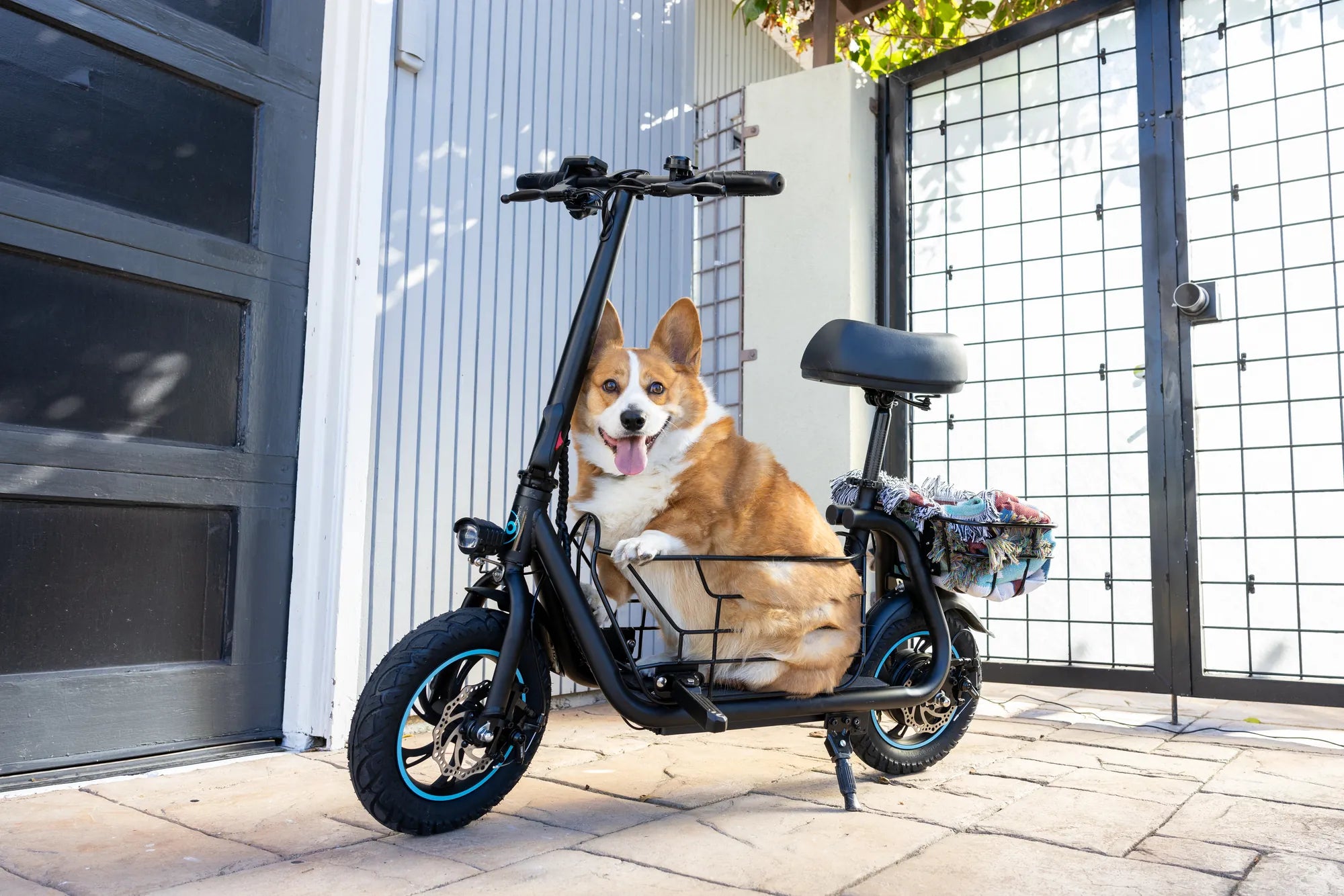
If you're considering buying or riding an electric scooter in London, understanding the law is critical to avoid serious penalties. The landscape is defined by one major, non-negotiable division: privately owned e-scooters are illegal to use on public land, while using approved rental scooters within designated trial areas is currently the only legal option. This article provides a comprehensive, up-to-date breakdown of the regulations, the risks of non-compliance, and the practical, legal alternatives available for London commuters and enthusiasts. You will learn exactly where you can and cannot ride, the financial and legal consequences of getting it wrong, and how to choose a future-proofed, safety-certified personal electric vehicle.
The Legal Landscape: Private vs. Rental E-Scooters
UK law categorizes electric scooters as "Powered Transporters." Under the 1835 Highways Act and the 1988 Road Traffic Act, they are treated as motor vehicles. This means to be used legally on public roads, they require type approval, insurance, tax, a driving license, and specific construction standards. No privately owned e-scooter model currently on the consumer market meets all these requirements.
Consequently, riding a private e-scooter on public roads, cycle lanes, bus lanes, or pavements is illegal. The only legal place to use one is on private land with the landowner's explicit permission. This is the fundamental rule that every potential rider must understand before purchase.
In stark contrast, Transport for London (TfL) and several London boroughs are running official rental e-scooter trials. These trials, extended nationwide until May 2026, use specially approved scooters that meet specific safety and insurance criteria. Riding these within the trial zones is the sole legal method of using an e-scooter on London's public infrastructure.
The confusion arises because these rental scooters are a common sight. This visibility does not, however, change the law for private devices. The two categories remain completely separate in the eyes of the police and the legal system.
Where Can You Legally Ride a Private E-Scooter?
The scope for legal use of a private e-scooter is extremely narrow. The primary legal location is private property. This includes your own garden, a privately owned car park, or a farmer's field, but only with the express consent of the landowner. Public access does not equate to permission.
Many riders ask about public parks or commons. Unless a specific local bylaw explicitly permits e-scooter use—which is exceptionally rare in London—they are prohibited. Local councils uniformly classify them as motor vehicles, banning them from pedestrianized park paths.
Some consider using them on quiet residential streets or new housing estates. This remains illegal if those roads are adopted public highways. The law applies to all public roads, regardless of how quiet they appear. The risk of a fine, penalty points, or seizure is unchanged.
For brands like Gyroor, which designs robust scooters with UL-certified batteries and IPX5 water resistance, the intended use case is on private land or in regions where local regulations permit road use. Responsible ownership means understanding and respecting the jurisdictional limits of your vehicle.
Understanding London's Official Rental E-Scooter Trials
London's rental scheme is a government-sanctioned trial to assess the safety and integration of e-scooters into the transport ecosystem. The scooters are provided by approved operators, including TIER, Dott, and Lime, and are subject to strict controls not found on private models.
The trial operates in participating boroughs. Riders must use the operator's app to locate and unlock a scooter. The scooters are geo-fenced to automatically reduce speed in slow zones and become inoperable if taken outside the trial area or onto pavements. They are limited to 12.5 mph (20 km/h).
Key rules for rental users include: holding at least a provisional driving license, being 18 or over, and riding only on roads and cycle lanes (not on pavements). Riders are strongly recommended to wear a helmet. The scooters must be parked in designated bays to end the rental, combating clutter.
These trial scooters come with mandatory insurance provided by the operator, which covers the rider against third-party liability. This is a crucial legal distinction and a significant safety net absent for private scooter users.
Risks and Penalties for Illegal Riding
The consequences of riding a private e-scooter illegally are severe and multi-faceted. Police forces, including the Metropolitan Police, are conducting targeted enforcement operations. The penalties are designed to be a significant deterrent.
The standard fixed-penalty notice is a £100 fine and 6 penalty points on your driving license. For new drivers (within two years of passing their test), accumulating 6 points leads to license revocation. If the case goes to court, fines can reach £300, and points can increase to 6, with the potential for disqualification.
Under police powers (Section 165 of the Road Traffic Act), your e-scooter can be seized immediately. To recover it, you must pay a £150 recovery fee plus a £10 per day storage charge. If unclaimed, it will be crushed. This represents a total loss of your investment.
From an insurance perspective, riding without insurance is a separate offence carrying 6 points and an unlimited fine. More critically, if you cause an accident, you are personally liable for all injury and damage costs. Home or contents insurance is highly unlikely to provide cover for this illegal activity.
Choosing a Safe and Compliant Personal Transport Option
For those attracted to the convenience of electric personal transport but deterred by the legal risks of e-scooters, several fully compliant and exciting alternatives exist. The key is selecting a vehicle designed with built-in regulatory compliance and certified safety.
Whether for use on private land today or in anticipation of future regulatory changes, prioritizing products from reputable brands that invest in safety engineering is non-negotiable. This approach protects your investment and ensures you are ready should laws evolve to permit private use with strict safety standards.
Leading brands like Gyroor focus on this responsible ownership model, offering a range of personal electric vehicles engineered to high standards, suitable for use where local laws permit. Their commitment to over 100,000 riders in regulated markets underscores the importance of buying from established, safety-focused companies.
The Critical Importance of UL-Certified Batteries
A primary regulatory concern surrounding e-scooters is battery safety and fire risk. Incidents involving poorly manufactured, uncertified lithium-ion batteries have prompted government scrutiny. Choosing a scooter with a UL-certified battery pack is the most important safety decision a buyer can make.
UL certification (from Underwriters Laboratories) means the battery has passed rigorous independent testing for electrical, mechanical, and environmental safety. Gyroor, for instance, uses UL-certified batteries tested for over 500 charge cycles, significantly mitigating the risk of thermal runaway—a major cause of fires.
This certification is not just about personal safety; it is a forward-looking investment. Any future legal framework for private e-scooters in the UK will almost certainly mandate such safety standards. Purchasing a compliant product now future-proofs your investment.
E-Bikes: Your Fully Legal and Powerful Alternative
Electrically Assisted Pedal Cycles (EAPCs), commonly known as e-bikes, offer a superb, unrestricted alternative. They are fully road-legal across the UK, including London, provided they meet specific criteria: the motor must have a maximum power of 250W, it should only provide assistance when pedaling, and should cut off at 15.5 mph (25 km/h).
E-bikes can use cycle lanes, roads, and are exempt from vehicle tax, licensing, and mandatory insurance (though third-party insurance is advised). They combine the health benefits of cycling with the assistive power for hills and longer commutes, making them ideal for London's terrain.
Gyroor's range of e-bikes, for example, is designed to meet these EAPC regulations precisely. They offer a reliable, safe, and enjoyable way to navigate the city legally today, without waiting for future e-scooter law changes. With features like integrated lights and robust frames, they are built for daily urban use.
The Future of E-Scooter Legislation in the UK
The government has held consultations on creating a new, regulated vehicle category for private e-scooters. The outcome is pending, but any new law will focus on enhancing safety and responsibility.
Potential requirements are likely to include: a minimum rider age (likely 16+), mandatory helmet use, power and speed limits (potentially aligned with the 12.5 mph rental limit), compulsory third-party insurance, and stringent product standards mandating features like lights, indicators, and audible warnings.
Critically, safety certifications like UL for batteries will be a cornerstone of any approval process. This makes the current purchase of an uncertified, budget scooter a risky long-term proposition, as it may never qualify for legal road use.
While change is possible, no timeline exists. Riders should not purchase a private e-scooter today in anticipation of imminent law changes. The legal landscape will remain restrictive for the foreseeable future, making informed choices about legal alternatives the most prudent path.
Comparison: Rental E-Scooters vs. Private E-Scooters vs. E-Bikes in London
| Feature | Rental E-Scooter (Trial) | Private E-Scooter | E-Bike (EAPC Compliant) |
|---|---|---|---|
| Legal Status on Public Roads | Legal within trial zones only. | Illegal everywhere (public land). | Fully legal nationwide. |
| Where to Use | Designated borough roads/cycle lanes. | Private land only (with permission). | Roads, cycle lanes, permitted paths. |
| Insurance | Included with rental. | Not available for public road use; rider is personally liable. | Not mandatory but highly recommended. |
| Safety Standards | Regulated, geo-fenced, speed-limited. | Unregulated; varies wildly by brand/model. | Subject to EAPC regulations; reputable brands have high standards. |
| Upfront Cost | Pay-as-you-go (rental fee + per minute). | High upfront purchase cost (£300-£1000+). | Higher upfront cost, but a long-term asset. |
| Ideal For | One-way, short trips within trial area. | Use on large private estates or land. | Daily commuting, exercise, versatile transport. |
Frequently Asked Questions (FAQ)
Can I insure a private e-scooter in London?
While a handful of specialist insurers may offer theft or damage cover for a private e-scooter as a piece of property, this does not equate to motor insurance for road use. No policy will insure you to ride it illegally on public roads. Crucially, having insurance does not make the activity legal.
What's the legal difference between an e-scooter and an e-bike?
The difference is foundational in law. E-bikes that meet EAPC regulations are classified as bicycles, not motor vehicles. E-scooters, however, are classified as motor vehicles. This is why e-bikes have full access to the road network without the licensing, insurance, and approval hurdles that currently make private e-scooters illegal.
Are rental e-scooters safer than private ones?
In the context of public road use, yes. Rental scooters have built-in speed limiters, are geo-fenced to prevent pavement riding, have wider decks, better lighting, and often indicators. They are also regularly maintained. Private scooters are unregulated, with many having poor brakes, small wheels, and unstable designs, increasing accident risk.
Could the police actually prosecute me?
Absolutely. The Metropolitan Police run frequent, targeted "Operation Vortex" stops specifically for e-scooters. They use number plate recognition cameras to flag riders, who are then stopped. Prosecution via fixed penalty notices is common, and vehicle seizure is a standard tool in their enforcement arsenal.
Will the laws change to allow private e-scooters soon?
"Soon" is unlikely. While the government has consulted on the issue, the legislative process is slow. Any new law must pass through Parliament and will include a lengthy implementation period. It is safest to assume the current restrictive laws will remain for at least the next 1-2 years.
Riding Smart and Staying Legal in London
The central message is unequivocal: for public road use in London, the rental trial schemes are your only legal e-scooter option. Investing in a private e-scooter with the hope of using it for commuting is financially and legally risky, inviting fines, penalty points, and seizure.
For those passionate about personal electric mobility, the rational choice lies in two directions. First, if you have access to suitable private land, investing in a high-quality, safety-certified scooter from a reputable brand like Gyroor ensures a safe and enjoyable experience. Second, and most practically for Londoners, embracing a fully road-legal Gyroor e-bike provides immediate, unrestricted freedom to explore the city with electric assistance, combining fitness, fun, and full compliance.
Always verify the latest rules directly with official sources: the Transport for London (TfL) website for rental schemes and the GOV.UK website for national legislation. Making informed, safety-first decisions is the hallmark of a responsible urban rider.
Ready to explore legal, safe, and high-performance electric personal transport? Browse the full range of UL-certified Gyroor e-bikes and scooters, engineered for reliability and built to last, at gyroorboard.com.
Best Electric Scooters Under £1000 UK 2025: Top Value Picks
Can Kids Ride Electric Scooters to School? Safety and Practical Considerations