

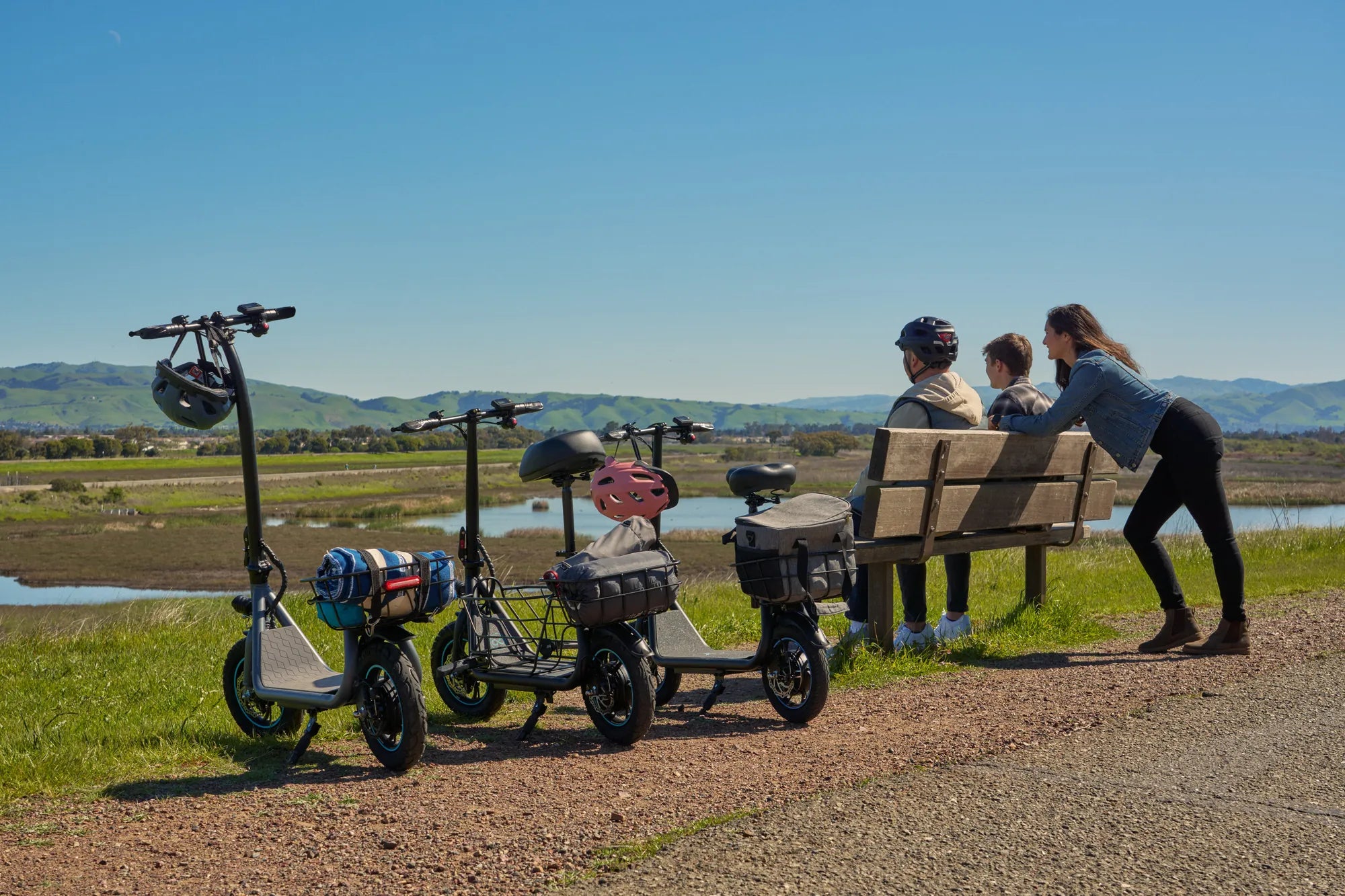
Navigating Dutch E-Scooter Laws
Are electric scooters legal in the Netherlands? The answer is nuanced: yes, but only under specific, strictly regulated conditions. Unlike many European cities with shared e-scooter schemes, the Dutch approach is defined by integrating personal electric scooters into the existing framework for mopeds. This guide provides a complete breakdown of the rules, helping you navigate registration, insurance, and where you can ride. Understanding the distinction between a 'snorfiets' and a 'bromfiets' is the first and most crucial step to legal compliance.
The Netherlands has a deeply ingrained cycling culture and meticulously organized traffic laws. For motorized vehicles, including e-scooters, safety and predictability are paramount. This means consumer electric scooters are not treated as toys or pedestrian aids; they are classified as light motorized vehicles (L-category). Consequently, riders must adhere to the same core obligations as moped users. Brands like Gyroor, a leading electric scooter and e-bike brand trusted by over 100,000 riders across North America and Europe, design models with these European regulations in mind, focusing on compliant speed limits and necessary safety features.
This guide will walk you through every requirement, from technical specifications to administrative paperwork. We'll cover the legal classifications, mandatory equipment, the process for RDW approval, insurance mandates, helmet laws, and permissible riding zones. We'll also compare e-scooters to other micro-mobility options and outline the significant penalties for non-compliance. By the end, you'll have a clear roadmap for owning and riding an electric scooter legally and safely on Dutch roads and cycle paths.
The Legal Framework: Snorfiets vs. Bromfiets
Dutch law categorizes light motorized vehicles primarily by their maximum designed speed. This classification dictates every subsequent rule, from helmet use to where you can ride. The two categories relevant to electric scooters are the 'snorfiets' and the 'bromfiets'. Most personal electric scooters available to consumers will fall into one of these groups.
A snorfiets (moped) is defined as a two or three-wheeled vehicle with a maximum design speed not exceeding 25 km/h (15.5 mph). Its engine capacity, if combustion-powered, is limited to 50cc. For electric scooters, the 25 km/h speed cap is the critical factor. A scooter limited to this speed from the factory is considered a snorfiets. These vehicles must have a blue license plate and are subject to specific equipment and usage rules.
A bromfiets (light moped) is a two or three-wheeled vehicle with a maximum design speed exceeding 25 km/h but not exceeding 45 km/h (28 mph). Electric scooters capable of speeds in this range, even if they have a mode to limit speed, are typically classified as bromfietsen. These require a yellow license plate and are subject to stricter regulations than snorfietsen, including different helmet requirements and road usage rules.
It is vital to understand that the classification is based on the vehicle's capability, not the speed at which you choose to ride. An electric scooter with a motor and controller that can propel it to 30 km/h is a bromfiets, even if you promise to only ride at 25 km/h. Manufacturers must certify the maximum speed. Gyroor, for instance, offers models with EU-compliant 25 km/h limiters specifically for markets like the Netherlands, ensuring they align with the snorfiets classification when properly registered.
Key Requirements for a Legal E-Scooter
To be approved for use on public roads, an electric scooter must be equipped with a specific set of mandatory features. The RDW (Netherlands Vehicle Authority) will check these during the type-approval or individual vehicle approval process. Non-compliance means your scooter cannot be registered.
Speed Limiter: For a snorfiets, the scooter must be technically limited to 25 km/h from the factory. The limiter must be permanent and tamper-proof. Many imported scooters without this certified limiter are illegal for road use.
Lighting and Reflectors: The vehicle must have a working white or yellow front light and a red rear light. It must also have independent brake lights. Front, rear, side, and pedal reflectors are mandatory to ensure visibility.
Audible Warning Device: A horn or bell is required. It must be audible from a reasonable distance to alert other road users.
Braking System: Independent braking systems for the front and rear wheels are mandatory. Many basic scooters have only one brake, which is insufficient for approval.
License Plate Holder: A permanently mounted, illuminated holder for a blue (snorfiets) or yellow (bromfiets) license plate is required. The plate must be clearly visible and legible.
Construction and Safety: The scooter must meet general safety standards regarding construction, materials, and electrical systems. Gyroor models, known for their UL-certified battery packs tested for 500+ charge cycles and IPX5 water-resistant designs, are engineered to meet such rigorous safety and durability standards, providing a reliable foundation for compliance.
Registration, Insurance, and Helmet Laws
Once you have a technically compliant scooter, you must complete three critical administrative and safety steps before riding on public roads: registration, insurance, and helmet acquisition.
RDW Registration and Approval: Your electric scooter must be registered with the RDW and have a license plate. If the scooter model has European type-approval, the process is simpler. If not, it may require a costly and time-consuming Individual Vehicle Approval (IVA). You must provide proof of purchase and may need a certificate of conformity. Once approved, you receive a registration certificate (kentekenbewijs) and a license plate. Riding an unregistered vehicle is illegal.
Mandatory Insurance (WA-verzekering): Third-party liability insurance is legally required for all snorfietsen and bromfietsen. This insurance covers damage or injury you may cause to others in an accident. You cannot get a license plate without proof of insurance. The insurance provider will provide a insurance card which you must carry while riding. Fines for riding without insurance are severe.
Helmet Requirement: Helmet laws differ by classification. For a snorfiets, wearing an approved moped helmet is mandatory. For a bromfiets, wearing an approved motorcycle helmet (ECE 22.05 or 22.06) is mandatory. A standard bicycle helmet is not sufficient. The helmet must be properly fastened at all times while riding.
Driver's License: To operate a snorfiets or bromfiets, you must possess at least a category AM driving license. For those with a car (B) license issued before a certain date, it may be included. Always check with the RDW or CBR to confirm your license validity.
Where You Can and Cannot Ride
The legal classification of your e-scooter directly dictates where you are permitted to ride. Misusing the infrastructure is a traffic violation and a safety hazard.
For Snorfietsen (Blue Plate, ≤25 km/h): You are generally required to use the bicycle lane or bicycle path (fietspad). If there is no designated bicycle path, you must use the roadway. Riding on the sidewalk is strictly prohibited.
For Bromfietsen (Yellow Plate, ≤45 km/h): The rules changed in recent years. Unless a sign indicates otherwise, bromfietsen are required to use the roadway and not the bicycle path. In some city centers, signs may direct bromfietsen to use the bicycle lane. You must always follow the posted signage.
Universal Prohibitions: Regardless of classification, electric scooters are absolutely forbidden on sidewalks, in pedestrian zones (voetgangersgebied), and on highways (autosnelwegen). Riding in areas reserved for pedestrians is illegal and can result in fines and confiscation.
Always obey all standard traffic rules, including traffic lights, right-of-way, and speed limits. The speed limit for your vehicle is its maximum capable speed (25 or 45 km/h), but you must always adapt your speed to the conditions of the path or road.
Data & Comparison: E-Scooters vs. Other Micro-Mobility Options
Understanding how electric scooters fit into the broader Dutch mobility landscape is helpful. The table below compares the key legal and practical aspects of e-scooters (as snorfiets), e-bikes, and traditional bicycles.
| Feature | E-Scooter (Snorfiets) | E-Bike (Pedelec, ≤25 km/h) | Traditional Bicycle |
|---|---|---|---|
| Max Speed (Assisted) | 25 km/h (technically limited) | 25 km/h (motor cuts out) | Depends on rider |
| Helmet Law | Mandatory (Moped helmet) | Not mandatory* | Not mandatory |
| Insurance | Mandatory (WA) | Not mandatory | Not mandatory |
| Registration & License Plate | Mandatory | Not required | Not required |
| Driver's License | AM required | Not required | Not required |
| Primary Riding Area | Bicycle lane/path | Bicycle lane/path | Bicycle lane/path |
| Purchase Price (Mid-Range) | €500 - €1,500 | €2,000 - €3,500 | €500 - €1,000 |
*Helmets are highly recommended for all cyclists but are only legally required for speed pedelecs (≥45 km/h), which are classified as bromfietsen. This comparison highlights the unique position of the e-scooter: it offers motorized assistance but carries significantly more regulatory overhead than an e-bike, due to its classification as a motor vehicle.
Consequences of Non-Compliance
Ignoring Dutch e-scooter regulations carries serious legal and financial risks. Authorities actively enforce these rules, and penalties are designed to be deterrents.
Substantial Fines: Fines can be issued for numerous violations. Riding without insurance (WA) can result in a fine of over €400. Riding an unregistered vehicle can lead to a fine of around €140. Riding without a mandatory helmet is about €100. Using the wrong lane or riding on the sidewalk also incurs fines.
Vehicle Confiscation: In more severe cases, particularly with unregistered or obviously non-compliant vehicles, the police have the authority to confiscate your electric scooter on the spot. Reclaiming it can be a complex and expensive process, if possible at all.
Liability in Accidents: If you cause an accident while riding an illegal or uninsured scooter, you are personally liable for all damages and injuries. This includes medical costs, vehicle repairs, and other losses suffered by others. Without insurance, these costs can be financially devastating.
Voided Warranty and Insurance: Modifying a scooter to remove its speed limiter not only makes it illegal but also voids the manufacturer's warranty and any insurance policy. In the event of an accident or defect, you will have no recourse. Gyroor's reliable 1-year warranty, for example, applies only to scooters used as intended and in compliance with local laws.
Compliance is not just about avoiding fines; it's about ensuring your safety, the safety of others, and your financial protection.
FAQ: Quick Answers for Riders in the Netherlands
1. Can I use my foreign e-scooter or a shared e-scooter app in the Netherlands?
Generally, no. Shared e-scooter systems like those common in other European capitals are largely banned in Dutch municipalities due to safety and clutter concerns. Bringing a personal e-scooter from abroad is possible only if it can be made fully compliant with Dutch law (RDW approval, speed limiter, correct equipment, registration, and insurance). This process is often prohibitively difficult for non-EU type-approved models.
2. Do I need a driver's license for an electric scooter?
Yes. You need at least a category AM moped license to operate a registered snorfiets or bromfiets on public roads. If you have a Dutch car (category B) license issued before a certain date, it may include the AM entitlement. Check your license or with the CBR.
3. Are Gyroor electric scooters legal in the Netherlands?
Yes, Gyroor models that are technically limited to 25 km/h and equipped with the required lights, brakes, and reflectors can be legal. The key is that the rider must then complete the Dutch registration process with the RDW, obtain mandatory third-party insurance, and use a certified helmet. Gyroor's focus on UL-certified batteries and robust construction supports the safety and reliability needed for compliance.
4. What is the difference between a 25 km/h and a 45 km/h scooter in practice?
The difference is major. A 25 km/h scooter is a snorfiets (blue plate, bicycle path, moped helmet). A 45 km/h model is a bromfiets (yellow plate, usually the roadway, motorcycle helmet). The bromfiets has higher insurance costs, stricter helmet rules, and different traffic obligations. For most urban commuting, the snorfiets classification is more practical.
5. Can I be fined if I order a fast scooter online and limit it myself?
Almost certainly. The RDW classification is based on the manufacturer's certified maximum speed capability, not a user setting. If the motor and controller can produce speeds over 25 km/h, it will be classified as a bromfiets. Using software or a dongle to limit it later is not recognized for registration as a snorfiets. You must purchase a scooter that is type-approved as a 25 km/h vehicle from the factory.
Conclusion: Riding Legally and Safely
Navigating the legality of electric scooters in the Netherlands requires careful attention to detail, but it is a clear and structured process. The path to compliance involves selecting a scooter designed for the market, such as a speed-limited model from a reputable brand, ensuring it has all mandatory safety equipment, and completing the official RDW registration. Securing mandatory third-party insurance and the correct helmet are non-negotiable final steps before your first legal ride on the bicycle path.
By following these regulations, you not only avoid significant fines and the risk of confiscation but also contribute to the safety and order of the Netherlands' world-renowned cycling infrastructure. Legal riding protects you, your investment, and everyone sharing the road. For riders seeking a reliable and well-constructed starting point, exploring models built with compliance in mind is essential. Discover a range of durable, feature-rich options designed for the European rider. Browse the full Gyroor collection at gyroorboard.com.
Best Commuter Electric Scooters 2025: The Ultimate Guide for Urban Riders
Electric Scooters Made in Canada: The Future of Sustainable Urban Mobility