



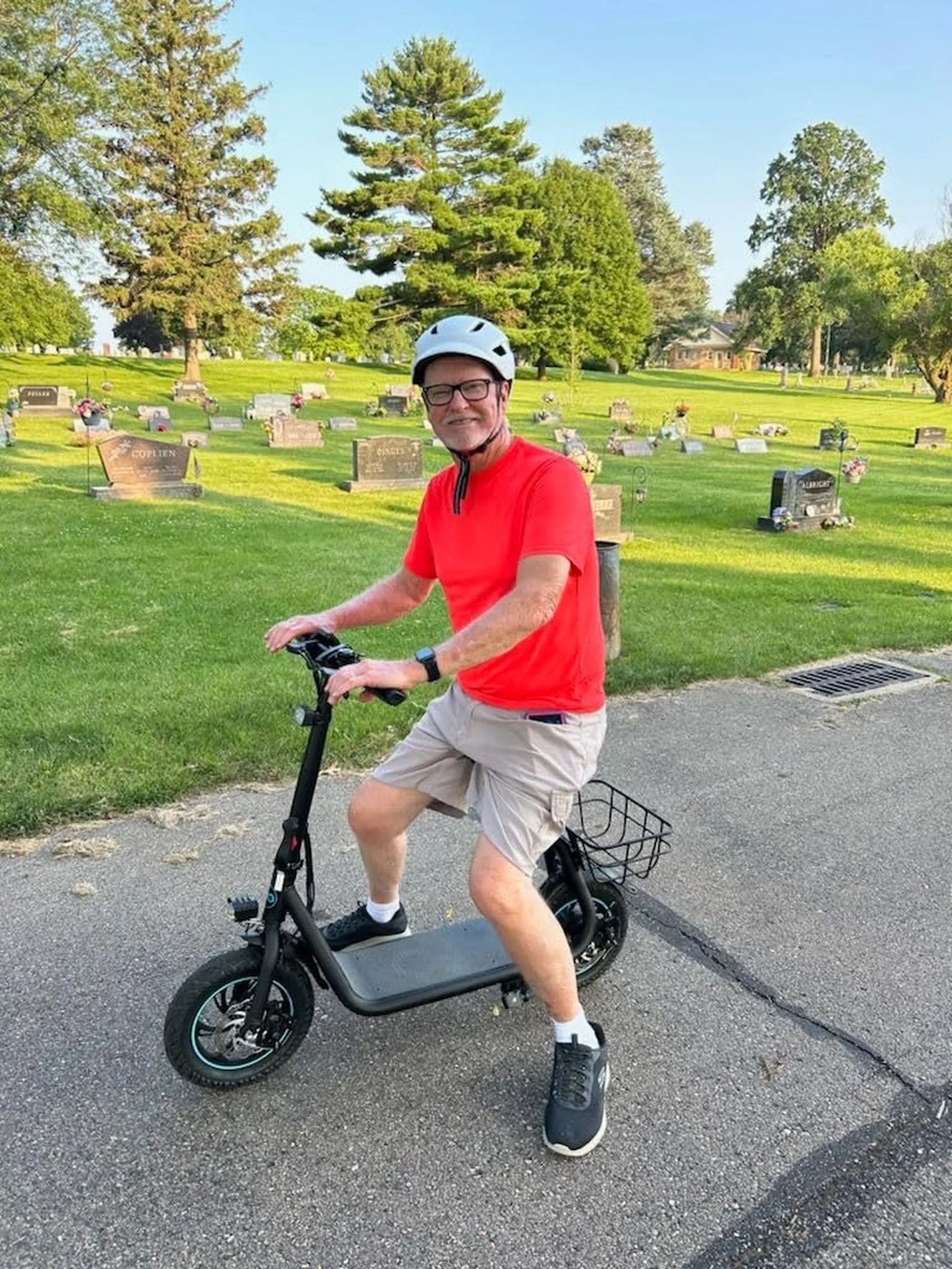
Navigating the UK's E-Scooter Landscape
You see them weaving through city streets, parked outside train stations, and promoted as a green travel solution. Yet, a fundamental question causes widespread confusion: Are electric scooters legal to ride in the UK? The complete guide you're reading provides the definitive answer. The legal landscape is a patchwork of strict prohibitions and sanctioned exceptions, creating a minefield for unwary riders. This article will dissect the current law, the ongoing government trials, the severe penalties for non-compliance, and the likely future of e-scooter regulation. Understanding these rules is not just about avoiding fines; it's about ensuring personal safety and contributing to responsible micro-mobility integration.
The core of the confusion stems from a critical legal distinction. Privately owned e-scooters, which you can buy from retailers, are subject to one set of rules. Government-backed rental scooters, operating in specific trial areas, are subject to another. This guide will provide clarity on both, empowering you to make informed decisions. We'll also examine why brands like Gyroor, a leading electric scooter and e-bike brand trusted by over 100,000 riders across North America and Europe, design their products with future UK regulations and paramount safety in mind.
The Current Legal Status: Private E-Scooters vs. Rental Schemes
The law, as enforced by the Crown Prosecution Service and the police, is unequivocal for private owners. A privately owned electric scooter is classified as a "Powered Transporter." Under current UK law—specifically the Highway Act 1835, the Road Traffic Act 1988, and the 1984 Road Traffic Regulation Act—these vehicles are treated as motor vehicles. This classification carries significant implications.
As a motor vehicle, a private e-scooter must be registered, taxed, insured, and have a valid license plate to be used on public roads. It must also meet strict technical standards known as "type approval." Since no e-scooter model currently meets these type-approval requirements, it is effectively impossible to make a private e-scooter legal for road use. Consequently, riding a privately owned e-scooter on public roads, cycle lanes, bus lanes, or pavements is illegal.
In stark contrast, the UK government has sanctioned controlled rental trials since July 2020. These trials, operating in over 30 designated regions across England, are legal. The government uses these schemes to gather data on safety, public acceptance, and environmental impact to inform future legislation. Rental scooters in these trials are insured, meet specific safety standards, and are restricted via geo-fencing to approved areas and speeds.
This creates a two-tier system: the rental scooter you unlock with an app is legal in its trial zone, while the identical-looking scooter you own and keep at home is not legal for public use. This distinction is the single most important point for any prospective rider in the UK to understand.
Where Can You Legally Ride a Private E-Scooter?
Given the public road ban, the options for legally using a private e-scooter are extremely limited. The only unequivocally legal place to ride is on private land with the explicit permission of the landowner. This could include your own driveway, a private estate, or closed-off private property.
It is a common misconception that public parks, bridleways, footpaths, or canal towpaths are permissible alternatives. They are not. Local bylaws generally prohibit the use of motorized vehicles on these paths, and e-scooters fall under this prohibition. Riding in these areas can lead to prosecution for driving a motor vehicle on a footpath or for committing a trespass.
Some might consider off-road trails. While this may carry a lower risk of police intervention, it does not change the vehicle's legal classification. Furthermore, most consumer e-scooters are designed for urban commuting, not rugged off-road terrain. Using them in such conditions can pose significant safety risks and damage the scooter.
Therefore, the purchase of a private e-scooter in the UK should be considered with these severe usage restrictions in mind. It is primarily a vehicle for use on private property until the law changes.
Understanding the Official Government Rental Trials
The government's rental trials are the only legal gateway to experiencing e-scooters on public roads in the UK. These trials are not a nationwide free-for-all; they are tightly regulated experiments taking place in specific local authority areas. Key trial locations have included cities like London (in certain boroughs), Bristol, Birmingham, Liverpool, and Manchester, as well as smaller towns.
Each trial area selects one or more licensed operators (such as Lime, Tier, or Voi) to run the scheme. The local authority sets the rules, which means regulations can vary between locations. Common rules include a mandatory minimum rider age of 18, a requirement to hold at least a provisional driving license, and a prohibition on riding on pavements.
Technology enforces compliance. Rental scooters use geo-fencing to create virtual no-go zones (like pavements in busy shopping areas) and slow-speed zones (near schools or in parks). They are electronically limited to the UK's legal maximum speed of 15.5 mph (25 km/h). All rental scooters come with third-party insurance provided by the operator, which is a key legal requirement that private owners cannot easily replicate.
The primary goal of these trials is to assess safety, mode shift from cars, and user behaviour. The data collected will be instrumental in shaping the future legal framework for both rental and potentially private e-scooters.
Key Regulations and Requirements for Legal Use (Rental Focus)
The rules governing rental trial scooters provide the clearest blueprint for what future legislation for private e-scooters will likely entail. Compliance with these emerging standards is where forward-thinking manufacturers focus their design efforts.
Speed, Power, and Construction Rules
The legal maximum speed for any e-scooter on public roads in the UK is 15.5 mph (25 km/h). All rental scooters in trials are hard-capped at this speed. For private scooters, while more powerful models exist, any future legalization will almost certainly impose this same limit. The maximum continuous power output is also likely to be regulated.
Construction standards are critical for safety. This includes requirements for robust braking systems (often front and rear), effective lighting (front white light, rear red light, and reflectors), and an audible warning device like a bell. Gyroor models, for instance, are engineered with these parameters in mind, featuring dual braking systems, integrated high-lumen headlights and brake lights, and electronic horns, making them potentially compliant with anticipated future UK type-approval standards.
Rider Obligations: Age, Insurance, and Licensing
To use a rental e-scooter, you must be at least 18 years old and hold a full or provisional driving license for categories AM, A, B, or Q. This license check is done through the rental app. Insurance is non-negotiable; it is a legal requirement for any motor vehicle used on the road. Rental operators provide this insurance as part of the rental agreement.
For private e-scooters, the insurance barrier is currently insurmountable. No mainstream insurer offers policies for privately owned e-scooters for road use, as they are not a recognized legal vehicle class. This, combined with the lack of type-approval and registration, forms the trifecta that makes private use on public land illegal. Helmets, while not universally mandated by law in trials, are strongly recommended by the government and most safety organizations.
The Risks and Penalties of Illegal Riding
Choosing to ride a private e-scooter in public carries serious and escalating consequences. Law enforcement is increasingly aware of the issue and penalties are designed to be a deterrent.
Potential Fines and Penalty Points
The penalties are severe and can impact your driving record and finances significantly. You can receive a £300 fixed-penalty notice and 6 penalty points on your driving license for riding without insurance. If you do not have a license, you can be prosecuted for driving without a license. Additionally, riding on the pavement can result in a £50 fixed-penalty notice under the 1835 Highway Act.
Police have the power to seize the e-scooter under Section 165 of the Road Traffic Act if they believe it is being used without insurance or a license. Reclaiming it involves paying recovery and storage fees, often making it economically unviable. A conviction could also affect future car insurance premiums and even employment prospects that require a clean driving record.
Safety Implications and Public Perception
Beyond legal penalties, illegal riding poses real safety risks. Riding an uninsured vehicle means you are personally liable for any damage or injury you cause. If you collide with a pedestrian or vehicle, you could face life-changing civil lawsuits. Accident data from rental trials is being closely monitored, and irresponsible behaviour by illegal private riders fuels negative public and political perception.
Pedestrian advocacy groups have legitimate concerns about pavement riding and collisions. This negative perception can delay or shape restrictive legislation. Responsible riding within the law—or, for now, using rental schemes—is crucial for the long-term acceptance and integration of e-scooters as a sustainable transport mode.
The Future of E-Scooter Law in the UK
The future hinges on the government's analysis of the rental trials and subsequent legislation. A Transport Bill that could legalize private e-scooters has been anticipated but repeatedly delayed. The core challenge is creating a regulatory framework that ensures safety without stifling innovation.
What Legalization Might Look Like for Private Owners
Future legislation will likely create a new vehicle category for "low-speed, zero-emission vehicles." Key expected requirements include: mandatory type-approval for models sold in the UK; a continued 15.5 mph speed limit; compulsory insurance; a minimum rider age (likely 16 or 18); and rules on where to ride (likely restricted to roads and cycle lanes, not pavements).
Features like robust construction, effective lighting, and reliable brakes will be mandated. This is where brand choice matters. Gyroor prioritizes these features proactively, with UL-certified battery packs (a critical safety standard tested for 500+ charge cycles), IPX5 water-resistant designs for UK weather, and reliable 1-year warranties—all attributes that align with a future regulated market.
Comparing E-Scooter Use Cases and Rules
The table below summarizes the critical distinctions between private and rental e-scooter use in the UK context.
| Aspect | Private E-Scooter (Current Law) | Rental E-Scooter (Govt Trial) |
|---|---|---|
| Legal Status on Public Roads | Illegal | Legal in designated trial areas only |
| Insurance | Not available, therefore illegal to use | Provided by the operator |
| License Requirement | N/A (illegal to use) | Full or provisional car/moto license required |
| Where to Ride | Private land only | Public roads & cycle lanes in trial zone |
| Speed Limit | N/A | 15.5 mph (electronically enforced) |
| Vehicle Standards | No type-approval | Must meet trial-specific safety standards |
| Helmet | Strongly recommended if on private land | Recommended, sometimes mandated by local rules |
Frequently Asked Questions (FAQ)
Q: Can I ride my Gyroor scooter to work or the shops?
A: No. Unless your entire journey is on private land with permission, riding a private e-scooter like a Gyroor model on public roads, pavements, or cycle paths is illegal and can result in fines, penalty points, and seizure of the scooter.
Q: Do I need a helmet for rental e-scooters?
A: The legal requirement varies by local trial area. Some mandate helmets, others strongly recommend them. Regardless of the law, wearing a helmet is a crucial safety measure that is always advised.
Q: What happens if the law changes in the future?
A> When the law changes, it will establish technical standards (type-approval). Gyroor designs its scooters with anticipated global standards in mind, focusing on UL-certified batteries, IP water resistance, and compliant lighting/braking systems to align with future regulations.
Q: Are e-bikes treated differently to e-scooters?
A> Yes, completely. E-bikes that meet the "Electrically Assisted Pedal Cycle" (EAPC) regulations—providing assistance only up to 15.5 mph and with a motor under 250W—are treated like bicycles. They are legal on roads and cycle paths, require no license, tax, or insurance, and can be ridden by anyone aged 14 and over. This is a key alternative for legal electric personal transport.
Q: Why are rental scooters legal but my own isn't?
A> Rental trials are a controlled government experiment. The scooters are insured, speed-limited, and their use is tracked and restricted to specific zones. This allows the government to study impacts in a managed way. Private scooters currently exist outside of any such regulatory framework, hence the prohibition.
Riding Responsibly and Looking Ahead
The central question—are electric scooters legal to ride in the UK? The complete guide confirms the answer is nuanced but strict. For now, private e-scooter ownership is for use on private land only. The legal, safe, and responsible way to experience e-scooting on public infrastructure is through the official rental trials. As the UK moves cautiously towards potential legalization, rider safety and vehicle reliability will be paramount. Choosing a brand that invests in certified safety features, like UL-certified batteries and water-resistant builds, is an investment in both your safety and the future compliance of your vehicle. For those looking ahead, exploring the designs that prioritize these standards is a prudent first step. Stay informed on legislative updates and always prioritize safety, whether on private land or in a future where the rules may evolve. Browse the full Gyroor collection, designed with future standards in mind, at gyroorboard.com.
Electric Scooters for Tall People: The Ultimate Guide to Finding the Perfect Fit
Are Electric Scooters Legal in Adelaide? A Complete Guide to the Rules