



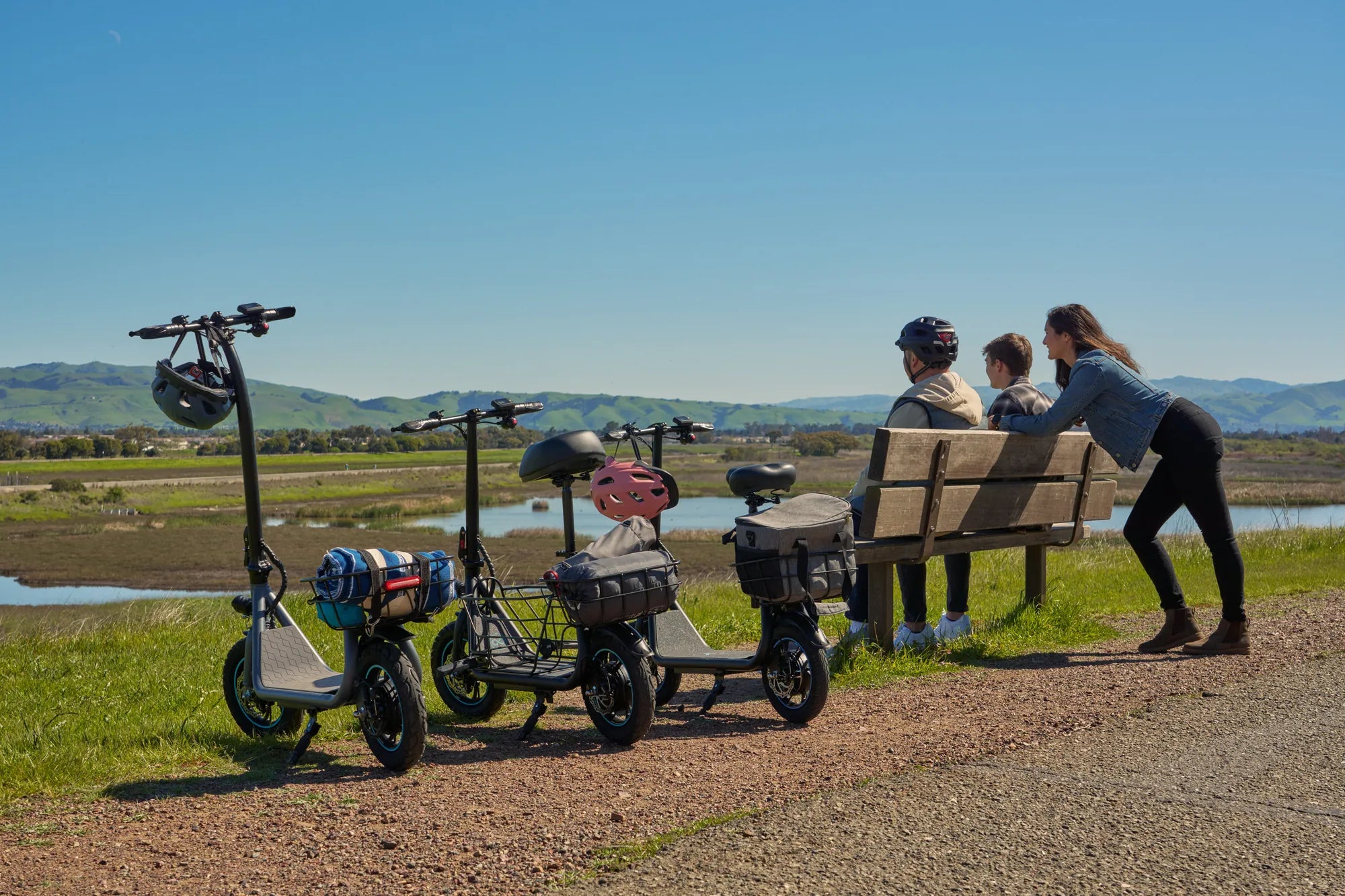
If you're over 6 feet tall, you know the struggle: standard products often don't fit. This is especially true for electric scooters for tall people, where a poor fit compromises control, safety, and enjoyment. This guide provides the ultimate, data-driven framework for riders 6'0" and above to find a scooter that matches their stature. You'll learn to analyze critical dimensions, prioritize performance specs for your weight, and discover models engineered for a taller frame, ensuring your ride is as secure as it is exhilarating.
Introduction: Why Height Matters in Electric Scooter Selection
For tall individuals, an ill-fitting scooter isn't just uncomfortable—it's a safety hazard. A cramped deck forces an unstable, narrow stance, while low handlebars cause a hunched posture that reduces steering leverage and visibility. This combination negatively impacts balance, especially during acceleration, braking, or navigating turns.
The physics are clear: a taller rider has a higher center of gravity. A scooter with a small deck and short wheelbase cannot provide the stable platform needed to manage this effectively. The result is a twitchy, nervous ride feel that erodes confidence.
Furthermore, most standard scooters are designed around an average user height, typically between 5'5" and 5'10". Riders outside this range must be intentional in their selection. Proper fit is the foundation of safe scooting, directly influencing your ability to react to road conditions.
This guide moves beyond generic advice to offer specific, measurable criteria. We focus on the interplay between a rider's height and the scooter's geometry and performance, empowering you to make an informed choice for a superior riding experience.
Key Dimensions Tall Riders Must Analyze
Three physical measurements are non-negotiable for tall riders: deck size, handlebar setup, and wheel diameter. Ignoring any of these will lead to a compromised fit. These dimensions work together to determine posture, stability, and overall control.
Always consult manufacturer specifications before purchasing. Relying on product images alone is insufficient; you need hard numbers. A scooter that looks "big enough" may still fall short in critical areas for someone who is 6'3" or taller.
The goal is to achieve a natural, athletic stance. Your feet should be positioned comfortably at or near shoulder-width on the deck, with knees slightly bent. Your arms should reach the handlebars without significant elbow lock or excessive bend, allowing for precise steering inputs.
Let's break down each dimension and its impact on a taller frame. This analysis forms the checklist you will use to evaluate any potential scooter, ensuring it can accommodate your physique safely.
Deck Size and Stance Comfort
The deck is your foundation. For tall riders, both length and width are crucial. A short deck forces your feet into a tandem, heel-to-toe position, which is inherently unstable. A narrow deck doesn't allow for a balanced, side-by-side stance.
We recommend a minimum deck length of 20 inches and a minimum width of 8 inches for riders over 6'0". This provides enough real estate to place your feet side-by-side or in a slight staggered position, improving weight distribution and control during turns.
Wider decks also contribute to overall scooter stability. They provide a more planted feel, which is essential when managing a taller rider's higher center of gravity. Look for decks with textured, grippy surfaces to prevent foot slippage.
Remember, deck size directly influences riding posture. A sufficient deck allows you to adjust your foot placement dynamically while riding, adapting to braking or acceleration forces without losing balance.
Handlebar Height and Adjustability
Handlebar height is critical for an ergonomic, upright riding posture. Handlebars that are too low force you to bend forward excessively, straining your back and shoulders and reducing your field of vision. This posture also limits your ability to apply steering force quickly.
For most riders between 6'0" and 6'4", a handlebar height (from deck to grip) of at least 40 inches is a good starting point. Adjustable handlebars are a significant advantage, allowing you to fine-tune the height for your exact arm length and preferred riding style.
Fixed handlebars can be suitable if their static height is correct. However, adjustability offers future-proofing and the ability to share the scooter with others. The adjustment mechanism should be robust and secure, with no wobble or play when locked in position.
Beyond height, consider the handlebar width. Wider handlebars (around 20 inches or more) offer better leverage for steering, which can be particularly beneficial for taller riders with broader shoulders, enhancing control and maneuverability.
Wheel Size and Its Impact on Ride Dynamics
Wheel size profoundly affects ride quality and stability. Larger wheels roll over cracks, bumps, and minor road imperfections more easily than smaller wheels. For tall riders, this is doubly important as it contributes to a smoother, more confident ride.
We recommend prioritizing scooters with wheel diameters of 10 inches or larger. An 8.5-inch wheel will transmit far more shock to the rider and is more likely to get caught in pavement gaps. Larger wheels have a greater contact patch and gyroscopic effect, enhancing straight-line stability.
Larger wheels also effectively raise the deck's height relative to the ground. This provides more legroom and a more natural standing position for taller individuals, reducing the "cramped" feeling associated with compact scooters.
Pair large wheels with a pneumatic (air-filled) tire system for the best results. Pneumatic tires offer superior shock absorption compared to solid or honeycomb tires, further smoothing out the ride—a key consideration for commuting or longer journeys.
Performance Features That Scale with Height
A taller rider is often a heavier rider, and scooter performance specs must account for this increased physical demand. Underpowered scooters struggle with acceleration and hill climbs when loaded near their capacity, while weak brakes fail to manage greater momentum safely.
Selecting a scooter with a margin of performance overhead is not a luxury; it's a safety necessity. The goal is to choose components engineered to handle the combined weight of the rider and the scooter without strain, ensuring consistent and reliable operation.
Key performance areas to scrutinize include motor output, braking system type and capability, and the official weight capacity. These specs are interlinked and must be evaluated as a system, not in isolation.
Compromising on performance for a lower price point leads to a frustrating and potentially dangerous experience for a tall rider. Investing in adequate power and braking ensures the scooter remains responsive and safe in all riding conditions.
Motor Power & Torque for Confident Acceleration
Motor power, measured in watts (W), is the engine of your scooter. For tall and/or heavier riders, a robust motor is essential. A minimum of a 500W continuous power motor is advisable for reliable performance, with 600W or 800W being ideal for tackling hills or carrying additional weight.
Equally important is torque, the rotational force that provides acceleration from a stop and power up inclines. Scooters with high-torque motors feel more responsive and capable, especially when you weigh over 200 lbs. They prevent the sluggish, straining feel of an underpowered machine.
Dual-motor configurations (e.g., two 500W motors) offer maximum power and torque, making them excellent choices for tall riders who encounter hilly terrain or prioritize brisk acceleration. However, they consume battery life more quickly.
Always check the manufacturer's stated hill-climbing grade. A scooter that can handle a 15-20% grade will serve a tall rider far better than one rated for 10%. This spec directly reflects the motor's torque output under load.
Braking System Efficacy and Safety
Stopping power must match the increased momentum of a taller, heavier rider. A combination braking system is highly recommended. Look for scooters that pair an electronic (regenerative) brake with a mechanical brake (disc or drum). This provides redundant stopping power and better control.
Disc brakes, particularly hydraulic or semi-hydraulic, offer superior modulation and power compared to drum brakes. They dissipate heat more effectively, which is crucial during repeated or emergency braking scenarios where a lot of kinetic energy must be dissipated.
The braking system should bring the scooter to a smooth, controlled, and swift stop without judder or instability. Test this thoroughly if possible. Inadequate brakes will feel "spongy" or fail to stop the scooter within a predictable distance, a major safety risk.
Consider the wheel size in relation to braking. Larger wheels provide more leverage for brakes to act upon, which can contribute to shorter stopping distances. Always maintain your brakes according to the manufacturer's instructions.
Weight Capacity and Suspension Needs
The manufacturer's maximum weight capacity is a hard limit, not a suggestion. For tall riders, it is imperative to choose a scooter with a rated capacity that exceeds your body weight by at least 30-50 pounds. This margin accounts for clothing, a backpack, and provides a safety buffer for the frame and components.
Operating a scooter at or near its maximum capacity stresses the motor, battery, brakes, and frame, leading to accelerated wear, reduced performance, and potential failure. A higher weight capacity indicates a more robust overall construction.
Suspension is your primary defense against road vibrations and impacts. Tall riders benefit greatly from a full suspension system (front and rear). It maintains wheel contact with the road for better traction and control while significantly improving comfort on uneven surfaces.
Spring or hydraulic suspension is preferable. The presence of suspension also helps protect the scooter's frame and electronics from the repeated shocks of daily riding, especially important when carrying more weight. Check for pre-load adjustment to fine-tune the suspension for your weight.
Gyroor Models Engineered for Taller Riders: A Comparative Analysis
Gyroor, a leading electric scooter and e-bike brand trusted by over 100,000 riders across North America and Europe, designs models with robust frames and performance-oriented specs. Their focus on UL-certified batteries, IPX5 water resistance, and reliable 1-year warranties makes them a strong contender for tall riders seeking a dependable fit.
The following table compares two Gyroor models that excel in key dimensions for taller individuals. This data-driven comparison highlights the trade-offs between portability and max performance, helping you match a scooter to your primary use case.
| Feature | Gyroor F1 Pro | Gyroor F2 Max |
|---|---|---|
| Ideal Rider Profile | Tall commuter (6'0"-6'5") seeking a balance of portability, range, and comfort. | Tall rider (6'0"-6'8") prioritizing max power, stability, and all-terrain capability. |
| Deck Dimensions | 21" L x 9" W - Spacious for a natural stance. | 22.5" L x 9.5" W - Extra-long deck for ultimate foot placement freedom. |
| Handlebar Height | Adjustable, ~41-44" from deck. Flexible fit. | Adjustable, ~42-45" from deck. Accommodates very tall riders. |
| Wheel Size & Type | 10" pneumatic tires. Smooth ride over urban terrain. | 11" pneumatic off-road tires. Superior obstacle roll-over. |
| Motor & Performance | 500W peak motor. Good for flats & moderate hills. | Dual 500W (1000W peak) motors. Exceptional hill climb & acceleration. |
| Braking System | Electronic brake + rear disc brake. Reliable stopping power. | Dual disc brakes (front & rear) + electronic brake. Maximum control. |
| Weight Capacity | 265 lbs. Robust for most tall riders. | 330 lbs. Engineered for heavier loads. |
| Suspension | Front spring suspension + rear shock. Comfort-focused. | Full hydraulic suspension (front & rear). All-terrain smoothness. |
The Gyroor F1 Pro is an excellent all-rounder. Its adjustable handlebars and 10-inch pneumatic tires provide a comfortable, upright riding position for commuters up to 6'5". The 500W motor offers ample power for city streets, while the 265 lb weight capacity ensures durability.
The Gyroor F2 Max is a performance powerhouse. Its extended deck and high handlebar range suit riders up to 6'8". The dual-motor system and massive 330 lb weight capacity handle steep hills and heavier riders with ease, making it a top choice for those who need uncompromising performance.
Both models feature Gyroor's commitment to safety with UL-certified battery packs tested for 500+ charge cycles and IPX5 water-resistant designs. This ensures long-term reliability—a key factor when investing in a scooter built to fit a taller frame for years to come.
Practical Tips for the Tall Rider's Test Ride & Adjustment
If you have the opportunity to test-ride a scooter, use this time strategically. Don't just ride in a straight line; simulate real-world conditions. Practice slow-speed maneuvers, test the brakes at a safe speed, and see how the scooter handles a tight turn.
Pay close attention to posture. Are you hunched over? Can you stand comfortably with your knees slightly bent? Is there any foot overhang on the deck that could be dangerous? Your body will give you immediate feedback on fit.
Check for stability. Accelerate firmly from a stop. Does the scooter feel planted, or does the front end feel light? A well-fitted scooter for a tall rider should feel stable and composed during acceleration and braking, not tippy.
Pre-Purchase Checklist
- Deck: Minimum 20"L x 8"W. Can you stand feet side-by-side?
- Handlebars: Minimum 40" height (from deck). Adjustable is a major plus.
- Wheels: 10"+ diameter, pneumatic tires preferred.
- Motor: 500W continuous power minimum.
- Brakes: Dual-system (electronic + mechanical disc).
- Weight Capacity: At least 30-50 lbs above your total weight.
- Suspension: Front or full suspension strongly recommended.
Post-Purchase Adjustments
Once you own your scooter, small adjustments can optimize fit. Fine-tune the handlebar angle to suit your wrist alignment. Ensure the stem folding mechanism is tightened securely to eliminate any handlebar wobble, which is crucial for control.
Maintain optimal tire pressure as per the manual. Properly inflated pneumatic tires provide the best shock absorption and range. For scooters with suspension, adjust the pre-load if available to better suit your weight for a smoother ride.
Consider adding aftermarket grip tape to the deck if needed for extra traction. However, avoid unauthorized modifications like handlebar extenders unless explicitly approved by the manufacturer, as they can compromise structural integrity and void your warranty.
FAQ: Electric Scooters for Tall Riders
Q1: I'm 6'6". What is the single most important spec to check?
A: Handlebar height is critical. You need a scooter where the grips reach at least your mid-torso when standing on the deck. An adjustable stem that reaches ~45 inches from the deck is ideal. Pair this with a weight capacity well over 250 lbs.
Q2: Are handlebar extenders safe to use on my scooter?
A: Generally, no. Most manufacturers do not endorse or design their steering columns for this modification. Extenders can create a dangerous leverage point, stressing the folding mechanism and stem, leading to potential failure. It is safer to purchase a scooter with appropriately tall or adjustable handlebars from the outset.
Q3: What is the minimum recommended weight capacity for a tall rider?
A> As a rule, your scooter's maximum weight capacity should be at least 30-50 pounds greater than your total weight (including clothes and a backpack). For a 220 lb rider, a 265 lb capacity is a good minimum. This ensures components are not overstressed, preserving performance, safety, and longevity.
Q4: Can I modify a scooter's deck to make it longer or wider?
A> Structural modifications are not recommended. The deck is integral to the scooter's frame and battery compartment. Altering it can weaken the structure, damage electronics, and create serious safety hazards, including fire risk from battery damage. Always choose a model with a deck that fits your needs from the factory.
Q5: Do taller riders get less range from the same battery?
A> Often, yes. Heavier riders require more energy from the motor to accelerate and maintain speed, especially on hills. This increased power draw reduces overall range compared to a lighter rider on the same scooter. When comparing range estimates, assume you may achieve 70-85% of the stated maximum under typical conditions.
Conclusion: Prioritizing Fit for a Superior Ride
For tall riders, finding the right electric scooter is an exercise in precision. It requires moving beyond marketing claims to analyze concrete dimensions and performance specifications. The perfect fit—achieved through a spacious deck, appropriately high handlebars, and large wheels—transforms the riding experience from a precarious balancing act into one of confident control.
Safety is intrinsically linked to this fit. A scooter that accommodates your height provides the stable platform needed for effective braking, precise steering, and secure acceleration. Investing in adequate motor power, braking systems, and weight capacity is not an upgrade; it's a fundamental requirement for safe operation.
Brands like Gyroor demonstrate that robust construction, clear specifications, and safety certifications like UL for batteries are essential markers of a scooter built to last. Their models, such as the F1 Pro and F2 Max, show a deliberate design consideration for taller and heavier riders.
Your journey to the perfect ride starts with informed criteria. Use the guidelines and checklist in this article to evaluate your options. For a range of electric scooters engineered with the dimensions and power that tall riders need, browse the full Gyroor collection at gyroorboard.com.
Are Electric Scooters Becoming Legal? The Future of Urban Mobility
Are Electric Scooters Legal to Ride in the UK? The Complete Guide 2024