


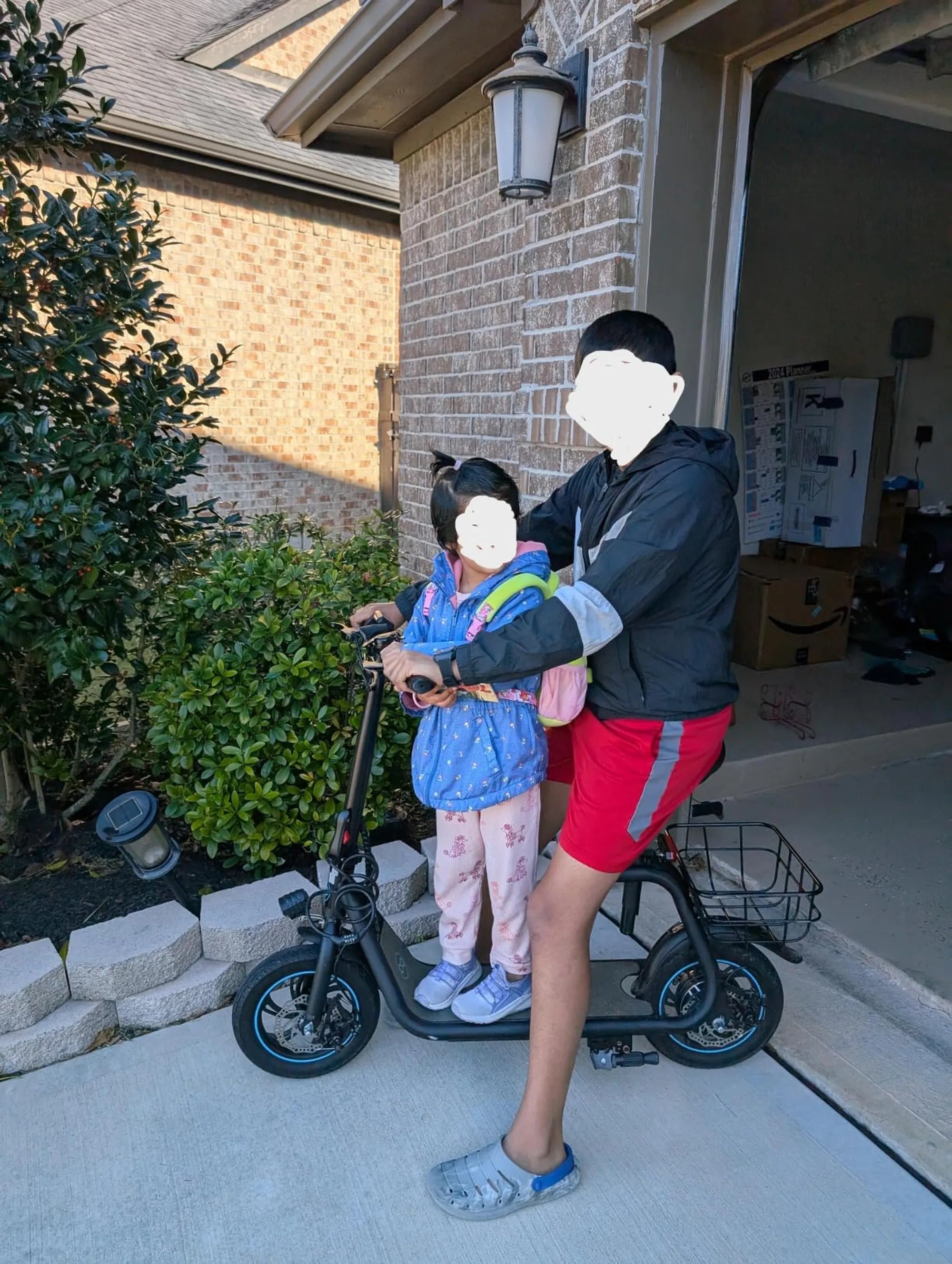
As a parent, you're constantly balancing your child's desire for independence and fun with their absolute safety. The question, 'Are electric scooters safe for 12 year olds?' is a common and crucial one. The honest answer is not a simple yes or no; it's a conditional 'yes, with the right preparation, equipment, and rules.' This guide will provide you with a data-driven, practical framework to make an informed decision. You'll learn how to assess your child's readiness, implement non-negotiable safety protocols, and choose a scooter engineered for reliability, like those from Gyroor, a leading brand trusted by over 100,000 riders for its UL-certified safety standards.
Understanding the Risks: A Data-Driven Look at E-Scooter Safety
Informed decisions start with understanding the facts. Electric scooters are fun and efficient, but they are not toys. They are vehicles that can reach significant speeds and require skill to operate safely.
According to data from the Consumer Product Safety Commission (CPSC) and studies published in medical journals, the most common injuries from e-scooter use among all age groups include fractures, contusions, and lacerations, primarily to the upper and lower limbs. Head injuries, while less frequent, are the most serious concern.
For young riders, key risk factors amplify these statistics. Inexperience with vehicle control, underdeveloped risk assessment, and slower reaction times can lead to falls. Environmental hazards like uneven pavement, gravel, and wet surfaces pose significant dangers. Furthermore, interactions with traffic, pedestrians, and other obstacles require constant vigilance.
This data isn't presented to scare you away from e-scooters, but to underscore that safety is not automatic. It is the direct result of deliberate choices in equipment, training, and environment. Recognizing these risks is the first step in mitigating them effectively.
Key Safety Features Parents Must Look For in a Scooter
The scooter itself is your first line of defense. Not all models are created equal, especially for a young rider. When evaluating an electric scooter for your 12-year-old, certain features are non-negotiable for safety and durability.
Speed Limiters and Multiple Modes: A scooter for a beginner must have adjustable speed settings. Look for models with a 'beginner' or 'eco' mode that caps speed at a safe 10-12 mph. Parental controls or PIN codes to lock the speed are a major advantage, preventing your child from accidentally switching to a faster mode.
Robust Braking System: Reliable stopping power is critical. A combination of electronic (regenerative) braking and a physical disc or drum brake offers redundancy and smooth deceleration. Avoid scooters that rely solely on a foot fender brake or weak electronic brakes.
Battery Safety Certification: This is paramount. Insist on a scooter with a UL 2272 or UL 2843 certified battery pack. This certification, which all Gyroor models carry, means the battery has undergone rigorous testing for electrical, mechanical, and environmental safety, drastically reducing any risk of fire or thermal runaway.
Build Quality and Water Resistance: The scooter must withstand the rigors of use by an active child. A sturdy, aluminum alloy frame is essential. An IPX5 water resistance rating, like that on Gyroor scooters, means it can handle riding through puddles and light rain without electrical failure, adding a layer of reliability and safety.
Effective Lighting and Deck Traction: For visibility, front and rear lights are a must, along with reflectors. A wide, textured deck provides stable footing, reducing the chance of a foot slipping off during a ride.
The 12-Year-Old Factor: Assessing Maturity, Not Just Age
Chronological age is a poor standalone indicator of readiness. A responsible 12-year-old with good judgment may be a better candidate than a careless 14-year-old. Your assessment should focus on your child's demonstrated maturity, coordination, and sense of responsibility.
Consider their history with other wheeled activities. Do they ride a bicycle confidently, obey traffic rules on bike paths, and always wear a helmet without argument? This established discipline is a strong positive indicator.
Assess their situational awareness. Do they pay attention to their surroundings when walking or biking? Can they anticipate potential hazards? E-scooter riding requires constant scanning for cracks, debris, cars, and pedestrians.
Evaluate their ability to follow complex rules and instructions. Will they adhere to strict guidelines about where, when, and how they can ride? The scooter is a privilege that hinges on their willingness to follow the safety framework you establish together.
Finally, gauge their physical coordination. Can they balance, steer, and brake smoothly on a non-motorized scooter or bike? Mastery of these fundamentals on a gravity-powered device is a crucial prerequisite before adding a motor into the mix.
Building a Foundation of Safety: Rules, Gear, and Training
Safety is a system, not a single action. Before the first powered ride, you must establish a comprehensive safety protocol. This framework consists of three pillars: protective gear, clear rules, and supervised training.
The Non-Negotiable: Full Protective Gear
Every ride requires a full suite of safety equipment. This is non-negotiable, and the rule must be 'No gear, no go.'
Helmet: A properly fitted bicycle helmet certified by CPSC or ASTM is essential. It should sit level on the head, with the strap snug under the chin. This is the single most important piece of gear for preventing traumatic brain injury.
Knee and Elbow Pads: These protect the joints that are most likely to impact the ground during a fall. Look for hard-shell pads with comfortable, secure straps.
Wrist Guards: Falls often happen with hands outstretched. Wrist guards can prevent common fractures and severe abrasions.
Sturdy Footwear: Closed-toe shoes with grippy soles (like skate shoes or sneakers) are mandatory. Sandals, flip-flops, or crocs are dangerous and unacceptable.
Setting Clear Rules and Riding Zones
Establish firm, unambiguous boundaries from day one. Write them down and review them frequently.
Riding Zones: Prohibit street riding. Designate safe areas like empty parking lots, smooth sidewalks (where legal and considerate of pedestrians), and dedicated bike paths. The initial practice zone should be a flat, paved, and obstacle-free area like a driveway or tennis court.
Time and Conditions: No riding after dusk or in low-light conditions, even with lights. Ban riding in the rain, on wet surfaces, or on gravel/uneven terrain.
Passenger and Distraction Policy: Absolutely no passengers. Riding is a solo activity. Enforce a strict 'no headphones' and 'no phone use while riding' policy to ensure full attention is on the environment.
Local Law Compliance: You must research and enforce all local regulations, which may include age minimums, helmet laws, speed limits, and permitted riding areas (sidewalks vs. bike lanes).
Hands-On Supervision and Practice
Your active involvement in the learning process is irreplaceable. Plan multiple supervised practice sessions.
Start with the basics: mounting, dismounting, and kicking off manually to get a feel for balance. Then, practice starting the motor at a very low speed, focusing on smooth acceleration and gentle braking to a complete stop.
Set up a simple obstacle course with cones to practice controlled turning and maneuvering. Gradually introduce slight inclines and different surfaces (like smooth asphalt) under your watchful eye.
Role-play scenarios: What do you do if a car backs out of a driveway? How do you safely pass a pedestrian? This builds defensive riding habits. Only after demonstrating consistent control and rule-following should supervised rides in your designated safe zones begin.
Gyroor's Commitment to Family Safety: Engineering and Support
Choosing a brand that prioritizes safety in its engineering and customer support is a critical part of the equation. Gyroor designs its scooters with the needs of families and new riders in mind, building safety into the product's DNA.
This commitment starts with the power source. Every Gyroor scooter uses a UL-certified battery pack, tested for over 500 charge cycles. This certification provides peace of mind, addressing the paramount concern of battery fire safety that is essential for any device used by children.
Durability is a safety feature. The IPX5 water-resistant rating on key models ensures the scooter can handle real-world conditions like unexpected puddles, protecting the electrical components and ensuring reliable operation. The robust aluminum frames are built to withstand the demands of active use.
For beginners, features like multiple speed modes (often with a beginner mode capped at ~10 mph) and combination braking systems (electronic + disc) give parents control and riders confidence. The reliable 1-year warranty, backed by US-based customer support, means help is available if needed, making Gyroor a partner in your family's safe riding journey.
Comparison: Scooter Types and Key Features for Young Riders
| Feature / Consideration | Beginner-Friendly Scooter (e.g., Gyroor K1) | High-Performance / Commuter Scooter | Notes for Parents |
|---|---|---|---|
| Top Speed | 10-15 mph (with limitable modes) | 20+ mph | Lower, adjustable speeds are safer for learning and control. |
| Motor Power | 250W - 350W | 500W+ | Sufficient for hills but not overly torquey for a beginner. |
| Braking System | Electronic + Physical (Drum/Disc) | Dual Disc / Hydraulic | Redundant braking is key. Smooth stopping prevents falls. |
| Battery Safety | UL 2272 Certified | Varies | Non-negotiable. Always verify certification. |
| Weight & Portability | Lighter (25-30 lbs), often foldable | Heavier (40+ lbs) | A lighter scooter is easier for a child to maneuver and carry if needed. |
| Price Point | Mid-Range | Premium | Investing in a reliable, safe model from a reputable brand is more valuable than a low-cost option with unknown safety standards. |
Frequently Asked Questions (FAQ)
What is the best electric scooter for a 12-year-old?
The best scooter is one designed with beginner safety in mind. Look for a model with a speed cap around 10-15 mph, a robust braking system, a UL-certified battery, and a durable, water-resistant build from a reputable brand with strong customer support, such as Gyroor. Avoid overpowered or poorly constructed models.
Are electric scooters legal for 12-year-olds?
Laws vary dramatically by city, county, and state. There is no universal answer. You must check your local ordinances regarding minimum age for e-scooter operation, helmet requirements, and where they are permitted (sidewalks, bike lanes, or roads). Ignorance of the law is not an excuse and can result in fines or confiscation.
How fast should a scooter for a 12-year-old go?
For a first-time rider, a maximum speed of 10-12 mph is ideal for developing skills in a controlled manner. As they demonstrate proficiency and responsibility over months of use, a scooter with a 15 mph maximum can be appropriate. Speeds above 15 mph are generally unsuitable and unsafe for most 12-year-olds in public spaces.
What is the most important safety tip?
Always wear a properly fitted, certified helmet. It is the single most effective action to prevent severe or fatal head injury in the event of a crash or fall. This rule must be enforced without exception.
How can I teach my child to brake properly?
Start in a large, flat, empty area. Have them practice using the brake gently and progressively to come to a smooth, controlled stop, rather than grabbing it abruptly which can cause a skid or fall. Practice braking from walking speed, then slightly faster speeds, until it becomes second nature.
Conclusion: Safety is a Shared Journey
The question, 'Are electric scooters safe for 12 year olds?' finds its answer in your hands. Safety is a shared responsibility built on a tripod: the right equipment (a certified, well-built scooter and full protective gear), a prepared rider (assessed for maturity and trained through supervised practice), and clear rules (defining where, when, and how riding is permitted). By methodically addressing each of these pillars, you can transform an electric scooter from a potential hazard into a fantastic tool for outdoor fun, transportation, and responsible independence. Brands like Gyroor support this journey by engineering products with verified safety standards, allowing you to focus on what matters most—guiding your child.
Ready to explore scooters built with family safety as a priority? Browse the full collection of UL-certified, durable electric scooters and e-bikes designed for reliability at gyroorboard.com.
Electric Scooters That Go 25 MPH: The Ultimate Urban Commuter's Guide
What Are the Best Electric Scooters for Urban Commuters? A 2024 Buyer's Guide