


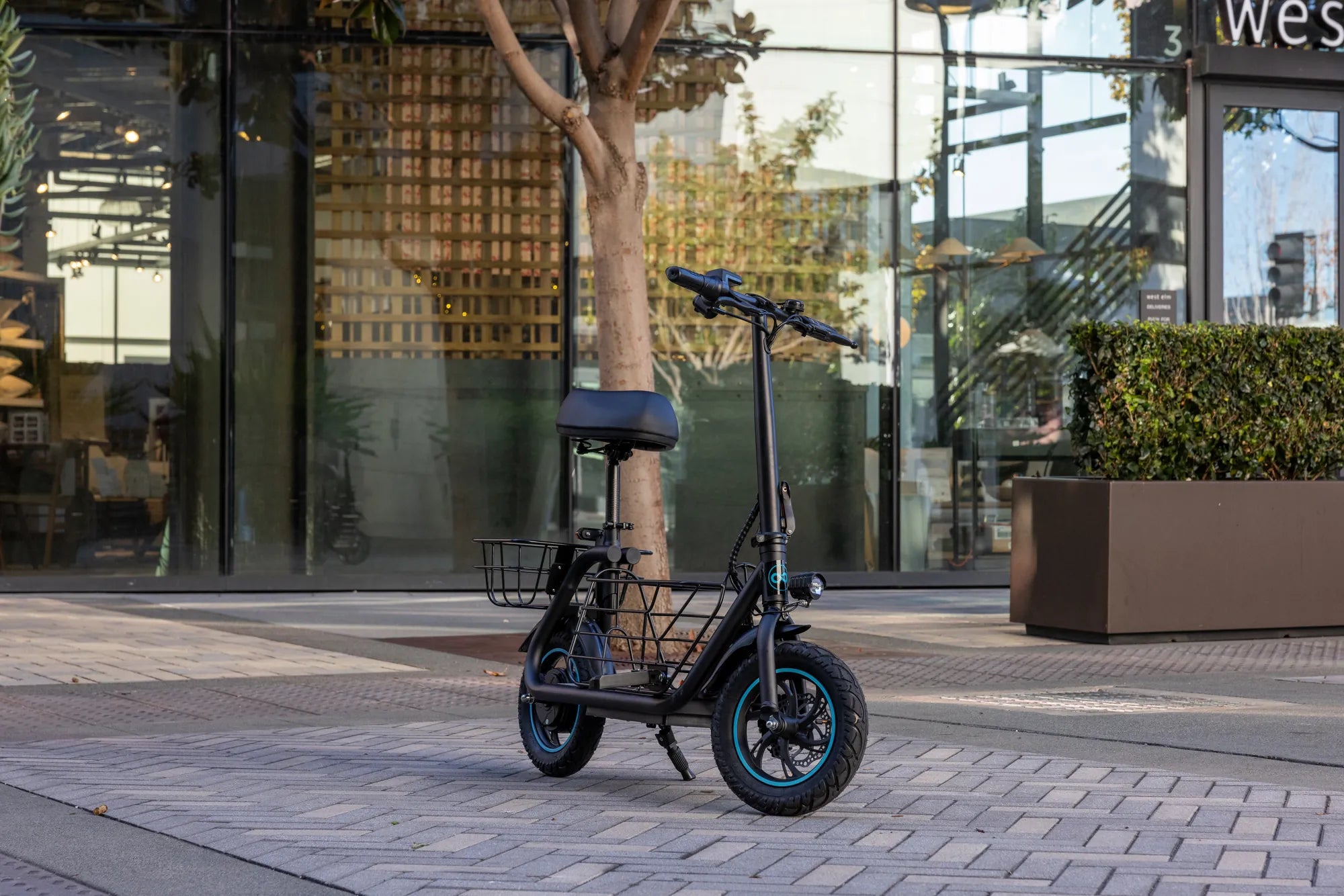
Navigating the Urban Jungle on Two Wheels
City commuting is a puzzle of traffic jams, expensive parking, crowded transit, and environmental impact. The best electric scooters for urban commuters have emerged as a powerful, practical piece to solve it. They offer a nimble, cost-effective, and sustainable alternative for trips from a few blocks to several miles.
However, not all e-scooters are created equal for the rigors of daily city use. The ideal model must be a reliable partner, blending safety, durability, portability, and real-world performance. This guide cuts through the marketing specs to focus on what truly matters for your daily journey.
We’ll evaluate the key features that separate a trustworthy commuter vehicle from a recreational toy. As a leader in personal electric mobility, Gyroor engineers its scooters with these exact urban challenges in mind, prioritizing UL-certified safety and robust, water-resistant designs trusted by over 100,000 riders.
Key Features Urban Commuters Must Prioritize
Choosing an e-scooter for daily use requires a different lens than picking one for weekend fun. Your checklist should prioritize reliability and safety over sheer top speed. These features form the foundation of a scooter that won’t let you down.
Battery Life & Real-World Range
Advertised range is often a best-case scenario on perfect terrain. For urban commuting, you must factor in real-world variables. Your weight, frequent stops and starts, hills, and colder temperatures can reduce range by 30-40%.
For a reliable commute, your scooter’s real-world range should comfortably exceed your round-trip distance. If your commute is 7 miles each way, a scooter with a 15-mile advertised range is a risk. Aim for a model with a 20+ mile advertised range for a 14-mile daily trip.
More critical than maximum range is battery safety and longevity. Daily charging stresses the battery pack. This is why UL-certified batteries are non-negotiable. This certification means the battery has passed rigorous tests for electrical, fire, and mechanical hazards. Brands like Gyroor use these UL-certified packs, tested for 500+ charge cycles, ensuring safety in your home or office and long-term reliability.
Portability & Weight: The Last-Mile Factor
For many urban commuters, an e-scooter is a “last-mile” solution integrated with public transit. Portability is key. A scooter that’s too heavy to carry up subway stairs or onto a bus becomes a burden.
Look for a balance. Lightweight scooters (under 30 lbs) are easy to carry but may sacrifice deck stability or motor power. Heavier models (35-45 lbs) offer more robust frames and batteries but are cumbersome. The folding mechanism should be intuitive, quick, and secure, with a reliable latch to prevent accidental unfolding.
A good carry handle or a design that balances well when folded is a subtle but crucial feature. Test this balance if possible. The best electric scooters for urban commuters are designed to transition seamlessly from ride to carry mode.
Ride Quality & Safety for City Streets
City streets are full of challenges: potholes, expansion joints, cobblestones, and sudden obstacles. Ride quality directly impacts safety and comfort. Key elements include wheel size, type, and suspension.
Larger, air-filled (pneumatic) tires (8.5-10 inches) absorb shocks far better than small, solid tires. They provide more stability and traction, especially on wet pavement. Some models add a front or dual suspension system for even smoother handling of rough patches.
Braking is your most critical safety system. A combination brake system is ideal. Electronic (regenerative) braking helps recharge the battery slightly and provides initial stopping power, while a mechanical disc or drum brake offers reliable, consistent stopping force in all conditions, including rain. Never rely solely on a foot fender brake or electronic brake alone for daily commuting.
Durability & Weather Resistance
Your commuter scooter will face daily wear and tear, occasional bumps, and unpredictable weather. Build quality is paramount. Look for a frame constructed from aerospace-grade aluminum or reinforced steel. Check the IP (Ingress Protection) rating.
An IP rating indicates resistance to dust and water. For urban commuting, where you might encounter rain-washed streets or puddles, a minimum of IPX4 (splash-resistant) is recommended, with IPX5 (water jet-resistant) being ideal. Gyroor designs its commuter scooters with IPX5 ratings, meaning they can withstand water jets from any direction, a key feature for real-world conditions. This protects the electrical components and ensures a longer lifespan.
Comparing Scooter Types: Finding Your Urban Fit
Your perfect scooter depends on your specific commute profile. The following comparison table breaks down the primary categories to help you match a scooter type to your needs.
| Scooter Category | Ideal For | Key Features | Typical Weight | Real-World Range |
|---|---|---|---|---|
| Lightweight & Compact | Mixed-mode commuters (train/bus + scooter), short trips (<5 mi), frequent carrying. | Quick-fold design, under 30 lbs, moderate motor (250W-350W), solid or small pneumatic tires. | 25-30 lbs | 10-15 miles |
| Value-Focused All-Rounder | Most urban commuters, medium-distance trips (5-10 mi), best feature balance for price. | Reliable 350W-500W motor, UL-certified battery, combination brakes, IPX4/5 rating, good suspension. | 30-40 lbs | 15-25 miles |
| Power & Range Champion | Longer commutes (10+ mi), hilly cities, riders prioritizing performance and comfort. | Dual motors (500W+), large capacity battery, dual suspension, wide pneumatic tires, advanced braking. | 45-70 lbs | 25-40+ miles |
Lightweight & Compact Commuters
These scooters prioritize ease of carrying above all. They are perfect if your commute involves stairs, crowded trains, or storing the scooter under a desk. Their motors are sufficient for flat to moderately inclined city streets.
Expect trade-offs: smaller decks, less powerful brakes, and often a firmer ride due to smaller solid or semi-pneumatic tires. Their range is adequate for short to medium distances. When evaluating, prioritize a foolproof folding latch and a weight you can comfortably manage.
Power & Range Champions for Longer Commutes
If you’re replacing a car or bike for a longer urban journey, this category delivers. Featuring dual motors for impressive hill-climbing torque and large, high-capacity batteries, they turn a 10-mile commute into a quick, sweat-free trip.
They excel in ride comfort with dual suspension and large pneumatic tires. The trade-off is significant weight (often 50+ lbs) and less portability. These are less “last-mile” and more “primary-mile” vehicles. Security at your destination becomes a more important consideration.
Value-Focused All-Rounders
This is the sweet spot for most urban commuters. These models offer the best balance of essential features without the premium price of top-tier performance models. You get a reliable motor, a decent UL-certified battery for 15-25 miles of real-world range, good brakes, and essential weather resistance.
They are portable enough to carry in a pinch but sturdy enough for daily use. Brands focusing on this segment, like Gyroor, ensure these scooters are built with durable materials and backed by a solid warranty, representing a smart long-term investment for daily transportation.
Why Brand Trust Matters: Safety and Support in the City
For a recreational toy, brand might be secondary. For a vehicle you depend on daily, it is critical. A reputable brand invests in safety engineering, quality control, and customer support that you’ll hope never to need—but will be grateful for when you do.
The Critical Importance of UL-Certified Batteries
The battery is the heart and most sensitive component of your e-scooter. Non-certified, cheaply made lithium-ion batteries pose a real fire risk, especially when charged unattended in apartments or offices. UL certification is an independent verification of safety.
It tests for overcharging, short-circuiting, crushing, and exposure to extreme temperatures. For a device that will be charged daily, often indoors, this certification is as important as the range it provides. Gyroor’s commitment to using only UL-certified battery packs in its scooters is a foundational aspect of its design philosophy for urban commuters.
Understanding Warranty and After-Sales Support
A comprehensive warranty is your insurance against manufacturing defects. Look for at least a 1-year warranty that covers the battery, motor, controller, and frame. Be wary of brands that only offer 90 days or have convoluted claim processes.
Equally important is accessible after-sales support. Can you easily get replacement parts like tires, brakes, or fenders? Is there a knowledgeable support team? Downtime is a major inconvenience for a commuter. A brand with a track record of support, like Gyroor’s established service network for its 100,000+ riders, minimizes this risk and protects your investment.
Urban Commuter Scooter FAQ
Q: Can I legally ride an e-scooter in my city?
A: Laws vary significantly. Generally, most cities allow e-scooters on bike lanes and streets with speed limits under 25-35 mph, but prohibit them on sidewalks. Helmets are often required, and there may be age restrictions (18+). Always check your specific local and state regulations before riding.
Q: Is it safe to ride an e-scooter in the rain?
A: Scooters with a high IP rating (IPX4 or higher) are designed to withstand wet conditions. However, always exercise extreme caution. Reduce speed, avoid painted road markings and metal surfaces (like manhole covers) which become very slippery, and brake earlier and more gently. Even with a good IP rating, try to avoid deep puddles that could submerge the deck.
Q: How do I secure my scooter at my destination?
A: Use a sturdy U-lock or heavy-duty chain lock, threading it through the frame or a non-removable part of the scooter. If possible, lock it to a fixed, immovable object in a well-lit, high-traffic area. Some commuters use a secondary motion alarm. The best security is to bring it inside with you whenever possible.
Q: How much maintenance do electric scooters require?
A: Regular maintenance is minimal but crucial. Monthly checks should include: tire pressure (for pneumatic tires), brake pad wear and adjustment, bolt tightness (especially on folding mechanisms), and cleaning off dirt/debris. Keeping the battery charged between 20-80% for daily storage maximizes its lifespan.
Q: What’s the true cost of ownership beyond the purchase price?
A: Factor in the electricity cost for charging (negligible—a few cents per charge), occasional replacement parts like tires, brake pads, and tubes, and a quality lock and helmet. The largest potential cost is a premature battery replacement, which is why investing in a scooter with a high-quality, UL-certified battery from the start pays off.
Essential Safety Gear and Riding Etiquette
Your scooter’s safety features are only one part of the equation. Proper gear and responsible riding are essential for integrating safely into the urban landscape.
A helmet is the single most important piece of safety equipment. Choose a certified bicycle or multi-impact helmet. For night riding or low-light conditions, active lighting is mandatory. Your scooter should have a bright front headlight and a rear brake light. Adding reflective stickers to your helmet, backpack, or scooter deck increases visibility.
Riding etiquette is crucial for coexistence with pedestrians, cyclists, and drivers. Always yield to pedestrians, signal your intentions with hand signals, and never ride unpredictably. Assume that drivers do not see you. Riding defensively and predictably is the best way to prevent accidents.
Making the Smart Long-Term Investment
The initial price tag is just one factor. A truly great urban commuter scooter saves you money over time by replacing transit fares, ride-shares, and parking fees. To calculate this, compare the scooter’s cost against your monthly transportation budget.
Durability is financial sustainability. A well-built scooter from a trusted brand with a good warranty may cost more upfront but lasts years longer than a cheaper, poorly made alternative. The peace of mind from knowing your vehicle has a UL-certified battery and reliable construction is invaluable.
Consider the scooter’s residual value and the availability of parts. Brands with a strong market presence tend to have better parts availability, extending the scooter’s usable life. This makes your investment not just a purchase, but a strategic move for your daily logistics.
Empowering Your Smart City Commute
The search for the best electric scooters for urban commuters ends with a simple truth: the right model is the one that reliably, safely, and comfortably solves your specific travel puzzle day after day. It’s not about the highest top speed, but about consistent performance, certified safety, and durable construction that withstands the urban environment.
Prioritizing features like real-world range, UL-certified batteries, effective braking, and water resistance ensures your scooter is a dependable partner. By choosing a brand with a proven commitment to these principles and strong customer support, you protect your investment and your safety.
Ready to transform your commute? Explore a range engineered for the realities of city life. Browse the full Gyroor collection of UL-certified, IPX5 water-resistant electric scooters at gyroorboard.com and find the model that powers your journey forward.
Are Electric Scooters Safe for 12 Year Olds? A Parent's Guide to Safety and Responsibility
Best Cheap Electric Scooters: Affordable Rides for Every Budget