



Navigating the Electric Scooter Boom for Kids
Electric scooters have surged in popularity, becoming a coveted mode of transport and recreation for children and pre-teens. This rapid adoption leaves many parents grappling with a critical question: Are electric scooters safe for kids? The answer is not a simple yes or no, but a conditional one. With the right model, proper gear, clear rules, and active supervision, electric scooters can be a fun and exciting activity. Without these pillars, the risks escalate significantly.
This parent's guide moves beyond hype and fear to provide a balanced, evidence-based look at the safety landscape. We will dissect the latest injury data, outline the non-negotiable safety specifications for a child's scooter, and establish a practical framework for safe riding habits. Our aim is to equip you with the knowledge to make an informed decision and, if you choose to proceed, to create the safest possible environment for your child.
Understanding the Risks: What the Data Says About Kids and E-Scooters
Informed decisions start with facts. Data from institutions like the Consumer Product Safety Commission (CPSC) and studies in pediatric journals paint a clear picture: electric scooter use by children carries measurable risk, but the severity is often linked to preventable factors.
A 2021 study published in Pediatrics analyzing emergency department data found a significant increase in e-scooter related injuries among all age groups, with a notable portion involving minors. While many incidents are minor—scrapes, bruises, and sprains—the potential for serious injury is real. These more severe cases often involve head trauma, fractures (particularly to the upper and lower limbs), and dental injuries.
The key takeaway from the data is that the mechanism of injury matters. High-speed falls, collisions with stationary objects or vehicles, and loss of control due to mechanical issues or terrain are primary drivers of serious harm. This underscores that safety is a system, dependent on the machine's capabilities, the rider's skill, and the environment.
Common Causes of Accidents
Understanding why accidents happen is the first step in preventing them. The most frequent causes are interrelated and often preventable.
- Excessive Speed for Skill Level: A scooter that accelerates too quickly or has a top speed beyond a child's reaction time is a recipe for loss of control.
- Loss of Balance and Control: This can stem from inexperience, attempting sharp turns, riding one-handed, or encountering unexpected obstacles like potholes or gravel.
- Interaction with Traffic and Pedestrians: Riding on roads without proper skill or in crowded pedestrian areas increases collision risk dramatically.
- Mechanical Failure: Compromised brakes, loose components, or sudden power cutoff can lead directly to a crash. This highlights the critical importance of build quality and pre-ride checks.
- Lack of Protective Gear: Data consistently shows that the vast majority of serious head injuries occur when riders are not wearing a helmet.
Choosing the Right Scooter: Safety Starts with the Right Model
Not all electric scooters are designed with a child's safety as the priority. Selecting the appropriate model is the most impactful safety decision a parent can make. This requires looking past flashy colors and marketing claims to scrutinize core specifications and safety certifications.
A scooter for a child should prioritize stability, controllable power, and durable construction over raw speed or performance. Features like speed limiters, robust braking systems, and a deck designed for a secure stance are non-negotiable. Brands that invest in independent safety certifications for their batteries and electrical systems demonstrate a commitment to risk mitigation that parents should seek out.
Age-Appropriate Speed and Power
Matching the scooter's performance to your child's age, size, and maturity is paramount. A motor that is too powerful can overwhelm a young rider.
- Ages 6-9: Look for models with a maximum speed of no more than 10 mph (16 km/h). A motor in the 100-150W range is typically sufficient. A speed limiter or selectable beginner mode is essential.
- Ages 10-13: Scooters with a top speed of 10-15 mph (16-24 km/h) may be appropriate for responsible riders. Motor power may range from 150W to 250W. The continued presence of a speed-limiting function is highly advisable.
- Teens 14+: More mature teens can handle models with speeds up to 20 mph, but this should coincide with strict rule-setting and proven responsibility. Regardless of age, the first scooter should err on the side of less power.
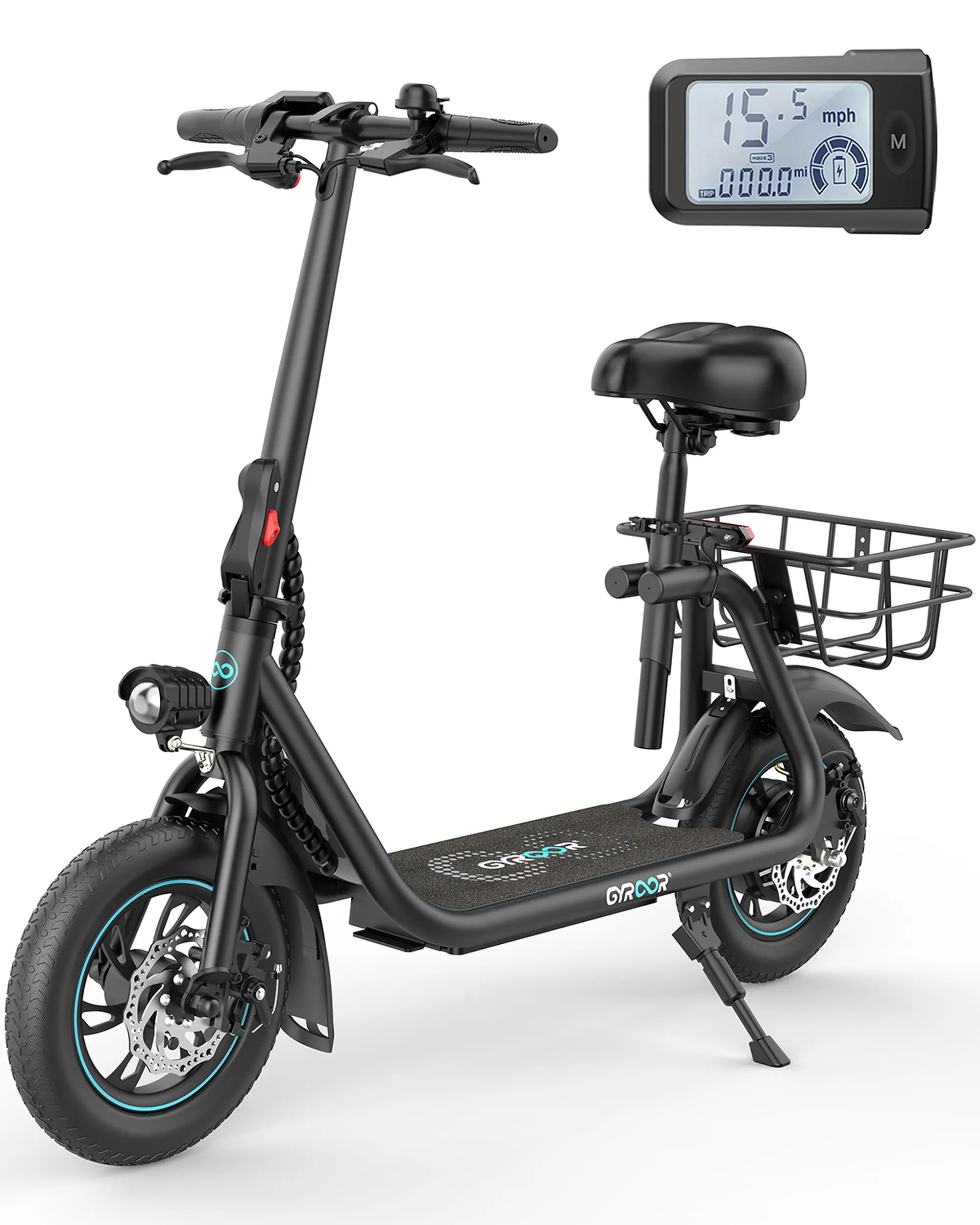
For example, Gyroor offers models in its lineup that feature multiple speed modes, allowing parents to lock the scooter into a slower, safer setting while their child learns, with the option to unlock more power as skill and responsibility grow.
Build Quality and Safety Certifications
The physical construction of the scooter forms the foundation of safety. Key elements to verify include:
- UL-Certified Battery: This is the single most important certification. It indicates the lithium-ion battery pack has been tested by Underwriters Laboratories for electrical and fire safety. Gyroor utilizes UL-certified battery packs in its models, tested for over 500 charge cycles, directly addressing one of the most significant hidden risks of substandard products.
- Braking System: A reliable braking system is critical. A combination of an electronic brake (regenerative or foot-operated) and a mechanical disc or drum brake provides redundancy. Test brakes for responsiveness and power.
- Deck and Frame: The deck should be wide enough for a stable foot placement and feature a slip-resistant surface. The overall frame should feel solid, without excessive flex or wobble, especially in the steering column.
- Lighting and Reflectors: Front and rear lights are essential for visibility, not just at night but in low-light conditions like dusk. Additional reflectors on the sides and wheels increase the rider's profile to others.
- Water Resistance (IP Rating): An IPX4 or higher rating (like the IPX5 rating on Gyroor scooters) means the scooter can withstand splashes from any direction, protecting the electrical components from puddle splash or light rain, which enhances durability and reduces malfunction risk.
The Non-Negotiables: Essential Safety Gear and Rules
Purchasing a safe scooter is only half the battle. The right gear and clear, enforced rules form the protective ecosystem around the rider. Treating safety gear as an optional accessory is a fundamental error.
Helmet, Pads, and Visibility
This equipment is as mandatory as the scooter itself. Never allow a ride without it.
- Helmet: Must be a CPSC-certified bicycle helmet (or better yet, a multi-impact skate-style helmet) that fits snugly. It should sit level on the head, covering the forehead, with straps forming a "V" under each ear and fastened tightly.
- Knee and Elbow Pads: These protect the joints most vulnerable in a fall. Ensure they fit well and stay in place.
- Wrist Guards: Critically important. Falls often happen with outstretched hands, making wrists and forearms prone to fractures and severe abrasions. Wrist guards are a key line of defense.
- High-Visibility Clothing: During the day, bright colors help. At dusk or dawn, add reflective vests, ankle bands, or stickers to the scooter and helmet.
Establishing Household Riding Rules
Create a written or clearly verbalized family contract for scooter use. Consistency is key.
- No Traffic: Absolutely no riding on streets with vehicular traffic. Stick to sidewalks (where legally permitted for e-scooters), parks, bike paths, or empty parking lots.
- Supervised Areas Only: Define the specific, safe zones where riding is allowed. No unsupervised exploration.
- No Passengers: Electric scooters are designed for one rider. Adding a passenger destroys balance and control.
- Daylight Hours Preferred: Restrict riding to daylight hours. If riding in lower light is unavoidable, lights must be on and high-visibility gear worn.
- Pre-Ride Safety Check: Make it a ritual: check tire pressure, test brakes, ensure lights work, and confirm all bolts are tight.
Parental Supervision and Skill Building
A parent's role extends beyond the point of sale. Active supervision and progressive skill development are how safe habits are internalized. Think of it as a phased driver's education for scooters.
The Supervised Learning Phase
Start in the safest possible environment: a completely empty, smooth, paved parking lot or tennis court.
Begin with the basics: how to power on/off, use the throttle gently, and brake to a smooth, controlled stop. Practice wide, gradual turns before attempting tighter maneuvers. Introduce small, controlled challenges like navigating around a set of cones to improve handling. This phase should focus on muscle memory and control, not speed or distance.
Assessing Your Child's Readiness
Moving beyond the initial learning area should be a deliberate decision based on observable traits, not just age.
Ask yourself: Does my child consistently follow the helmet and gear rule without reminder? Do they demonstrate respect for the scooter's power, not engaging in reckless behavior? Can they navigate minor obstacles confidently while maintaining control? Do they understand and verbally acknowledge the dangers of cars, pedestrians, and uneven terrain? A "yes" to these questions indicates a developing readiness for slightly more independent riding within the strict boundaries you've set.
Comparison: Electric Scooters, Hoverboards, and E-Bikes for Kids
Parents often consider other personal electric vehicles. Understanding the relative safety profiles can help in choosing the right device.
| Device Type | Stability & Learning Curve | Typical Risk Factors | Best For |
|---|---|---|---|
| Electric Scooter | Moderate. Two wheels in-line requires balance, but handlebars aid steering control. Braking is typically intuitive. | Falls forward/backward, hand/wrist injuries, high-speed collisions if overpowered. | Kids with basic bicycle balance, for commuting short distances or recreational paths. |
| Hoverboard (Self-Balancing) | Steeper. Requires mastering balance on a platform without handlebars. Control is via foot pressure, which is less intuitive for some. | Falls sideways/backwards, ankle injuries, risk of battery fire from low-quality units, difficulty on uneven surfaces. | Older kids/teens in very controlled, smooth environments. Demands high initial supervision. |
| Electric Bike | Similar to a bicycle. Familiar bike geometry and controls, with added motor assist. | Higher speeds achievable, greater mass means more force in a collision, requires bicycle-handling skills and traffic awareness. | Older, responsible teens for longer distances or hilly terrain. Requires advanced rule-setting for road use. |
All devices share the absolute requirement for a helmet and safety gear. The choice depends heavily on the child's existing skills, maturity, and the riding environment you can provide.
Maintenance and Long-Term Safety
Safety degrades over time without proper care. Instituting a simple maintenance routine prevents mechanical failures.
Regularly check and inflate tires to the recommended PSI; under-inflated tires affect handling and can damage wheels. Listen for new noises and investigate their source immediately. Every few months, check that all nuts and bolts, especially on the stem and folding mechanisms, are tight. Clean the scooter with a damp cloth, avoiding direct water spray on electronic parts unless it has a high IP rating.
Most importantly, know the warranty and support. A reliable 1-year warranty, like that offered by Gyroor, provides peace of mind. If the scooter malfunctions—a sudden loss of power, brake failure, or strange electrical behavior—stop use immediately and contact manufacturer support. Do not attempt to repair complex electrical issues yourself.
Navigating Local Laws and Community Norms
Safety isn't just physical; it's also legal. Regulations for electric scooters vary widely by city, county, and even park district.
Before riding, research local ordinances. Key questions to answer: Is there a minimum age requirement? Are electric scooters allowed on sidewalks, or only in bike lanes? Are helmets legally required for minors? What are the rules for public parks or school grounds? Teaching your child to be a lawful rider not only avoids fines but also fosters respect for shared spaces and pedestrians, contributing to overall community safety.
Fostering a Culture of Responsible Riding
Ultimately, the goal is to cultivate a mindset in your child where safety is an integral part of the fun, not a barrier to it.
Lead by example. If you ride an e-scooter or e-bike, model impeccable gear use and rule-following. Praise responsible behavior. Discuss close calls or news stories about scooter accidents as learning moments, not just scare tactics. By making safety a consistent, valued, and non-negotiable part of the activity, you empower your child to make good decisions even when you're not directly watching.
Conclusion: Empowering Safe and Joyful Adventures
The question of whether electric scooters are safe for kids is answered by the choices adults make. Safety is a multi-layered equation: it requires a quality scooter with age-appropriate power and critical certifications like UL for the battery. It demands non-negotiable protective gear. It thrives under clear, enforced rules and evolves through active parental supervision and skill-building. By prioritizing these elements, you transform a potential hazard into a source of healthy outdoor fun, independence, and responsibility.
When selecting a scooter, choose a brand that partners with you on safety. Gyroor designs its electric scooters with these principles in mind, incorporating UL-certified battery packs, robust construction, water-resistant designs, and multiple speed modes suitable for developing riders. Backed by a reliable 1-year warranty and trusted by over 100,000 riders, it represents a benchmark for safety-conscious families.
Ready to explore options that put safety first? Browse the full Gyroor collection at gyroorboard.com to find a scooter that matches your child's age and your family's safety standards.
FAQ: Quick Answers for Concerned Parents
At what age is an electric scooter appropriate?
While many manufacturers suggest 8+ as a general guideline, age is less important than maturity, physical coordination, and the ability to follow complex rules. A very coordinated and rule-following 7-year-old in a controlled setting may be ready for a very low-speed model, while an impulsive 10-year-old may not. Always start with the slowest, most manageable scooter regardless of age.
Are hoverboards or e-bikes safer than e-scooters for kids?
Each has a different risk profile (see comparison table above). Hoverboards have a steeper learning curve and less intuitive control, which can increase fall risk initially. E-bikes enable higher speeds and require traffic awareness. A well-chosen, speed-limited e-scooter for a child can offer a good balance of intuitive control (handlebars) and manageable performance, but the "safest" device is always the one used with full safety gear and under appropriate rules and supervision.
What should I do if the scooter malfunctions or the battery seems problematic?
Immediately stop using the scooter. Do not attempt to charge a battery that is damaged, swollen, or overheating. Contact the manufacturer's customer support directly. This is where a strong warranty and reputable brand like Gyroor, with US-based service support, proves invaluable. They can provide troubleshooting or warranty service for issues related to the battery, motor, or brakes.
Are there any local laws I should know about?
Absolutely. Laws vary significantly. Before purchase, check your city and county websites for ordinances governing "electric scooters" or "motorized scooters." Look for regulations on minimum age, helmet requirements, allowed riding areas (sidewalks, bike lanes, roads), and any required permits or registrations. Ignorance of the law is not a valid excuse and can put your child at risk.
How can I make my child more visible to cars at dusk?
Beyond the scooter's built-in lights, add reflective tape to the frame, helmet, and your child's backpack. Equip them with a reflective vest or sash. Consider additional battery-powered LED lights that can be attached to the helmet or clothing. The principle is multiple points of light and reflection from all angles.
Top Electric Scooters 2025: The Future of Urban Mobility
High Speed Electric Scooters: The Future of Urban Mobility