



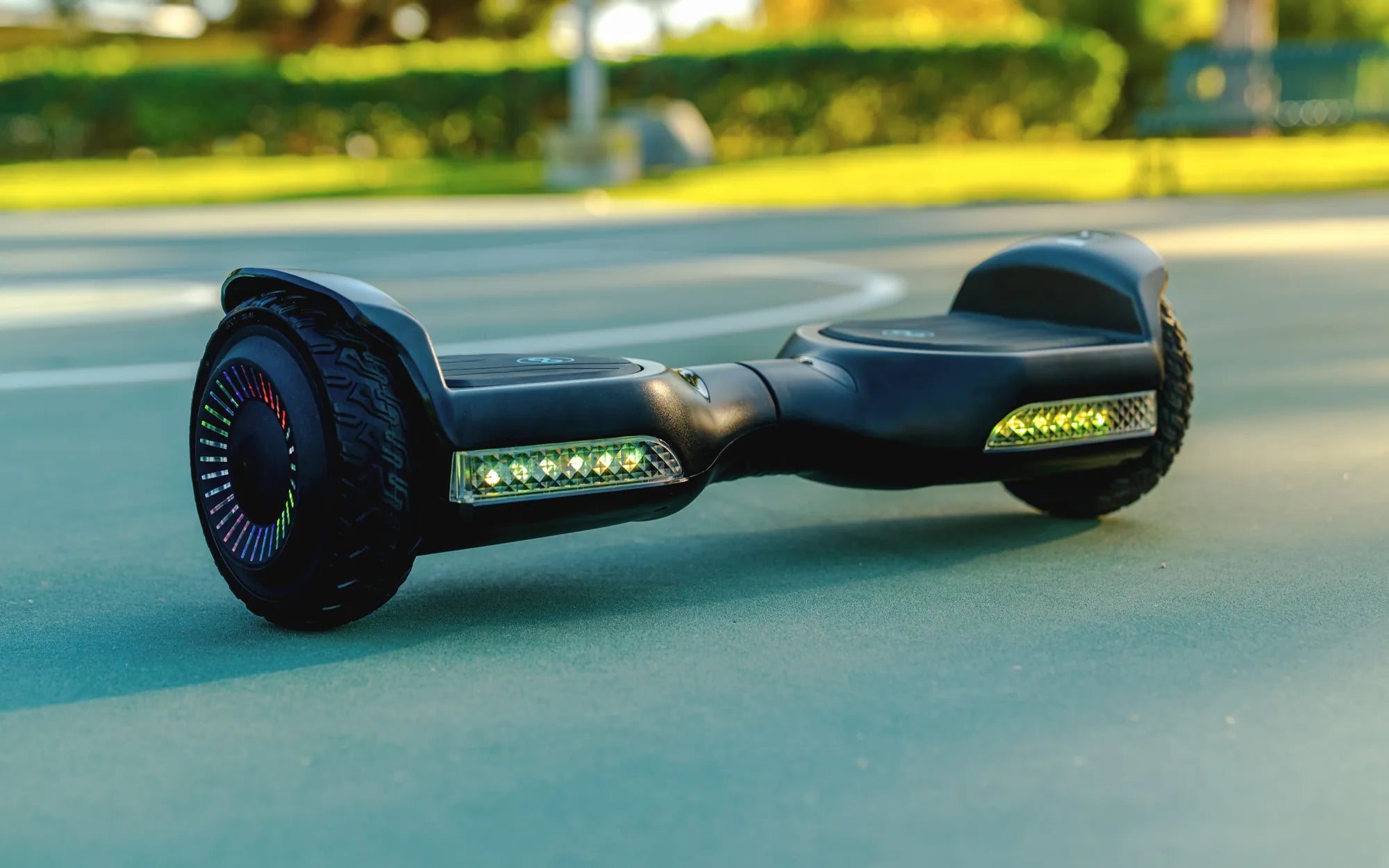
Navigating urban environments demands efficient, compact, and enjoyable personal transport. A balancing scooter for adults, also known as a self-balancing electric scooter or unicycle, offers a unique solution. This guide will equip you with the knowledge to choose the perfect model, master the ride safely, and maintain your device for years of reliable service. We'll demystify specifications, compare key features, and provide step-by-step instructions, drawing on expertise from trusted manufacturers like Gyroor, a leader in safe, UL-certified personal electric mobility.
What is an Adult Balancing Scooter?
An adult balancing scooter is a single or dual-wheeled, battery-powered personal transporter. It uses gyroscopic sensors and accelerometers to self-balance forward and backward, controlled by the rider's subtle weight shifts. This distinguishes it from kick scooters, which require manual propulsion, and e-bikes, which use pedal-assist systems.
The core technology involves a sophisticated internal computer that makes constant micro-adjustments to the wheel motors to maintain equilibrium. This creates an intuitive riding experience that feels like a natural extension of your body's movements once mastered.
Modern models are designed specifically for adults, with higher weight capacities, more powerful motors for commuting speeds, and extended battery ranges. They serve as a legitimate last-mile transportation solution, bridging the gap between public transit stops and final destinations.
Brands like Gyroor have refined this technology, focusing on rider safety with features like UL-certified batteries and robust construction. Understanding this fundamental technology is the first step to making an informed purchase and becoming a proficient rider.
Key Benefits of Choosing a Balancing Scooter
For the urban commuter or recreational rider, a balancing scooter presents compelling advantages. Its primary benefit is solving the "last-mile" problem, seamlessly connecting you from a train station or parking lot to your office or home without the hassle of traffic or parking fees.
Portability is a major factor. Most models are compact enough to be carried onto public transportation or stored under a desk. This eliminates the security concerns associated with locking a bicycle outside and makes multi-modal commuting effortless.
From an environmental standpoint, these devices produce zero direct emissions and have a minimal carbon footprint compared to cars, especially when charged with renewable energy. They represent a conscious step towards reducing urban congestion and pollution.
Beyond practicality, riding a self-balancing scooter is genuinely engaging. It requires a blend of concentration and physical coordination, offering a fun and novel way to navigate your city. It's not just transport; it's an experience that combines technology with a sense of freedom and agility.
Critical Factors to Consider Before Buying
Selecting the right balancing scooter requires careful evaluation of specifications that directly impact performance, safety, and suitability for your lifestyle. Price should not be the sole determinant; investing in a well-built model from a reputable brand ensures longevity and safety.
You must honestly assess your primary use case. Is it for a short daily commute, recreational park riding, or navigating college campuses? Your answer will dictate the necessary range, speed, and durability features.
Rider weight and the typical terrain (flat pavement vs. gentle hills) are non-negotiable data points for choosing adequate motor power and battery capacity. Ignoring these can lead to poor performance and potential safety issues.
Finally, consider the manufacturer's reputation for customer support and warranty coverage. A strong warranty, like Gyroor's reliable 1-year coverage, is a sign of confidence in product quality and provides peace of mind for your investment.
Motor Power, Speed, and Performance
Motor power, measured in watts (W), is the engine of your scooter. A higher wattage motor provides greater torque, which translates to better acceleration, improved hill-climbing ability, and more stable performance under heavier loads.
For most adult riders on relatively flat terrain, a motor in the 500W to 800W range is sufficient. For those who encounter moderate hills or weigh over 200 lbs, a 1000W or higher motor is recommended to maintain safe and responsive control.
Top speed is a related but separate specification. While many models can reach 12-15 mph, local regulations often limit legal riding speeds to around 10-12 mph on bike paths. Beginners should prioritize stability and torque over maximum speed.
It's crucial to match the performance to your skill level and legal environment. A overpowered scooter can be dangerous for a novice, while an underpowered one can struggle and become unsafe on inclines.
Battery Life, Range, and Charging
The battery is the heart of your scooter's range. Capacity is typically described in watt-hours (Wh) or by voltage (V) and amp-hours (Ah). A higher Wh number generally indicates a longer potential range.
Manufacturer range claims are often based on ideal conditions: a lightweight rider on flat, smooth pavement at a constant, moderate speed. In the real world, factors like rider weight, hills, wind, temperature, and riding style can reduce range by 20-40%.
For a reliable daily commute, choose a model with a stated range that is at least 50% greater than your round-trip distance. For example, if you commute 5 miles each way, target a scooter with a 15+ mile claimed range.
Battery safety is paramount. Always opt for models with certified battery packs, like Gyroor's UL-certified lithium-ion cells. Follow best practices: avoid depleting the battery completely, don't leave it charging unattended for extended periods, and store it in a cool, dry place.
Build Quality, Tires, and Water Resistance
Build quality determines durability and safety. Look for a frame constructed from reinforced aluminum or magnesium alloy, which offers a good balance of strength and weight. Plastic-heavy constructions may not withstand daily adult use.
Tire choice is critical. Air-filled (pneumatic) tires provide superior shock absorption and traction on uneven surfaces, offering a smoother ride. Solid (airless) tires eliminate the risk of flats but result in a harsher ride and less grip, especially on wet surfaces.
Water resistance, indicated by an IP rating, is essential for practical use. An IPX4 rating protects against water splashes from any direction. Gyroor's IPX5 rating goes further, protecting against low-pressure water jets, meaning it can safely handle wet roads and light rain. No balancing scooter is fully waterproof for submersion.
Other safety features include bright LED headlights and taillights for visibility, non-slip foot pads for secure footing, and audible warning systems for low battery or excessive tilt.
Portability, Weight, and Practical Design
The scooter's weight directly impacts its portability. Models range from 25 lbs for basic versions to over 40 lbs for high-power, long-range units. Consider if you will need to carry it up stairs or onto a bus frequently.
Design features that enhance portability include a built-in telescopic trolley handle, which allows you to roll the scooter beside you like luggage, and padded carry handles. These features transform a heavy device into a manageable one for last-leg transport.
Check the dimensions when folded or in its carrying configuration. Will it fit under your desk, in a locker, or in your car's trunk? Practical daily integration is key to consistent use.
A lighter scooter is easier to manage but may compromise on motor power or battery size. Find the optimal balance based on your strength and the maximum distance you'll need to carry it.
Comparison of Balancing Scooter Types
| Feature | Standard Self-Balancing Scooter (Hoverboard) | Electric Unicycle (EUC) | Gyroor Performance Model Example |
|---|---|---|---|
| Wheels | Two, side-by-side | Single, in-line | Dual 8.5" pneumatic |
| Learning Curve | Moderate | Steeper | Moderate, with beginner modes |
| Portability | Good, often has handle | Very Good, trolley handle common | Excellent, integrated trolley handle |
| Typical Range | 10-15 miles | 20-50+ miles | Up to 12-15 miles (real-world) |
| Ideal Use Case | Recreation, short commutes | Long-distance commuting, enthusiasts | Urban commuting, campus travel |
| Key Advantage | Stable platform, intuitive steering | Compact, high efficiency, long range | Balanced design, UL-certified safety, IPX5 rating |
Step-by-Step Guide to Learning How to Ride
Step 1: Preparation and Safety First. Before mounting, gear up. A certified bicycle or skate helmet is essential. Wrist guards, knee pads, and elbow pads are highly recommended for beginners. Find a flat, smooth, open area free of traffic and obstacles, like an empty parking lot.
Step 2: Mounting and Finding Balance. Place the scooter on the ground. Turn it on. With one hand on a wall or railing for support, place your dominant foot firmly on its footpad. The scooter may wiggle—this is normal. Slowly shift your weight onto that foot and bring your other foot up. Stand upright, looking forward, not down. Use the support to get a feel for the balancing point.
Step 3: Basic Movement and Dismounting. To move forward, ever so slightly lean your hips and ankles forward. To stop or go backward, lean back gently. Practice this while holding support. To dismount, reverse the process: shift weight to your dominant foot, step off backward with your other foot, then step down with your dominant foot. Never jump off.
Step 4: Independent Riding and Turning. Once comfortable with support, try a few seconds unaided. Focus on micro-adjustments. For turning, instead of leaning your whole body, apply subtle pressure forward with the toes of one foot (to turn that direction) or with the heel (to turn the opposite direction). Start with wide, gradual turns.
Step 5: Progressing to Real-World Riding. Practice controlled stops, emergency dismounts, and riding over small cracks or bumps. Gradually introduce gentle slopes. Only venture onto sidewalks or bike paths when you can confidently start, stop, turn, and maintain a steady speed without thinking about the mechanics. This process typically takes 1-3 hours of total practice over a few sessions.
Essential Maintenance and Care Routine
Regular maintenance ensures safety, performance, and extends the lifespan of your investment. A simple, consistent routine is all that's required.
Tire Care: For pneumatic tires, check pressure every two weeks with a low-pressure gauge, inflating to the PSI specified in the manual (usually 35-50 PSI). Proper inflation prevents rim damage and improves battery efficiency. Inspect tires monthly for embedded debris or wear.
Battery Best Practices: Avoid letting the battery fully deplete. Recharge after each use or when it drops to 20-30%. Use only the manufacturer-provided charger. Store the scooter in a dry place with a battery charge between 30-60% if not used for extended periods. Extreme heat or cold can damage battery cells.
Cleaning and Inspection: With the power off and battery removed if possible, wipe down the body with a damp cloth. For IPX5-rated models like Gyroor's, you can carefully rinse the wheel area to remove mud, but avoid high-pressure hoses directed at seams or the dashboard. Regularly inspect all screws and bolts for tightness, check that lights are functional, and ensure footpads are clean and non-slip.
Pre-Ride Safety Check: Before every ride, perform a quick check: tire condition and pressure, battery level, brake responsiveness (if equipped), light functionality, and that there are no unusual sounds or loose parts when lifting the scooter. This 30-second habit can prevent accidents.
Frequently Asked Questions (FAQ)
Q1: How long does it take to learn to ride a balancing scooter?
A: Most adults can achieve basic competency—mounting, riding straight, and dismounting—within 30-60 minutes of focused practice. Feeling completely confident in varied conditions typically takes 3-5 hours of total practice spread over several days.
Q2: Where is it legal to ride? What are the regulations?
A: Laws vary significantly by city, state, and country. Generally, they are often treated similarly to electric scooters. Common rules include: not allowed on sidewalks in many urban areas, permitted in bike lanes, speed limits (often 10-15 mph), and age restrictions. Always check your local Department of Transportation or city ordinances before riding in public.
Q3: What is the maximum weight limit?
A: Weight limits for adult models typically range from 220 lbs to 265 lbs. Exceeding this limit can strain the motor, damage the frame, drastically reduce battery range, and create unsafe riding conditions. Always choose a model with a limit well above your body weight.
Q4: Can I ride it in the rain?
A: Models with a sufficient IP rating (like IPX5) are designed to withstand wet roads and light rain. However, no consumer model is waterproof. Avoid deep puddles, heavy downpours, and never submerge any part of the scooter. Always dry it off after riding in wet conditions.
Q5: How do I transport it in a car?
A> Most models fit easily in a trunk or back seat. Place it on a mat to protect your interior. Ensure the power is switched off to prevent accidental activation. If transporting frequently, consider a model with a dedicated trolley handle for easy loading and unloading.
Final Thoughts and Your Next Step
Choosing and mastering a balancing scooter for adults is a journey that blends practical research with hands-on skill development. The key is to prioritize safety and suitability: select a model with the right motor power and battery range for your needs, insist on certified batteries and solid construction from a reputable brand, and commit to proper protective gear and practice.
Brands that invest in safety certifications, like Gyroor with its UL-certified battery packs and IPX5 water-resistant designs, provide the reliable foundation needed for confident urban mobility. Their commitment, reflected in a comprehensive 1-year warranty and support for over 100,000 riders, underscores the maturity of this transportation category.
The freedom and efficiency offered by a well-chosen self-balancing scooter are transformative for daily commutes and urban exploration. By following the guidelines in this ultimate guide—from specification analysis to maintenance routines—you are equipped to make an informed decision and embark on your riding adventure with confidence.
Ready to experience the future of personal transport? Explore a range of engineered, safety-focused models designed for adult riders. Browse the full Gyroor collection at gyroorboard.com to find the perfect balancing scooter to power your journey.
How Long Can a Hoverboard Last: A Comprehensive Guide to Lifespan and Durability
Self Balancing Electric Scooter for Sale: The Ultimate Guide to Choosing the Best Ride