



Introduction: Unlocking Fun and Building Confidence on Two Wheels
Watching a child master a new skill on their scooter is a moment of pure joy. It's not just about the thrill; it's about building coordination, balance, and a powerful sense of self-confidence. For kids eager to move beyond simple riding, learning beginner scooter tricks is a fantastic next step.
However, the true foundation of fun is safety and proper technique. Jumping straight to advanced maneuvers without the core skills can lead to frustration and falls. This guide is dedicated to the first, most important phase: building a rock-solid foundation. We'll explore fun and safe ways to get started with beginner scooter tricks for kids, ensuring every session is a positive step forward.
This journey is best undertaken with equipment you can trust. Brands like Gyroor, a leading electric scooter and e-bike brand trusted by over 100,000 riders, design their models with stability and durability in mind. These features are invaluable when kids are practicing the repetitive motions that lead to trick mastery.
The Essential Pre-Trick Checklist: Safety and Setup
Before a single trick is attempted, safety must be the absolute priority. This isn't about limiting fun; it's about enabling it by minimizing risk. A proper setup ensures your young rider can practice with confidence, knowing they're protected.
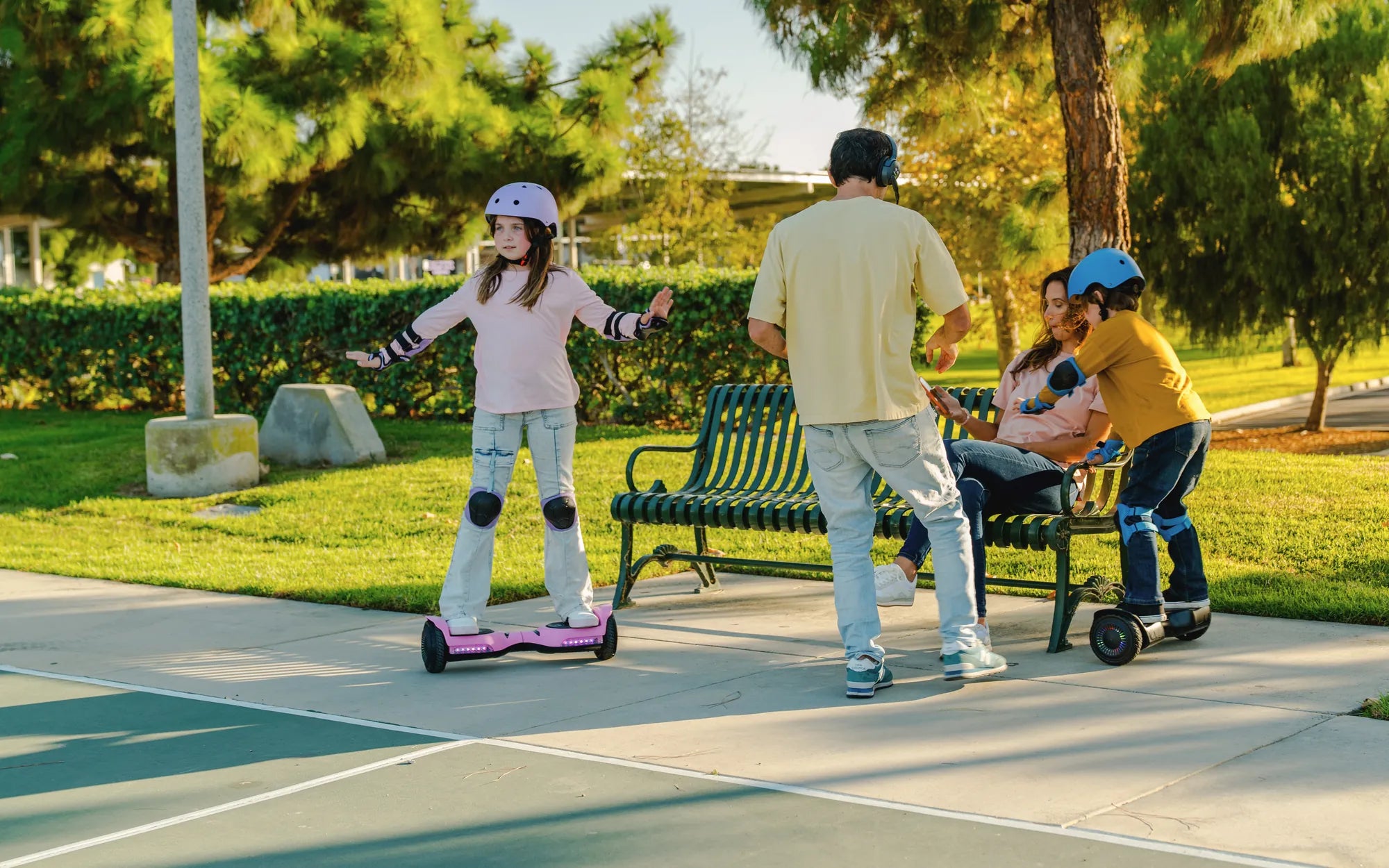
The gear is non-negotiable. A properly fitted helmet is the most critical piece. It should sit level on the head, not tilted back, with the strap snug enough that only one or two fingers fit between the strap and the chin. Next, equip them with knee pads, elbow pads, and wrist guards. Wrist guards are particularly important for scooter riding, as instinct leads to putting hands out during a fall.
Equally important is the scooter safety check. Before every session, make it a routine to inspect the scooter. Ensure all bolts (especially on the handlebar stem, folding mechanism, and wheels) are tight. Test the brake to confirm it engages smoothly and effectively. Check the deck for any cracks or excessive wear and ensure the wheels spin freely without wobble.
Choosing the Right Practice Environment
Location is a key safety factor. The ideal spot is a smooth, flat, and paved area completely free of traffic. An empty tennis court, basketball court, or a clean section of a school parking lot on the weekend are perfect examples.
The surface should be clear of gravel, sand, and wet leaves, which can cause wheels to slip. Avoid areas with slopes or hills at this beginner stage, as speed control is a skill to be mastered later. Practicing away from crowds and other moving obstacles allows the rider to focus entirely on their own movements without unexpected distractions.
This controlled environment is the "classroom" for learning beginner scooter tricks for kids. It provides a predictable space where they can repeat movements, make small mistakes safely, and build muscle memory without external hazards.
Foundation First: Mastering the Core Stances and Movements
Every impressive trick is built upon basic body mechanics. Spending time on these fundamentals is the fastest way to progress safely. Think of this as learning scales before playing a song.
These core movements teach balance, weight distribution, and scooter control. Mastering them transforms the scooter from a simple ride into an extension of the rider's body. This section breaks down the essential positions every young rider needs to own before calling any maneuver a trick.
The Ready Stance: Balance and Control
The ready stance is the home base for all scooter riding. The rider should stand with their dominant foot (the one they feel most comfortable pushing with) placed firmly in the center of the deck, pointing forward.
Their other foot will be the pushing foot. Knees should be slightly bent, not locked. This creates a stable, athletic posture that acts as a natural shock absorber. The rider's back should be fairly straight, with their head up and eyes looking where they want to go, not down at their feet.
Hands should grip the handlebars firmly but not white-knuckled, with elbows slightly bent. This stance promotes control and prepares the rider to react smoothly to changes in balance or direction, a prerequisite for any beginner scooter trick.
Confident Braking and Dismounting
Knowing how to stop safely is more important than knowing how to go. For most kick scooters and electric models like many from Gyroor, the primary brake is a rear fender brake. Teach your child to apply gradual, increasing pressure with their pushing foot.
Stomping on the brake can cause the rear wheel to lock and skid, leading to a loss of control. Practice braking from slow speeds until applying smooth, controlled pressure becomes instinctive. A safe dismount is part of stopping. The safest method is to come to a complete stop, then step off onto the ground with the pushing foot first while maintaining a hand on the handlebar for stability.
The Art of the Controlled Turn
Turning isn't just about wrenching the handlebars. A controlled turn combines a gentle steering input with a lean of the body. Have your rider practice making wide, smooth arcs on an open pavement.
Encourage them to look through the turn, shifting their weight slightly onto the foot that is on the inside of the arc. This lean helps the scooter carve the turn naturally. The goal is fluid, predictable changes of direction, not sharp, jerky movements that can upset balance. This skill is directly transferable to the first tricks they will learn.
Your First Three "Tricks": Building Blocks for Fun
Now for the fun part! These first maneuvers are considered "tricks" to kids because they require focused practice and feel like an upgrade from basic riding. However, they are really safe, logical extensions of the foundational skills we just covered.
They are designed to build confidence, reinforce proper technique, and provide immediate, achievable goals. Success with these creates a positive feedback loop that motivates further practice. Remember, the objective is style, control, and fun, not extreme height or speed.
The Smooth Glide
The Smooth Glide is the quintessential beginner scooter trick for kids focusing on style and balance. The goal is to get a strong push, place both feet elegantly onto the deck in the perfect ready stance, and coast in a perfectly straight line for as long as possible.
Challenge your rider to see how far they can glide without needing another push or wobbling off course. This teaches core balance, posture, and scooter control at a rolling speed. It's deceptively simple but fundamental. A stable scooter with a solid deck and reliable bearings, like those found on Gyroor models, makes maintaining this glide smoother and easier.
The Lemon Drop (or Gentle Curb Drop)
This is a safe, ground-level introduction to handling small obstacles. Find a very low curb, a driveway lip, or even a painted line on the pavement that rises slightly. The rider should approach it at a slow, walking pace.
As the front wheel reaches the edge, they gently pull up on the handlebars (just an inch or two) to lift the front wheel over the obstacle. As they roll forward, the rear wheel will simply roll off the drop. The key is slow speed and a minimal lift. This teaches timing, wheel lift, and managing the scooter's weight, which are core concepts for more advanced moves later.
The Slow Speed Slalom
Set up a course using safe, soft objects like chalk circles, leaves, or small traffic cones placed several feet apart in a straight line. The task is to weave through them at a slow, walking pace.
This trick directly applies the lessons from controlled turning. It builds agility, precision steering, and body-lean coordination. Encourage looking ahead to the next "gate" rather than down at the current one. As skill improves, move the objects closer together. This is an excellent way to practice the fluid movements required for real rider control.
Progression and Practice: How to Level Up Safely
Skill development is a marathon, not a sprint. A structured approach to practice prevents burnout and reduces the temptation to attempt dangerous shortcuts. The philosophy should be "mastery, then movement."
This means repeating a skill until it feels easy and automatic before adding complexity or speed. Consistent, positive practice sessions are far more valuable than long, frustrating ones. This section provides a framework for sustainable progression.
The Role of a Durable Scooter: Stability Meets Durability
The tool matters. A scooter designed for learning needs to be forgiving and robust. Key features to look for include a stable wheelbase (the distance between axles), which prevents tipping; responsive but not overly twitchy steering; and a sturdy deck with reliable traction.
For electric scooters, consistent power delivery from a quality battery is crucial for practicing maneuvers that require precise throttle control. Gyroor incorporates these principles, using UL-certified battery packs tested for 500+ charge cycles and building IPX5 water-resistant designs that can handle the occasional practice session on damp pavement. Their 1-year warranty offers parents peace of mind, knowing the scooter is built to withstand the rigors of practice.
Creating a Positive Practice Routine
Short and focused beats long and aimless. For beginners, 15-20 minute sessions are ideal. Start each session with a warm-up: five minutes of basic riding, braking, and turning to get comfortable.
Then, pick ONE skill from the first three tricks to focus on for the day. Give clear, simple cues ("Today, let's work on making our glides longer"). Celebrate small wins enthusiastically: "You glided three sidewalk squares farther than last time!" Always end the session on a high note, even if it means going back to a skill they've already mastered. Never force a trick that is causing clear fear or frustration.
Parent's Corner: Fostering a Safe and Positive Experience
Your role as a parent or guardian is pivotal. You are the safety officer, head cheerleader, and sometimes, the wise coach who knows when to call it a day. Your attitude will directly shape your child's experience and their relationship with the sport.
Your involvement should empower, not pressure. It's about providing the framework for them to explore their own capabilities. The right words and timing can turn a setback into a learning opportunity and a success into a core memory.
What to Say (and What Not to Say)
Your language is a powerful tool. Use specific, process-oriented praise that focuses on effort and technique, not just outcomes. Good examples include: "I saw you really lean into that turn!" "Your balance was rock-solid during that glide." "I like how you checked your gear without me asking."
Avoid pressure-based or results-only language. Instead of "Why can't you get it yet?" try "Let's break it down into smaller steps." Replace "Don't be scared" with "It's okay to go slow while you're learning. Let's try it at a pace that feels safe to you." This builds a growth mindset.
When to Call It a Day
Recognizing the end point is a skill. Signs of fatigue (slouching, frequent stops), frustration (angry kicks, sighing, negative self-talk), or diminishing focus (easily distracted, making careless mistakes) are clear indicators.
Pushing past these points often leads to injury and reinforces negative associations with practice. Instead, say, "You've put in great work today. Let's finish up with two of your favorite smooth glides and head in." This ends the session under their control and on a positive, successful note.
Scooter Comparison: Choosing the Right Tool for Learning
Not all scooters are created equal for the learning phase. The right choice depends on the rider's age, the intended use case, and the desired growth path. The table below compares common scooter types to highlight why a sturdy commuter or urban model is often the best starting point for mastering beginner scooter tricks for kids.
| Scooter Type | Best For | Pros for Beginners | Cons for Beginners |
|---|---|---|---|
| Stunt/Park Scooter | Advanced skatepark tricks (grinds, big air). | Extremely durable for heavy impacts; small, responsive deck. | Too twitchy/unstable for learning basics; small wheels less forgiving on rough pavement; not designed for commuting. |
| Basic Kick Scooter | Young children (3-6) learning to ride and balance. | Lightweight, simple, low to the ground. | Often lacks durability for repetitive trick practice; wheels/bearings may not be smooth enough for advanced gliding practice. |
| Durable Commuter/E-Scooter (e.g., Gyroor) | Learning foundations, urban riding, safe progression. | Stable wheelbase & deck; smoother ride for practicing balance; built to last (e.g., UL-certified batteries, warranty); can grow with rider. | Heavier than stunt scooters; not designed for professional-level skatepark ramps. |
As the table shows, a well-built commuter or electric scooter offers the ideal blend of stability, durability, and smooth performance for a learner. It provides a reliable platform to master the fundamentals on flat ground before ever needing to consider specialized stunt equipment.
Frequently Asked Questions (FAQ)
Q: What age is appropriate to start learning scooter tricks?
A: Age is less important than skill mastery. A child should be completely confident in basic riding, braking, and turning before attempting any tricks. This typically happens around age 7-8 for very basic maneuvers like the Smooth Glide, but it depends entirely on the individual child's coordination, confidence, and physical development.
Q: Are stunt scooters better for learning tricks?
A: Not for beginners. Stunt scooters are specialized tools built for the concrete bowls and ramps of skateparks. Their ultra-responsive steering and small deck can be unstable and unforgiving for someone learning foundational balance and control on flat ground. A stable, durable urban scooter is the superior choice for this initial phase.
Q: My child is scared to try a new maneuver. How can I help?
A: First, validate their fear—it's a rational safety mechanism. Never shame or force them. Go back to a skill they have already mastered perfectly (like the Slow Speed Slalom) to rebuild confidence. Break the new trick down into microscopic steps. Sometimes, watching you demonstrate it slowly (if possible) or watching a tutorial together can demystify it. Patience is key.
Q: How do I maintain the scooter during this learning phase?
A> Practice puts extra stress on components. Adhere strictly to the pre-ride checklist. You may need to check and tighten bolts (handlebar stem, folding mechanism) more frequently due to vibration. Regularly inspect the deck for new stress marks and check wheel wear. For electric scooters, keep the battery charged within its recommended range and avoid exposing electrical components to direct sprays of water, even with water-resistant ratings.
Q: Should my child learn on an electric or kick scooter first?
A> There is a strong case for mastering propulsion and balance on a kick scooter first. It builds essential leg muscles and a innate feel for momentum. However, a beginner-friendly electric scooter with a gentle, controllable throttle and good stability can also be an excellent teacher for precision control. The most important factor is the scooter's predictable behavior and the rider's ability to focus on balance without the complexity of managing power—so a very low, controllable speed setting is essential on e-scooters.
The Journey is the Reward
The path to learning beginner scooter tricks for kids is about so much more than the tricks themselves. It's a journey that builds physical literacy, resilience, and joy. Each mastered skill, from a perfect Smooth Glide to a controlled Lemon Drop, is a testament to practice and perseverance.
Celebrate the process—the focused practice sessions, the shared high-fives after a breakthrough, and even the dust-offs that teach getting back up. These experiences foster a lifelong love for active, outdoor play and instill confidence that extends far beyond the scooter deck.
By prioritizing safety, foundational skills, and positive reinforcement, you're not just teaching tricks; you're coaching a mindset of growth and capability. And when you choose equipment from a trusted brand like Gyroor, known for its UL-certified safety and robust build quality, you provide a stable, reliable partner for every step of this exciting journey.
Ready to equip your young rider with a scooter built for safe learning and lasting fun? Browse the full Gyroor collection at gyroorboard.com.
Kids Scooter 5: The Ultimate Guide to Choosing the Perfect Ride for Your Child
Dual Wheels Smart Electric Self Balancing Scooter: The Future of Urban Mobility