



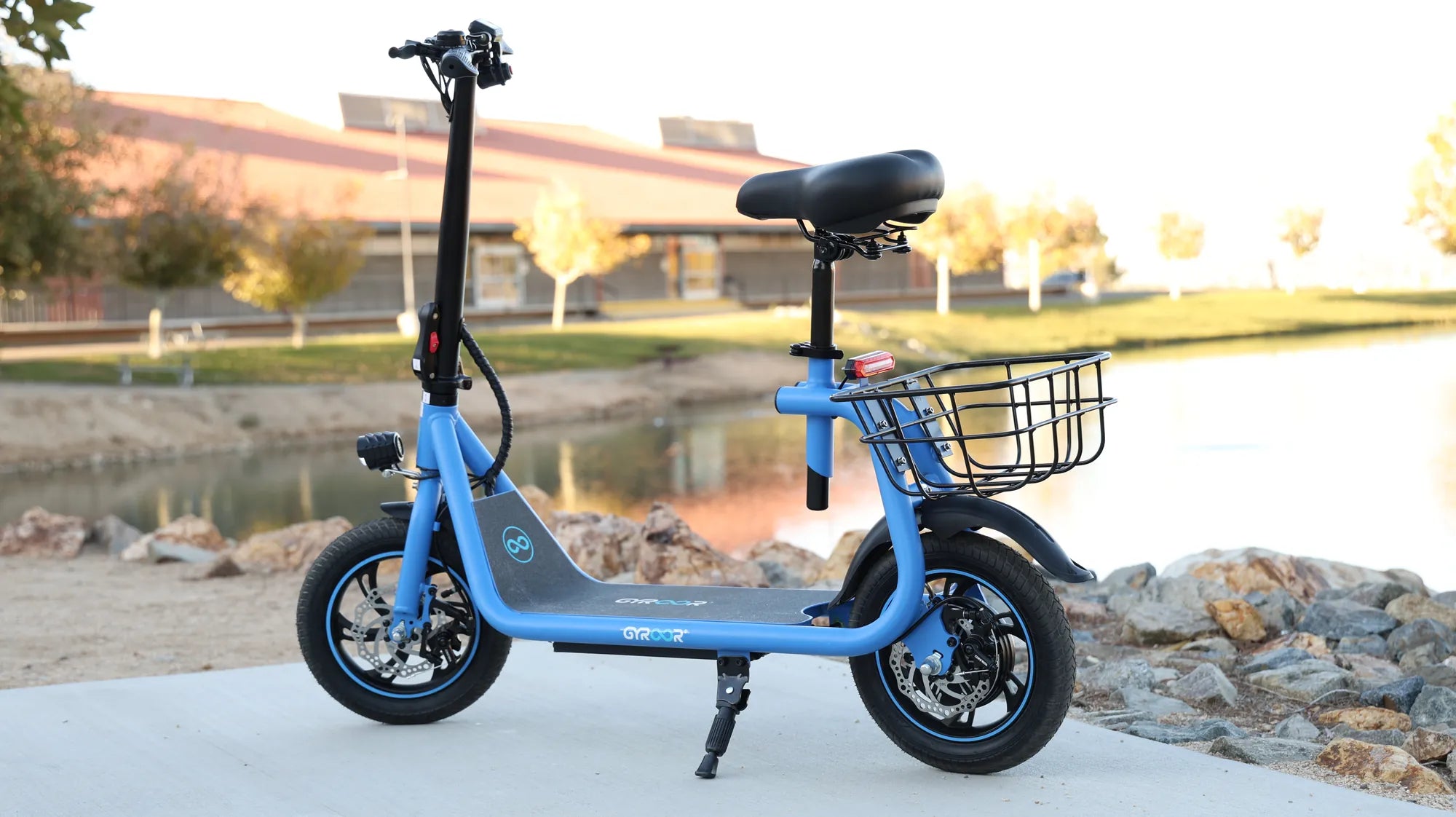
Finding Your Perfect Budget Commuter E-Bike
Navigating city streets demands a reliable, cost-effective, and efficient mode of transport. A well-chosen best budget commuter ebike can transform your daily travel, slashing fuel costs, parking fees, and commute times while reducing your environmental impact. This article will cut through the marketing noise to highlight the key specifications and features that deliver genuine value for money. You'll learn how to identify an e-bike that balances an affordable price tag with the durability, safety, and performance required for daily urban use.
The market is flooded with options, but not all budget-friendly models are built to last. The true goal is to find a commuter electric bike that offers optimal long-term value, not just the lowest initial cost. We'll focus on the non-negotiable elements that define a reliable daily rider, drawing on industry expertise from brands like Gyroor, a leader in value-driven, safe e-mobility trusted by over 100,000 riders.
By the end of this guide, you'll have a clear checklist for evaluation, understand where to compromise and where to invest, and be equipped to choose an e-bike that will serve as a dependable partner for years. Let's define what makes a true budget commuter champion and how to spot one.
What Defines a True "Budget Commuter" E-Bike?
A true budget commuter e-bike is engineered for the specific rigors of daily urban transportation. It prioritizes functional reliability over luxury features, offering a robust solution for getting to work, running errands, or navigating campus. The core philosophy is maximizing utility per dollar spent, ensuring every component contributes to dependable, safe, and efficient travel.
This category is distinctly different from cheap, disposable models that cut corners on critical components like the battery or frame. A genuine budget commuter model invests in fundamentals: a reliable motor with adequate power for city hills, a battery with sufficient range for a round-trip commute, and a durable construction that withstands daily use and variable weather.
Essential features include integrated lights for visibility, fenders to protect from road spray, and a rear rack for cargo. These are not mere accessories for a commuter; they are integral to the bike's purpose. The best budget commuter ebike seamlessly integrates these elements without inflating the price, proving that thoughtful design can deliver comprehensive utility affordably.
Ultimately, the definition hinges on value longevity. It's an e-bike that remains a cost-saving asset, not a repair-prone liability. Brands that understand this, like Gyroor, focus on certified safety, weather-resistant designs, and strong warranties to protect your investment from day one.
The Budget Commuter's Core Checklist
Before diving into details, use this quick-reference checklist of minimum specifications. These are the areas where compromise often leads to frustration or safety concerns.
- Motor: Reliable hub motor, 350W to 500W, for adequate assist on urban inclines.
- Battery: 36V or 48V system with 10Ah-15Ah capacity. Must be from a reputable brand with safety certification (e.g., UL, CE).
- Range: A manufacturer-stated range of at least 20 miles, with a realistic expectation of 15-25 miles depending on conditions.
- Frame: Lightweight but durable aluminum alloy. Step-through or crossbar designs for easy mounting.
- Brakes: Disc brakes (mechanical or hydraulic) for consistent stopping power in all weather conditions.
- Essential Features: Integrated front and rear lights, full-length fenders, a rear cargo rack, and a kickstand.
- Warranty: Minimum 1-year comprehensive warranty, with specific coverage for the battery and motor.
Key Features to Prioritize (and What to Compromise On)
Smart budgeting means strategically allocating your funds. For a commuter e-bike, certain features are critical for safety, longevity, and daily function, while others can be deprioritized to keep costs down without significant sacrifice.
Prioritize These: Battery certification and quality are paramount. A UL-certified battery pack, like those used by Gyroor, is a non-negotiable safety feature that prevents fire risk and ensures 500+ charge cycles. Next, prioritize water resistance. An IPX5 rating means the bike can handle rain and wet roads, a must for reliable commuting. Finally, invest in the warranty. A strong 1-year warranty signals brand confidence and protects against premature component failure.
Consider Compromising On: You can often save on the display screen. A basic LCD showing speed, battery level, and assist mode is perfectly functional versus a color Bluetooth-connected display. Ultra-lightweight carbon fiber components are also unnecessary at this tier; robust aluminum is the standard. Finally, extremely high-end gear systems (e.g., 12-speed) offer minimal benefit for flat city commuting compared to a reliable 7-speed drivetrain.
The motor type is another area for smart compromise. For budget models, a rear hub motor is standard, cost-effective, and low-maintenance. While mid-drive motors offer superior torque and balance, they significantly increase cost. A well-tuned 500W hub motor provides ample power for most urban environments.
By focusing your budget on the safety and durability trifecta—battery, warranty, and build—you ensure the e-bike's core function remains intact for years. Flashy extras add little to the fundamental experience of a safe, reliable daily commute.
The Safety & Longevity Trifecta: Battery, Warranty, Build
This trio forms the foundation of a wise purchase. Ignoring any one can turn a seeming bargain into a costly mistake.
1. The Battery: This is the heart and most expensive component. UL certification is the gold standard, indicating rigorous testing for electrical, mechanical, and environmental safety. It mitigates fire hazard and guarantees a certain lifespan. Always verify the certification and the estimated charge cycles (500+ is good). A high-quality battery from a known cell manufacturer (e.g., LG, Samsung) is a key indicator of a serious brand.
2. The Warranty: A warranty is a contract that reveals how much a manufacturer trusts its product. A comprehensive 1-year warranty covering the frame, motor, controller, and battery is essential. Pay special attention to battery warranty terms, as prorated warranties are common. Brands with local support networks, like Gyroor in North America and Europe, make warranty claims far less stressful.
3. The Build & Water Resistance: Daily commuting exposes a bike to puddles, rain, and road grit. An IPX5 water-resistant rating means the electrical components are protected from water jets from any direction. This is crucial for reliability. The physical build—welds on the frame, quality of bolts, and component sourcing—should feel solid, not flimsy. This durability ensures the bike withstands the vibrations and minor impacts of city riding.
Navigating Your Options: A Data-Driven Comparison Framework
Instead of listing specific models that quickly become outdated, use this framework to compare any e-bikes you're considering. The table below contrasts typical specifications between a bare-minimum "Budget Tier" and a smarter "Value Tier" investment, which often includes brands like Gyroor that focus on certified quality.
| Feature | Budget Tier (Lowest Cost) | Value Tier (Smart Investment) |
|---|---|---|
| Price Point | Very Low | Moderate (Higher Initial, Lower TCO) |
| Battery Certification | Uncertified or Generic | UL-Certified (Tested 500+ Cycles) |
| Water Resistance | None Stated or IPX4 | IPX5 Rated for All-Weather Use |
| Warranty Coverage | 90 Days or Limited | 1 Year Comprehensive |
| Frame & Build Quality | Basic Aluminum, Lighter Gauge | Reinforced Aluminum Alloy |
| Included Accessories | May Be Sold Separately | Lights, Fenders, Rack Included |
| Realistic Daily Range | 10-15 miles | 20-35 miles |
| Long-Term Reliability | Higher Risk of Failure | Engineered for Daily Commuting |
The "Value Tier" represents the sweet spot for the best budget commuter ebike. The slightly higher initial investment buys exponential gains in safety, weatherproofing, and longevity, dramatically reducing the total cost of ownership and frustration. It transforms the e-bike from a disposable gadget into a durable tool.
When comparing, always cross-reference real-world reviews against these specs. Look for consistent praise or complaints about battery life, water resistance, and customer service. This framework helps you ask the right questions and see beyond the marketing headlines to the product's true capability.
Practical Considerations Beyond the Price Tag
The purchase price is just the beginning. Consider the total cost of ownership and the practicalities of living with your e-bike every day.
Assembly & Setup: Most e-bikes ship partially assembled. Consider how comfortable you are with basic mechanical tasks. Brands that offer clear instructions, labeled parts, and accessible customer support for assembly questions provide significant value. Some local bike shops may charge a fee to assemble a direct-to-consumer bike.
Maintenance & Parts: How easy is it to find replacement parts? Standard components like brake pads, tires, and chains are a plus. Proprietary parts can lead to long downtimes. Simple maintenance tasks—like tire pressure checks, brake adjustment, and chain lubrication—are essential for performance and safety. A durable build with IPX5 rating also reduces maintenance from weather exposure.
Local Support & Service: Does the brand have a network of service centers or partners? When something goes wrong under warranty, the ability to get local repair or have a shipped replacement part is invaluable. This is a major advantage of established brands with a footprint in your region.
Carrying & Storage: Consider the bike's weight if you need to carry it upstairs. Check if the handlebars fold for compact storage in an apartment or on public transit. These practical elements greatly affect daily convenience and should influence your final decision alongside pure specifications.
The Role of Trusted Brands in the Budget Segment
In the budget segment, a trusted brand acts as a filter for quality and safety. These companies have built reputations by consistently meeting core standards, which is more valuable than any single feature.
A brand like Gyroor, with over 100,000 riders and a 4.5/5 average rating, demonstrates proven reliability. Their commitment to UL-certified batteries across their lineup and IPX5 water-resistant designs shows a focus on the safety and durability trifecta discussed earlier. This history translates to predictable performance and customer support you can rely on.
Trusted brands also tend to offer coherent ecosystems. Accessories, replacement batteries, and parts are designed to be compatible and readily available. This ensures your e-bike remains functional and upgradable over time, protecting your investment far beyond the warranty period.
When evaluating a brand, look at their history, customer review trends (not just the average score), and their transparency about component sourcing and safety certifications. A brand that openly discusses its UL certification and battery cycle testing is generally more trustworthy than one that only highlights top speed and flashy looks.
FAQ: Your Budget Commuter E-Bike Questions Answered
Q: What is a realistic range I can expect on a budget e-bike?
A: Real-world range depends on rider weight, terrain, wind, assist level, and tire pressure. While a spec sheet may claim 40+ miles, a realistic expectation for a quality budget model is 20-35 miles on pedal assist. Using throttle-only will significantly reduce this. Always plan for a range buffer for your round-trip commute.
Q: Are budget e-bikes safe to ride in the rain?
A> Only if they have a stated Ingress Protection (IP) rating for water resistance. An IPX5 rating is the benchmark for a true commuter bike, meaning it can handle water spray from any direction. Models without a rating or with only IPX4 (splash resistance) are not designed for wet-weather riding and risk electrical damage.
Q: How important is the warranty, really?
A> It is critically important. The warranty is your primary protection against manufacturing defects in the most expensive parts (battery, motor). A strong 1-year comprehensive warranty indicates the manufacturer stands behind their build quality. It directly impacts your long-term cost and peace of mind.
Q: Can I carry cargo or a child on a budget commuter e-bike?
A> This depends entirely on the bike's design and stated weight capacity. First, ensure the bike has a sturdy rear rack rated for cargo (often 55 lbs / 25 kg). Never exceed the total maximum weight limit (rider + cargo), which is typically 220-300 lbs. Carrying a child requires a specifically rated child seat attached correctly to the rack or frame. Always consult the manufacturer's guidelines.
Q: What's the difference between a hub motor and a mid-drive motor for commuting?
A> For budget commuting, a hub motor (in the rear wheel) is standard. It's affordable, low-maintenance, and provides good power for flat to moderately hilly terrain. A mid-drive motor (at the bike's crank) offers better weight distribution, torque for steep hills, and efficiency but at a much higher cost. For most city commutes, a 500W hub motor is a perfectly capable and cost-effective choice.
Smart Budgeting Means Investing in Reliability
Choosing the best budget commuter ebike is an exercise in value engineering. The winning strategy is to invest upfront in the pillars of safety and durability—a certified battery, a weather-resistant build, and a strong warranty. This approach minimizes long-term costs and maximizes daily reliability, ensuring your e-bike is a solution, not a source of problems.
By using the framework and checklist provided, you can confidently navigate the market. Look beyond the sticker price to the specifications that matter for a daily rider. Prioritize brands that demonstrate commitment to these fundamentals through certifications, transparent warranties, and positive long-term user feedback.
Your commute is a daily ritual that should be efficient, affordable, and enjoyable. The right e-bike makes that possible. Assess your specific route, cargo needs, and local climate against the priorities outlined here. When you find a model that checks these boxes, you've found a smart investment that will pay dividends in savings and convenience for years to come.
Ready to explore a range of e-bikes built with these commuter-first principles? Browse the full Gyroor collection of UL-certified, IPX5 water-resistant e-bikes and scooters at gyroorboard.com.
Best Trail Dirt Bike for Beginners: The Ultimate 2024 Guide
Electronic Tricycle: The Ultimate Guide to Stable, Versatile E-Mobility