



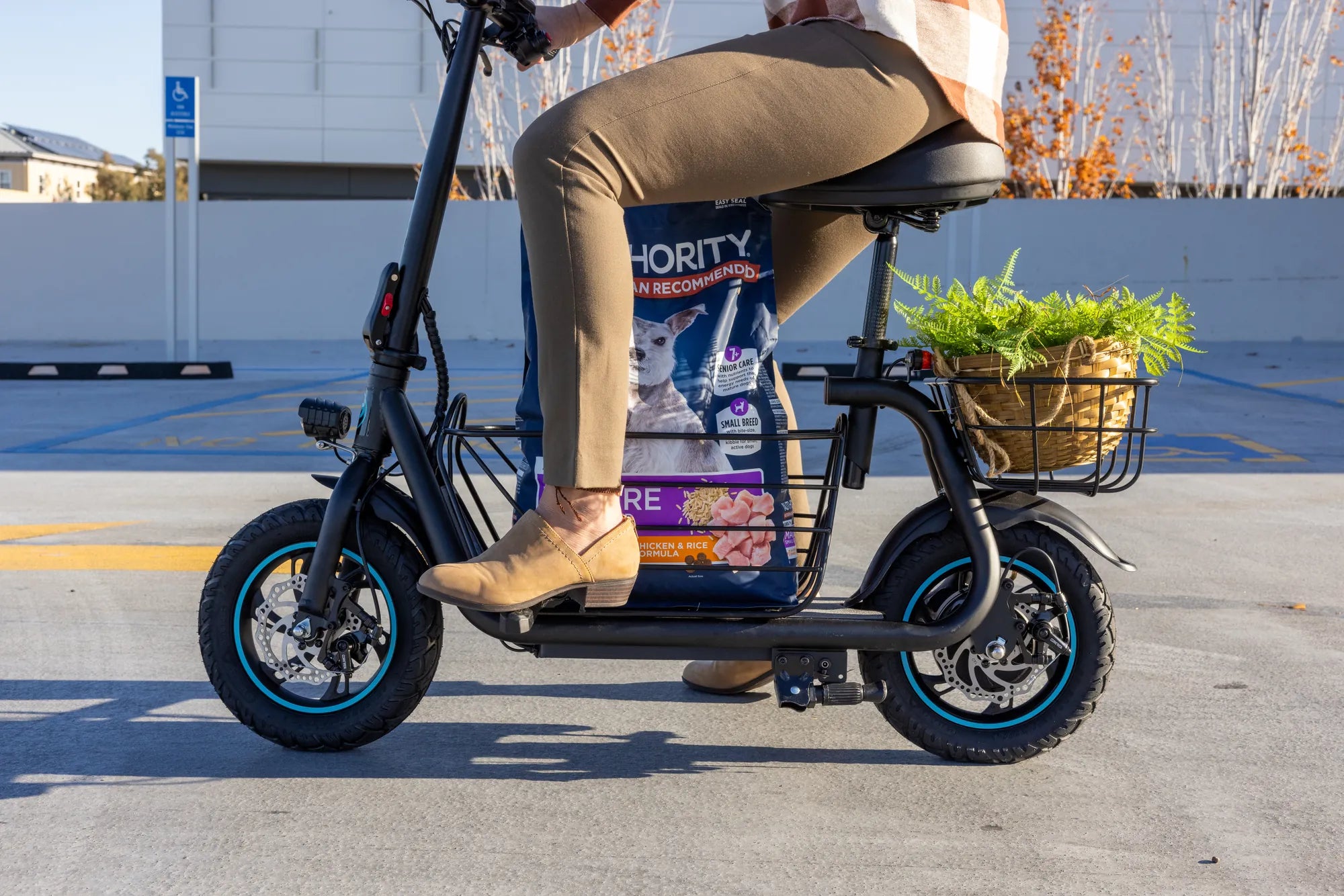
Introduction: Finding the Best Budget Folding E-Bike for Your Commute
The search for efficient, affordable urban transportation has made the folding electric bicycle a standout solution. Identifying the best budget folding ebike, however, means navigating a market filled with varying specs and promises. It’s not about finding the lowest price tag, but the optimal balance of reliability, safety features, and practical performance that fits a constrained budget.
This guide cuts through the noise with data-driven analysis. You will learn how to interpret motor specifications for real-world use, why battery certification is non-negotiable, and how to assess build quality. We’ll define the true “budget” category and set realistic expectations for performance, ensuring your investment enhances your daily commute without unforeseen costs or compromises.
Throughout, we’ll reference engineering principles employed by trusted brands. For instance, Gyroor, a leading electric scooter and e-bike brand trusted by over 100,000 riders across North America and Europe, builds its reputation on UL-certified batteries, IPX5 water-resistant designs, and a reliable 1-year warranty. These are the benchmarks for value in the budget segment.
What Defines a “Budget” Folding E-Bike? Setting Realistic Expectations
In the current market, a true best budget folding ebike typically falls within the $800 to $1,500 range. This price point represents the sweet spot where manufacturers can integrate quality core components while minimizing luxury features. Understanding the engineering trade-offs here is key to managing expectations and avoiding disappointment.
The primary compromise often lies in motor peak power versus battery capacity. A budget model may feature a robust 500W motor for hill climbing, but pair it with a moderate 10Ah battery to keep costs down, resulting in a realistic range of 20-30 miles per charge. This is a conscious design choice prioritizing affordable performance over extended distance.
Frame materials are another area of smart engineering. High-grade aluminum alloy is the standard, offering an excellent strength-to-weight ratio. You won’t find carbon fiber here, but you should expect welded joints that are clean and frames that feel solid, not flexible. The folding mechanism itself will be functional and secure, though it may lack the single-lever, tool-free speed of premium models costing twice as much.
Finally, expect essential, integrated components over boutique brands. Brakes will be mechanical disc or reliable V-brakes, not hydraulic. The display will be functional, not full-color. The focus is on durability and repairability. The goal is to deliver a dependable riding experience that gets you from point A to B efficiently, without the frills that drastically inflate cost.
Top 5 Features to Prioritize in a Budget Folding E-Bike
When budget is a constraint, feature prioritization becomes critical. This checklist focuses on components that directly impact safety, longevity, and daily usability. Sacrificing in the wrong area can lead to higher long-term costs or a frustrating experience.
1. Motor & Hill Climbing Ability: Watts vs. Torque
Motor wattage (e.g., 350W, 500W) is a common spec, but torque (measured in Newton-meters, Nm) is more telling for real-world performance. A 350W motor with high torque will often outperform a generic 500W motor on a moderate incline. For urban environments with overpasses or gentle hills, a motor rated for at least 30Nm of torque is advisable.
Look for descriptions of “hill climb ability” or grade percentages. A capable budget e-bike should handle a 15-20% grade with a rider of average weight. This ensures the bike remains practical for varied routes, not just perfectly flat paths. Underpowered motors strain the battery and can overheat, shortening component life.
2. Battery Range & Safety: The UL-Certification Imperative
Advertised range is a theoretical maximum under ideal conditions. Subtract 30-40% for real-world factors like hills, wind, stop-and-go traffic, and rider weight. A “40-mile” claim often translates to 25-28 miles of practical use. Battery placement also matters; frame-integrated batteries offer better protection and weight distribution than rear-rack models.
Safety is paramount. The best budget folding ebike must use a UL 2271 or UL 2849 certified battery pack. This certification, which all Gyroor models carry, means the battery has passed rigorous testing for electrical, mechanical, and environmental safety. It is the single most important feature to prevent fire risk and ensure the battery withstands 500+ charge cycles with minimal degradation.
3. Portability: The Weight & Foldability Trade-Off
Portability hinges on weight and folding design. Budget models typically weigh between 45 and 65 pounds. Lighter bikes use smaller batteries or more minimalist frames. Assess your needs: will you need to carry it up stairs frequently, or simply roll it folded? A good folding mechanism has a secure, positive-locking latch to prevent accidental unfolding and should fold/unfold in under 30 seconds.
Test the folded footprint. Does it stand upright on its own? Can you easily grip it to carry? Some designs incorporate magnets or straps to keep the folded package tidy. These small details significantly enhance the user experience for multi-modal commuters who transition between bike, train, and bus.
4. Build Quality & Weather Resistance: IP Ratings Explained
Daily commuting exposes a bike to dust, spray, and puddles. An IP rating defines this protection. An IPX5 rating, like those on Gyroor e-bikes, means the electrical components are protected against water jets from any direction. This is essential for riding in rain or on wet roads. Avoid models with no stated IP rating or only “water-resistant” claims without certification.
Build quality extends to component choices: stainless steel spokes resist rust, sealed bearings in the wheel hubs keep out grime, and quality brake pads provide consistent stopping power in all conditions. Check for details like welded cable guides and connectors that are tucked away, not dangling. These elements prevent premature wear and costly repairs.
5. Warranty & Customer Support: Your Long-Term Safety Net
A comprehensive warranty is a sign of manufacturer confidence. For a best budget folding ebike, insist on a minimum 1-year warranty covering the frame, motor, and battery. Scrutinize the terms: is it a limited warranty? What is excluded? Reliable brands offer clear warranty policies and accessible customer support channels.
Strong post-purchase support transforms a commodity into a trusted tool. Can you get timely answers to technical questions? Are replacement parts like inner tubes, brakes, and chargers readily available? Gyroor’s 1-year warranty and North American/European support network exemplify this commitment, ensuring your investment is protected for the long haul.
The Gyroor Advantage: Engineering Value Without Compromise
Gyroor’s approach to the budget segment directly addresses the common pitfalls. By applying rigorous standards to core components, they deliver a product that performs reliably year after year, justifying its position as a top contender for the best budget folding ebike.
Starting with the battery, every Gyroor model uses a UL-certified pack. This isn’t an upgrade; it’s the foundation. This commitment to safety is paired with smart battery management systems (BMS) that regulate charge/discharge cycles, enhancing longevity well beyond the industry-standard 500 cycles. It’s an investment in the bike’s total lifespan.
The IPX5-rated construction is another critical differentiator. From sealed motor hubs to protected controller casings, this design philosophy ensures a commuter isn’t stranded by a sudden shower. This level of weatherproofing is often reserved for higher-priced models, but Gyroor integrates it as a core feature, recognizing that real-world use is rarely under perfect conditions.
Finally, the 1-year warranty and dedicated support provide peace of mind. With over 100,000 riders globally and a 4.5/5 average rating, the brand’s reputation is built on consistent performance and customer satisfaction. This track record demonstrates that “budget” does not have to mean “compromised safety” or “disposable product.”
Practical Comparison: Budget Folding E-Bike Scenarios
Your ideal bike depends on your specific use case. The following table breaks down three common rider profiles and the feature priorities for each, helping you match your needs to the right specifications.
| Rider Profile | Primary Need | Key Priority Features | Recommended Spec Focus |
|---|---|---|---|
|
The Urban Commuter (Daily 5-10 mile round trip, some hills) |
Reliability in all weather, secure storage | Weather Resistance (IPX5), Motor Torque, Warranty | 500W motor (40Nm+), IPX5 rating, integrated lights, 1-year warranty |
|
The Multi-Modal Traveler (Combines with train/bus, carries often) |
Ultimate portability, compact fold | Weight (<50 lbs), Folded Dimensions, Latch Security | Lightweight aluminum frame, single-step folding, self-standing fold, ~45-50 lbs |
|
The Occasional Leisure Rider (Weekend rides, errands, flat terrain) |
Comfort, ease of use, value | Battery Range, Comfort Geometry, Simplicity | Moderate 350W-450W motor, larger battery (12Ah+), padded seat, upright handlebars |
This comparison highlights that the best budget folding ebike for you is highly contextual. An urban commuter should never sacrifice weatherproofing for a slightly more powerful motor, while a multi-modal traveler might accept a smaller battery for a drastically lighter frame.
Maximizing Your Investment: Essential Maintenance & Safety Tips
Proper care extends the life and performance of any e-bike, especially a budget model where component longevity is key to value retention. These proactive steps are simple but highly effective.
Battery Care is Paramount: Avoid routinely draining the battery to 0%. Try to recharge when it reaches 20-30% capacity. Store the bike (and battery if removable) in a cool, dry place, away from extreme heat or freezing temperatures. Use only the manufacturer-provided charger to prevent damage to the BMS.
Pre-Ride Checks: Develop a quick ABC check: Air (tire pressure), Brakes (squeeze levers for firmness), and Connections (ensure folding latch and quick-release levers are fully secured). Periodically inspect brake pads for wear and check that all bolts, especially around the stem and folding joints, are tight. A loose bolt in a folding mechanism can lead to dangerous play.
Cleaning & Storage: Clean the bike with a damp cloth and mild soap. Avoid high-pressure hoses, even on IPX5 models, as they can force water into bearings. Dry the chain and apply a bicycle-specific lubricant periodically. When folded for storage, ensure the bike is stable to prevent it from falling and damaging the display or derailleur.
Safe Riding Practices: Always wear a helmet. Use lights day and night for visibility. Be predictable in traffic, signal turns, and assume drivers may not see you. Understand your bike’s braking distance, which is longer when the battery is fully charged due to regenerative braking resistance (if equipped). Start with lower assist levels to get accustomed to the motor’s power delivery.
Frequently Asked Questions (FAQ)
Q: How far can I really go on a single charge with a budget e-bike?
A: Real-world range is typically 60-70% of the advertised maximum. For a bike advertised at 40 miles, plan for 25-30 miles. This factors in variables like rider weight, terrain, wind, temperature, and assist level usage. Using a lower pedal-assist level (PAS 1 or 2) on flat ground will maximize range.
Q: Are budget folding e-bikes safe to ride in the rain?
A: Safety depends on the IP rating. A bike with a certified IPX5 rating, like those from Gyroor, is designed to withstand rain and wet roads safely. Avoid riding through deep puddles that could submerge the motor hub. Always dry the bike after a wet ride, and exercise extra caution as braking distances increase on wet surfaces.
Q: How heavy are they, and are they easy to carry?
A: Most budget models weigh 50-65 pounds. While foldable, they are often described as “portable” rather than “lightweight.” Carrying one up multiple flights of stairs daily can be challenging. Look for models with a built-in carry handle or a design that balances well when lifted. For frequent carrying, prioritize the lightest model you can find, even if it means a slightly smaller battery.
Q: What is the most common repair needed, and is it covered?
A: The most common wear-and-tear repairs are brake pad replacements and fixing flat tires. These are generally not covered by warranty, as they are considered routine maintenance. Warranty typically covers defects in materials or workmanship for major components like the frame, motor, and battery. Always check your warranty documentation for specific inclusions and exclusions.
Q: Can I test ride a Gyroor e-bike before buying?
A: Gyroor primarily operates via direct-to-consumer online sales, which helps keep costs down. While physical test rides may not be universally available, the brand’s clear specifications, detailed customer reviews, and reliable warranty policy are designed to provide confidence in your purchase. Checking local retailers or user groups in your area may occasionally provide hands-on opportunities.
Your Path to Smart, Affordable Mobility
The journey to find the best budget folding ebike concludes with a clear understanding that true value lies in certified safety, durable construction, and dependable support. It’s an investment in a tool that reclaims time, reduces commute stress, and offers enjoyable freedom of movement. By prioritizing UL-certified batteries, IPX5 weather resistance, and a solid warranty, you secure not just a low initial cost, but low total cost of ownership and peace of mind for years of reliable service.
Brands that build to these principles, like Gyroor, demonstrate that smart engineering can deliver premium features at an accessible price point. Your decision should be guided by how well a bike’s specifications align with your daily reality, not just its sticker price. The right choice will feel less like an expense and more like an upgrade to your lifestyle.
Ready to explore models that embody this balance of performance, safety, and value? Browse the full Gyroor collection at gyroorboard.com and discover a folding e-bike engineered to be a dependable partner for your urban adventures.
Lectric eBike Tricycle: A Comprehensive Guide to Stable, Practical E-Mobility
Ebike Controller Wiring: The Complete DIY Guide to Power, Safety & Upgrades