


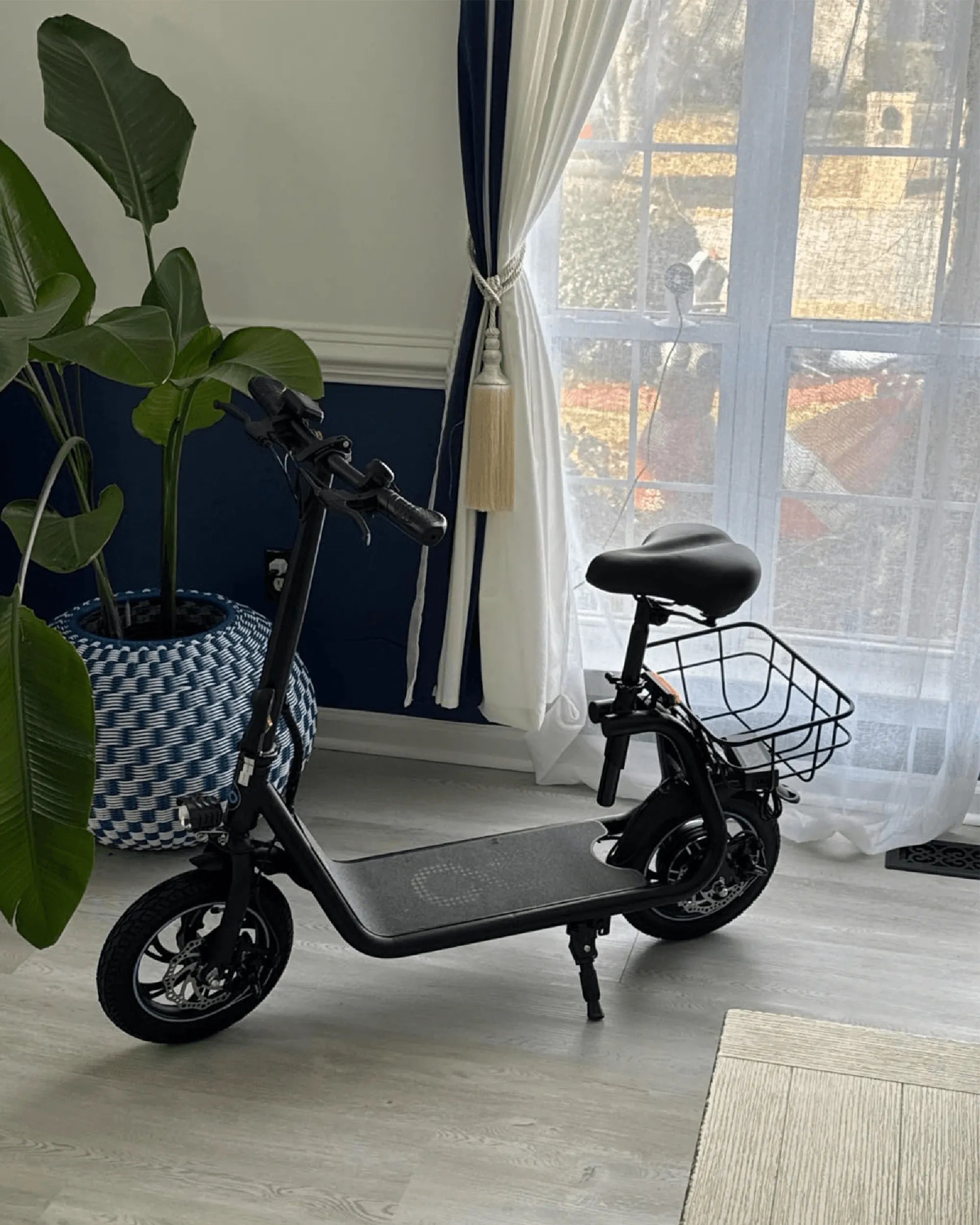
Choosing the best e-bike for teenagers is about empowering independence while ensuring their safety is never compromised. This guide provides a data-driven framework for parents and teens to navigate motor power, battery safety, legal compliance, and essential gear. You'll learn to identify the non-negotiable safety features, compare e-bike styles for different needs, and understand why certified components from trusted brands are a critical investment.
Why an E-Bike is a Transformative Choice for Teenagers
E-bikes offer teenagers a unique blend of practical transportation, outdoor activity, and personal responsibility. They provide a reliable means to travel to school, extracurricular activities, and friends' houses, reducing reliance on parental rides. This fosters a sense of independence and time management.
From a health perspective, e-bikes encourage physical activity. While the pedal-assist feature makes hills and distances manageable, riders still engage in consistent, low-impact exercise. It's a gateway to an active lifestyle away from screens.
Environmentally, e-bikes represent a clean alternative for short trips. For families, it can reduce car usage for local errands. The experience also teaches teens about vehicle maintenance, road safety, and the value of a significant personal possession.
Addressing concerns head-on, the key to a positive experience lies in selecting the right e-bike with appropriate safety features and establishing clear riding rules. A well-chosen e-bike is not a toy, but a legitimate mode of transport that builds confidence and responsibility.
Key Safety Features: The Non-Negotiable Checklist
Safety is the paramount concern when selecting any vehicle for a young rider. The best e-bike for teenagers will integrate multiple layers of protection into its design. This goes beyond just having brakes; it encompasses the entire system's integrity.
First, battery safety is critical. Parents should insist on e-bikes equipped with UL 2271 or UL 2849 certified battery packs. These certifications mean the battery has undergone rigorous testing for electrical, mechanical, and fire safety. Gyroor, for instance, uses UL-certified batteries tested for over 500 charge cycles, providing a fundamental safety benchmark.
Braking performance is equally vital. Look for reliable, dual braking systems such as disc brakes (mechanical or hydraulic) or robust linear-pull brakes. These provide consistent stopping power in various weather conditions, which is essential for a new rider's confidence and control.
Visibility features are a must for safety. Integrated front and rear lights, along with reflectors, are non-negotiable for riding at dawn, dusk, or in overcast conditions. Additionally, a sturdy frame with a weight capacity well above the teen's weight ensures stability and durability during use.
The Importance of Speed Management
For teenage riders, controllable speed is more important than maximum speed. E-bikes with multiple pedal-assist levels (PAS) allow teens to start at lower assistance levels. Some models offer programmable speed limiters via a companion app, letting parents set a maximum speed appropriate for the rider's skill and local regulations.
Top 5 Factors for Choosing the Right Teen E-Bike
Selecting the best e-bike for teenagers involves evaluating several interconnected factors. A bike that excels in one area but fails in another is not a suitable choice. Balance is key to finding a perfect match for your teen's needs and your safety requirements.
1. Motor Power and Speed Modes
Motor power, measured in watts (W), determines how much assistance the bike provides. For most teenagers, a motor in the 350W to 500W range is ideal. It offers ample power for hills and headwinds without being excessive. Crucially, the e-bike should have selectable speed or assist modes.
Beginner modes limit top speed, allowing teens to build skills safely. As proficiency grows, they can access higher modes. This graduated system is far safer than a bike with a single, high-speed setting. Always prioritize control and compliance with local e-bike class laws, which often cap speed at 20 mph for younger riders.
2. Battery Safety and Practical Range
The battery is the heart of the e-bike and the component where safety cannot be compromised. Always verify UL certification. Beyond safety, consider range—the distance the bike can travel on a single charge.
For typical teen use (commuting to school, visiting friends), a range of 20-35 miles is usually sufficient. It's better to have a slightly shorter range with a ultra-safe battery than a longer range from an uncertified source. Removable batteries are a plus, allowing for secure indoor charging.
3. Build Quality, Durability, and Weather Resistance
Teens are not always gentle with equipment. The e-bike must withstand daily use. Look for a frame made from aluminum alloy or steel, with welded joints and a finish that resists scratches. Check the manufacturer's stated weight capacity; a higher limit indicates a sturdier build.
Weather resistance is critical for a vehicle used daily. An IP rating for water and dust resistance is a strong indicator of durability. For example, Gyroor designs feature IPX5 water resistance, meaning they can withstand water jets from any direction, making them reliable in rain.
4. Ergonomics: Size, Fit, and Adjustability
A proper fit is essential for control and comfort. The teen should be able to stand over the frame with both feet flat on the ground. Handlebar and seat height should be easily adjustable to accommodate growth spurts.
A comfortable, upright riding position is generally best for teens, offering good visibility and control. Avoid bikes that force an aggressive, leaned-forward posture. If possible, have your teen test-ride the bike to ensure the fit is correct before purchasing.
5. Legal Compliance and Parental Control Features
E-bike laws vary by state and locality, typically involving age restrictions, helmet requirements, and speed/power limits (often categorized as Class 1, 2, or 3). Parents must research and ensure the chosen e-bike complies with their area's regulations for teenage riders.
Modern e-bikes often include smart features via Bluetooth apps. These can be invaluable for parents, allowing them to monitor riding history, set geofences, and lock or limit the bike's speed remotely. These digital tools provide an extra layer of oversight and security.
E-Bike Styles for Teenagers: A Practical Comparison
Not all e-bikes are designed for the same purpose. Choosing the right style ensures the bike matches your teen's primary use case, whether it's commuting, recreation, or mixed-terrain exploration.
| Style | Best For | Key Features | Considerations |
|---|---|---|---|
| Commuter/City | School, errands, paved paths | Upright posture, fenders, rack mounts, integrated lights | Prioritizes practicality and comfort for daily use on roads. |
| Cruiser | Leisure rides, beach paths, flat terrain | Comfort-focused geometry, wide tires, often single-speed | May lack gears for hills; very comfortable for casual riding. |
| Mountain/Hybrid | Trails, off-road, varied terrain | Suspension, knobby tires, rugged frame, multiple gears | Versatile but can be heavier; ideal for adventurous teens. |
| Folding | Multi-modal commuting, limited storage | Compact fold, lighter weight, portability | May have smaller wheels; ideal if space is a constraint. |
The commuter or hybrid style is often the most versatile and practical choice for a teenager's first e-bike. It provides a comfortable riding position for daily use and is equipped with necessary features like lights and mounting points for a lock or backpack.
Why Gyroor E-Bikes are Engineered for Family Trust
When evaluating the best e-bike for teenagers, brand philosophy and support infrastructure matter immensely. Gyroor designs its products with the needs of families in mind, building trust through certified safety and reliable performance.
The cornerstone of this trust is battery safety. Every Gyroor e-bike utilizes a UL-certified battery pack, undergoing extensive testing. This directly addresses a parent's foremost concern, providing peace of mind that the power source meets stringent independent safety standards.
Durability for real-world use is another key focus. With IPX5 water-resistant construction, Gyroor e-bikes are built to handle unexpected weather, ensuring reliability for daily transportation. This robust design is backed by a comprehensive 1-year warranty and supported by a service network in North America and Europe.
With a community of over 100,000 riders, Gyroor's models are proven in daily use. The brand balances performance features—like multiple speed modes and adequate motor power—with the controlled, safety-first approach necessary for younger riders, making their e-bikes a considered choice for families.
Essential Gear and Safety Practices for Teen Riders
The right e-bike is only part of the safety equation. Equipping your teen with proper gear and establishing clear safety practices is equally important for responsible riding.
Mandatory Gear: A properly fitted, CPSC-certified bicycle helmet is non-negotiable. Consider additional protective gear like gloves and knee/elbow pads for new riders. High-visibility clothing or a reflective vest is crucial for low-light conditions. A high-quality U-lock is essential to secure the investment.
Pre-Ride Safety Check: Teach your teen the ABC Quick Check: Air (tire pressure), Brakes, and Chain (and battery charge). Ensure lights are functional before any ride. This routine builds mechanical awareness and prevents accidents.
Road Rules and Etiquette: Teens must understand and obey all local traffic laws for bicycles/e-bikes. This includes riding in the direction of traffic, using hand signals, and respecting pedestrians. Practice riding in low-traffic areas before tackling busier routes.
Parent-Teen Agreement: Establish clear rules: approved riding areas, curfews for daylight-only riding if necessary, mandatory helmet use, and a prohibition against passenger riding. Linking e-bike privileges to responsible behavior reinforces its status as a tool, not a toy.
Frequently Asked Questions (FAQ)
What is the appropriate age for a teenager to ride an e-bike?
There is no universal "right" age, as maturity and responsibility vary. Legally, many states set minimum ages of 14 or 16 for certain e-bike classes. Beyond legality, the teen should demonstrate strong conventional biking skills, traffic awareness, and the responsibility to follow safety rules. A parent's assessment of their child's judgment is crucial.
Are e-bikes safe for teenagers?
E-bikes are as safe as the rider's training, the bike's quality, and the adherence to safety practices. Choosing an e-bike from a reputable brand with UL-certified batteries, reliable brakes, and speed controls significantly mitigates risk. Comprehensive safety gear and ongoing education are essential components of safe riding.
How fast should a teenager's e-bike go?
Speed should be appropriate for the rider's skill and local laws. For most teens, a bike that can be limited to 15-20 mph is advisable. Many areas regulate Class 1 and 2 e-bikes to a 20 mph maximum speed with motor assistance. The ability to start with lower speed limits via pedal-assist modes is a key safety feature for beginners.
What is the average price range for a quality teen e-bike?
Expect to invest between $800 and $1,500 for a well-built, safe e-bike from a reputable brand. This price range typically includes essential safety features like certified batteries, good brakes, and a durable frame. Prices significantly lower often compromise on critical safety components like battery certification and braking systems.
Does Gyroor offer models specifically suited for younger riders?
Yes, Gyroor's lineup includes models well-suited for teenage riders. Their commuter and hybrid-style e-bikes often feature the adjustable speed modes, UL-certified batteries, and durable, water-resistant builds that align with the needs of teens and the concerns of parents. Reviewing specific model specs for frame size and motor power will help find the best fit.
Empowering Independence with Confidence and Safety
Selecting the best e-bike for teenagers is a meaningful decision that blends the excitement of new freedom with the imperative of safety. The ideal choice is a balanced machine—one that offers reliable performance and fun through a framework of certified safety components, controllable power, and durable construction. It empowers teens with practical transportation while giving parents tangible peace of mind.
This peace of mind is rooted in specifics: UL-certification on the battery, robust braking systems, and a brand that stands behind its product with strong warranty support. By prioritizing these factors over sheer speed or flashy aesthetics, families invest in a positive, long-term riding experience. The right e-bike becomes a tool for growth, responsibility, and adventure.
<Ready to explore e-bikes designed with safety and reliability as core principles? Browse the full Gyroor collection, featuring UL-certified batteries, IPX5 water-resistant designs, and a 1-year warranty, at gyroorboard.com to find a model that fits your teen's journey to independence.
Full Size Ebike: The Complete Guide to Capable Electric Bicycles
180cc Dirt Bike: The Ultimate Guide to Power, Performance & Perfect Fit