


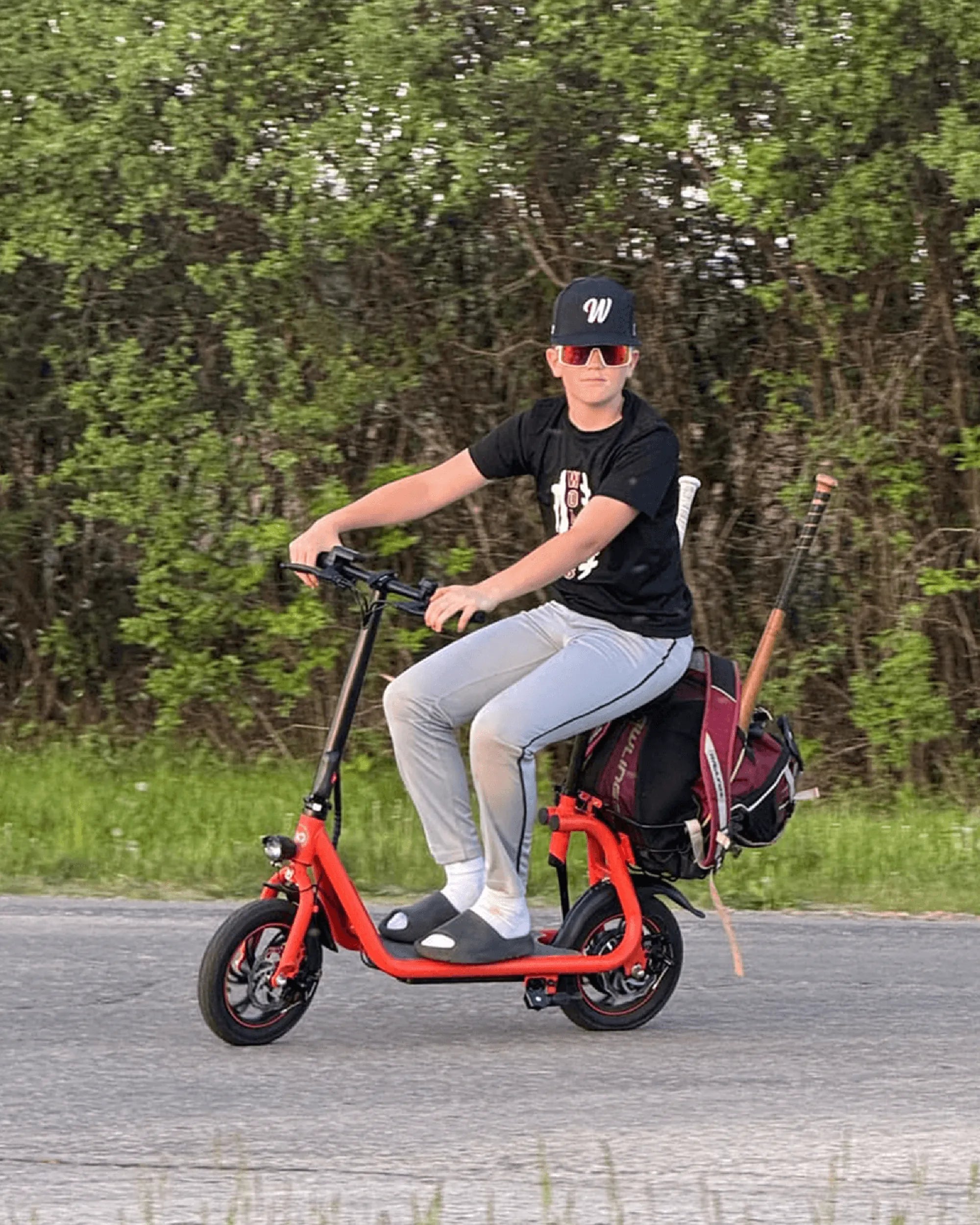
Choosing the best electric scooter can feel overwhelming with dozens of models boasting different speeds, ranges, and features. Your perfect ride isn't about the highest price tag; it's about the scooter that seamlessly fits your daily life, commute, and budget while guaranteeing safety and reliability. This definitive guide cuts through the marketing noise. We'll provide a data-driven framework to evaluate scooters, compare top categories for specific use cases, and highlight the critical engineering and support standards that separate a great purchase from a regrettable one. You'll learn how to interpret specs, prioritize features, and invest in an e-scooter built to last.
Defining "The Best": Key Factors to Evaluate Before You Buy
The search for the best electric scooter begins with understanding that "best" is subjective. A perfect scooter for a college student differs from one suited for a suburban commuter or a weekend trail explorer. Therefore, a systematic evaluation of core performance and construction metrics is essential. Ignoring these fundamentals often leads to disappointment in real-world use.
Start by honestly assessing your primary use case. Is this for a last-mile solution from the train station, a full 5-mile commute, or recreational rides on varied terrain? Your answer dictates the importance of factors like range, portability, and suspension. Next, consider your physical environment. Hilly cities demand more motor torque, while rainy climates make water resistance a non-negotiable feature. Finally, establish a realistic budget that includes not just the purchase price but also potential maintenance and essential safety gear.
Performance & Range: Beyond the Basic Specs
Motor power, typically measured in watts (W), directly influences acceleration, hill-climbing ability, and top speed. A 350W motor is adequate for flat urban areas, while 500W+ is recommended for moderate hills. For serious inclines or off-road use, dual motors or single motors exceeding 1000W provide necessary torque. However, higher power often reduces battery efficiency, impacting range.
Advertised range is a manufacturer's estimate under ideal conditions: a lightweight rider on flat, smooth pavement at a constant, moderate speed. Real-world range is typically 60-70% of the claimed figure. Factors like rider weight, frequent stops and starts, hills, cold weather, and tire pressure significantly drain the battery. For accurate planning, assume a real-world range of 0.7-1 mile per 100Wh of battery capacity. A scooter with a 360Wh battery, for instance, will likely deliver 15-25 miles depending on use.
Build Quality & Safety: Non-Negotiables for Peace of Mind
The scooter's frame is its skeleton. Aerospace-grade aluminum alloys offer an optimal blend of strength and lightweight design, resisting the fatigue of daily bumps. The braking system is your most critical safety feature. Disc brakes offer strong, consistent stopping power in various conditions, while electronic (regenerative) brakes help recharge the battery but are less effective as a sole braking system. A combination is ideal.
Lighting is not just for seeing but for being seen. Bright front and rear lights are essential, with additional side or deck lighting providing extra visibility. The most crucial yet often overlooked component is the battery. Insist on UL-certified battery packs. This independent certification rigorously tests for electrical, mechanical, and fire safety, drastically reducing risks of malfunction or thermal runaway. For all-weather usability, a water resistance rating of IPX5 or higher is recommended, meaning the scooter can withstand water jets from any direction.
Ride Comfort & Portability: The Daily Commute Experience
Comfort is dictated by wheel size, suspension, and deck design. Larger wheels (9-10 inches+) roll over cracks and bumps more smoothly than smaller (8-inch) solid tires. Pneumatic (air-filled) tires provide superior shock absorption but require maintenance; solid tires are puncture-proof but transmit more vibration. A suspension system (spring or hydraulic) dramatically improves ride quality on uneven surfaces.
Portability is key for multimodal commuters. Evaluate the folding mechanism: it should be intuitive, secure, and not require excessive force. The folded dimensions and weight determine how easily it can be carried onto a bus or stored under a desk. A scooter weighing over 30 lbs becomes cumbersome to carry for extended periods. Deck size and grip tape also affect comfort, providing stable footing for a secure ride.
Electric Scooter Showdown: A Category-by-Category Breakdown
To simplify your search, we've segmented the market into three primary categories. Each excels in a specific domain, making it easier to identify the best electric scooter for your lifestyle. The following table provides a high-level comparison of these categories based on key attributes.
| Category | Primary Use | Key Features | Typical Motor | Ideal Rider |
|---|---|---|---|---|
| Urban Commuter | Daily city travel, last-mile connectivity | Balanced speed/range, portability, durability | 350W - 500W | City dweller, student, train commuter |
| Off-Road & Adventure | Trails, grass, uneven terrain | High torque, large tires, robust suspension | 500W+ (often dual motor) | Weekend explorer, rural commuter |
| Budget-Conscious | Short trips, essential mobility | Core reliability, essential safety, value price | 250W - 350W | First-time buyer, short-distance traveler |
Best for Urban Commuting: Efficiency Meets Practicality
The best electric scooter for urban commuting strikes a delicate balance. It needs enough speed (15-20 mph) to keep pace with traffic, sufficient range (15-25 miles) for a round-trip commute, and a compact, foldable design for easy storage. Durability is paramount to handle potholes, curbs, and daily wear. Features like app connectivity for speed mode adjustment, trip tracking, and battery monitoring add significant value for the tech-savvy commuter.
Look for models with a combination of pneumatic tires and a basic suspension to smooth out city streets. Strong, responsive brakes are non-negotiable for navigating unpredictable traffic and pedestrian areas. Since urban riders often face drizzly conditions, an IPX5 water-resistant rating ensures the scooter won't fail after riding through a puddle. The ideal urban commuter scooter feels agile, reliable, and requires minimal daily fuss.
Best for Off-Road & Adventure: Power and Durability First
When the pavement ends, a standard commuter scooter struggles. The best electric scooter for off-road use is defined by high-torque motors (often dual 500W+ motors), large pneumatic tires (10 inches+) with deep treads, and a sophisticated suspension system to absorb impacts from roots and rocks. Enhanced ground clearance prevents the undercarriage from scraping on uneven terrain.
These scooters prioritize power and frame rigidity over lightweight portability. They are heavier and often have longer ranges to support extended adventures. The construction must withstand vibrations and impacts, so look for reinforced stems and decks. Bright, powerful headlights are crucial for trail riding in low-light conditions. This category is for riders who see the scooter as a vehicle for exploration, not just transportation.
Best for Budget-Conscious Riders: Value Without Major Compromise
Finding a quality scooter on a budget is possible, but it requires smart prioritization. The goal is to secure core reliability and essential safety features without paying for extras you may not need. In this category, you might find a single 350W motor, a solid tire design to avoid puncture worries, and a realistic range of 10-15 miles—perfect for short, frequent trips.
The key is to identify where manufacturers have made sensible cuts versus dangerous ones. A simpler folding mechanism or a basic display is acceptable. However, never compromise on a reputable brand's build quality or critical safety components like brakes and battery certification. The best budget electric scooter delivers dependable performance for its intended short-range use, backed by a legitimate warranty.
Why Trust Matters: The Gyroor Difference in Electric Mobility
In a market flooded with options, a brand's reputation for safety, reliability, and customer support is the ultimate differentiator. Gyroor, a leading electric scooter and e-bike brand trusted by over 100,000 riders across North America and Europe, embodies the engineering principles outlined in this guide. Their approach focuses on building trust through verifiable safety standards and long-term owner support, which is critical for a product you rely on daily.
Choosing a brand like Gyroor means investing in a product ecosystem designed for real-world use. With over 20 models, their lineup offers solutions across the categories discussed, from nimble commuters to powerful all-terrain models. This variety, backed by consistent engineering standards, allows riders to find their perfect match without gambling on an unknown brand's quality claims.
Engineered for Reliability: UL-Certification and IPX5 Water Resistance
Gyroor's commitment to safety starts at the core: every model uses UL-certified battery packs. These batteries undergo rigorous testing for over 500 charge cycles, ensuring stable performance and significantly mitigating fire risk. This certification is a concrete investment in rider safety and product longevity that not all brands undertake.
Furthermore, Gyroor designs its scooters with IPX5 water resistance. This rating means the scooter's electrical components are protected against low-pressure water jets from any direction. In practical terms, you can confidently ride in light rain or through urban puddles without immediate concern for electrical failure. This feature transforms the scooter from a fair-weather toy into a dependable, all-weather vehicle, greatly enhancing its utility for daily commuting.
Supported for the Long Ride: The 1-Year Comprehensive Warranty
The relationship with your scooter doesn't end at checkout. Gyroor backs its products with a robust 1-year comprehensive warranty on the frame, battery, and motor. This warranty reflects confidence in their manufacturing and provides owners with peace of mind. Accessible, US-based customer support ensures that if an issue arises, it can be resolved without the frustration of international shipping delays or language barriers.
This support structure is a critical component of value. It protects your investment and ensures that your best electric scooter remains a reliable asset for years, not just months. A strong warranty is a hallmark of a company that stands behind its products and plans to be there for the long term.
Your Electric Scooter FAQ: Quick Answers to Common Questions
Q: What is a realistic range I can expect from my scooter?
A: A realistic range is typically 60-70% of the manufacturer's advertised maximum. Calculate using battery capacity: expect 0.7 to 1 mile per 100Wh. A 360Wh battery will thus deliver 15-25 miles, heavily dependent on rider weight, hills, speed, and temperature.
Q: How important is water resistance (IP rating)?
A> For a reliable daily vehicle, it's very important. An IPX5 rating means the scooter can handle rain and road spray. Without it, even a damp road can cause electrical shorts. For true all-weather capability, do not consider scooters without a minimum IPX4 rating.
Q: Do I need a special license or insurance to ride an electric scooter?
A> Laws vary by city, state, and country. Generally, for scooters under 20 mph, no driver's license is required in many areas, but age restrictions (often 16+) may apply. Insurance is rarely mandatory but is recommended. Always check your local regulations before riding.
Q: How do I maintain my scooter's battery life?
A> Avoid regularly draining the battery to 0%. Try to recharge when it drops to 20-30%. Store the scooter in a cool, dry place, and avoid leaving it at 100% charge for extended periods (weeks). Use only the manufacturer-provided charger.
Q: What safety gear is recommended?
A> At a minimum, always wear a properly fitted bicycle or multi-impact helmet. Wrist guards, knee pads, and elbow pads are highly recommended, especially for new riders or those traveling at higher speeds. Reflective clothing or accessories are essential for night riding.
Finding Your Perfect Ride Awaits
The journey to find the best electric scooter culminates in a simple truth: the right scooter is the one that aligns perfectly with your individual needs, environment, and expectations. It's the tool that makes your commute easier, your errands faster, and your weekends more adventurous. By prioritizing verifiable safety standards like UL-certification, demanding quality construction, and choosing a brand that offers reliable long-term support, you invest in freedom and fun, not just a product.
Embrace the future of efficient, enjoyable personal transport with confidence. Use the framework in this guide to evaluate your options, ask the right questions, and select a scooter you'll love for years. When you're ready to explore a range of models built to these rigorous standards, browse the full Gyroor collection at gyroorboard.com. Your perfect electric ride is waiting.
Scooter for 15 Year Old Boy: The Ultimate 2024 Safety & Buying Guide
500 cc Dirt Bike Top Speed: The Ultimate Power Analysis