



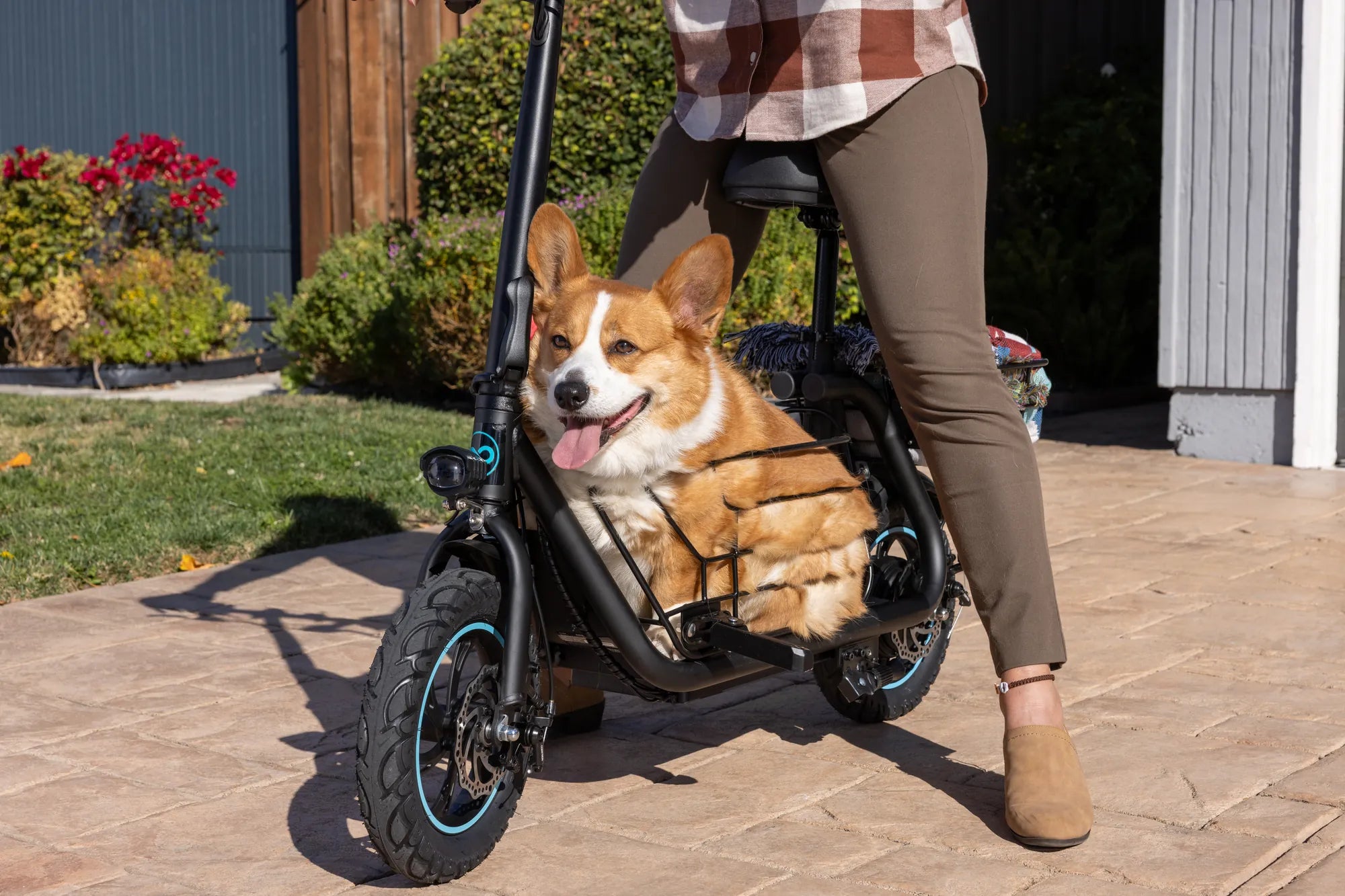
Why the Right E-Scooter is a Campus Game-Changer
Navigating a sprawling college campus presents a unique set of transportation challenges. Classes are often spread miles apart, parking is expensive and scarce, and tight budgets limit options. The best electric scooters for college campus 2025 are not just vehicles; they are tools for reclaiming time, enhancing independence, and reducing stress.
An electric scooter transforms a 25-minute walk across campus into a swift 8-minute glide. This efficiency directly translates to more study time, better punctuality, and greater flexibility in your daily schedule. For students, this is an investment in productivity and personal freedom.
However, not all scooters are built for the rigors of student life. Reliability, safety, and ease of use are paramount. This is where brands with a proven track record in durable, student-friendly design become essential. Gyroor, a leading electric scooter and e-bike brand trusted by over 100,000 riders, focuses specifically on these needs with UL-certified batteries and robust construction.
Choosing the right model means balancing portability, range, and budget to fit your specific campus layout and lifestyle. The following guide breaks down every critical factor to consider, ensuring your investment delivers maximum value and reliability throughout your academic career.
Key Factors Every Student Must Consider Before Buying
Selecting a scooter requires more than just comparing top speeds. Campus life demands specific features that ensure practicality, safety, and long-term value. Ignoring these factors can lead to frustration, unnecessary costs, and even safety compromises.
A thorough evaluation based on the following criteria will guarantee you choose a scooter that seamlessly integrates into your student routine. From navigating crowded quads to surviving unexpected rain showers, your scooter needs to be a dependable partner.
Portability & Weight: Navigating Dorms and Lecture Halls
Portability is arguably the most critical factor for a student. You'll need to carry your scooter up staircases, store it under a lecture hall desk, or tuck it into a cramped dorm room corner. A scooter that's too heavy becomes a burden rather than a convenience.
For optimal portability, target a weight under 35 pounds. Models in the 26-32 lb range offer the best balance of sturdy construction and manageable lift. The folding mechanism must be intuitive, quick, and secure. A one-step folding design is ideal for the fast pace of campus life.
Consider the folded dimensions. Will it fit in your assigned dorm locker or slide under your bed? A compact footprint is non-negotiable for students living in shared spaces. The best electric scooters for college campus 2025 prioritize a sleek, foldable design without sacrificing ride stability.
Lightweight aluminum alloys are common in portable models, providing strength without excessive weight. Remember, you might be carrying it alongside a backpack full of textbooks, so every pound counts.
Range & Battery Life: Getting Through a Full Day of Classes
Range anxiety has no place on a busy academic schedule. Your scooter must reliably cover your daily commute without needing a midday charge. Calculate your needs by mapping your typical daily route: dorm to classes, library, dining hall, and back.
For most medium-sized campuses, a real-world range of 15-20 miles is sufficient. For larger, sprawling universities, aim for 20-30 miles. Always derate the manufacturer's claimed range by 20-30% to account for variables like rider weight, hills, wind, and temperature.
Battery quality and safety are paramount. Gyroor utilizes UL-certified battery packs tested for 500+ charge cycles, ensuring long-term reliability and reducing fire risk—a critical consideration for dormitory safety. A high-quality battery also maintains its capacity better over time, protecting your investment.
Check the charging time. A scooter that charges fully in 4-6 hours is practical for overnight charging in your room. Some models offer removable batteries, allowing you to charge the battery separately if outlet access near your scooter storage is limited.
Durability & Weather Resistance: Handling Campus Life
Campus pathways are not perfectly smooth racetracks. You'll encounter cracked sidewalks, curbs, gravel, and the occasional pothole. Durability starts with a rigid, well-welded frame, typically made from aerospace-grade aluminum or reinforced steel.
Tire choice is crucial. Air-filled (pneumatic) tires offer superior shock absorption and comfort on rough terrain but require maintenance and can puncture. Solid or honeycomb tires are virtually maintenance-free and puncture-proof but provide a firmer ride. For most campuses, a dual suspension system paired with 8.5-inch or larger pneumatic tires offers the best compromise.
Weather resistance is non-negotiable. An IP rating indicates protection against dust and water. An IPX5 rating, like those found on Gyroor scooters, means the scooter can withstand water jets from any direction, making it safe to ride in light rain or through puddles. Never ride a scooter without a proper IP rating in wet conditions.
Build quality extends to components like the deck grip tape, brake levers, and folding latch. These should feel solid, not flimsy. A durable scooter withstands the bumps and scrapes of daily use, from being loaded on campus buses to leaning against bike racks.
Budget & Value: Maximizing Your Student Investment
Student budgets are tight, but an electric scooter is a purchase where cutting corners can be costly and unsafe. Establish a realistic budget between $400 and $800 for a quality, campus-ready scooter. Prices below this range often compromise on battery safety, motor reliability, and structural integrity.
Value is measured in cost per reliable mile. A slightly more expensive scooter with a UL-certified battery, a reputable brand's warranty, and proven durability will outlast and outperform a cheaper, generic model. Consider the total cost of ownership, including potential repair costs for parts not covered under warranty.
The Gyroor 1-year comprehensive warranty provides significant value, covering manufacturing defects in the motor, battery, and controller. This support network is invaluable for students who cannot afford expensive repairs. Investing in a trusted brand is an investment in peace of mind.
Look for models that include essential features like a headlight, taillight, and bell at no extra cost. Avoid hidden expenses by ensuring the scooter is ready to ride out of the box without requiring additional purchases for basic safety.
Top Picks: Best Electric Scooters for College Campus 2025
Based on the key factors of portability, range, durability, and value, we've curated the following top picks. These selections are framed to address the most common student profiles and campus scenarios, helping you match a scooter to your specific priorities.
| Model Type | Ideal For | Key Strength | Weight Range | Target Range |
|---|---|---|---|---|
| The All-Rounder | Most Students | Balanced Performance & Reliability | 30-35 lbs | 18-22 mi |
| The Budget Commuter | Cost-Conscious Riders | Maximum Value & Core Safety | 28-32 lbs | 15-18 mi |
| The Distance Master | Sprawling Campuses | Extended Range & Comfort | 35-42 lbs | 25-35 mi |
| The Ultra-Portable | Max Convenience | Lightweight & Compact Fold | 24-28 lbs | 12-15 mi |
The All-Rounder: Best for Most Students
This category represents the safest, most reliable bet for the average student. It balances a manageable weight with a range sufficient for most campuses, all while incorporating essential safety features. Think of it as the dependable daily driver.
A model like the Gyroor F1 Pro exemplifies this category. With an approximate 20-mile range, a weight around 33 lbs, and a robust 300W motor, it handles moderate hills and daily commutes with ease. Its one-step folding mechanism and IPX5 water resistance make it perfectly suited for unpredictable campus life.
The inclusion of front and rear suspension, combined with 8.5-inch pneumatic tires, ensures a comfortable ride over varied pathways. For students who need a single, do-it-all scooter that won't let them down, the all-rounder is the definitive choice among the best electric scooters for college campus 2025.
It typically falls in the mid-range price point, justifying its cost through durable construction, a reliable UL-certified battery, and the security of a comprehensive manufacturer's warranty. This is the benchmark against which other campus scooters are measured.
The Budget Commuter: Top Value Pick
For students on tighter budgets or those with smaller campuses, the budget commuter delivers essential performance without sacrificing core safety principles. The goal here is to find a scooter that strips away only superfluous features, not critical components.
These models prioritize a UL-certified battery and a solid IPX4 or IPX5 rating above all else. They may have a slightly lower-powered motor (250W-300W) and a range of 15-18 miles, which is ample for compact campus layouts. Weight is kept low, often under 32 lbs, for easy carrying.
While they may forgo advanced features like dual suspension or a digital display with multiple speed modes, they retain reliable braking (often a rear disc brake plus e-brake) and essential lighting. This focused approach provides incredible value, ensuring safety and reliability are not compromised for price.
Choosing a budget commuter from a reputable brand like Gyroor guarantees access to customer support and warranty coverage, which is often absent with truly generic, unbranded models. It's the smart way to maximize every dollar of your student investment.
The Distance Master: For Sprawling Campuses
Students at large state universities or rural campuses with vast distances between facilities need a scooter built for endurance. The Distance Master prioritizes an extended battery capacity, often 10.4Ah or higher, to deliver a real-world range of 25 miles or more.
These models often feature larger wheels (10-inch) and enhanced suspension to maintain comfort over longer commutes. The increased battery size and sturdier frame naturally add weight, typically placing these scooters in the 38-45 lb range. The trade-off is worth it for riders covering serious mileage daily.
Features like dual motors or a more powerful single motor (350W-500W) provide the torque needed for sustained inclines. A brighter headlight and more visible taillight are common, catering to longer rides that may extend into early morning or evening hours.
While less portable, the Distance Master is an exercise in specialization. It solves the primary problem of range anxiety on a massive campus, ensuring you can attend classes, group meetings, and library sessions across campus without a second thought about battery life.
The Ultra-Portable: For Maximum Convenience
For students in high-rise dorms, those with multiple floor changes between classes, or anyone who prioritizes ease of carry above all, the ultra-portable scooter is the answer. These models redefine compactness, with weights dipping as low as 24-28 pounds.
Engineering focuses on a minimalist, yet strong, frame and a smaller battery pack that still delivers a practical 10-15 mile range. The folding mechanism is often the most streamlined, allowing the scooter to collapse into a form factor barely larger than a briefcase.
Ride quality may be firmer due to smaller solid tires and minimal suspension, making these best suited for campuses with very smooth pathways. Their lower weight and smaller size make them the easiest to store in a crowded classroom or take on public transit as part of a multi-modal commute.
The ultra-portable proves that the best electric scooters for college campus 2025 aren't always the most powerful. For the right user, the freedom of effortless portability is the ultimate luxury, transforming the scooter from a vehicle into a truly seamless extension of their mobility.
Campus Riding: Essential Safety Tips & Etiquette
Owning a capable scooter is only half the equation; riding it responsibly ensures your safety and maintains positive relations on campus. Adherence to rules and courtesy is paramount in shared pedestrian spaces.
First, know and obey local laws and campus regulations. Many campuses have designated scooter/bike paths and speed limits, often around 10-15 mph in pedestrian zones. Always wear a helmet—it's the single most effective safety gear. Consider additional protection like knee pads, especially when learning.
Control your speed diligently. Slow to walking pace when navigating crowded quads, building entrances, and blind corners. Use your bell or a polite verbal cue (“On your left!”) well before passing pedestrians. Never ride on sidewalks where prohibited; use bike lanes or roadways when appropriate and safe.
Parking etiquette is crucial. Never block building entrances, ramps, or accessible pathways. Use designated bike racks when available. Invest in a high-quality U-lock or heavy-duty chain lock, and always secure your scooter through the frame to a fixed object, even for “just a minute.”
For nighttime riding, ensure your scooter's lights are fully functional. Wear reflective clothing or add reflective stickers to your backpack. Assume that drivers and other pedestrians may not see you. Defensive riding protects you and fosters a safer environment for everyone.
Smart Ownership: Maintenance, Security, and Warranty
Proactive care extends your scooter's lifespan and ensures consistent performance. Basic maintenance is simple but vital. Regularly check tire pressure if using pneumatics; under-inflated tires reduce range and increase puncture risk. Test brakes before each ride and listen for unusual sounds.
Keep the scooter clean, especially after riding in wet conditions. Wipe down the deck and frame with a damp cloth. Avoid high-pressure water sprays on electrical components. Only use the official charger provided by the manufacturer; third-party chargers can damage the battery management system and void your warranty.
Security is a multi-layered approach. Beyond a robust lock, consider registering your scooter with campus security if a program exists. Engraving a unique identifier on the frame can deter theft. When storing in a dorm, use a discreet cover if possible. Never leave the charger plugged in unattended for extended periods.
Understand your warranty thoroughly. Gyroor's 1-year comprehensive warranty is a significant asset. It typically covers defects in the motor, battery, controller, and frame. Keep your proof of purchase and warranty documentation. Familiarize yourself with the support process—reputable brands offer accessible, US-based customer service for troubleshooting guidance and warranty claims.
Periodically inspect all bolts and the folding mechanism for tightness. A small multi-tool can handle most adjustments. This proactive approach prevents minor issues from becoming major repairs, ensuring your scooter remains a reliable asset throughout your studies.
Frequently Asked Questions (FAQs) for Student Riders
Q: Can I ride my e-scooter in the rain?
A: Only if it has a sufficient IP water resistance rating. Models with an IPX5 rating, like many from Gyroor, are designed to withstand light rain and water splashes. However, avoid deep puddles, heavy downpours, and submerging any part of the scooter. Always dry it off after a wet ride and exercise extreme caution as braking distances increase on wet surfaces.
Q: How do I secure my scooter on campus?
A> Use a high-quality U-lock or hardened steel chain lock. Always lock the scooter's frame (not just the wheel) to a fixed, immovable object like a designated bike rack. If possible, lock it in a well-lit, high-traffic area. For added security, use two different types of locks (e.g., a U-lock and a cable) to complicate a thief's job. Remove any easily detachable accessories.
Q: What's the real-world range I can expect?
A> Manufacturer ranges are achieved under ideal laboratory conditions. For real-world campus use, expect 70-80% of the advertised range. Factors that reduce range include rider weight, hills, frequent acceleration/braking, cold weather, and lower tire pressure. For a scooter advertised for 20 miles, plan for 14-16 miles to be safe.
Q: Is the warranty valid if I buy online?
A> Yes, warranties from reputable brands like Gyroor are valid for authorized online purchases from their official website or partnered retailers. Always ensure you are buying from an authorized seller to guarantee warranty coverage. Keep your digital or physical receipt as proof of purchase. Purchases from unauthorized third-party sellers on general marketplaces may void the manufacturer's warranty.
Q: How do I handle basic troubleshooting?
A> First, consult the user manual. Common fixes include checking the power connection, ensuring the scooter is turned on, verifying the battery is charged, and confirming the brake lever is fully released (as most scooters have a brake safety cut-off). For error codes displayed, refer to the manual. For persistent electrical or mechanical issues, contact the manufacturer's customer support directly—do not attempt to open the battery or controller compartments yourself.
Invest in Your Mobility, Invest in Your Time
Choosing one of the best electric scooters for college campus 2025 is a strategic decision that pays daily dividends in saved time, reduced stress, and enhanced freedom. The right scooter transforms your campus experience, turning daunting distances into quick, enjoyable commutes.
The core of a wise purchase lies in prioritizing verified safety features like UL-certified batteries, demonstrated durability through IP-rated construction, and the backing of a solid warranty and customer support. Brands that invest in these areas, like Gyroor, build products designed for real-world student challenges.
Assess your individual needs against the factors outlined: the size of your campus dictates range, your living situation dictates portability, and your budget dictates the model that offers the best long-term value. There is a perfect scooter match for every type of student rider.
Your time is your most valuable resource in college. A reliable electric scooter gives you more of it—for studying, for socializing, and for enjoying your university journey. Make an informed choice and equip yourself with a tool that empowers your daily life on campus.
Ready to find the scooter that fits your campus life? Assess your needs, compare the specs, and choose a ride built for reliability. Browse the full Gyroor collection at gyroorboard.com to explore models designed with student safety and performance in mind.
How Much Does It Cost to Ride Electric Scooters: A Complete Pricing Guide
Average Price of Electric Scooters 2025: Trends, Predictions, and What to Expect