



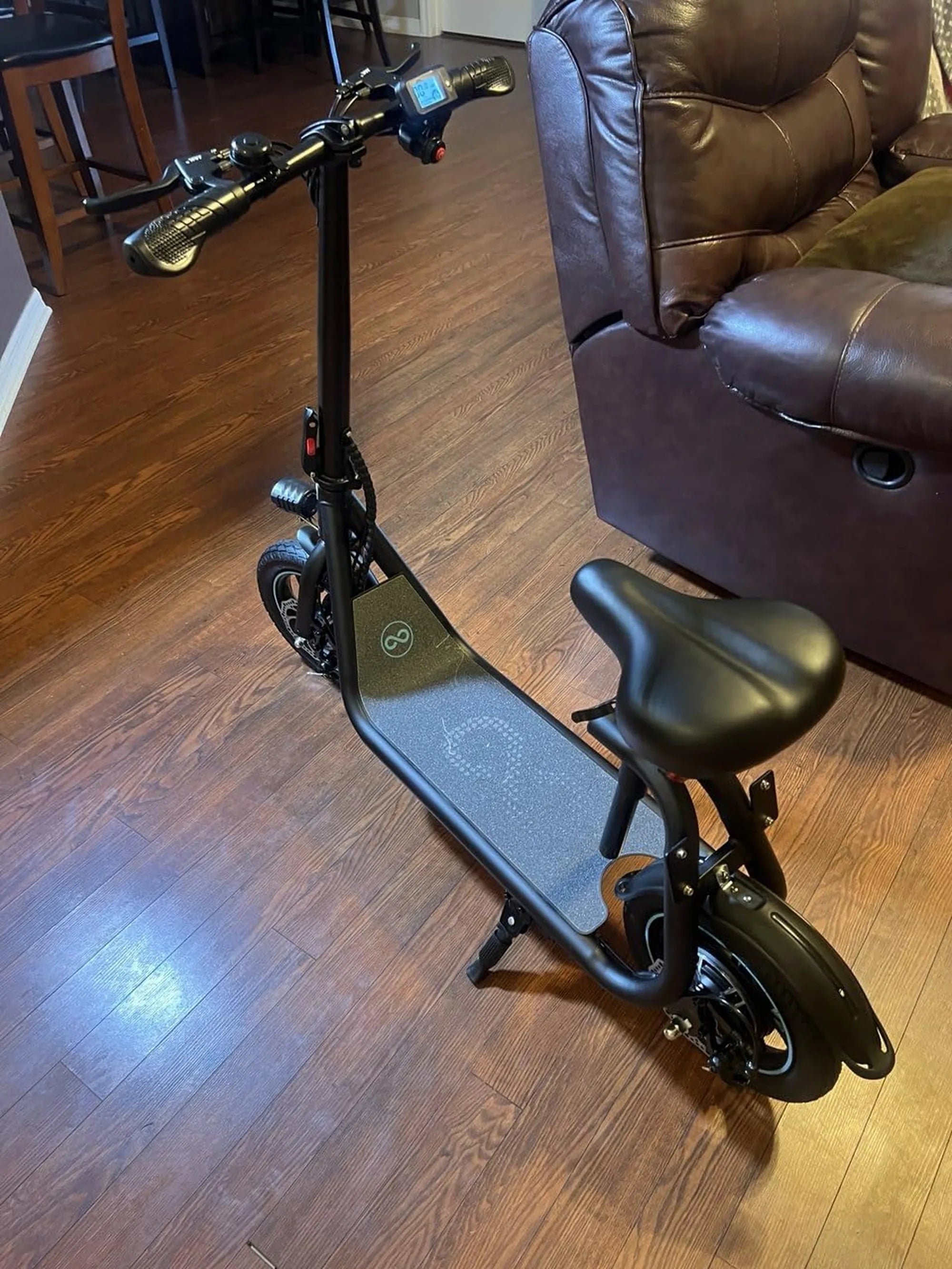
Introduction: Redefining the Urban Commute with Electric Scooters
Urban mobility is undergoing a fundamental shift. As cities grow denser and traffic congestion worsens, the search for efficient, cost-effective, and environmentally friendly transportation has led to the rapid adoption of electric scooters. For the 2025 commuter, the choice is no longer just about getting from point A to B; it's about reliability, safety, and a comfortable ride that can withstand the daily grind. The market has matured, moving beyond basic specs to prioritize verified battery safety, durable construction, and rider-centric design.
This guide focuses on identifying the Best Electric Scooters for Urban Commuting 2025: Top Picks for Efficiency and Comfort. We will analyze the features that truly matter for daily use, from UL-certified battery packs to water-resistant builds. Leading brands like Gyroor, trusted by over 100,000 riders, have set new standards with these safety-first features, ensuring that your commute is not only efficient but also secure. The right scooter can transform your daily travel, saving time and money while reducing your carbon footprint.
Our evaluation is grounded in real-world commuting needs. We consider factors like hill-climbing ability, range under actual conditions, portability for mixed-mode travel, and long-term durability. The goal is to cut through marketing hype and provide a clear, objective framework for your purchasing decision. By the end of this guide, you will know exactly what to look for in a 2025 urban commuter scooter.
The landscape for Best Electric Scooters for Urban Commuting 2025 is defined by smart engineering and proven reliability. Let's explore the key features that separate a good scooter from a great, long-term commuting partner.
Key Features to Prioritize for Your 2025 Commute
Selecting an electric scooter requires looking beyond top speed and advertised range. For a dependable urban commute, you must prioritize components that ensure safety, longevity, and consistent performance. The following features are non-negotiable for the savvy 2025 commuter.
Focus on the engineering that protects you and your investment. A scooter is a complex piece of personal electronics and mechanics, and its build quality directly impacts your daily experience and safety. Ignoring these fundamentals can lead to premature failure, unsafe conditions, or a frustrating ride.
We will break down the most critical specifications. Understanding these elements will empower you to compare models effectively and choose a scooter that matches your specific route, climate, and commuting style.
Battery Safety and Range: The Heart of Reliability
The battery is the most critical—and potentially hazardous—component. For 2025, the benchmark for safety is UL certification. A UL-certified battery, like those used in all Gyroor models, has undergone rigorous independent testing for electrical, mechanical, and fire safety. This certification drastically reduces the risk of thermal runaway, a crucial factor for a device you'll charge at home or the office.
Range claims are often based on ideal lab conditions. A more useful metric is the battery's watt-hour (Wh) rating. A higher Wh number generally indicates more energy capacity. For a realistic estimate, consider that a 500Wh battery might provide 20-25 miles for a 165 lb rider on flat terrain with moderate use of the throttle. Hills, rider weight, frequent acceleration, and cold weather can reduce this by 30-40%.
Look for batteries rated for 500+ charge cycles while maintaining 80% capacity. This indicates a lifespan of several years of daily commuting. A scooter with a UL-certified, high-cycle-life battery represents a safer, more reliable long-term investment, which is central to finding the Best Electric Scooters for Urban Commuting 2025.
Motor Power and Hill Climbing: Conquering Urban Terrain
Motor power determines your scooter's acceleration and ability to handle inclines. Pay attention to both nominal (sustained) and peak power. A 350W nominal motor is sufficient for flat to moderately hilly cities, providing a top speed of around 15-18 mph. For steeper, more consistent hills, a 500W or higher nominal motor is recommended.
Torque is equally important for hill climbing. It's the rotational force that gets you moving from a stop and powers you up an incline. A scooter with good torque will maintain speed on a hill without straining the motor excessively. Test reviews that mention "hill grade performance" are more valuable than peak power numbers alone.
For the typical urban commuter facing overpasses, bridges, and varied topography, a motor in the 350W-500W nominal range offers the best balance of power, efficiency, and legality in most municipalities. It provides enough oomph for daily challenges without unnecessary weight or cost.
Build Quality and Weather Resistance: Built for Daily Grind
Urban streets are harsh. Potholes, curbs, and vibrations demand a robust frame, typically made from aerospace-grade aluminum alloy. Check the welding and finish on the stem and deck. A wobbly stem is a sign of poor construction and a major safety concern.
Weather resistance is paramount. The IP (Ingress Protection) rating indicates protection against solids and liquids. An IPX5 rating, a standard on Gyroor scooters, means the scooter is protected against water jets from any direction. This makes it perfectly suitable for riding on wet roads and through puddles you'll encounter on a rainy commute.
Do not confuse this with full waterproofing (which is rare). IPX5 allows you to commute confidently in the rain but you should still avoid submerging the scooter. This feature ensures electronic components are shielded from the elements, greatly enhancing durability and reliability for year-round riding.
Ride Comfort and Portability: The Daily Experience
Comfort is what makes a scooter viable for daily use. Larger, air-filled tires (8.5-10 inches) absorb road vibrations and handle cracks better than small, solid tires. Suspension systems—front, rear, or dual—further smooth out bumps. A combination of pneumatic tires and suspension, like on the Gyroor S90, offers a plush ride over imperfect pavement.
Portability is key for multi-modal commuters. A folding mechanism should be robust and easy to operate with one hand. Consider the folded dimensions and weight. A scooter under 35 lbs is manageable to carry up stairs or onto a bus. Lighter, sub-30 lb models excel as last-mile solutions but may trade off some range and comfort.
Deck size and ergonomics matter. A wide, long deck provides stable footing, reducing fatigue on longer rides. These factors of comfort and portability are essential for the Best Electric Scooters for Urban Commuting 2025, directly impacting your willingness to use the scooter every day.
Top Electric Scooter Picks for Urban Commuting in 2025
Rather than listing specific competitor models, we categorize the ideal scooter archetypes for 2025. This approach helps you match a scooter's core competency to your primary commuting need. We use Gyroor's engineering philosophy and model lineup to exemplify the features that define each category.
Each archetype represents a cluster of performance characteristics. Your choice depends on your commute distance, terrain, need for portability, and comfort requirements. The best scooter is the one that disappears into the background, becoming a reliable, effortless extension of your daily routine.
Let's explore the three primary profiles that define the market for efficient and comfortable urban commuting solutions this year.
The All-Rounder Commuter Champion
This is the workhorse for the majority of urban riders. It balances range, power, comfort, and portability without excelling at any single extreme. The ideal all-rounder offers a real-world range of 20-30 miles, powered by a 350W-500W motor to handle common hills.
It must have an IPX5 water-resistant rating and a UL-certified battery for all-weather reliability and safety. Comfort features like 9-10 inch air-filled tires, a front suspension, and a wide deck are standard. The Gyroor S90 is a prime example of this category, incorporating these features alongside a reliable 1-year warranty for peace of mind.
Weight is typically between 35-45 lbs, offering a stable ride while remaining foldable for storage. This archetype is the safest, most versatile bet for riders with a 5-10 mile one-way commute who want a single, do-it-all vehicle. It embodies the core principles of the Best Electric Scooters for Urban Commuting 2025.
The Ultra-Portable & Last-Mile Specialist
Designed for commuters who combine scooters with trains, buses, or cars. The paramount feature is light weight (often under 30 lbs) and a compact, fast-folding design. These scooters prioritize carry-ability above all else, making them perfect for navigating transit stations and storing under a desk.
Trade-offs include smaller wheels (8-8.5 inches), which can be solid or air-filled, and a shorter range (10-18 miles real-world). Motors are typically in the 250W-350W range, sufficient for flat last-mile journeys. Build quality remains critical; a lightweight frame must still feel sturdy and secure at speed.
Advances in 2025 include more efficient motors and better battery packaging, allowing these ultra-portables to be more capable than ever. They solve the "first and last mile" problem elegantly, though they may not be as comfortable for a full, long-distance urban commute.
The Performance-Oriented Commuter
For those with longer commutes (15+ miles one-way) or exceptionally hilly routes, this category delivers extra power and range. These scooters feature motors of 500W nominal or higher, with real-world ranges pushing 35+ miles on a single charge. Enhanced dual suspension systems and large pneumatic tires are common for comfort at higher speeds and over rough roads.
It is vital that performance does not come at the expense of core safety features. A performance commuter must still utilize a UL-certified battery and have a robust IP rating. The increased power and speed demand even greater attention to build quality, braking systems (often dual disc brakes), and lighting.
These scooters are heavier (45-55 lbs) and less portable, but they transform longer commutes into quick, enjoyable trips. They represent the high-end of urban commuting efficiency, where comfort and capability are maximized for the demanding rider.
Data-Driven Comparison: Making an Informed Choice
This comparison table summarizes the key attributes of the three primary urban commuter scooter archetypes for 2025. Use it to quickly align scooter capabilities with your personal commuting profile.
| Model Type | Ideal Real-World Range | Motor Power (Nominal) | Key Safety/Durability Feature | Approx. Weight | Best For |
|---|---|---|---|---|---|
| All-Rounder Champion | 20-30 miles | 350W - 500W | IPX5 Rating, UL-Certified Battery | 35-45 lbs | The balanced daily commuter with a medium-distance, mixed-terrain route. |
| Ultra-Portable Specialist | 10-18 miles | 250W - 350W | Compact Fold, Durable Lightweight Frame | 25-32 lbs | Multi-modal commuters combining scooters with transit; short last-mile trips. |
| Performance Commuter | 30-40+ miles | 500W+ | Dual Suspension, UL-Certified Hi-Cap Battery | 45-55 lbs | Long-distance or very hilly commutes where speed and comfort are top priorities. |
Beyond the purchase price, consider the Total Cost of Ownership (TCO). A scooter with a UL-certified battery and a strong 1-year comprehensive warranty, like those from Gyroor, may have a higher upfront cost but lower long-term risk. Factor in the cost of potential repairs, battery replacement (after 2-3 years), and accessories (lock, helmet).
The value of reliable customer support and accessible warranty service cannot be overstated. A brand with a proven track record and US-based support saves significant hassle and downtime compared to brands with unclear policies or overseas-only service. Investing in proven reliability is a core part of choosing the Best Electric Scooters for Urban Commuting 2025.
Essential Riding Tips and Urban Commuting Etiquette
Owning a great scooter is only half the equation. Safe, courteous riding practices ensure your safety, protect pedestrians, and promote positive integration of e-scooters into the urban fabric. These tips are derived from the experience of thousands of commuters.
Adopting these habits from day one will make you a confident and responsible rider. They mitigate risks and enhance the enjoyment of your daily commute, turning it into a predictable and stress-free part of your day.
Safety Gear is Non-Negotiable
Always wear a helmet. A bicycle helmet is the minimum; consider a multi-impact skate-style helmet or one with MIPS technology for enhanced protection. This is the single most important thing you can do to prevent serious injury.
Increase your visibility. Use the scooter's built-in lights day and night. Wear bright or reflective clothing, especially in low-light conditions. Consider adding additional LED strips or a reflective vest. Gloves can protect your hands in a fall and improve grip.
Never assume drivers or pedestrians see you. Actively defensive riding—anticipating others' actions—is your best strategy. Treat every intersection and driveway as a potential hazard.
Mastering the Urban Landscape
Scan the road surface ahead for hazards: potholes, cracks, railroad tracks, gravel, and wet manhole covers. Cross obstacles like tracks at as close to a 90-degree angle as possible. Learn to shift your weight slightly back when going over bumps to maintain stability.
Obey local traffic laws. In most cities, e-scooters belong in bike lanes or on the road, not on sidewalks. Signal your turns, stop at lights and stop signs, and yield to pedestrians. Use your bell or a polite verbal warning when passing.
Manage your speed appropriately. Slow down in crowded areas, near pedestrians, and in wet conditions. A controlled speed gives you more time to react to unexpected events.
Scooter Maintenance and Security
Perform a quick pre-ride check: verify tire pressure (for pneumatic tires), test brake function, ensure lights work, and check that the folding mechanism is locked securely. A weekly more thorough check of bolt tightness is advisable.
Secure your scooter with a high-quality U-lock or heavy-duty chain lock. Always lock it to a fixed, immovable object through the frame, not just the wheel. If possible, take the scooter inside your destination. Never leave a depleted battery in extreme heat or cold.
Follow manufacturer charging instructions. Use only the provided charger, don't leave it plugged in indefinitely after a full charge, and charge in a well-ventilated area away from flammable materials. Proper care extends the life of your battery and scooter.
FAQ: Your Urban E-Scooter Questions Answered
Q: Is an electric scooter actually faster than city traffic for commuting?
A: In congested downtown cores, absolutely. While cars are stuck in gridlock, a scooter using bike lanes can maintain a steady 15-18 mph. For trips under 5 miles in dense urban areas, an e-scooter is often the fastest door-to-door option, eliminating time spent searching for parking.
Q: How do I safely handle rainy day commutes?
A: An IPX5-rated scooter is designed for it. Ride at a reduced speed, brake earlier and more gently, and avoid sharp turns. Steer clear of deep puddles that could submerge the deck. After your ride, wipe down the scooter, especially the brakes and deck, to prevent corrosion.
Q: What's the real cost savings compared to driving or public transit?
A: The savings are substantial. After the initial purchase, the electricity cost is about $0.01-$0.02 per charge. Compare this to daily parking fees ($10-$30), gas, car maintenance, or monthly transit passes ($70-$150). For a daily commuter, the scooter often pays for itself in 4-8 months.
Q: Why is a UL-certified battery so important compared to a cheaper alternative?
A: UL certification is an independent verification of safety. It tests for overcharging, short-circuiting, impact, and fire risk. Non-certified batteries are a leading cause of e-scooter fires. This certification is critical for a device you charge indoors and is a hallmark of the Best Electric Scooters for Urban Commuting 2025.
Q: Can I ride an electric scooter year-round, even in colder climates?
A: Yes, with planning. Cold temperatures reduce battery range by 20-40%. Dress warmly, and store the scooter indoors when not in use to keep the battery warm. Avoid riding on ice or snow unless you have specific off-road tires, and be extra cautious on wet, cold pavement.
Conclusion: Your Efficient, Comfortable Commute Awaits
The search for the Best Electric Scooters for Urban Commuting 2025 culminates in a simple truth: the best models are those that blend smart engineering with unwavering reliability. Efficiency and comfort are delivered through thoughtful design—large, cushioned tires, adequate power, and ergonomic controls—but they are underpinned by non-negotiable safety standards. The evolution of the market now demands verified components like UL-certified batteries and meaningful weatherproofing as foundational elements, not optional extras.
Your ideal commuter scooter is the one that aligns with your specific urban landscape and daily patterns. Whether you prioritize the balanced versatility of an all-rounder, the effortless portability of a last-mile specialist, or the extended capability of a performance model, the core principles remain. Prioritize safety certifications, durable construction, and a reputable brand that stands behind its product with a strong warranty and accessible support.
Brands like Gyroor have demonstrated that investing in these foundational features creates a product trusted by a global community of riders. This trust is earned through thousands of trouble-free miles on city streets worldwide. By choosing a scooter built to these 2025 standards, you're not just buying transportation; you're investing in predictable, enjoyable, and sustainable mobility for years to come.
Ready to transform your daily travel? Assess your commute, define your needs, and explore scooters engineered for the real world. Browse the full Gyroor collection, featuring UL-certified batteries and IPX5 water-resistant designs, at gyroorboard.com to find your perfect urban commuting partner.
Do You Have to Charge Electric Scooters? The Ultimate Guide to Keeping Your Ride Powered
Wheels for Electric Scooters: The Ultimate Guide to Performance and Safety