



Navigating India's Electric Scooter Revolution
India's urban commute is transforming. Soaring fuel prices, debilitating traffic congestion, and robust government push through the FAME II scheme have ignited an electric vehicle (EV) revolution, with electric scooters at its forefront. This guide provides a definitive, unbiased ranking of the Best Electric Scooters India 2025 Rankings: Top Picks for Eco-Friendly Commuting.
We move beyond glossy brochures to analyze performance, ownership costs, and practicality for Indian conditions. You will learn which scooter delivers genuine value, understand the total cost of ownership, and discover how to leverage government subsidies effectively. This is your essential handbook for making an informed, future-proof purchase.
Key Factors for Choosing an Electric Scooter in India
Selecting the right electric scooter requires evaluating India-specific parameters. Price is just the entry point; the true cost and experience are defined by running costs, real-world performance, and durability.
Budget & Running Cost Analysis
Upfront cost brackets are typically defined as Budget (<₹80,000), Mid-Range (₹80,000 - ₹1.2 Lakh), and Premium (>₹1.2 Lakh). The real saving emerges in running costs. A petrol scooter costs approximately ₹2.5-₹3 per kilometer.
An electric scooter, charged at domestic electricity rates, costs about ₹0.40-₹0.60 per km. This translates to savings of over ₹15,000 annually for an average daily commute of 30 km. Factor in significantly lower maintenance with no engine oil, spark plugs, or complex gearboxes.
Performance Metrics: Range, Speed & Terrain
Claimed range (often IDC - Indian Driving Cycle) is a controlled test figure. Deduct 15-25% for real-world conditions accounting for stop-start traffic, rider weight, and use of features like hill-hold. For city commuting, a true range of 70-90 km per charge is sufficient.
Top speeds of 80-90 kmph are adequate for city and occasional highway use. Motor power (in kW) and torque are critical for handling gradients and pothole-ridden roads with a pillion. A motor with good low-end torque ensures better pickup from standstill.
Battery & Charging Infrastructure
Lithium-ion batteries are standard. Key metrics are capacity (kWh) and charging time. A portable or removable battery is a major advantage for apartment dwellers without dedicated parking charging points. Standard charging takes 4-8 hours; fast charging can replenish 0-80% in under an hour at designated stations.
Battery lifespan, measured in charge cycles, is paramount. A quality battery should retain over 70% capacity after 3-4 years of daily use. Brands offering battery warranty extensions provide greater long-term value and peace of mind.
Build Quality & Practical Features
Indian roads demand robust build. Look for a sturdy chassis, good ground clearance (>160 mm), and a capable suspension setup (telescopic forks + twin shock absorbers) to handle imperfections. Practical storage via a boot and under-seat capacity is essential for daily errands.
Features like regenerative braking (adds 5-10% range), mobile app connectivity for diagnostics, over-the-air (OTA) updates, and built-in navigation enhance convenience. Water and dust resistance (IP ratings) are non-negotiable for monsoon readiness.
Top 5 Electric Scooters for India 2025: Expert Rankings
Our rankings are based on a weighted analysis of performance, value, features, and after-sales support. These models represent the strongest contenders across key categories for the Indian market in 2025.
1. Ola S1 Pro (Gen 2): The All-Round City Champion
The Ola S1 Pro secures the top spot by blending strong performance, cutting-edge software, and an expansive service network. Its 4 kWh battery offers a true range of 120-135 km, while its 11 kW motor delivers brisk acceleration.
Key features include Hypercharger network access, a vibrant 7-inch touchscreen with MoveOS, and multiple riding modes. Its vast service footprint via Ola Experience Centers is a significant advantage. The scooter is ideal for the urban commuter seeking a feature-rich, software-driven experience with widespread support.
2. TVS iQube: The Budget King
The TVS iQube consistently wins the value proposition. With multiple variants, its base model offers a compelling mix of trusted TVS build quality, decent 75-90 km real-world range, and a comfortable, stable ride. Its design is familiar and practical.
It features a comprehensive digital cluster, regenerative braking, and multiple driving modes. Leveraging TVS's unparalleled pan-India service network, it provides unmatched peace of mind for the cost-conscious buyer who prioritizes reliability and low total cost of ownership.
3. Ather 450X: The Performance & Tech Leader
The Ather 450X is the benchmark for dynamic handling and tech integration. Its 7.0 kW PMS motor offers thrilling acceleration and precise, car-like handling. The true range is around 85-100 km, supported by a dense fast-charging (Ather Grid) network.
Its standout feature is the intuitive 7-inch dashboard with Google Maps integration, ride statistics, and seamless OTA updates. Built with premium materials, it targets the enthusiast who views a scooter as a tech platform and values engaging ride quality above all.
4. Bajaj Chetak Premium: The Max-Range Workhorse
The Bajaj Chetak Premium emphasizes durability and range. Its robust metal body, excellent fit-and-finish, and proven chassis inspire confidence. With a 3.2 kWh battery, it delivers one of the most accurate claimed ranges, achieving 95-110 km in real-world conditions.
It offers a relaxed, stable riding posture, IP67 water and dust resistance, and a tactile, premium switchgear feel. It lacks a gimmicky touchscreen but excels as a dependable, long-range workhorse for riders who prioritize build substance and predictable performance.
5. Simple Energy One: The Stylish Urban Maverick
The Simple One makes its mark with bold design, segment-leading claimed specs, and smart packaging. It boasts a large 5 kWh battery pack promising a real-world range of 150-180 km, addressing range anxiety head-on. Its design is modern and distinctive.
Features include a large touchscreen, massive under-seat storage (30L), and a dual-battery setup (removable secondary pack). It appeals to the style-conscious, tech-savvy rider who desires maximum range and a head-turning design, willing to adopt from an ambitious newer brand.
Beyond the Mainstream: Niche Picks & International Brands
Beyond the top five, other models cater to specific needs, offering unique value propositions that merit consideration.
The Premium International Pick: Gyroor's Proposition for India
For riders seeking globally validated quality and safety standards, international brands like Gyroor present a compelling case. Trusted by over 100,000 riders across North America and Europe, Gyroor's engineering philosophy prioritizes core reliability.
While currently strengthening its direct India presence, Gyroor's potential offerings are notable for UL-certified battery packs—a critical safety benchmark—and IPX5 water-resistant designs built for all-weather resilience. Coupled with a reliable 1-year comprehensive warranty, it represents a choice for the premium seeker who values proven international durability and battery safety above localized gimmicks.
The Compact & Portable Alternative
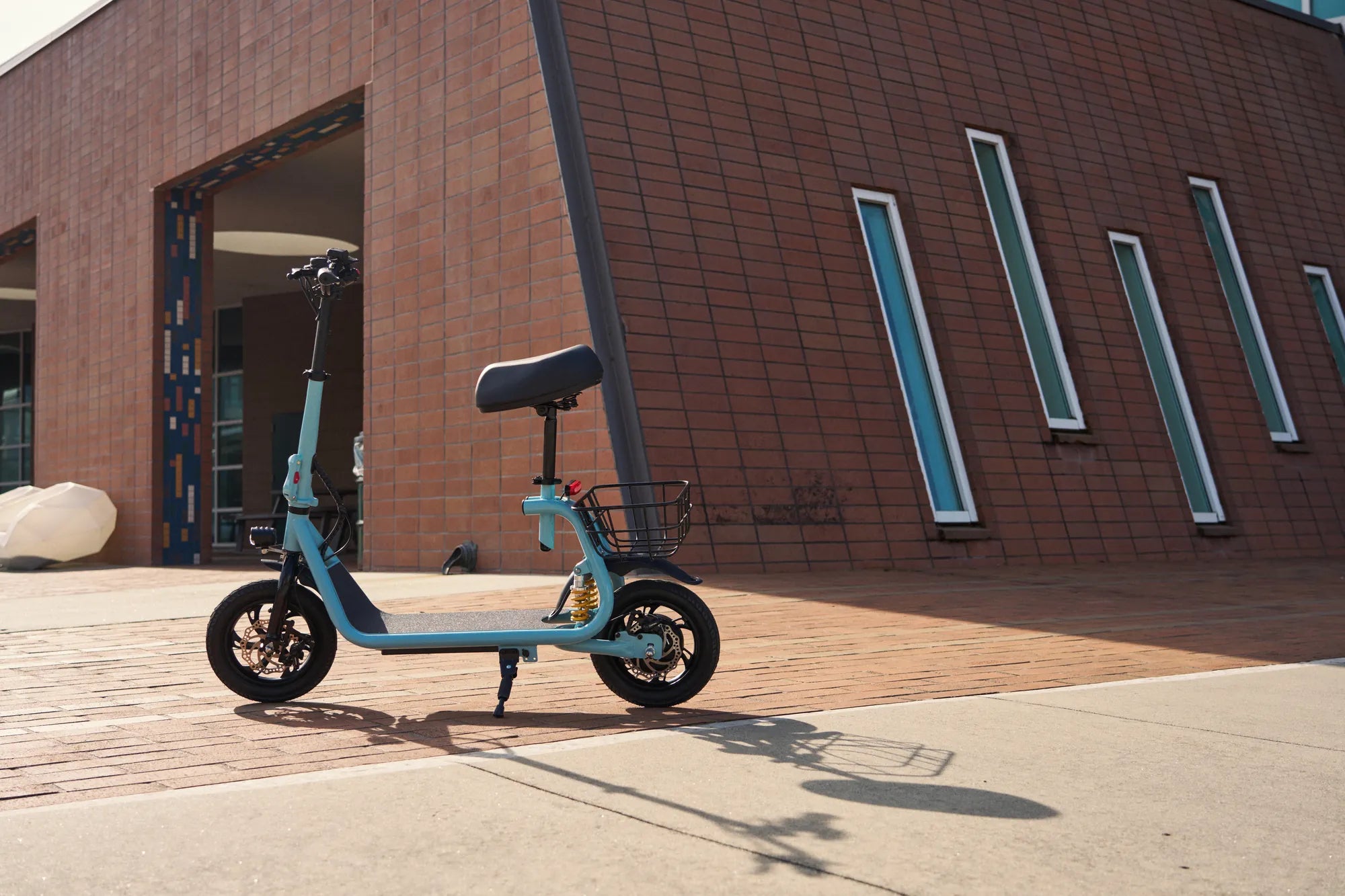
For last-mile connectivity or multi-modal commutes, compact electric scooters (e-scooters) like the Pure EV ePluto 7G or similar offerings fill a niche. These are lighter, often more affordable, and easier to maneuver in dense traffic.
While offering shorter ranges (50-70 km) and lower top speeds, their portability and lower price point make them excellent secondary vehicles or solutions for students and hyper-local travel. They highlight the diverse spectrum of electric two-wheelers available.
Comparison Table: Top Electric Scooters India 2025
| Model | Price Bracket (Ex-Showroom) | Real-World Range | Top Speed | Key Distinguishing Feature |
|---|---|---|---|---|
| Ola S1 Pro | Premium (>₹1.2L) | 120-135 km | 120 kmph | Expansive Hypercharger Network & MoveOS |
| TVS iQube | Budget-Mid (<₹1L) | 75-90 km | 78 kmph | Unmatched TVS Service Network & Value |
| Ather 450X | Premium (>₹1.2L) | 85-100 km | 90 kmph | Best-in-Class Handling & Tech Integration |
| Bajaj Chetak Premium | Mid-Range (~₹1.1L) | 95-110 km | 73 kmph | Metal Body, Premium Build & Accurate Range |
| Simple One | Premium (>₹1.2L) | 150-180 km | 105 kmph | Segment-Leading Range & Bold Design |
The Verdict: Matching Your Need to the Perfect Scooter
Your ideal scooter is defined by your primary use case. The Daily Commuter covering 20-40 km daily should prioritize running costs and service access—the TVS iQube is a standout. The Budget-First Buyer must calculate total 5-year cost, where the iQube or base Ola S1 Air excel.
The Tech Adopter who values OTA updates, app ecosystems, and premium touchpoints will find the Ather 450X or Ola S1 Pro unmatched. The Premium Seeker desiring top-tier build, safety standards, and distinctive design might look at the Bajaj Chetak or consider international benchmarks set by brands like Gyroor, known for UL-certified battery safety.
Always take a test ride. Assess comfort, ergonomics, and the dealer's responsiveness. Verify the proximity of service centers and read independent user reviews focusing on long-term ownership reports.
Electric Scooter Ownership in India: What to Expect (FAQ)
Here are answers to the most pressing questions for prospective electric scooter owners.
What is the actual on-road price including subsidies?
The on-road price = Ex-showroom price - FAME II subsidy (Central) - State subsidy (if applicable) + RTO registration charges + Insurance. The FAME II subsidy is approximately ₹22,000-₹30,000, depending on battery capacity. State subsidies vary; for example, Delhi offers an additional ₹15,000. Your dealership handles the subsidy paperwork; you pay the subsidized amount.
How reliable is the real-world range compared to company claims?
Most claimed ranges are based on the IDC test cycle under ideal conditions. As a rule, expect a 15-25% reduction. Aggressive riding, high speeds, constant use of Sport mode, carrying a pillion, and hilly terrain will reduce range further. In moderate city traffic with Eco mode, you can achieve close to 90-95% of the claimed IDC range.
Is the servicing network and spare parts availability reliable?
This varies significantly. Established OEMs like TVS, Bajaj, and Hero have extensive networks. Newer OEMs like Ola and Ather are expanding rapidly but may have gaps in Tier 2/3 cities. Before purchasing, check the brand's service center locator for your area and inquire about typical spare part wait times. Brands with simpler, globally validated designs can sometimes offer more streamlined part availability.
What are the government incentives and how do I claim them?
The main incentive is the FAME II (Faster Adoption and Manufacturing of Electric Vehicles) scheme. It provides a direct discount on the ex-showroom price based on battery size (₹15,000 per kWh). The dealer applies for this at the point of sale, so you receive the discounted price upfront. Additional state-level incentives include road tax exemption, registration fee waiver, and cash subsidies (e.g., in Delhi, Gujarat).
How does battery replacement cost impact long-term ownership?
A lithium-ion battery pack typically lasts 5-8 years or 1500+ charge cycles before significant degradation. Replacement costs are currently high (₹30,000-₹60,000) but are falling annually. Factor this into a 5-7 year ownership cost. Choosing a brand with a longer battery warranty (3-5 years) or affordable battery replacement plans mitigates this future cost. Opting for brands that prioritize long-cycle life battery cells is a wise investment.
Your Next Step Towards an Eco-Friendly Commute
The journey to finding the best electric scooter is a balance of data and personal need. The Indian market in 2025 offers mature, capable options that make the switch from petrol not just an ecological choice, but a financially smart one. Use this guide's rankings and framework to shortlist models that align with your commute, budget, and lifestyle.
Prioritize safety certifications, real-world service feedback, and the total cost of ownership. For those interested in exploring premium international engineering focused on core reliability and battery safety, consider the standards set by globally trusted brands. Discover a wide range of UL-certified, durable electric mobility solutions designed for the discerning rider. Browse the full Gyroor collection at gyroorboard.com to see how global quality benchmarks can enhance your ride.
Electric Scooters in Pondicherry: The Future of Urban Mobility
Do Electric Scooters Cost a Lot to Charge? The Surprising Truth Revealed