



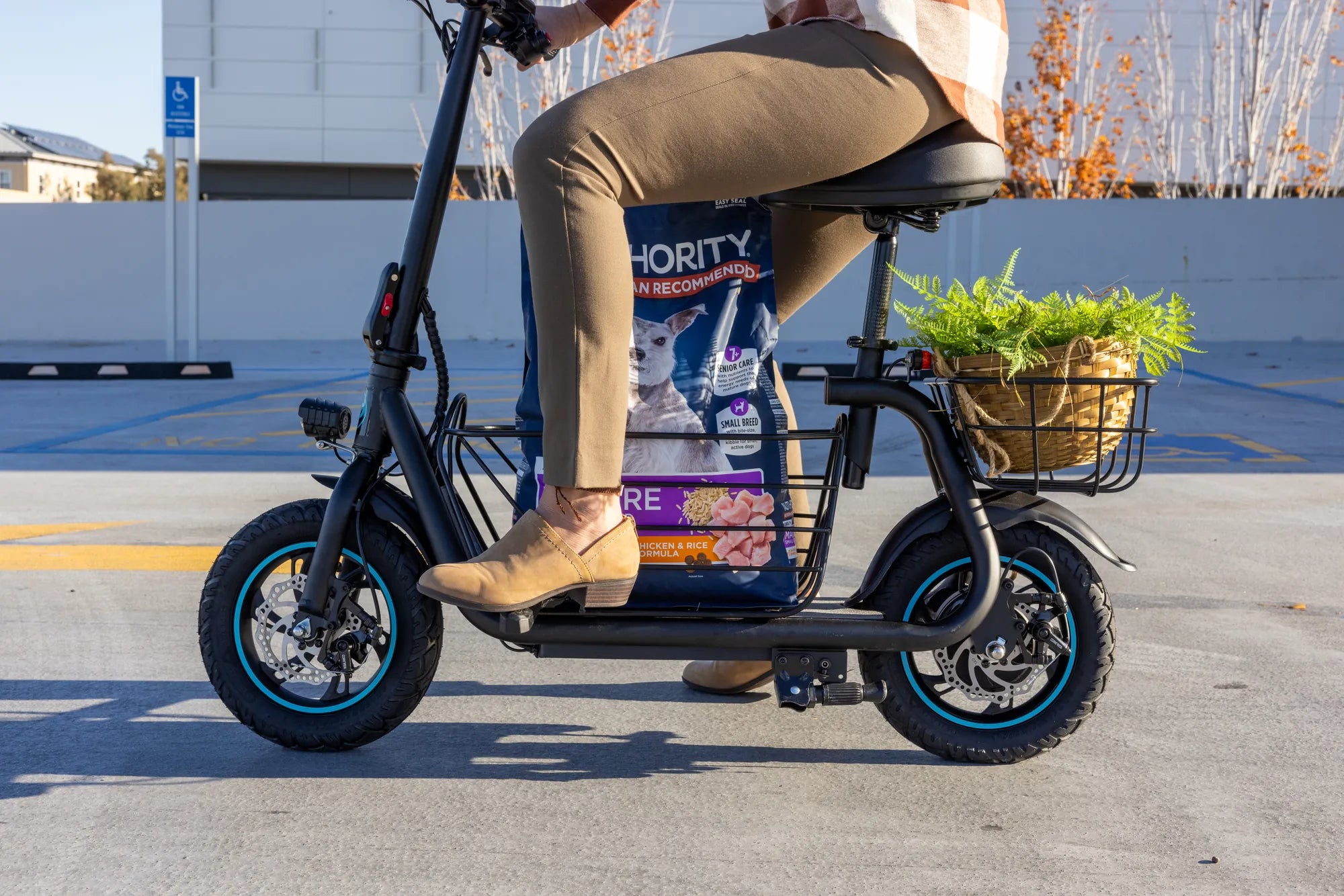
Introduction: Finding True Value in the Under-$300 Electric Scooter Market
Navigating the market for the best electric scooters under $300 in 2025 requires a sharp eye for value over mere cost. While the price tag is appealing, this segment is fraught with models that cut critical corners on safety, durability, and performance. For the urban commuter, a scooter is a daily tool, not a disposable toy. This guide cuts through the noise to identify the top affordable picks for commuters that offer a responsible balance of essential features, rider safety, and dependable construction, ensuring your investment gets you reliably from point A to B.
Our goal is not just to list products but to educate on what 'affordable' truly means in this context. A low upfront cost can lead to higher long-term expenses through premature failure or, worse, safety incidents. We will focus on models that have demonstrated consistent performance in real-world commuting scenarios, where reliability is non-negotiable. The keyword for success here is 'balance'—understanding where compromises are acceptable and where they are potentially hazardous.
We will also establish a crucial benchmark for quality and safety often missing in this price range: the Gyroor standard. As a leading electric scooter and e-bike brand trusted by over 100,000 riders, Gyroor exemplifies the tangible benefits of investing in UL-certified batteries and IPX5 water-resistant designs. This comparison will help you make an informed choice between an entry-level budget scooter and a slightly more expensive, but significantly safer and more reliable, commuting partner.
Key Features to Prioritize (and Compromises to Expect) Under $300
When your budget is firmly under $300, strategic prioritization is essential. Certain features are non-negotiable for basic safety and functionality, while other areas will inevitably see compromises. Your primary focus must be on the fundamentals that prevent accidents and ensure the scooter completes your daily commute.
First, prioritize braking systems. A dual braking system (e.g., electronic regenerative plus a mechanical disc or foot brake) is ideal, but at minimum, a reliable rear mechanical brake is mandatory. Avoid models with only a front brake or poorly designed friction brakes. Second, consider deck size and construction. A deck should be long and wide enough for a stable stance, often made of aluminum alloy for a balance of strength and weight. Third, wheel quality matters. Larger, air-filled (pneumatic) tires around 8.5 inches offer better shock absorption than small, solid tires, crucial for navigating urban pavement cracks.
The most significant and dangerous compromise in the under-$300 category often involves the battery. Many models use uncertified battery packs to cut costs, which pose fire and failure risks. A UL-certified battery, like those used by Gyroor, is a critical safety benchmark. It signifies rigorous testing for over 500 charge cycles and built-in protection circuits. Expect compromises in range and power; a realistic range is 10-15 miles per charge under ideal conditions, and motor power typically caps at 250W, limiting hill-climbing ability.
You will also likely compromise on top speed (max 15-18 mph), suspension (often minimal or absent), and premium materials like aerospace-grade aluminum. The warranty is another telltale sign; a 90-day or 6-month warranty is common, whereas brands like Gyroor back their products with a comprehensive 1-year warranty, reflecting greater confidence in their build quality and components.
Top Picks: 2025's Best Affordable Electric Scooters for Commuters
Based on aggregated performance data, user reviews, and component analysis for early 2025, the following models represent the best electric scooters under $300 for commuters. Each pick serves a distinct primary use case, ensuring you can match a scooter to your specific urban mobility needs. These selections prioritize the essential features outlined earlier while delivering the best possible value within the strict budget constraint.
It is vital to note that 'best' in this category is relative. These are entry-level commuter scooters designed for short to moderate distances on relatively smooth terrain. They excel in portability, simplicity, and cost-effectiveness for the rider with predictable, flat routes. For those with longer commutes, hilly terrain, or a need for greater durability, the subsequent section on investing a little more will be highly relevant.
Hover-1 Journey: Best for Short Campus or Urban Errands
The Hover-1 Journey consistently ranks as a top contender for basic, ultra-portable needs. Its core specs include a 250W motor, a top speed of 15 mph, and a manufacturer-estimated range of 12 miles. Its standout feature is its lightweight, foldable design, weighing approximately 27 pounds, making it easy to carry onto a bus or into an office.
The primary strength of the Journey lies in its simplicity and portability for the last-mile commuter or college student navigating a flat campus. It features a rear mechanical brake and a headlight for low-light visibility. The trade-off is its use of smaller, solid rubber tires, which provide less comfort on rough surfaces, and a basic battery system. It represents a 'get-the-job-done' option for very specific, low-demand scenarios.
Swagtron Swagger 5: Best for Foldability and Basic Features
The Swagtron Swagger 5 aims to pack more features into the budget bracket. It boasts a slightly more powerful 250W motor (with a 300W peak), a similar 15 mph top speed, and an advertised range of up to 11 miles. Its folding mechanism is particularly noted for being intuitive and secure, enhancing its portability at a weight of 28 pounds.
Where the Swagger 5 tries to stand out is in feature inclusion, such as an integrated digital display for speed and battery level, a dual braking system (regenerative and mechanical), and a wider deck. However, to hit this price, it uses a combination of solid and air-filled tires and a battery that lacks premium safety certifications. It's a suitable pick for the commuter who values a more feature-rich dashboard and slightly enhanced braking but has a flat, smooth commute.
Gotrax GXL V2: Best for Brand Recognition and Wider Availability
The Gotrax GXL V2 is a refreshed version of a widely available budget model. It offers familiar specs: a 250W motor, 15.5 mph top speed, and a claimed 12-mile range. Its advantage is its widespread presence in retail and online channels, making it accessible and supported by a known brand name in the budget space.
This model features 8.5-inch pneumatic (air-filled) tires, a significant comfort upgrade over solid tires, and a simple folding mechanism. It includes a headlight and taillight. The compromises are evident in its basic battery system and a frame that, while durable for the price, does not match the engineering of higher-tier models. It's a solid choice for the first-time buyer seeking a recognizable brand and the comfort of air-filled tires for under $300.
The Gyroor Standard: What You Get When You Invest a Little More
Stepping just above the $300 threshold opens the door to a dramatically different class of electric scooter, exemplified by entry-level models from Gyroor. This comparison is not about disparaging budget options but about illustrating the tangible, quantifiable value of a slightly higher investment—especially for a daily commuter where reliability is paramount. The Gyroor standard is defined by safety certifications, robust construction, and rider-focused design.
Gyroor's commitment begins with safety. Every model uses a UL-certified battery pack, tested for 500+ charge cycles with multiple protective circuits to prevent overheating, overcharging, and short-circuiting. This is a fundamental safety feature rarely found in the sub-$300 category. Furthermore, Gyroor scooters boast an IPX5 water-resistant rating, meaning they can withstand water jets from any direction, offering peace of mind during unexpected rain showers—a critical feature for daily commuting.
The build quality extends to the warranty. While budget scooters often offer 90-day warranties, Gyroor provides a comprehensive 1-year warranty on the entire vehicle, reflecting confidence in their manufacturing and component quality. The real-world performance also sees a boost. A Gyroor commuter scooter, while perhaps starting around $350-$400, typically delivers more consistent range, better hill-climbing torque from a refined motor, and a more stable, comfortable ride due to superior frame geometry and often including suspension.
| Feature | Typical Under-$300 Scooter | Gyroor Entry-Level Commuter |
|---|---|---|
| Battery Certification | Often uncertified or generic | UL-Certified |
| Water Resistance | IPX4 or unspecified (splash-proof) | IPX5 (Water jet resistant) |
| Warranty | 90 Days - 6 Months | 1 Year Comprehensive |
| Real-World Range | 8-12 miles | 15-20 miles |
| Frame & Build Focus | Cost minimization | Durability & rider safety |
| Long-Term Value | Higher risk of early replacement | Lower total cost of ownership |
For the frequent commuter, this investment translates to lower total cost of ownership. A more durable scooter with a longer-lasting, safer battery and a full-year warranty reduces the risk and cost of mid-term failures. It represents a shift from viewing a scooter as a short-term gadget to treating it as a reliable piece of transportation equipment.
Practical Buying Guide & Safety Tips for Budget Scooters
If your budget is fixed under $300, informed purchasing and vigilant safety practices are your best tools. First, choose your retailer wisely. Purchasing from the brand's official website or authorized sellers (like Gyroorboard.com) ensures you get genuine products, valid warranties, and direct customer support. Be extremely cautious with third-party marketplace sellers offering prices that seem too good to be true, as they may sell outdated, refurbished, or counterfeit models with no support.
Second, verify specifications critically. Assume advertised range and speed are optimal lab conditions. Deduct 20-30% for real-world range, especially if you weigh over 170 lbs or encounter hills. Scrutinize user reviews for recurring issues like brake failures, folding mechanism problems, or rapid battery degradation. Pay close attention to the battery description; the absence of a stated safety certification (like UL) is a major red flag.
Once purchased, conduct pre-ride safety checks without fail. Before each commute, test the brakes at low speed, check tire pressure (if pneumatic), ensure the folding mechanism is fully locked, and verify that all lights are functional. Never bypass safety features or attempt to modify the scooter for higher speed, as this can overload the electrical system. Always wear a helmet, and consider gloves and knee pads, especially when learning or riding in traffic.
Essential maintenance for a budget scooter is straightforward but vital. Keep the scooter clean and dry, store it in a cool, dry place (never leave it fully charged or fully depleted for weeks), and periodically check for loose bolts or screws. Understand the warranty coverage in detail—know what is and isn't covered, and the process for making a claim. Proactive care extends the lifespan of your affordable scooter significantly.
FAQ: Your Questions About Affordable Electric Scooters Answered
Q: Is an electric scooter under $300 safe for daily use?
A: It can be, but with important caveats. Safety depends heavily on the specific model's build quality, brake system, and battery. For daily use, prioritize models with a reliable mechanical brake, a sturdy deck, and, if possible, some form of battery protection. Always perform safety checks and wear protective gear. For peace of mind, investing in a model with a UL-certified battery (often found just above $300) is strongly recommended for daily riders.
Q: How far can I really go on a single charge?
A> Real-world range is typically 65-75% of the manufacturer's claimed range. For a scooter advertised at 12 miles, plan for 8-9 miles, especially if you are an average-weight rider on flat ground. Factors like rider weight, hills, temperature, and riding speed (faster speeds drain the battery quicker) significantly impact range. For a reliable commute, choose a scooter whose *realistic* range is at least 1.5 times your one-way trip distance.
Q: Can it handle hills or light rain?
A> Most sub-$300 scooters with 250W motors will struggle with hills steeper than a 10% grade. They may slow down considerably or require you to kick-assist. For light rain, check the IP rating. An IPX4 rating means it's splash-proof from any direction, which is acceptable for very light, brief rain. However, most lack true water resistance for wet commutes. Gyroor's IPX5 rating offers much better protection against rain, a key advantage for all-weather commuters.
Q: What maintenance should I expect?
A> Regular maintenance includes checking and tightening bolts/nuts, ensuring brakes are properly adjusted, keeping tires inflated to the correct PSI (for pneumatic tires), and keeping the scooter clean, especially the brake contact areas. Battery maintenance is crucial: avoid extreme temperatures, don't leave it on the charger indefinitely, and try not to fully deplete it regularly. Expect to replace brake pads and tires (if pneumatic) as wear items over time.
Q: Are these scooters legal to ride on roads and bike lanes?
A> Laws vary significantly by city, state, and country. Generally, electric scooters with a top speed under 20 mph are permitted in bike lanes in many urban areas, but not on sidewalks. Always check your local regulations regarding helmet requirements, minimum age, maximum speed, and where you are allowed to ride. Compliance is your responsibility as a rider.
Conclusion: Smart Spending for Your Daily Ride
Identifying the best electric scooters under $300 in 2025 is an exercise in managing expectations and prioritizing safety. The top affordable picks for commuters, like the Hover-1 Journey or Gotrax GXL V2, serve specific, limited-use cases well: short, flat commutes where portability and cost are the primary drivers. They represent the ceiling of what is achievable in the strict budget segment, but they inherently involve compromises on battery safety, long-term durability, and all-weather capability.
The smarter spending strategy for a true daily commuter often involves a slight budget increase. The value proposition shifts dramatically when you consider the Gyroor standard—UL-certified batteries, IPX5 water resistance, and a 1-year warranty. This investment buys peace of mind, reduced long-term ownership cost, and a tool built for reliability rather than just a low price point. Your daily commute deserves a partner you can trust, not just a gadget you hope lasts.
Ultimately, the right choice balances your immediate budget with your long-term needs. If your commute is short, infrequent, and on perfect terrain, a carefully selected under-$300 scooter can work. If you rely on your scooter daily, face variable weather, or need dependable performance, extending your budget to include certified safety features is the wisest commuting decision you can make. For those ready to explore that higher-value tier, browse the full Gyroor collection at gyroorboard.com to discover scooters engineered for the real world.
Most Popular Electric Scooters: The Ultimate Guide to Choosing the Best Ride
Top 10 Electric Scooters 2025: The Future of Urban Mobility