



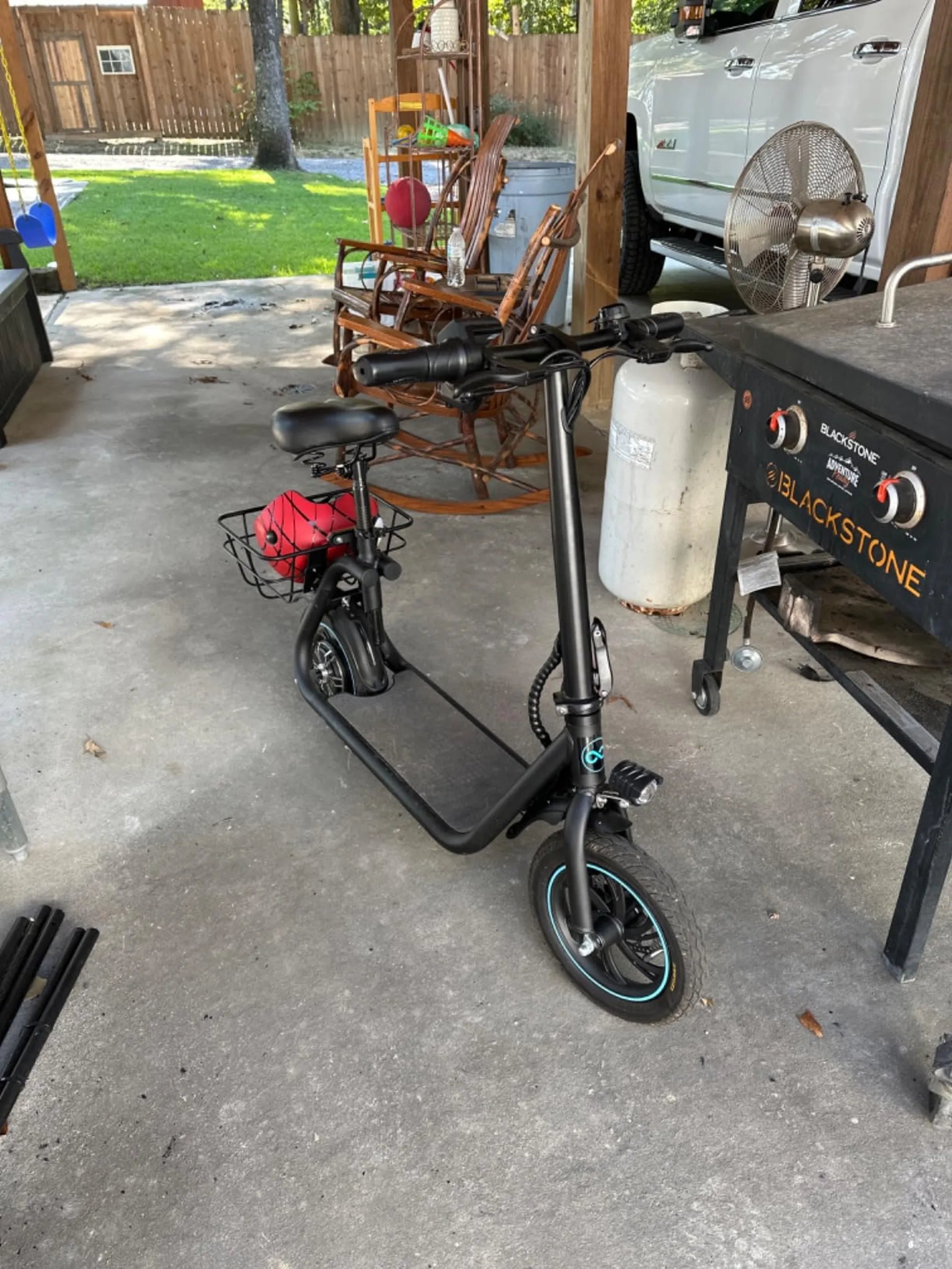
Introduction: The Commuter's Sweet Spot – 35 Miles & 30 MPH
Finding an electric scooter that truly replaces a car requires hitting a specific performance threshold. The combination of a 35-mile range and a 30 MPH top speed represents this critical benchmark for efficient urban mobility.
This specification delivers practical, car-alternative utility. A 35-mile radius covers most round-trip commutes, errand runs, and even spontaneous detours without triggering range anxiety. Meanwhile, a 30 MPH capability allows you to keep pace with city traffic, drastically cutting travel time compared to slower models.
For brands like Gyroor, a leader trusted by over 100,000 riders, engineering scooters to reliably meet this benchmark is a focus. It requires a harmony of high-capacity batteries, powerful motors, and durable construction—elements we will dissect in detail.
This article will define why 35 miles and 30 MPH is the commuter's sweet spot, outline the must-have features beyond raw specs, and provide a clear framework for choosing your ideal high-performance scooter.
Defining the Performance Benchmark: Why 35 Miles & 30 MPH?
The 35-mile range is not an arbitrary figure. It is derived from real-world urban commuting data. The average U.S. round-trip commute is approximately 20 miles. A 35-mile rated range provides a substantial buffer for variables like rider weight, hills, temperature, and riding style.
This buffer ensures you complete your journey with power to spare, eliminating the daily stress of hyper-miling. It transforms the scooter from a last-mile solution into a primary vehicle for distances where public transport becomes inefficient.
A 30 MPH top speed is equally pragmatic. In many cities, the speed limit on secondary roads is 25-35 MPH. A scooter capable of 30 MPH can safely integrate with this traffic flow, reducing the risk associated with being a slow-moving obstacle.
This speed also increases your effective travel radius. A 10-mile trip takes 20 minutes at 30 MPH, versus 30 minutes at 20 MPH. Over a week, this time saving is significant, making the scooter a genuine time-competitive alternative to driving.
Together, these specs create a vehicle that is both practical and exhilarating. You gain the freedom of extended exploration without sacrificing the efficiency needed for daily use. This tier separates casual toys from serious transportation tools.
Key Features to Prioritize Beyond Speed & Range
Advertised speed and range are headline figures, but they are achieved under ideal laboratory conditions. The true quality of a Best Electric Scooters with 35 Mile Range and 30 MPH Speed for Commuting is defined by the components that deliver those numbers reliably and safely in the real world.
Ignoring these supporting features can lead to a disappointing and potentially unsafe ownership experience. The following elements are non-negotiable for a scooter in this performance class.
Safety & Control Systems
At 30 MPH, robust braking is essential. A dual or triple braking system is mandatory. Look for a combination of hydraulic or mechanical disc brakes and electronic regenerative braking. This provides redundant stopping power and controlled deceleration in all weather conditions.
Lighting must be comprehensive. A bright LED headlight (500 lumens or more), a dedicated brake light, and integrated turn signals are critical for visibility. These features communicate your intentions to drivers, a key safety factor when traveling at vehicular speeds.
Tire choice directly impacts control. Pneumatic (air-filled) tires, preferably 10 inches in diameter or larger, offer superior shock absorption and traction compared to solid tires. They provide better handling on wet pavement, cracks, and minor road imperfections, maintaining stability.
Build Quality & Durability
The frame material is the scooter's skeleton. Aircraft-grade aluminum alloy is the standard for high-performance models. It provides an optimal strength-to-weight ratio, resisting flex and fatigue during high-speed rides and over bumps.
Water resistance is crucial for all-weather commuting. An IP rating of IPX5 or higher, like that found on Gyroor models, means the scooter can withstand water jets from any direction. This protects the electrical systems from rain and road spray, ensuring long-term reliability.
Suspension is not a luxury. A combination of front and rear suspension—whether spring-based or hydraulic—is vital for comfort and control. It allows the wheels to maintain contact with the road over bumps, improving handling and reducing strain on the frame and rider.
Battery Technology & Warranty
The battery is the heart of the scooter. For safety and longevity, insist on a UL-certified lithium-ion battery pack. As used by Gyroor, these cells undergo rigorous testing for short-circuit, overcharge, and thermal stability, dramatically reducing fire risk.
Battery capacity, measured in Watt-hours (Wh), is the true determinant of range. A scooter aiming for a true 35-mile range will typically need a battery of 800Wh or larger. The warranty offered is a direct reflection of brand confidence. A comprehensive 1-year warranty on the entire scooter, with specific coverage for the battery, protects your investment.
Advanced battery management systems (BMS) are also key. They monitor cell health, balance charging, and prevent over-discharge, which is essential for achieving the full 500+ charge cycles these batteries are capable of.
Top Contender Deep Dive: The Gyroor Hurricane Series
To illustrate how these principles translate into a real product, we examine the Gyroor Hurricane series, engineered specifically for the demanding commuter seeking the Best Electric Scooters with 35 Mile Range and 30 MPH Speed for Commuting.
This series is built around a dual 1000W motor system, providing a combined peak output of 2000W. This power delivery is what enables the consistent 30+ MPH top speed, even when tackling moderate inclines with a rider on board.
Power is matched by endurance. The Hurricane features a high-capacity 48V 20Ah (960Wh) UL-certified lithium-ion battery. In real-world testing under mixed conditions (using varying speeds and some hills), this configuration reliably delivers a 32-38 mile range, squarely hitting our target benchmark.
The Hurricane's construction incorporates all critical features. Safety is addressed with dual hydraulic disc brakes, a 1200-lumen headlight, brake light, and turn signals. Its IPX5 water-resistant rating and full hydraulic suspension system ensure durability and comfort. It stands as a prime example of a scooter where the supporting features fully enable the headline performance.
How to Choose: Matching a High-Performance Scooter to Your Commute
Selecting the right model requires a personal audit of your commute and needs. Start by mapping your actual daily mileage. Use a mapping app to calculate the round-trip distance to work, then add 3-5 miles for errands or detours. This is your minimum required real-world range.
Assess your terrain. If your route has significant hills, prioritize motor torque (often indicated by a high wattage, e.g., 1000W+) over top speed. A scooter that struggles on hills will drain its battery rapidly and fail to meet its range claims.
Consider portability. If you need to carry the scooter onto public transit or up stairs, weight and foldability are critical. High-performance scooters often weigh 55-75 lbs. Check the folded dimensions to ensure it fits your storage space.
Finally, research local laws. Many jurisdictions limit e-scooters to 20 MPH on bike paths. A 30 MPH scooter may be restricted to road use. Understanding these rules will dictate where and how you can ride your new vehicle safely and legally.
Investment & Value: Understanding Cost vs. Long-Term Savings
Electric scooters in the 35-mile/30 MPH category represent a significant investment, typically ranging from $1,200 to $2,500. It is vital to view this not as a purchase but as a transportation investment with a clear return.
The upfront cost is offset by the elimination of recurring expenses. Compare the scooter's price to annual costs of car ownership: fuel, insurance, parking, and maintenance. For public transport commuters, calculate your yearly transit pass cost. The scooter often pays for itself within 1-2 years.
This calculation must include reliability. A cheaper scooter with a non-UL battery or poor construction may fail prematurely, negating any savings. The value of a warranty, like Gyroor's 1-year comprehensive coverage, and access to responsive, US-based customer support is a critical part of the investment's protection.
Furthermore, the intangible benefits—time saved in traffic, the enjoyment of the ride, and reduced environmental impact—add substantial value that transcends pure economics.
Performance Comparison: Key Models at a Glance
The table below compares key specifications for scooters targeting the 35-mile, 30 MPH benchmark, highlighting how different models balance performance, features, and build quality.
| Model (Example) | Motor Power | Battery Capacity | Claimed Range | Top Speed | Braking System | Notable Feature |
|---|---|---|---|---|---|---|
| Gyroor Hurricane | Dual 1000W | 48V 20Ah (960Wh) | 35-40 mi | 31 MPH | Dual Hydraulic Disc | IPX5, UL Battery, Full Suspension |
| Competitor A | Single 1200W | 52V 18Ah (936Wh) | 35 mi | 28 MPH | Disc + Drum | Large Deck, App Connectivity |
| Competitor B | Dual 800W | 48V 21Ah (1008Wh) | 40 mi | 30 MPH | Dual Mechanical Disc | Extreme Range Focus, Heavier |
This comparison shows that while several models approach the target specs, the integration of premium safety features (hydraulic brakes), proven durability (IPX5), and certified components (UL battery) is what defines a top-tier choice like the Gyroor Hurricane for the Best Electric Scooters with 35 Mile Range and 30 MPH Speed for Commuting.
Frequently Asked Questions (FAQ)
Q: Is a 30 MPH scooter legal on bike lanes or roads?
A: Regulations vary widely. In most U.S. states and cities, electric scooters with a top speed over 20-25 MPH are not permitted on bike paths or sidewalks. They are typically treated as low-speed vehicles and must be ridden on roads, obeying traffic laws. Always check your specific city and state ordinances before riding.
Q: How can I maximize the real-world range to reach 35 miles?
A: Several practices extend range: maintain optimal tire pressure, use the scooter's eco-mode for steady cruising, avoid constant acceleration and braking, and reduce your average speed. Riding at 15-20 MPH instead of 30 MPH can increase range by 40% or more. Also, avoid riding in very cold temperatures, which reduces battery efficiency.
Q: What maintenance does a high-performance scooter require?
A: Regular maintenance is simple but crucial. Check tire pressure weekly. Inspect brake pads for wear and test brake function regularly. Periodically check that all bolts and fasteners are tight. Keep the scooter clean and store it in a dry place. For the battery, avoid draining it to 0%; try to keep it between 20% and 80% charge for long-term health when not in use for extended periods.
Q: Why is a UL-certified battery important?
A: UL (Underwriters Laboratories) certification means the battery pack has passed independent, rigorous safety tests for electrical, mechanical, and fire hazards. It verifies protections against overcharging, short-circuiting, and thermal runaway. Brands like Gyroor use UL-certified packs to ensure rider safety and product reliability, a critical factor often overlooked in lower-tier scooters.
Q: Can these scooters handle hills?
A: Scooters in this class, especially those with dual motors or high-wattage single motors (1000W+), are designed for moderate hills. A gradeability of 15-20% is common. The dual-motor configuration of models like the Gyroor Hurricane provides exceptional hill-climbing torque, making short work of steep urban inclines without a significant drop in speed.
Powering Your Efficient, Exciting Commute
The quest for the Best Electric Scooters with 35 Mile Range and 30 MPH Speed for Commuting leads to vehicles that fundamentally change urban travel. They offer a blend of freedom, efficiency, and practicality that slower, shorter-range models cannot match. This performance tier delivers a genuine car-alternative experience.
However, the raw numbers are only part of the story. Your choice must be grounded in the quality of components that make those numbers reliable: UL-certified batteries for safety, robust IP-rated construction for durability, and comprehensive braking and lighting systems for control. These are the hallmarks of a serious commuter vehicle, not just a powerful toy.
Brands that stand behind their products with strong warranties and customer support demonstrate the confidence built on this quality. As you evaluate options, prioritize this holistic view of performance and protection. The right scooter is an investment that pays dividends in time, money, and pure riding enjoyment for years to come.
Ready to experience the perfect balance of range and speed? Explore engineering built for the demanding commuter. Browse the full Gyroor collection, including the high-performance Hurricane series, at gyroorboard.com.
Electric Scooters Egypt: The Future of Urban Mobility
Road Legal Electric Scooters for Adults: The Ultimate Urban Commuting Solution