


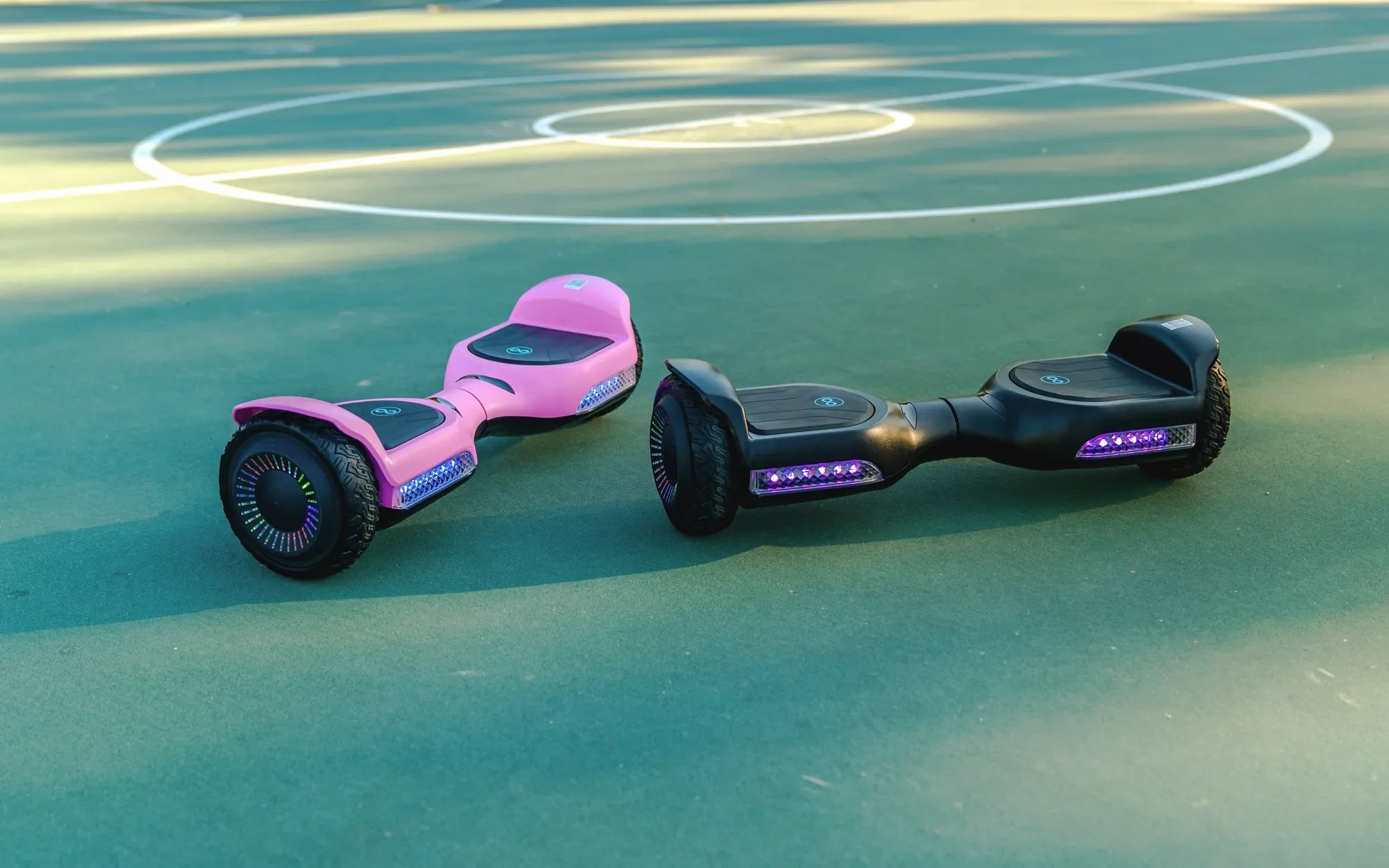
Finding the perfect hoverboard for your child means balancing exhilarating fun with uncompromising safety and durability. The market is flooded with options, but for young riders, the brand you choose is the single most important decision you'll make. This guide cuts through the noise to focus on the best hoverboard brands for kids, where certified engineering and thoughtful design create a secure platform for adventure. We'll explore the non-negotiable safety standards, key features for young riders, and how leading brands like Gyroor—a trusted name in personal electric transport with over 100,000 riders—build trust through UL-certified batteries and robust warranties.
Why Brand Reputation is Critical for Kids' Hoverboards
Not all hoverboards are created equal, and for children, the stakes are significantly higher. A reputable brand is your first and best line of defense against hidden dangers. Cheap, uncertified models often cut corners on the most critical components: the battery management system, motor controllers, and frame integrity. This can lead to catastrophic failures, including thermal runaway in batteries—a primary cause of fires—or sudden motor cutouts that can throw a rider.
Established brands invest heavily in research, development, and rigorous third-party testing. They use higher-grade materials for the shell and wheels, ensuring they can withstand the bumps and falls of learning. Furthermore, a recognized brand stands behind its product with accessible customer service and clear warranty policies, providing long-term peace of mind that a generic seller cannot match.
The difference is often in the details you can't see: the quality of solder joints on the circuit board, the consistency of the lithium-ion cells in the battery pack, and the software that governs balance and speed limits. For a child's product, these invisible elements are what separate a safe toy from a potential hazard.
The Non-Negotiables: UL 2272 Certification and Reliable Batteries
The UL 2272 safety standard is the absolute baseline for any hoverboard considered for a child. This certification, developed by Underwriters Laboratories after well-publicized safety incidents, tests the entire electrical system—battery, charger, and motor—for over 100 potential failure points. It evaluates the product for electrical, mechanical, and fire hazards under extreme conditions.
A hoverboard without this certification is a significant risk. UL 2272 ensures the battery pack is designed to prevent overcharging, short-circuiting, and overheating. It's not just a sticker; it's evidence of a fundamental commitment to safety. When evaluating the best hoverboard brands for kids, confirming authentic UL 2272 certification is step one.
This directly connects to battery quality. Reputable brands use name-brand, UL-certified lithium-ion cells arranged in a pack with a robust Battery Management System (BMS). Gyroor, for example, utilizes UL-certified battery packs tested for over 500 charge cycles, ensuring stable performance and longevity. This focus on certified power sources is a hallmark of trustworthy brands in this space.
Top Features to Look for in a Kid-Friendly Hoverboard
Beyond core safety certifications, specific features tailor a hoverboard to a younger, less experienced rider. Parents should look for designs that prioritize control, stability, and durability over raw speed or flashy gimmicks. The goal is to find a board that grows with the child, offering a safe learning curve and the resilience to handle the learning process.
Key specs to scrutinize include the motor power (typically 200W-350W per motor is sufficient for kids), the wheel size (6.5 to 8.5 inches for a blend of stability and maneuverability), and the maximum speed. Perhaps most importantly, look for models with multiple speed modes, including a very slow beginner setting that can be locked in via a parental control app or physical switch.
The weight limit is another crucial data point. Exceeding it can strain the motors and battery, leading to premature failure and unpredictable behavior. A good kids' model will have a clear, appropriate limit, often between 44 lbs and 220 lbs, to accommodate growth while ensuring the board operates within its engineered parameters.
Built to Last: Durability and Water Resistance
Kids will test the limits of any product's durability. A quality hoverboard features a reinforced frame, often made from ABS plastic with metal or reinforced fiberglass components internally. The shell should feel solid, not hollow or flimsy, and the seams should be tight to keep out dust and moisture.
Water resistance is a critical feature for real-world use. An IP rating tells you how well the unit is sealed. An IPX4 rating means it can resist splashes from any direction, but for true peace of mind against puddles and light rain, look for IPX5 or higher. Gyroor designs its hoverboards with an IPX5 water-resistant rating as standard, meaning they can withstand water jets, which significantly reduces the risk of water damage during typical outdoor play.
This durability extends to the tires. Solid rubber tires are maintenance-free and puncture-proof, while air-filled tires offer a slightly smoother ride but require inflation. For most kids, robust solid tires are the practical choice, paired with a good suspension system to absorb vibrations.
Rider-Centric Design: Speed Modes, Learning Features, and Weight Limits
A beginner-friendly hoverboard must have a gentle learning curve. The most important feature here is a dedicated beginner or training mode. This mode severely limits the top speed (often to 4-5 mph) and makes the acceleration and turning less sensitive, allowing the child to build confidence and muscle memory safely.
Some advanced models come with companion smartphone apps that allow parents to set a permanent speed limit, track the board's location, or monitor battery life. While not essential, these tools offer an extra layer of control. Physical design elements also aid learning: wider foot pads provide more stability, and textured surfaces help prevent feet from slipping.
Balanced tire design and a low center of gravity are engineering feats that contribute significantly to initial stability. The board should self-balance effectively and respond predictively to lean. Always verify the manufacturer's recommended age and weight range, and err on the side of caution. A board rated for ages 8+ with a 120 lb weight limit is fundamentally different from one rated for teens and adults.
Navigating the Market: A Look at Trusted Hoverboard Brands
The landscape of reputable hoverboard brands has consolidated around those who prioritize safety and quality. When searching for the best hoverboard brands for kids, you'll encounter companies that have built their reputation on transparency, certified components, and positive user reviews. These brands typically offer clear warranty terms, have responsive customer support channels, and provide detailed product specifications.
It's useful to compare brands based on their core philosophy. Some focus on ultra-durable, all-terrain designs, while others prioritize smart features and app connectivity. For children, the focus should remain on foundational safety, robust construction, and manageable performance. Brands that offer specific "kids" or "beginner" models are often a good starting point, as these are engineered with the appropriate speed and control profiles.
Parents should be wary of brands that are new, have no verifiable UL certification details, or are sold exclusively through third-party marketplaces with vague seller information. The trustworthiness of a brand is often reflected in its after-sales support and the availability of replacement parts like tires, batteries, and chargers.
Gyroor: A Case Study in Safety-First Engineering
Gyroor stands out as a leading electric scooter and e-bike brand that applies its rigorous engineering standards to its hoverboard lineup. Trusted by over 100,000 riders across North America and Europe, Gyroor's approach is a textbook example of building a kid-safe product from the ground up. Their commitment starts with the power source: every model uses a UL-certified battery pack, undergoing extensive testing for reliability over hundreds of charge cycles.
This safety-first mentality extends to the physical design. With a standard IPX5 water-resistant rating, Gyroor hoverboards are built to handle the elements, a critical feature for outdoor toys. The frames are designed for durability, capable of withstanding the rigors of learning. Furthermore, Gyroor backs its products with a reliable 1-year warranty, providing a clear safety net for parents.
For families, this translates to a hoverboard where the core risks are mitigated by certified components and thoughtful design. It exemplifies how a reputable brand addresses parental concerns not with marketing, but with verifiable safety benchmarks and a commitment to quality control that cheaper alternatives simply cannot match.
Head-to-Head: Key Features of Trusted Kids' Hoverboards
The following table compares important criteria across general categories of trusted kids' hoverboards. This comparison highlights how focusing on certified brands shifts the feature set towards safety and durability.
| Feature / Consideration | Certified Brand Models (e.g., Gyroor, similar tier) | Uncertified / Generic Models |
|---|---|---|
| Safety Certification | UL 2272 Certified (Full System) | Often missing or falsely claimed |
| Battery Quality | UL-Certified Li-ion Pack with BMS | Unbranded, uncertified cells; poor BMS or none |
| Build Quality & Frame | Reinforced ABS/Composite; Tight Seals | Thin, brittle plastic; poor assembly |
| Water Resistance | Typically IPX4 or higher (IPX5 common) | Little to no sealing (IPX0) |
| Speed Control | Multiple Modes (Beginner/Locked Low Speed) | Single high-speed mode or unreliable modes |
| Warranty & Support | 1-Year Limited Warranty; Accessible Support | 30 days or none; no meaningful support |
| Weight Limit Clarity | Clearly stated, appropriate range (e.g., 44-220 lbs) | Vague or overstated |
The Parent's Guide to Safe Hoverboarding
Owning a quality hoverboard is only the first step. Ensuring safe riding practices is an ongoing parental responsibility. Establishing rules and habits from day one is crucial for preventing accidents and injuries. This starts before the first ride, with a thorough review of the user manual and a pre-ride inspection of the board itself.
Choose the right environment for learning: a flat, smooth, paved surface like an empty tennis court, basketball court, or driveway. Absolutely avoid public roads, streets with traffic, or areas with steep hills or heavy pedestrian traffic initially. The space should be free of major obstacles, gravel, and sand, which can affect traction and control.
Supervision is non-negotiable, especially during the first several hours of use. A parent or responsible adult should be present to help the child mount and dismount, practice basic maneuvers, and intervene if the board behaves unexpectedly. This also allows you to enforce safety gear usage and rest periods to prevent fatigue.
Essential Safety Gear is a Must
Full protective gear is as mandatory as a helmet on a bicycle. This non-negotiable kit significantly reduces the risk of serious injury from falls, which are inevitable during the learning process.
- Helmet: A properly fitted, CPSC-certified bicycle or multi-sport helmet is essential to protect against head injuries.
- Wrist Guards: These are arguably the second most important item. Falls often happen with outstretched hands, making wrist fractures and sprains very common. Guards stabilize the joint.
- Knee and Elbow Pads: These protect the large, vulnerable joints from scrapes, bruises, and impact injuries. Look for pads with hard plastic caps and secure straps.
Make wearing the full gear a non-negotiable rule for every single ride, no matter how short. Setting this precedent early makes it a habit and clearly communicates that safety is the priority over convenience.
Setting Ground Rules and Supervised Practice
Clear, consistent rules create a safe framework for fun. Establish and reiterate these rules before riding begins. Key rules should include: no riding after dark or in wet conditions, no riding near pools or bodies of water, no carrying passengers, and no using headphones while riding. Designate specific, safe areas where riding is permitted.
Supervised practice sessions should focus on mastery of fundamentals: mounting and dismounting safely, starting and stopping smoothly, making gentle turns, and looking ahead while riding (not down at the feet). Teach your child how to properly step off the board if they lose balance—typically by jumping off backwards with both feet—rather than trying to recover a lost cause.
Finally, instill good maintenance habits. Show your child how to check tire pressure (if applicable), look for debris stuck in the wheel wells, and how to properly connect the charger. The board should be stored in a cool, dry place away from direct sunlight and extreme temperatures, and the battery should not be left fully depleted for extended periods.
Frequently Asked Questions (FAQs) About Kids' Hoverboards
Q: What is the appropriate age for a child to start using a hoverboard?
A: Most manufacturers recommend hoverboards for children ages 8 and up. This recommendation is based on the average child's developed balance, coordination, and cognitive ability to follow safety rules. However, readiness varies individually. The child should be able to understand and follow instructions, have good physical balance, and wear all required safety gear.
Q: How do I check if a hoverboard is truly UL 2272 certified?
A> First, look for the official UL 2272 mark on the product itself, its packaging, and the online listing. Then, verify it. You can visit the UL Product Spec database at productspec.ul.com and search by the brand or model name. A genuine listing will show the certification details. Be skeptical of phrases like "UL Certified Battery" alone—the certification must be for the complete system.
Q: What maintenance does a hoverboard require?
A> Regular maintenance is simple but important. Wipe down the board with a damp cloth to remove dirt. Keep the wheel axles and charging port clean and dry. Check tire tread for wear and inflate air-filled tires to the PSI listed in the manual. Regularly inspect the body for cracks. Most importantly, follow proper battery care: don't leave it on the charger indefinitely, avoid full discharges, and store it with a 50-80% charge if not used for weeks.
Q: Are there any local laws about riding hoverboards we should know?
A> Laws vary significantly by city, state, and country. Common restrictions include bans on riding on public roads, sidewalks in business districts, or in public parks. Some areas classify them as motorized vehicles, requiring adherence to road rules. Always check your local municipal codes or department of transportation website. As a general rule, ride on private property or designated areas only.
Q: How long does the battery last on a single charge, and what's the lifespan?
A> For a quality kids' model, expect a range of 6-12 miles per charge, depending on rider weight, terrain, and speed. Battery lifespan is measured in charge cycles. A well-made UL-certified battery, like those used by Gyroor, is typically rated for 500+ full charge cycles before its capacity noticeably degrades. With average use, this translates to several years of reliable service.
Conclusion: Investing in Fun and Safety
Choosing from the best hoverboard brands for kids is an investment in your child's outdoor fun and your own peace of mind. The journey begins with an unwavering commitment to verified safety standards like UL 2272, extends to selecting a model with durable, water-resistant construction and beginner-friendly features, and is sustained through consistent safety practices and proper maintenance. Brands that transparently commit to these principles, such as Gyroor with its certified batteries and robust warranties, offer a reliable foundation for countless hours of adventure.
By prioritizing certified quality over low price, equipping your child with essential safety gear, and establishing clear riding rules, you transform a exciting toy into a valuable tool for developing balance, coordination, and responsible outdoor play. The right hoverboard isn't just a gift; it's a gateway to active fun, built on a platform of security and trust. Ready to explore a range of engineered, safety-first options? Browse the full Gyroor collection at gyroorboard.com to find the perfect match for your young rider's next adventure.
How to Make a Hoverboard: A Step-by-Step DIY Guide for Serious Enthusiasts
How Much Is a Hoverboard for Kids? A Complete Pricing Guide